South Korea · Gyeongsangbuk-do
Where to Stay in Sangju, Gyeongsangbuk-do
Sangju is an old inland city in North Gyeongsang Province, South Korea, nicknamed Sam Baek for rice, silkworm cocoons and dried persimmons.
Hotel links are affiliate links: booking through them may earn us a commission, at no extra cost to you. It never affects how places are ranked. How this works


Where to stay in Sangju
The practical side of choosing where to sleep.
Sangju is rural, and beds follow that. The municipality covers a large stretch of the northwestern part of Gyeongsangbuk-do, so accommodation gathers in the built centre while the farm country that produces the Three Whites carries very little. Downtown wins by default.
No part of the municipality works like a resort town, and away from the centre the choice is between farm roads and more farm roads. The Sangju Bicycle Museum side suits short visits. Staying near the museum and the civic buildings keeps the one attraction that draws outside interest within walking reach, and it puts the rest of the centre's services in the same few streets.
Gyeonhwonsanseong Fortress pulls the other way. Fortified ground of that age rewards an early start, and if you are here for the fortress a base on that side saves the first hour of the day. Sport takes its own share of the rooms.
Sangju Sports Park and the Sangju Civic Auxiliary Stadium bring event traffic, and beds nearest them are the ones that go first when a fixture is on. Farm country takes over beyond the built ground, where persimmon drying and silkworm rearing continue and formal lodging thins to nothing. Korean is the language throughout Gyeongsangbuk-do.
Find hotels in Sangju
Direct booking searches for these neighbourhoods.
The centre by the Sangju Bicycle Museum
The built centre holds the Sangju Bicycle Museum along with the city's everyday services, which is as concentrated as Sangju gets.Find hotels in The centre by the Sangju Bicycle MuseumMornings given to Gyeonhwonsanseong FortressGyeonhwonsanseong Fortress ground
The fortress is the oldest structure surviving in Sangju, and reaching it early asks for a base on that side of the municipality. Few places to stay nearby — book ahead.Find hotels in Gyeonhwonsanseong Fortress groundFixtures at Sangju Sports Park and the Sangju Civic Auxiliary StadiumThe Sangju Sports Park area
Event traffic for Sangju Sports Park and the Sangju Civic Auxiliary Stadium clears the nearest rooms before anywhere else in the city.Find hotels in The Sangju Sports Park areaHotel links are affiliate links: booking through them may earn us a commission, at no extra cost to you. It never affects how places are ranked. How this works
About Sangju
Three Whites give Sangju its nickname.
What is Sangju known for?
Sam Baek stands for rice, silkworm cocoons and dried persimmons, the agricultural products of the surrounding country that the name still carries. This is an old city. Sangju was once a key place in the region, and together with Gyeongju it supplies half the name of the Gyeongsang Provinces, which is a longer claim on the map than its rural character suggests.
What are the main landmarks in Sangju?
Gyeonhwonsanseong Fortress carries the oldest name here. The fortress heads a short list that also holds the Sangju Bicycle Museum, an institution unusual enough to give the city a subject few others claim. Playing fields make up the rest.
Sangju Sports Park and the Sangju Civic Auxiliary Stadium cover the athletic side, and the designated Buddhist triad recorded as Sangju Bukjangsa Temple Geungnakbojeon Hall Wooden Seated Amitabha Buddha Triad completes the protected set.
What is the history of Sangju?
Sangju is old, and the name proves it. The Gyeongsang Provinces take their name from Gyeongju and Sangju together, which means the city was prominent enough at the time of that naming to stand beside Gyeongju in a label that still covers two provinces. It was once a key city.
That standing has since receded, and the place the sources describe is rather rural, but the compound name remains a durable record of what it used to be. Gyeonhwonsanseong Fortress belongs to the older layer. Fortified ground of that kind is the physical remainder of the period when Sangju mattered strategically, and it survives among the city's protected pieces beside a designated Buddhist triad recorded under the name Sangju Bukjangsa Temple Geungnakbojeon Hall Wooden Seated Amitabha Buddha Triad.
Agriculture wrote the rest. Rice, silkworm cocoons and dried persimmons earned the district the nickname Sam Baek, or Three Whites, and that trio has outlasted whatever administrative weight the city once carried. Gyeongsangbuk-do took the city in.
Modern administration places Sangju in the northwestern part of Gyeongsangbuk-do, North Gyeongsang Province in English, so the city that half-named the region is one municipality within it.
Where is Sangju?
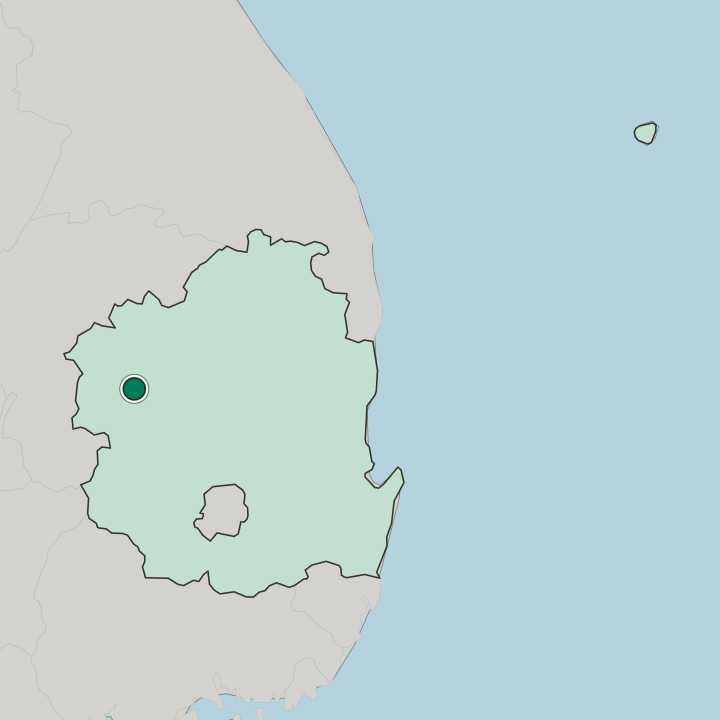
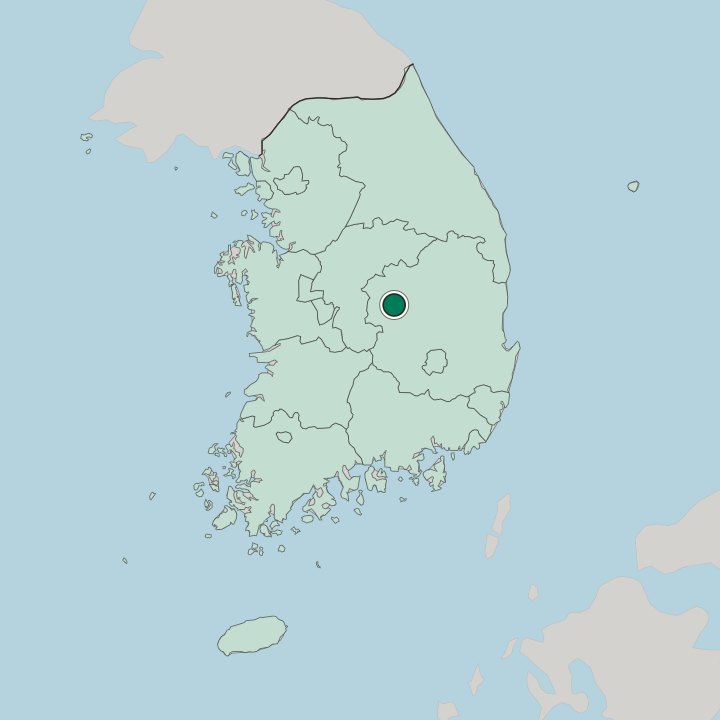
Sangju has no coastline. The city takes in over twelve hundred square kilometres in the northwestern part of Gyeongsangbuk-do, well away from any coast, and lies toward the centre of the country. Farmland does the work.
Ground producing rice, silkworm cocoons and dried persimmons in the quantity needed to name a place takes room, and Sangju has it across a municipality of that size.
What is the climate of Sangju?
Persimmons want a dry autumn. The inland position of Sangju, far from any coast and toward the middle of the country, gives it the sharper seasonal swing that drying fruit and rearing silkworms both rely on, and the Three Whites are the proof of it. Winter bites harder inland.
Coastal moderation does not reach this far, so the cold half of the year is more pronounced in the interior of Gyeongsangbuk-do than on either shore.
How do you get to Sangju?
Sangju sits in the middle of the country. Central position is the useful fact for planning an approach, because a city this far from any coast is reached overland from whichever direction the journey starts rather than by one obvious route. The province supplies the links.
Gyeongsangbuk-do surrounds Sangju, so connections run through North Gyeongsang rather than along a coastal corridor, and Gyeongju belongs to the same provincial pairing the region's name records.
Common questions
What is the best area to stay in Sangju?
The centre by the Sangju Bicycle Museum: Short visits pinned on the Sangju Bicycle Museum. Gyeonhwonsanseong Fortress ground: Mornings given to Gyeonhwonsanseong Fortress. The Sangju Sports Park area: Fixtures at Sangju Sports Park and the Sangju Civic Auxiliary Stadium.
Good for
More cities in Gyeongsangbuk-do
Updated September 2026