South Korea · Gyeongsangbuk-do
Where to Stay in Gyeongju, Gyeongsangbuk-do
Gyeongju is the ancient capital of the Silla kingdom in southeastern Korea, a city of royal tombs and old temples.
Hotel links are affiliate links: booking through them may earn us a commission, at no extra cost to you. It never affects how places are ranked. How this works


Where to stay in Gyeongju
How the choice of base plays out on the ground.
Where you stay in Gyeongju turns on the old tombs. The central streets around Daereungwon and the pond keep the tombs, the observatory, and the museums within a walk, and staying downtown suits anyone here for the ancient sights. The mounds glow green at dusk.
Rooms sit near the tombs and the park. Out toward Bomun Lake and the temple mountains, the resorts spread among the hills. A room by the lake trades the old centre for space, quiet water, and an easy road to Bulguksa and the grotto.
Past the last of the Bomun resorts the wooded temple mountains climb away. If you want the tombs and the town, stay in the centre; if you want the lake, take a room by the water. Either way, the old capital is close at hand.
Find hotels in Gyeongju
Direct booking searches for these neighbourhoods.
The old centre
Around Daereungwon and the old palace grounds, within a walk of CheomseongdaeFind hotels in The old centreStays wanting space and the temple mountainsBomun Lake
By the lake east of town, an easy road to Bulguksa and the grottoFind hotels in Bomun LakeHotel links are affiliate links: booking through them may earn us a commission, at no extra cost to you. It never affects how places are ranked. How this works
Things to do in Gyeongju
Ranked by global recognition; descriptions from Wikidata (CC0).
Museums & Galleries
1- Gyeongju National Museum
Castles & Historic Sites
4- Wolseong Heritage
- Daereungwon Heritage
- Gyerim Heritage
- Heungnyunsa Heritage
Stadiums & Sports
2- Gyeongju Civic Stadium
- Gyeongju Football Park
worth knowingacross 3 categories in Gyeongju
About Gyeongju
Gyeongju is the thousand-year capital of old Korea.
What is Gyeongju known for?
Across the town and its valley rise the grassy burial mounds of the Silla kings, an ancient stone observatory, and the halls of great temples, so that the whole city is often called a museum without walls. Golden crowns lie in the royal tombs. Kings and temples mark the city.
What are the main landmarks in Gyeongju?
The royal tombs of Daereungwon rise in the heart of Gyeongju. Great grassy burial mounds of the Silla kings fill a green park in the middle of the town, the emblem of the city, beside the old streets. Temples and towers ring the valley.
The Gyeongju National Museum holds the gold crowns and the great bell, while the observatory of Cheomseongdae and the temple of Bulguksa stand among the fields.
What is the history of Gyeongju?
Gyeongju ruled Korea for nearly a thousand years. From this valley the kings of Silla built a kingdom that, in the seventh century, united the whole peninsula for the first time under one crown, and the capital grew into one of the great cities of its age. The court gathered fabulous wealth.
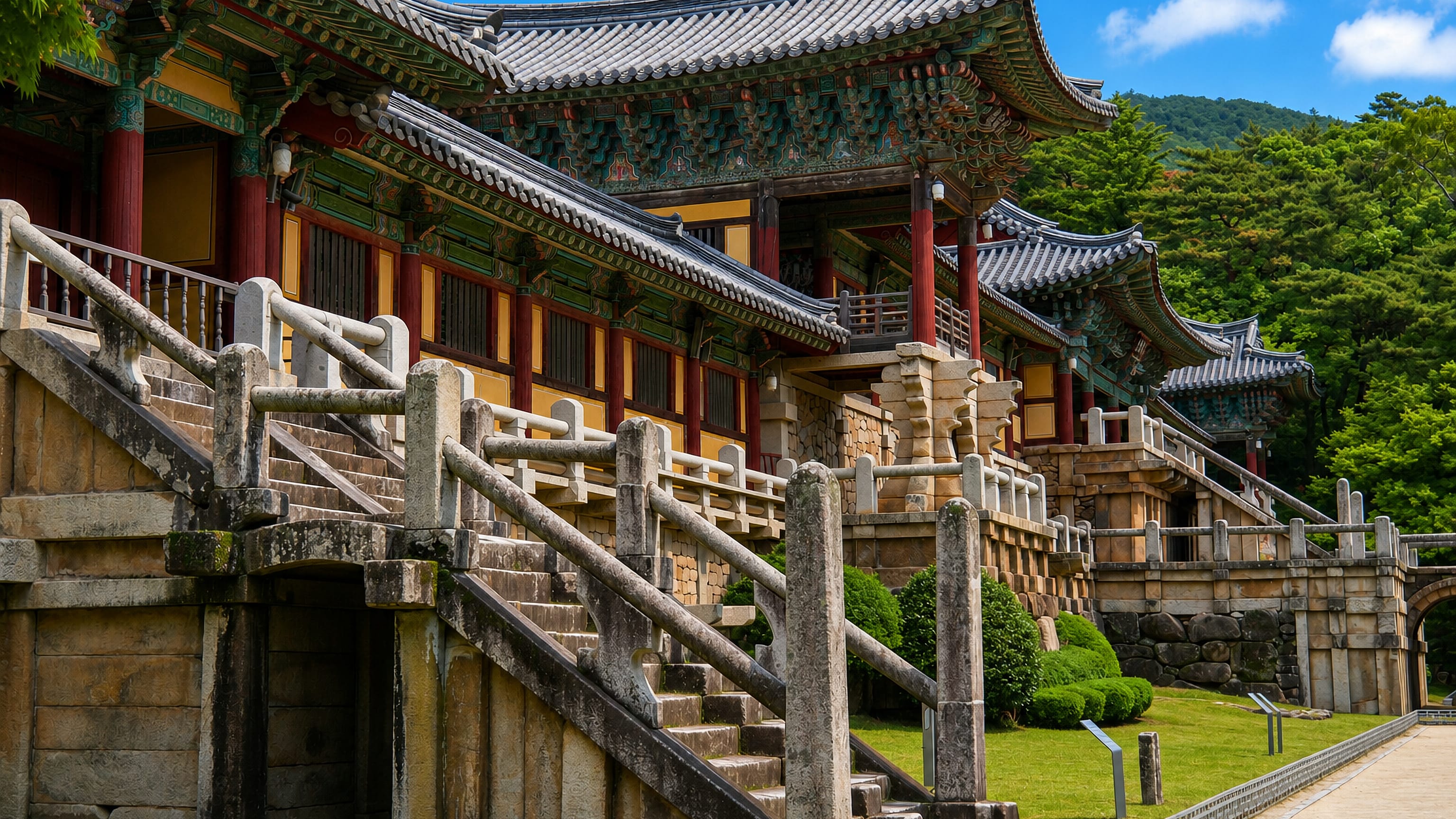
Its rulers were buried under huge mounds of earth with crowns and ornaments of gold, and they raised temples, palaces, and an observatory to watch the stars. Buddhism flowered in the hills around. The Silla built the great temple of Bulguksa and the stone grotto of Seokguram on the eastern mountains, masterworks of Korean Buddhist art that still stand above the town.
Then the kingdom fell. Silla gave way to new dynasties after the tenth century, and the capital sank into a quiet country town, its palaces gone to grass. The tombs kept their treasures underground.
Gyeongju guards the golden past of Korea among its green mounds.
Where is Gyeongju?
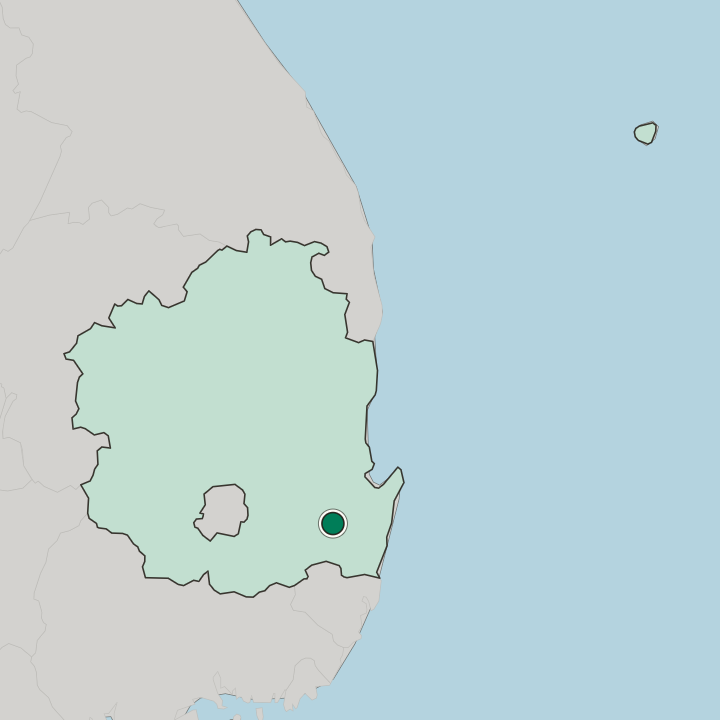
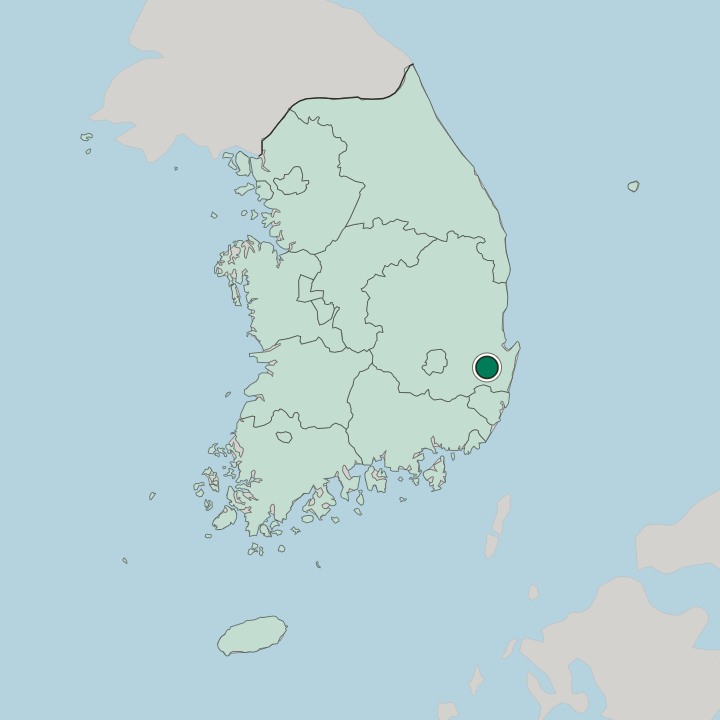
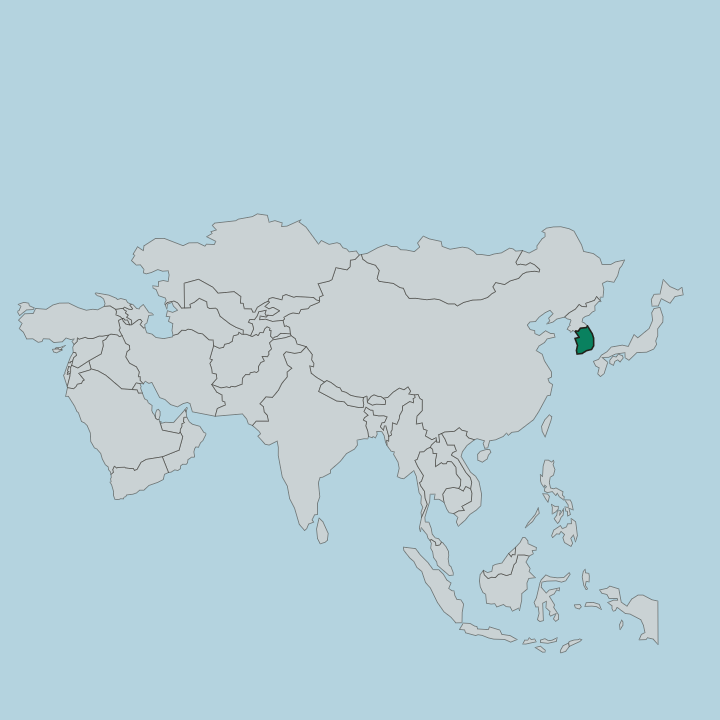
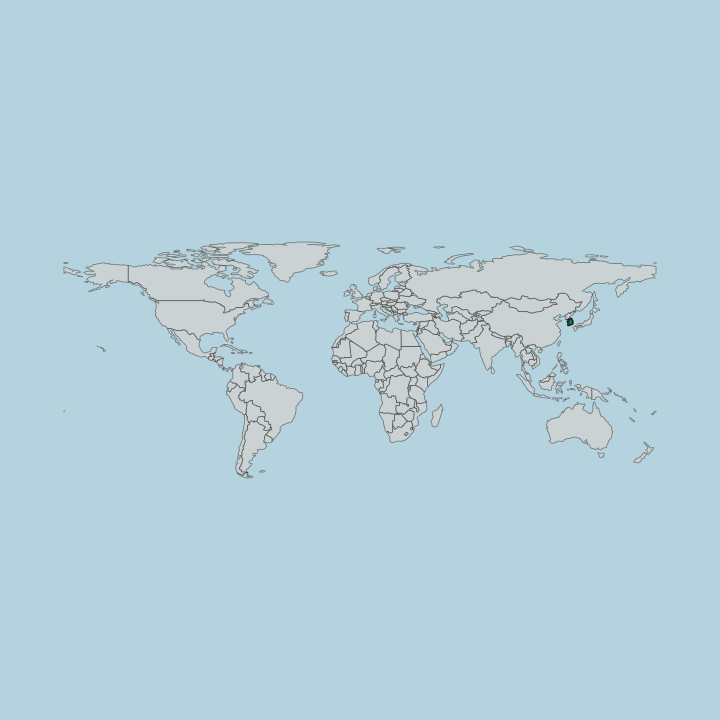
Gyeongju lies in a wide green basin in the southeast of Korea. The city spreads across a flat plain of rice fields ringed by low wooded mountains, near the east coast of the peninsula, where old burial mounds rise among the modern streets. Forested hills enclose the valley.
The plain runs green to the ranges.
What is the climate of Gyeongju?
Gyeongju has a temperate monsoon climate. Hot, wet summers bring the heavy rains of the East Asian monsoon, and the winters turn cold and dry in the sheltered basin, with mild spring and autumn between. Cherry blossom fills the valley in spring.
The seasons turn sharp and clear.
How do you get to Gyeongju?
Gyeongju lies in the southeast of Korea near the coast. A high-speed rail line and the expressway run to it from Seoul in the north and Busan on the coast, and the old town lies close to both. Buses reach the temple mountains around.
Most arrive by train through the hills.
Common questions
What is the best area to stay in Gyeongju?
The old centre: Visitors here for the tombs, observatory, and museums. Bomun Lake: Stays wanting space and the temple mountains.
Good for
More cities in Gyeongsangbuk-do
Updated October 2026