Norway · Østfold fylke
Where to Stay in Halden, Østfold fylke
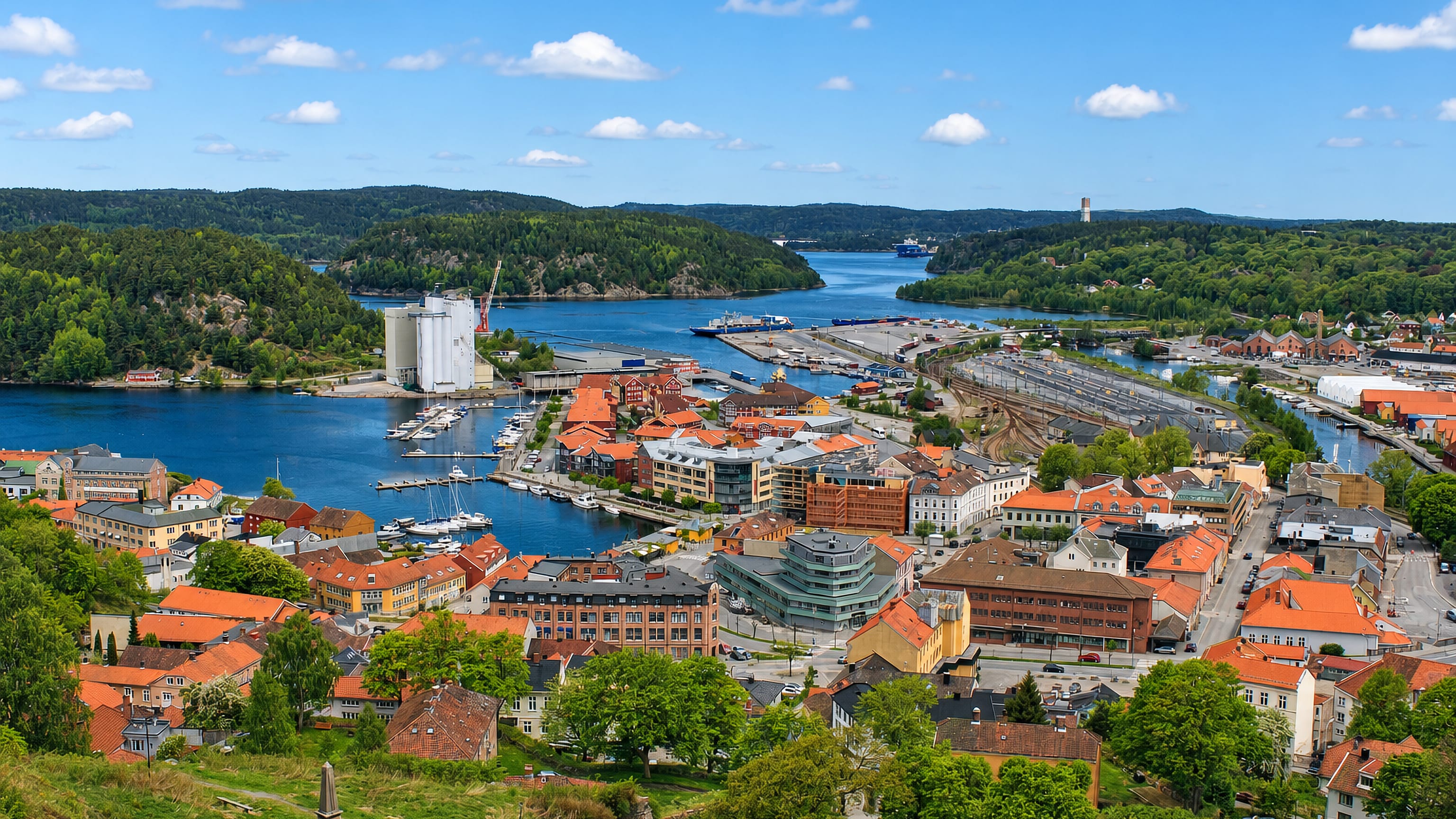
Halden is a fortress town in Østfold, south-eastern Norway, on the Swedish border below the ramparts of Fredriksten festning.
Hotel links are affiliate links: booking through them may earn us a commission, at no extra cost to you. It never affects how places are ranked. How this works


Where to stay in Halden
Where the beds are, and what that means for the visit.
The harbour-side centre is the natural base. Halden gathers its hotels and services around the waterfront below Fredriksten festning, in the southern part of Østfold, putting the fortress climb, the churches, and the everyday shops of the town all within easy reach. Stay near the water for the simplest footing.
The town spreads inland and uphill from there. You will find quieter ground out in the district of Tistedal around Tistedal kirke, away from the harbour yet still close to the centre, suited to travellers who prefer calm over the bustle of the waterfront. The central streets work best for first-timers who want the fortress and the manor of Rød herregård on hand.
Choose Halden as a border base in south-eastern Norway, with Sweden and Strömstad just beyond the frontier.
Find hotels in Halden
Direct booking searches for these neighbourhoods.
Harbour centre
the waterfront core of Halden below the fortress, with most hotels and the manor of Rød herregård nearbyFind hotels in Harbour centretravellers wanting a quiet inland Halden district by Tistedal kirkeTistedal
the upriver neighbourhood around Tistedal kirke, calm and green away from the harbour. Rooms are few around here — worth securing early.Find hotels in Tistedalvisitors happy with a rural Halden base near Berg kirkeBerg
outlying parish country around Berg kirke, quiet ground at the edge of the border municipality. Beds are limited here, so book early.Find hotels in BergHotel links are affiliate links: booking through them may earn us a commission, at no extra cost to you. It never affects how places are ranked. How this works
Things to do in Halden
Ranked by global recognition; descriptions from Wikidata (CC0).
Museums & Galleries
1- Rød herregård Heritage
Churches & Religious Sites
6- Immanuel Church Heritage
- Idd Church Heritage
- Rokke Church Heritage
- Prestebakke Church Heritage
- Søndre Enningdal Chapel Heritage
Show 1 more →
- Tistedal Church Heritage
Castles & Historic Sites
7- Fredriksten Heritage
- Kornsjø station Heritage
- Halden station Heritage
- Halden sykehus Heritage
- Søylegården Heritage
Show 2 more →
- Kongegården Heritage
- Halden gamle politistasjon og fengsel Heritage
Landmarks & Notable Places
3- Nexanstårnet
- Høiåsmasten
- Kommandantboligen
worth knowingacross 4 categories in Halden
About Halden
The fortress dominates everything.
What is Halden known for?
Fredriksten festning rises above Halden in the southern part of Østfold, a great border stronghold that defined the town and still draws most of its visitors up to the walls. The border itself defines the rest. Halden sits hard against the frontier with Sweden, close to Strömstad across the line, a position in south-eastern Norway that shaped its long military story.
What are the main landmarks in Halden?
The fortress leads the list. Fredriksten festning crowns the ridge above Halden, the manor of Rød herregård sits below, and the Nexanstårnet tower marks the working waterfront. Churches anchor the parishes.
Immanuels kirke and St. Peter kirke stand in the town, with Berg kirke and Tistedal kirke serving the surrounding districts of this corner of Østfold near the Swedish border.
What is the history of Halden?
Halden was forged on the frontier. The town grew as a border stronghold in the southern part of Østfold, facing Sweden, and from 1665 to 1928 it carried the name Fredrikshald in honour of the king whose fortress, Fredriksten festning, was raised to guard the approach against Swedish attack. War shaped its name and its walls.
The fortress saw famous fighting. Fredriksten festning withstood sieges from across the border near Strömstad, and the wider town spread through parishes marked by Immanuels kirke and the upriver church of Tistedal kirke as life settled around the garrison. The manor of Rød herregård recalls the gentler side of the same centuries.
Where is Halden?
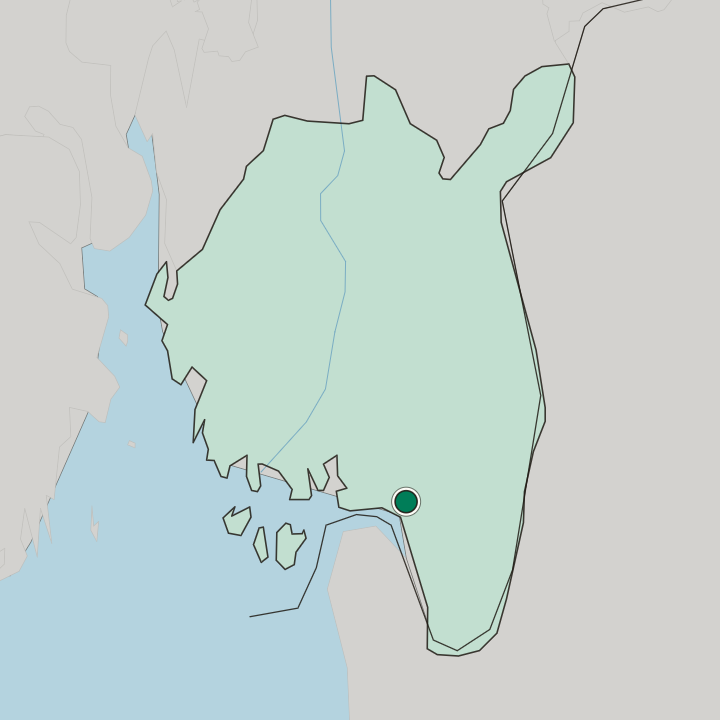
Halden sits at the head of a fjord and a frontier. The town lies in the southern part of Østfold, where a sheltered inlet meets the land border with Sweden, and the fortress ridge of Fredriksten festning rises directly above the waterfront. Ridge above, water below.
The country climbs inland toward Tistedal and the parish of Berg, a wooded, water-cut edge of south-eastern Norway pressed against the Swedish frontier.
What is the climate of Halden?
Coast and interior meet in the weather. Lying at the head of an inlet in the southern part of Østfold, Halden has the mild summers and cold but rarely extreme winters of the south-eastern Norway lowlands, tempered near the water yet sharper up the valley toward Tistedal. Summer draws people to the fortress.
The sheltered border position in the Østlandet region keeps Halden gentler than the higher interior of Norway.
How do you get to Halden?
Halden is the last Norwegian stop before Sweden. The town lies in the southern part of Østfold, at the end of the rail and road line down the coast of south-eastern Norway, just short of the Swedish border and the crossing toward Strömstad. Trains run right to the centre.
From the station the waterfront, the climb to Fredriksten festning, and the road on into Sweden are all close at hand in this corner of the Østlandet region.
Common questions
What is the best area to stay in Halden?
Harbour centre: first-timers wanting the climb to Fredriksten festning on foot. Tistedal: travellers wanting a quiet inland Halden district by Tistedal kirke. Berg: visitors happy with a rural Halden base near Berg kirke.
Good for
More cities in Østfold fylke
Updated October 2026