Russia · Chelyabinsk Oblast
Where to Stay in Chelyabinsk, Chelyabinsk Oblast
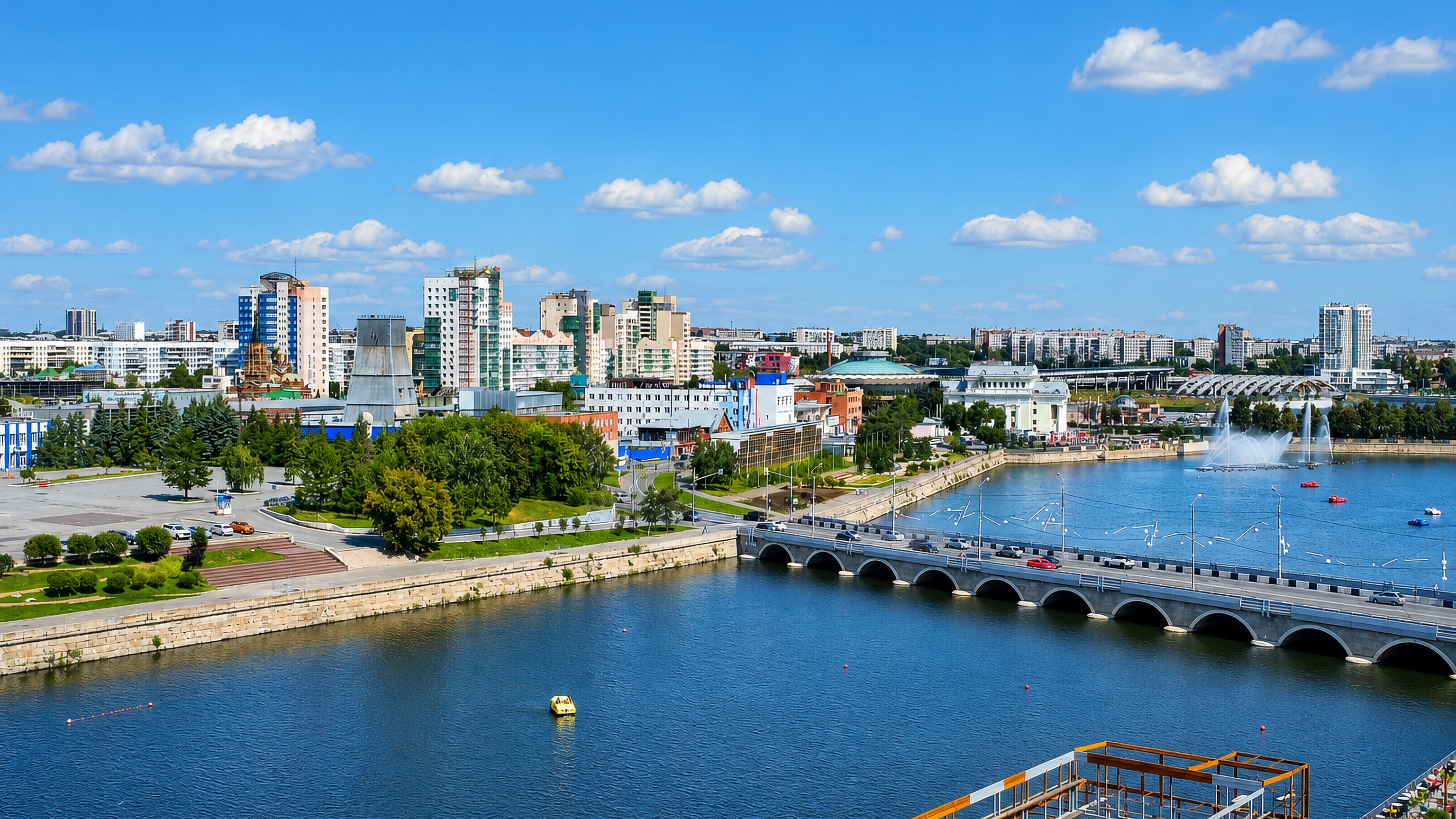
Chelyabinsk is the largest city of Chelyabinsk Oblast, spread along the Miass River east of the southern Ural Mountains.
Find your area →


Where to stay in Chelyabinsk
The practical side of choosing where to sleep.
Most visitors base themselves in the central districts of Chelyabinsk, on the west bank of the Miass River where the civic core is densest. Here the Glinka Opera and Ballet Theatre, the Chelyabinsk State Art Museum, and the main shopping streets sit within walking reach, and the pedestrianised stretch near Kirovka draws the evening crowds. It is the obvious first base.
Across the river the newer residential quarters spread outward toward the edge of the city. They lie farther from the museums and the theatres, but they put you closer to the lakes and forest-steppe of Chelyabinsk Oblast for anyone whose plans reach beyond the centre. Whichever bank you choose, the Miass River and the old Chelyabinsk-Glavny railway station remain the fixed points by which the city arranges itself, and both are easy to find your way back to.
Things to do in Chelyabinsk
Ranked by global recognition; descriptions from Wikidata (CC0).
Museums & Galleries
1- Chelyabinsk State Art Museum
Churches & Religious Sites
3- Holy Trinity Church in Chelyabinsk Heritage
- Chelyabinsk Mosque Heritage
- Chelyabinsk Synagogue Heritage
Castles & Historic Sites
5- Monument «Orleonok» in Chelyabinsk Heritage
- Lenin memorial, Chelyabinsk Heritage
- Statue of Lenin at the Revolution Square in Chelyabinsk Heritage
- Na novyi put Heritage
- Monument "Slava Otvazhnym" Heritage
Landmarks & Notable Places
8- Molnija Heritage
- Glinka Opera and Ballet Theatre Heritage
- Chelyabinsk grain elevator Heritage
- Chelyabinsk State Academy of Culture and Arts Heritage
- Rodina music hall Heritage
Show 3 more →
- Zhukovsky House Heritage
- Arkhipov House Heritage
- Krasnaya street 38, Chelyabinsk Real school Heritage
worth knowingacross 4 categories in Chelyabinsk
About Chelyabinsk
What is Chelyabinsk known for?
Chelyabinsk anchors the industrial belt of the southern Urals. Its landmarks range across faiths and eras, from the Chelyabinsk Mosque to the Chelyabinsk Synagogue, with the Nativity of Christ Cathedral and the Holy Trinity Church rising nearby. The city's cultural life gathers at the Glinka Opera and Ballet Theatre and the Chelyabinsk State Art Museum, while the State Historical Museum of the Southern Urals holds the record of the wider Ural region.
Trade runs deep here. Much of that trade once passed through the grand Chelyabinsk-Glavny railway station, whose old building still stands as a marker of the city's role on the Trans-Siberian line.
What are the main landmarks in Chelyabinsk?
The heart of Chelyabinsk collects landmarks of many kinds. The Glinka Opera and Ballet Theatre and the Rodina music hall carry its stage life, while the Chelyabinsk State Art Museum and the State Historical Museum of the Southern Urals hold its collections. Places of worship stand close together: the Chelyabinsk Mosque, the Chelyabinsk Synagogue, the Holy Trinity Church, and the Nativity of Christ Cathedral.
Older still are the merchant houses. The Mansion of Akhmetov and the Zhukovsky House recall the traders who once worked the river town on the Miass.
What is the history of Chelyabinsk?
Chelyabinsk began in 1736 as a fortress on the Miass River, one of a chain of outposts guarding the frontier east of the Ural Mountains. For its first century it stayed a modest garrison and trading point. Rails changed the settlement's fate.
When the Trans-Siberian line reached the settlement at the close of the nineteenth century, Chelyabinsk became a junction where goods and people crossing between European Russia and Siberia had to pass, and the old Chelyabinsk-Glavny railway station stands as the surviving witness to that turn. Grain and iron followed the tracks. The Chelyabinsk grain elevator and a spread of workshops marked the city's growth into a centre of exchange for the Southern Urals.
Through the twentieth century the industry deepened, and the built fabric filled with the theatres, museums, and civic monuments that still stand, among them the Glinka Opera and Ballet Theatre and the State Historical Museum of the Southern Urals. The Miass River, once the reason for the fort, remained the axis around which each new district of Chelyabinsk arranged itself.
Where is Chelyabinsk?
The Miass River threads through Chelyabinsk, dividing the older core from newer districts on the far bank. The city sits east of the southern Ural Mountains, on the flatter land where the ranges give way to the West Siberian Plain. Two great regions meet here.
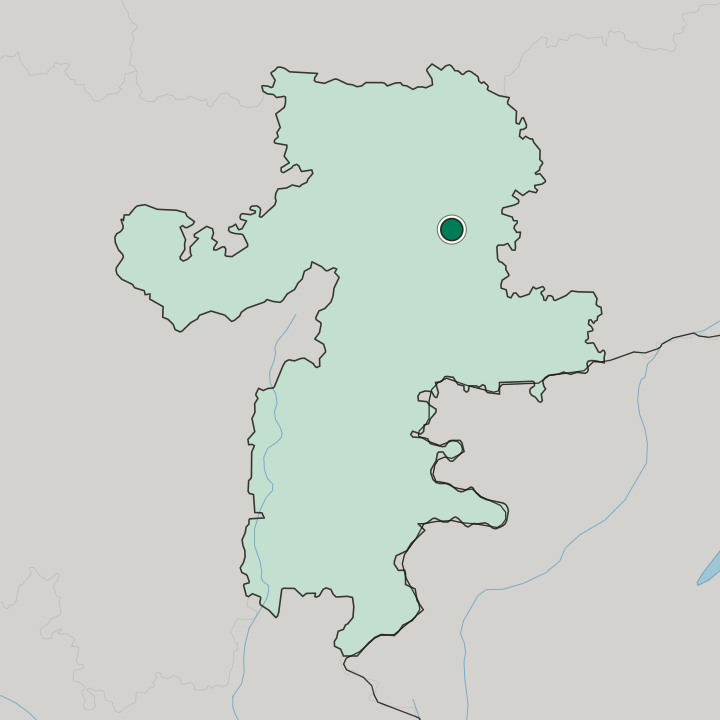
Chelyabinsk Oblast surrounds the city with lakes, forest-steppe, and the mineral-rich foothills that gave the Southern Urals their industry, and the river ties the built-up centre to that broader landscape of water and low relief.
What is the climate of Chelyabinsk?
Chelyabinsk carries a sharply continental climate, shaped by its position on the plain east of the Ural Mountains. Winters bite. Snow settles for months, and cold air pools over the flat terrain around the Miass River with little to break it.
Summers turn warm and comparatively short, drawing city dwellers to the lakes scattered across Chelyabinsk Oblast, and the swing between the two seasons is among the widest felt anywhere in the Southern Urals.
How do you get to Chelyabinsk?
Rail defines Chelyabinsk. The city sits on the Trans-Siberian Railway, and trains still call at the modern terminal beside the historic Chelyabinsk-Glavny railway station, whose old building marks the spot where the line first met the frontier town on the Miass River. Roads fan out across Chelyabinsk Oblast toward the lakes and the foothills of the Ural Mountains.
An airport sits on the edge. Travellers reach Chelyabinsk by air as readily as by the railway that made it.
Good for
More cities in Chelyabinsk Oblast
Updated October 2026