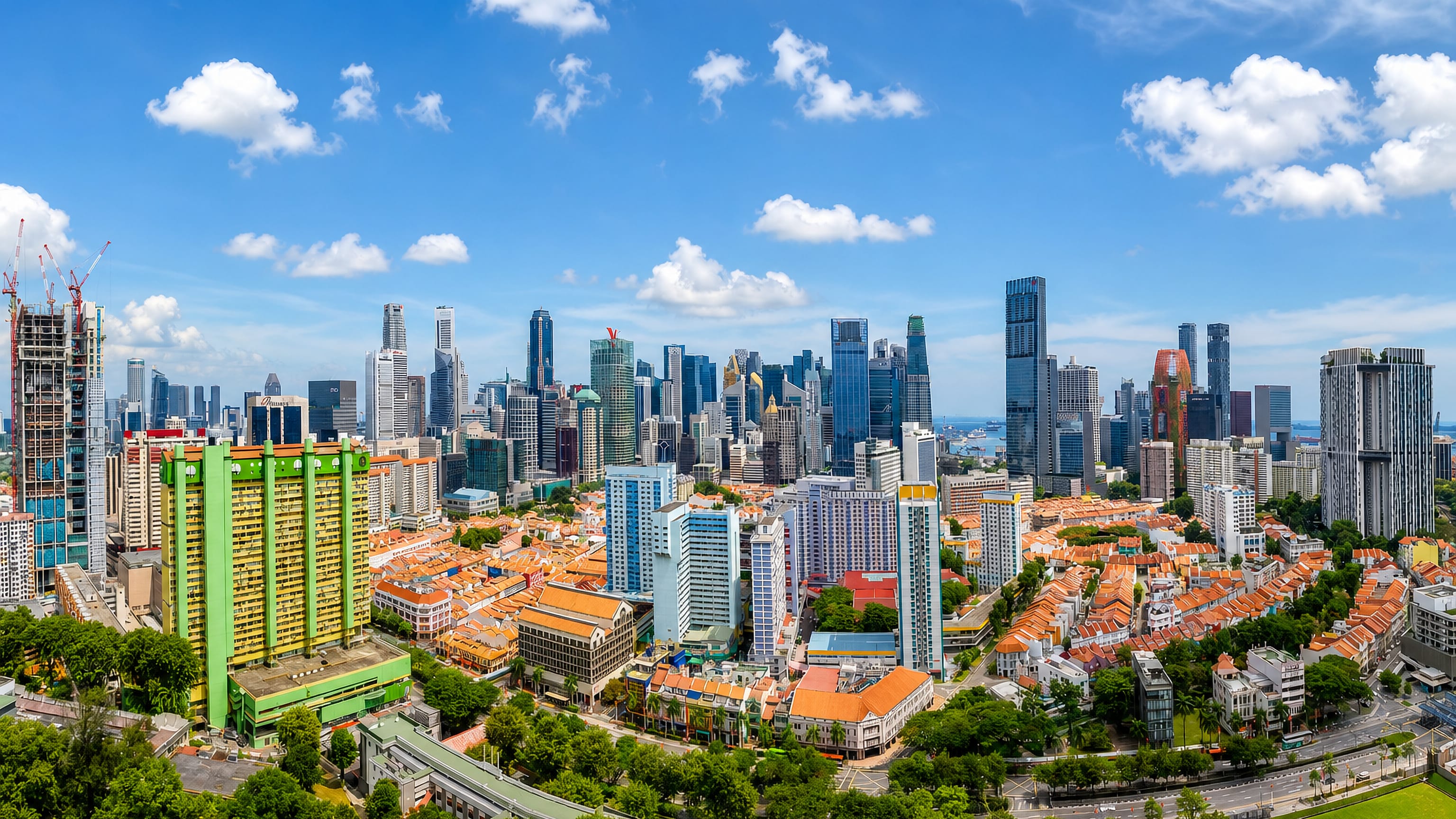
Singapore
Where to Stay in Singapore
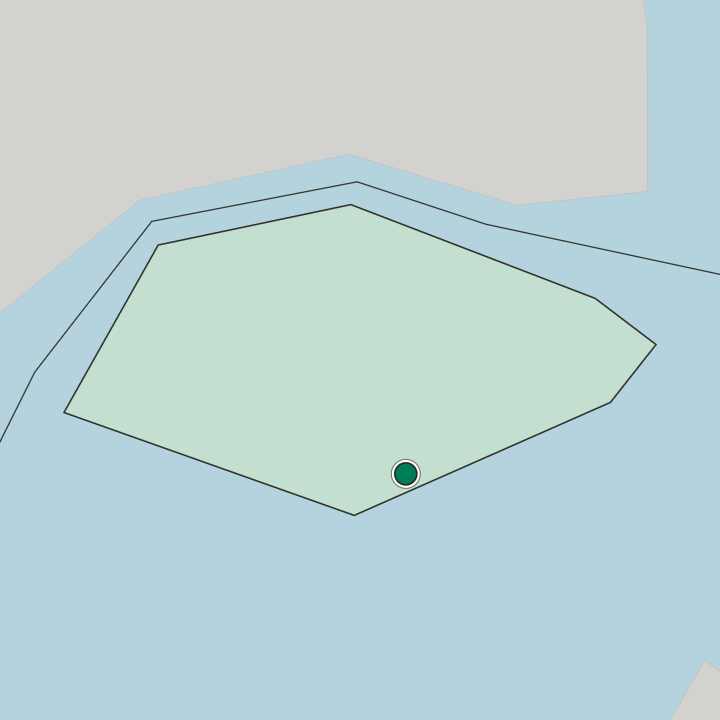
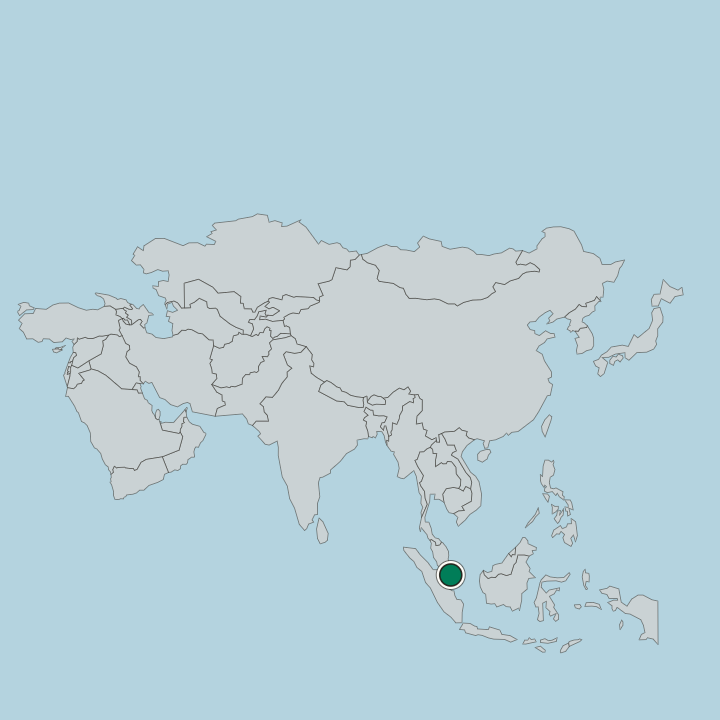
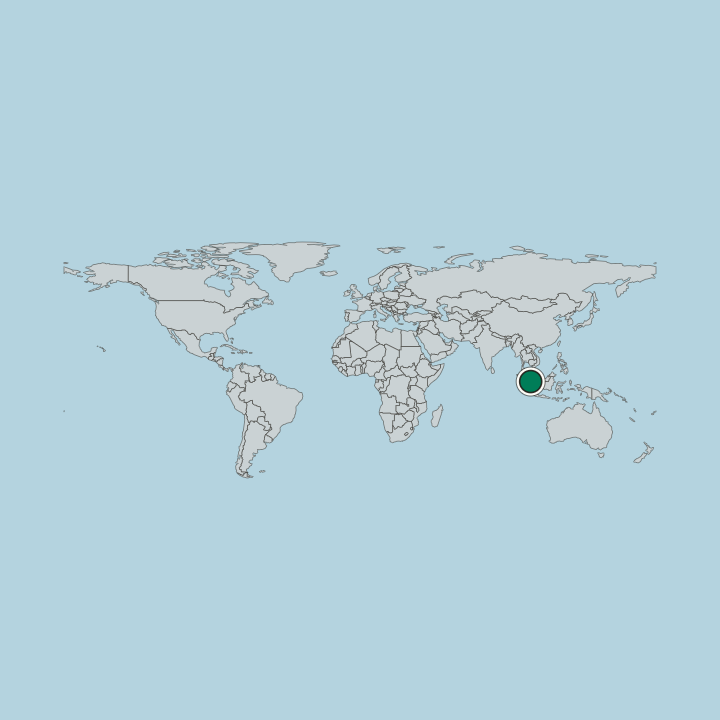
Singapore is an island city-state in Southeast Asia, between the Strait of Malacca and the Singapore Strait off the Malay Peninsula.
Hotel links are affiliate links: booking through them may earn us a commission, at no extra cost to you. It never affects how places are ranked. How this works


Where to stay in Singapore
Not every neighbourhood fits every trip — here's what each one is good for.
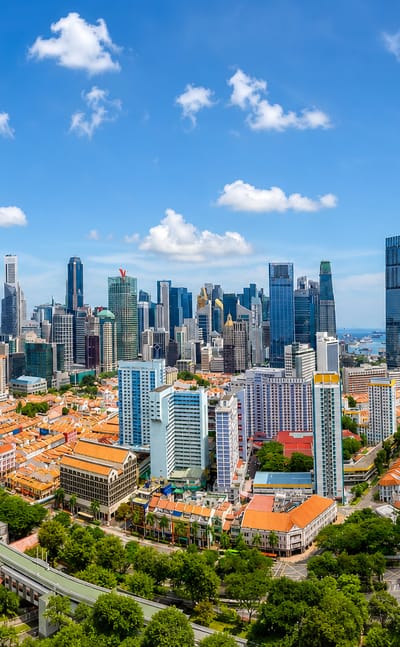
 SingaporeSingapore
Civic District
Civic District is the museum and government quarter of Singapore, holding the National Gallery Singapore beside the Singapore River.Where to stay → SingaporeSingapore
Outram Park
Outram is a planning area of Singapore's Central Area, taking in four subzones: China Square, Chinatown, People's Park and Pearl's Hill.Where to stay → SingaporeSingapore
Kallang
Kallang is a planning area and residential zone in Singapore's Central Region, with the Malay Heritage Centre and the Sports Museum inside it.Where to stay →SingaporeSingaporeTanglin
Tanglin is a Central Region planning area of Singapore built around the Singapore Botanic Gardens, with Tyersall Park and Saint George's Church nearby.Where to stay → SingaporeSingapore
Telok Blangah
Telok Blangah is a housing estate on the ground behind Keppel Harbour, forming three contiguous subzones of Bukit Merah in Singapore.Where to stay → SingaporeSingapore
Toa Payoh New Town
Toa Payoh New Town fills the western portion of the Toa Payoh planning area, a residential town of Singapore's Central Region by Siong Lim Temple.Where to stay → SingaporeSingapore
Geylang
Geylang is a planning area of Singapore on the eastern fringe of the Central Region, holding temples, a church and the Singapore Badminton Hall.Where to stay →SingaporeSingaporeKembangan
Kembangan is a residential subzone within Bedok town, in Singapore's East Region, mostly private housing with a public estate along Lengkong Tiga.Where to stay → SingaporeSingapore
Holland Village
Holland Village, often shortened to Holland V, sits on the boundary between the Bukit Timah and Queenstown planning areas in Singapore.Where to stay →SingaporeSingaporeHillcrest Park
Hillcrest Park is a named district of Singapore, one the register identifies by name without attaching a landmark or a founding date to it.Where to stay → SingaporeSingapore
Bishan New Town
Bishan New Town, also known as Peck San, is a planned residential town at the most central point of Singapore, in the Central Region.Where to stay →SingaporeSingaporeTai Seng
Tai Seng is a district of Singapore, one of the local names by which the ground of the city-state is divided.Where to stay →All neighbourhoods (21)
SingaporeSingaporeSerangoon Garden
Serangoon Garden Estate is a residential estate inside the Serangoon district, part of the built-up ground of Singapore's North-East Region.Where to stay → SingaporeSingapore
Serangoon New Town
Serangoon New Town is a planning area and residential town in Singapore's North-East Region, with two churches and a mosque on its landmark list.Where to stay → SingaporeSingapore
Paya Lebar
Paya Lebar is a planning area in Singapore's East Region, ringed by Hougang, Sengkang, Tampines, Bedok and Pasir Ris.Where to stay →SingaporeSingaporeSerangoon
Serangoon is a planning area and residential town within Singapore, recorded in the North-East Region and carrying no landmark of its own.Where to stay →SingaporeSingaporeHougang New Town
Hougang, also called Aukang, is a mature residential town in Singapore's North-East Region and the largest housing estate in the country by land area.Where to stay → SingaporeSingapore
Bukit Batok New Town
Bukit Batok New Town, abbreviated Bt Batok, is a planned residential town in the eastern part of the West Region of Singapore, dating from 1975.Where to stay → SingaporeSingapore
Tampines New Town
Tampines is the regional centre of the East Region of Singapore, a planning area levelled by quarrying and edged by the Straits of Singapore.Where to stay → SingaporeSingapore
Hong Kah
Hong Kah is a Jurong West subzone in Singapore, edged by the PIE, Corporation Road, the Jurong Canal and Boon Lay Way.Where to stay →SingaporeSingaporeLoyang
Loyang names one quarter of Singapore, a district recorded on the map of a state whose whole territory is a single city.Where to stay →Hotel links are affiliate links: booking through them may earn us a commission, at no extra cost to you. It never affects how places are ranked. How this works
Find hotels in Singapore
Direct booking searches for these neighbourhoods.
Marina Bay
Steps from Gardens by the Bay, the Singapore Flyer, and the nightly light show over the bay.Find hotels in Marina BayShopping and central transitOrchard Road
A mile of malls and hotels on the train line to the colonial museums.Find hotels in Orchard RoadTemples and hawker foodChinatown
Built around the Sri Mariamman Temple and the Buddha Tooth Relic Temple.Find hotels in ChinatownMarkets and street lifeLittle India
The lanes off Serangoon Road, loud with garland stalls and curry houses.Find hotels in Little IndiaHeritage and design shopsKampong Glam
Gathered under the gold dome of Masjid Sultan along Arab Street.Find hotels in Kampong GlamRiverside nightlifeClarke Quay
Converted godowns lining the Singapore River upstream of the Merlion.Find hotels in Clarke QuayHotel links are affiliate links: booking through them may earn us a commission, at no extra cost to you. It never affects how places are ranked. How this works
Things to do in Singapore
Ranked by global recognition; descriptions from Wikidata (CC0).
Museums & Galleries
3- Former Ford Factory Heritage
- Singapore City Gallery
- Reflections at Bukit Chandu
Churches & Religious Sites
8- Cathedral of the Good Shepherd Heritage
- Armenian Church of Saint Gregory the Illuminator Heritage
- Church of the Nativity of the Blessed Virgin Mary Heritage
- Saint Joseph's Church Heritage
- Church of Saints Peter and Paul Heritage
Show 3 more →
- Church of Our Lady of Lourdes Heritage
- Tou Mu Kung Temple Heritage
- Saint George's Church Heritage
Castles & Historic Sites
2- SGH War Memorial
- Frederic Chopin statue in Singapore
Stadiums & Sports
3- The Kallang
- Singapore Badminton Hall
- Toa Payoh Swimming Complex
Parks & Gardens
3- Singapore Botanic Gardens UNESCO
- Haw Par Villa
- New World Amusement Park
Landmarks & Notable Places
1- Parliament House
worth knowingacross 6 categories in Singapore
About Singapore
Trade and gardens define Singapore.
What is Singapore known for?
The deep-water anchorage off the Malay Peninsula drew a British trading post in 1819, and the harbour grew into one of the world's busiest ports while the island remade itself as a planned Garden City. Marina Bay is the showpiece. Gardens by the Bay, the Singapore Flyer, and Merlion Park ring the waterfront, and the shophouses of Chinatown and Little India hold the older trading town together.
What are the main landmarks in Singapore?
The waterfront carries the headline sights. Gardens by the Bay grows its Supertrees beside the Marina Barrage, the Merlion spouts across the water from Merlion Park, and the Singapore Flyer turns above the bay. The museums cluster inland.
The National Gallery Singapore fills the former Supreme Court and City Hall, while the Asian Civilisations Museum, the Peranakan Museum, and the National Museum of Singapore trace the island's trading past.
What is the history of Singapore?
Singapore began as a port. A British trading post took root on the island in 1819, drawn by the sheltered water at the mouth of the Singapore River, and the settlement grew into the busiest harbour on the route between India and China. Fort Canning Hill held the early garrison and the first botanical garden.
Free trade pulled in Chinese, Malay, Tamil, and Arab merchants. Their quarters, Chinatown, Little India, and Kampong Glam around the Masjid Sultan, still map the old divisions of the colonial town, and the shophouses that line them survive as heritage streets. War broke the colonial calm.
Japanese forces took the island in 1942, and the occupation left a scar that long outlasted the return of British rule. Singapore joined the new federation of Malaysia, then left it within two years, and became an independent republic in 1965. From a low-rise trading port it built the towers of Marina Bay, the reservoir behind the Marina Barrage, and the planned greenery that earned it the name Garden City.
The story is told in full at the National Museum of Singapore. The Merlion, half lion and half fish, became the emblem of that remade island.
Where is Singapore?
Singapore is small and low. The main island sits off the southern tip of the Malay Peninsula, joined to the State of Johor by a causeway across the Straits of Johor, with more than sixty smaller islands scattered around it. The Strait of Malacca runs to the west and the Singapore Strait to the south, two of the busiest shipping lanes anywhere.
Reclaimed land has pushed the shoreline out at Marina Bay, where a barrage holds back a freshwater reservoir in the heart of the city.
What is the climate of Singapore?
Singapore sits almost on the equator, and its weather barely changes through the year. Days are hot and humid, broken most afternoons by heavy thunderstorms that roll in off the Strait of Malacca. Two monsoons set the rhythm.
The northeast monsoon brings the wettest months around the turn of the year, while the southwest monsoon carries hazier, drier spells through the middle of the year. Rain is never far. The greenery of the Garden City, from the roadside rain trees to Gardens by the Bay, runs on that constant warmth and wet.
How do you get to Singapore?
Most arrivals land at Changi. The airport on the island's east is one of the busiest in Asia, linked to the centre by a fast train line and expressway. From Malaysia, two road crossings span the Straits of Johor, the old Causeway to Johor Bahru and the Second Link to the west.
Once in the city, the Mass Rapid Transit reaches almost everything. Trains run under Orchard Road, Chinatown, and Little India, and the bay sights sit a short walk apart.
Common questions
What is the best area to stay in Singapore?
Marina Bay: Skyline views and the waterfront. Orchard Road: Shopping and central transit. Chinatown: Temples and hawker food. Little India: Markets and street life. Kampong Glam: Heritage and design shops. Clarke Quay: Riverside nightlife.
Good for
Updated October 2026