Turkey · İstanbul
Where to Stay in Bağcılar, İstanbul
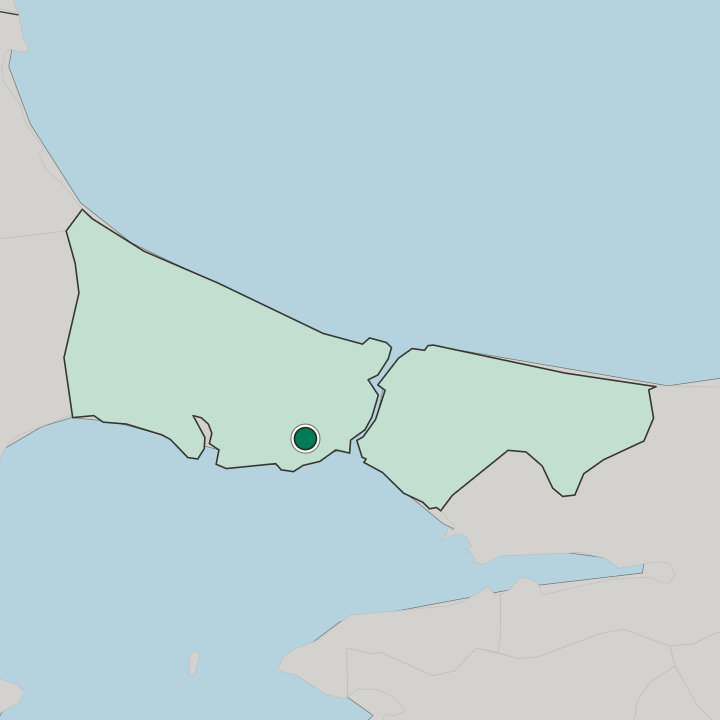
Bağcılar is a dense residential district on the European side of İstanbul, between the TEM and D100 ring roads just north of Bahçelievler.
Hotel links are affiliate links: booking through them may earn us a commission, at no extra cost to you. It never affects how places are ranked. How this works


Where to stay in Bağcılar
The practical side of choosing where to sleep.
Nobody stays in Bağcılar for Bağcılar. The district is residential almost end to end, a dense grid of apartment streets on the European side with no monument of its own, and the reason to book here is the run into the centre rather than anything on the doorstep. Transit is the argument.
The Istanbul Metro and the T1 line of the Istanbul Tram both serve the district, so Hagia Sophia, Topkapı Palace, the Turkish and Islamic Arts Museum and the Walled Obelisk are all a single ride away. That list belongs to the centre, not to Bağcılar itself, and the distinction matters when a booking site puts the two names side by side. Ring roads bracket the place.
TEM runs along one side and D100 along the other, which makes Bağcılar straightforward to reach by car and awkward to cross on foot, and a room near either edge trades quiet for that access. Bahçelievler lies just south. Anyone who wants the museums rather than the motorway should judge a Bağcılar address purely by its walk to the metro, since that single detail decides whether the Chora Church, the Pera Museum and İstanbul Modern feel close or far.
The district itself asks little of a visitor.
Find hotels in Bağcılar
Direct booking searches for these neighbourhoods.
The metro streets
The Istanbul Metro through Bağcılar reaches Hagia Sophia and Topkapı Palace without a change, which is the only real argument for sleeping in the districtFind hotels in The metro streetsA second rail route out of a district with no sightsAlong the T1 tram
The T1 line of the Istanbul Tram serves Bağcılar as well, giving a room here two ways towards the Turkish and Islamic Arts Museum and the Walled ObeliskFind hotels in Along the T1 tramArriving in Bağcılar by car off the TEM ring roadThe TEM edge
Rooms by the TEM ring road put a car first, with D100 on the far side of Bağcılar and the old city reached by rail instead. Few places to stay nearby — book ahead.Find hotels in The TEM edgeHotel links are affiliate links: booking through them may earn us a commission, at no extra cost to you. It never affects how places are ranked. How this works
About Bağcılar
Bağcılar earns its living from housing.
What is Bağcılar known for?
The district covers a compact stretch of the European side, packed with apartment streets rather than monuments, and what it sells to a visitor is position between the TEM and D100 ring roads. Transit carries the rest. The Istanbul Metro and the T1 line of the Istanbul Tram put Hagia Sophia, Topkapı Palace and the Istanbul Archaeology Museums within a straightforward ride of a room here.
What are the main landmarks in Bağcılar?
The district keeps no monuments of its own. Its list points outward. What Bağcılar has instead is a short ride to the ones everybody comes for, Hagia Sophia and Hagia Irene, Topkapı Palace, the Şehzade Mosque and the Zeyrek Mosque among them.
The Galata Tower belongs to another quarter entirely. Older stone waits elsewhere too, at the Chora Church, the Pammakaristos Church and the Golden Gate, none of which Bağcılar can claim as its own.
What is the history of Bağcılar?
Bağcılar has almost no past to speak of. The ground it covers stayed outside the built city while Hagia Sophia, the Chora Church and the Golden Gate were already centuries old, and its own streets went up in a single burst of late twentieth-century expansion. Growth came fast.
Apartment blocks filled a district that had held very little before, and the result is a place defined by what happened to İstanbul rather than by anything that happened on the spot. The record it borrows is enormous. Panorama 1453 History Museum, the Istanbul Archaeology Museums and the Turkish and Islamic Arts Museum hold the layers that Bağcılar's own soil never accumulated, and the Republic Monument marks a later turning point in the same city.
None of those monuments stands inside the district. Ring roads did the shaping instead. TEM and D100 fixed the district's outline, the Istanbul Metro and the T1 line of the Istanbul Tram arrived to move the people living inside it, and Bahçelievler grew up against its southern boundary at much the same time.
Little Hagia Sophia and the Fenari Isa Mosque tell an older story. Bağcılar tells a very recent one.
Where is Bağcılar?
Bağcılar covers a small, tightly built square of the European side. Bahçelievler adjoins it to the south, TEM and D100 bracket the district between them, and the city centre lies near enough that Bağcılar counts as inner İstanbul rather than suburb. Green space is scarce.
Streets run block after block with the ground almost entirely built over.
What is the climate of Bağcılar?
Traffic sets the tone before the weather does. Between TEM and D100 the air over Bağcılar carries the ring roads with it, and a still summer day in a district built almost solid feels closer than the same day nearer open ground. Winters run wet and grey.
Nothing about the temperate seasons here differs from the rest of İstanbul, but shelter is thinner, since the district has few parks to soften either extreme.
How do you get to Bağcılar?
Two ring roads and two rail lines. Both TEM and D100 touch the district, so a car reaches Bağcılar from either side of the European half of İstanbul without touching the old streets. The Istanbul Metro does better.
It runs through the district, the T1 line of the Istanbul Tram adds a second route, and between them the ride to Hagia Sophia or the Galata Tower is simple enough that nobody needs a taxi.
Common questions
What is the best area to stay in Bağcılar?
The metro streets: A straight rail run from Bağcılar to Hagia Sophia. Along the T1 tram: A second rail route out of a district with no sights. The TEM edge: Arriving in Bağcılar by car off the TEM ring road.
Good for
More cities in İstanbul
Updated October 2026