United States · Alabama
Where to Stay in Auburn, Alabama
Auburn is a Lee County city in Alabama's River Heritage region, dating from 1836 and built around Auburn University in its own downtown.
Hotel links are affiliate links: booking through them may earn us a commission, at no extra cost to you. It never affects how places are ranked. How this works


Where to stay in Auburn
Where visitors usually base themselves, and why.
Football weekends decide everything. Auburn University's home games pull alumni and visiting supporters on a scale that empties downtown Auburn of rooms months ahead, and anyone travelling for other reasons should read the fixture list before choosing dates. The rest of the year is easy.
Downtown holds the walkable stay, with the Auburn University Chapel and the Jule Collins Smith Museum of Fine Art close to each other and to most of the eating. Opelika takes the overflow. The two cities share the Auburn-Opelika metropolitan area, so a room there stays viable on the weekends when nothing is left in the college town itself, provided the drive back in is accepted as part of the day.
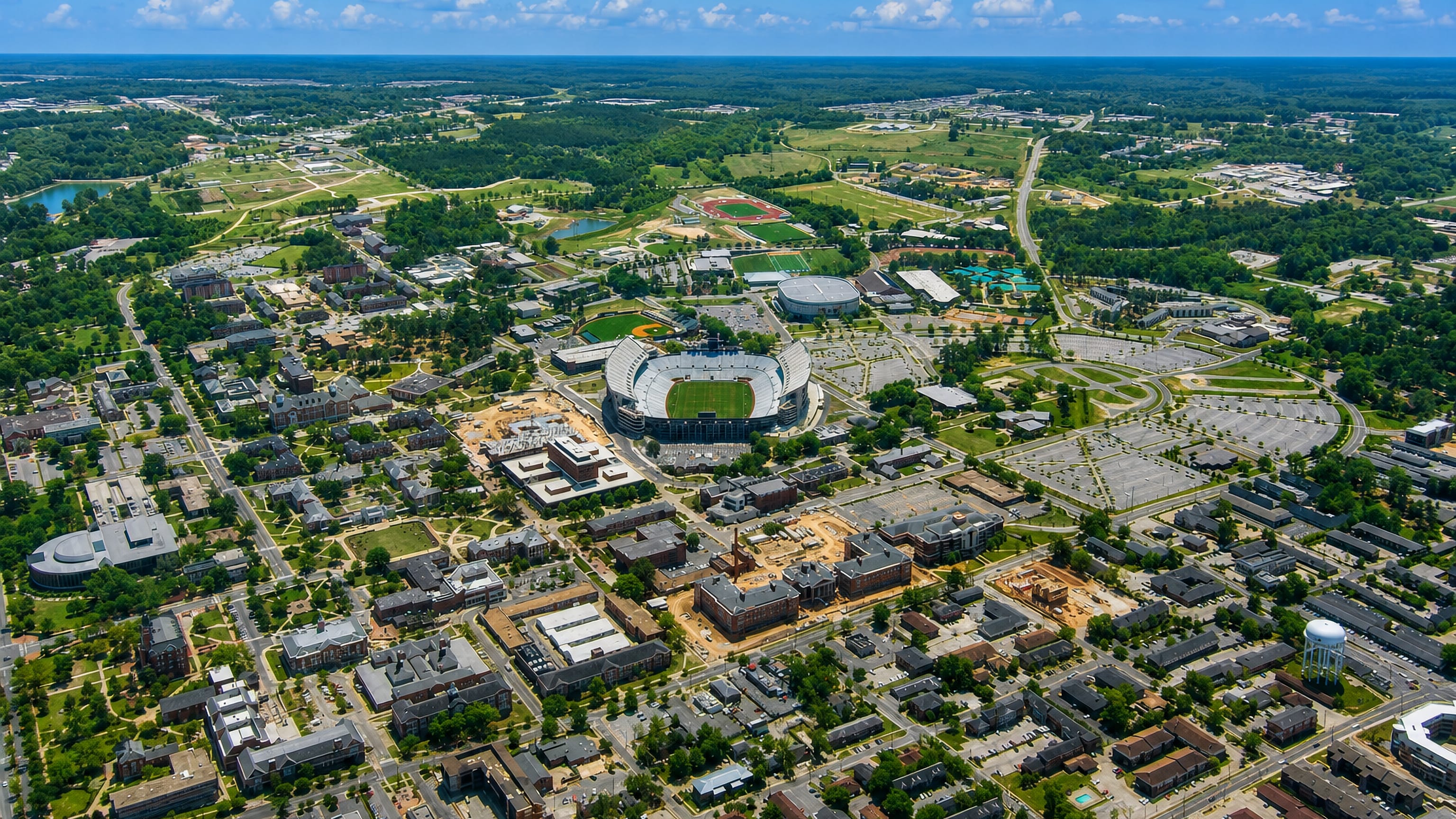
Athletics pull the other way. Samford Stadium, Hitchcock Field at Plainsman Park and the James E. Martin Aquatics Center stand apart from the shops, and a stay beside them trades the evening walk for a parking space that costs no thought. Columbus and Tuskegee lie further out again.
Both belong to the wider region Auburn anchors with Opelika, and either can absorb a night when a game weekend has taken everything nearer in.
Find hotels in Auburn
Direct booking searches for these neighbourhoods.
Downtown Auburn
Downtown Auburn puts the university, its Chapel and the Jule Collins Smith Museum of Fine Art inside one walk, which is exactly why it sells out first on a home football weekend. Beds are limited here, so book early.Find hotels in Downtown AuburnGame-weekend nights once the college town has nothing leftOpelika
Opelika shares the metropolitan area with Auburn and keeps rooms in the weeks when the university's home fixtures have taken every bed across Lee County.Find hotels in OpelikaBaseball dates and swim meets at the James E. Martin Aquatics CenterThe Plainsman Park side
Samford Stadium – Hitchcock Field at Plainsman Park and the James E. Martin Aquatics Center sit on the athletic edge of the city, where a parking space matters more than a walkable street.Find hotels in The Plainsman Park sideHotel links are affiliate links: booking through them may earn us a commission, at no extra cost to you. It never affects how places are ranked. How this works
Things to do in Auburn
Ranked by global recognition; descriptions from Wikidata (CC0).
Museums & Galleries
1- Jule Collins Smith Museum of Fine Art
Churches & Religious Sites
1- Auburn University Chapel Heritage
Stadiums & Sports
2- Samford Stadium – Hitchcock Field at Plainsman Park
- James E. Martin Aquatics Center
Landmarks & Notable Places
1- Robert Wilton Burton House Heritage
worth knowingacross 4 categories in Auburn
About Auburn
The university runs the town.
What is Auburn known for?
Auburn University sits in downtown Auburn, and its home football weekends draw alumni in numbers the ordinary streets were never laid out to carry. Sport is only half of it. The Jule Collins Smith Museum of Fine Art, the Auburn University Chapel and the James E. Martin Aquatics Center give Lee County a cultural and athletic range that towns of this size seldom hold, while Samford Stadium, Hitchcock Field at Plainsman Park takes the baseball season.
What are the main landmarks in Auburn?
The chapel comes first. Auburn University Chapel and the Jule Collins Smith Museum of Fine Art both belong to the university rather than to the city that grew around it, which holds true for most of what a visitor to Auburn goes out to see. Sport supplies the rest.
Samford Stadium, Hitchcock Field at Plainsman Park and the James E. Martin Aquatics Center are the working venues, and the Robert Wilton Burton House is the single protected residence on the list.
What is the history of Auburn?
Auburn dates from 1836. The town existed before the university that now defines it, and the Auburn University Chapel stands at the seam between the two, on ground where the campus and the streets of downtown Auburn run into one another. The Robert Wilton Burton House keeps the domestic record.
Little else from the founding decades is left in a centre that Auburn University steadily absorbed. Growth came through the campus. The university turned a Lee County town into the largest city of its part of Alabama, and the pattern of the year here still follows an academic calendar rather than an agricultural or an industrial one.
Football fixed the rest. Home games remade autumn weekends into the town's defining event, filling the streets with alumni and visiting supporters for whom the tailgate is the reason for the journey. Opelika grew alongside.
The two cities now share a metropolitan area, and together with Columbus and Tuskegee they make up the larger grouping that the statistical definitions treat as one region. Money followed the growth. The Jule Collins Smith Museum of Fine Art, the James E. Martin Aquatics Center and Samford Stadium, Hitchcock Field at Plainsman Park all belong to that later and better-funded Auburn rather than to the small place of 1836.
Where is Auburn?
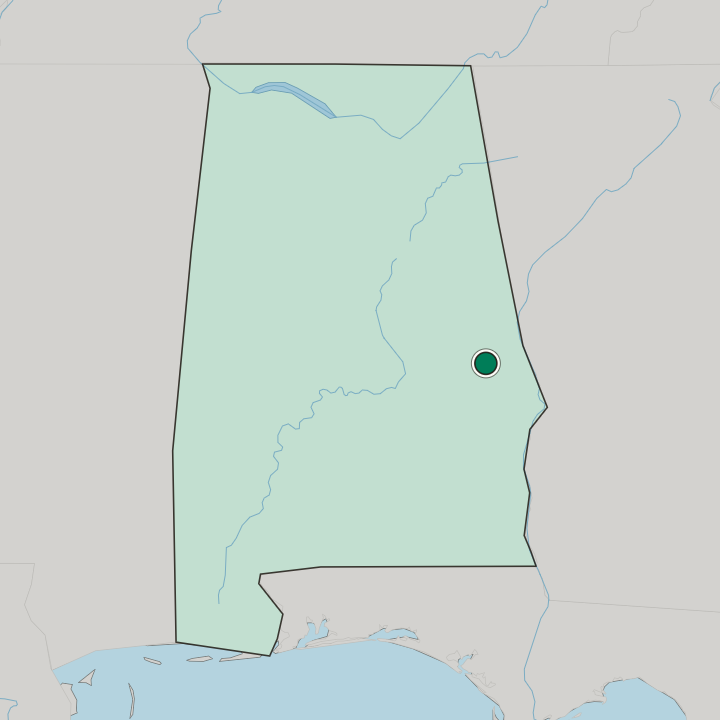
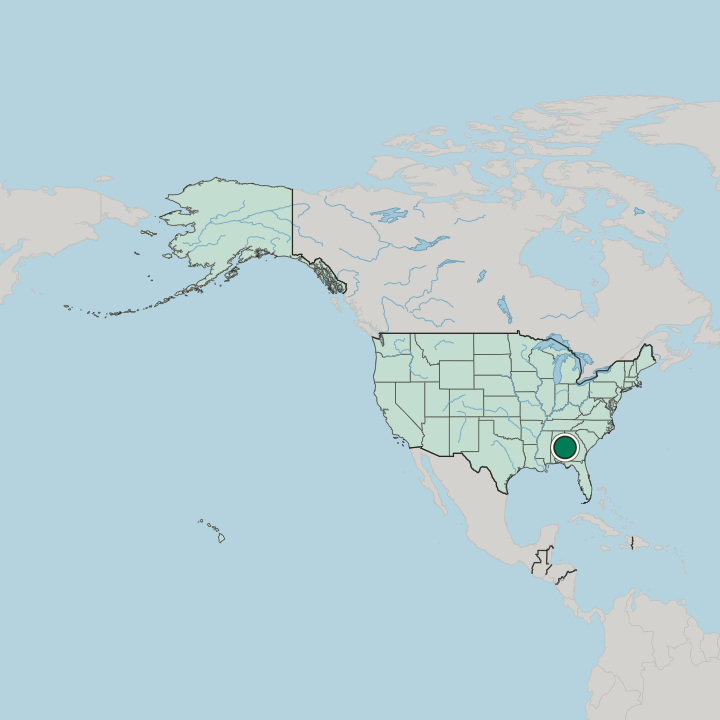
Lee County frames it. Auburn spreads across roughly 155 square kilometres of the River Heritage region of Alabama, with Opelika immediately alongside and much of the ground between the two already built over. Downtown is the exception.
The old centre keeps a density the rest of the city gave up long ago, and the presence of Auburn University in the middle of it is the reason.
What is the climate of Auburn?
Long summers govern the River Heritage region, and the subtropical position of Auburn gives that season a length any visitor planning outdoor time should assume rather than hope for. Auburn's winters hardly count. The James E. Martin Aquatics Center and Samford Stadium, Hitchcock Field at Plainsman Park run schedules that a colder corner of Alabama could not sustain, and the football weekends fall in the months when the heat has only started to ease.
How do you get to Auburn?
Opelika is the near neighbour. Most arrivals reach Auburn by road through the Auburn-Opelika metropolitan area, with Columbus beyond it as the larger centre on the same run. Game days change the arithmetic.
Traffic on a home football weekend is far heavier than the town's ordinary scale suggests, and Lee County roads take longer than a map allows for, which matters most to anyone timing an arrival for the Jule Collins Smith Museum of Fine Art or a fixture at Samford Stadium, Hitchcock Field at Plainsman Park.
Common questions
What is the best area to stay in Auburn?
Downtown Auburn: Walkers pairing the Auburn University Chapel with the Jule Collins Smith Museum of Fine Art. Opelika: Game-weekend nights once the college town has nothing left. The Plainsman Park side: Baseball dates and swim meets at the James E. Martin Aquatics Center.
Good for
More cities in Alabama
Updated September 2026