United States · Alabama
Where to Stay in Decatur, Alabama
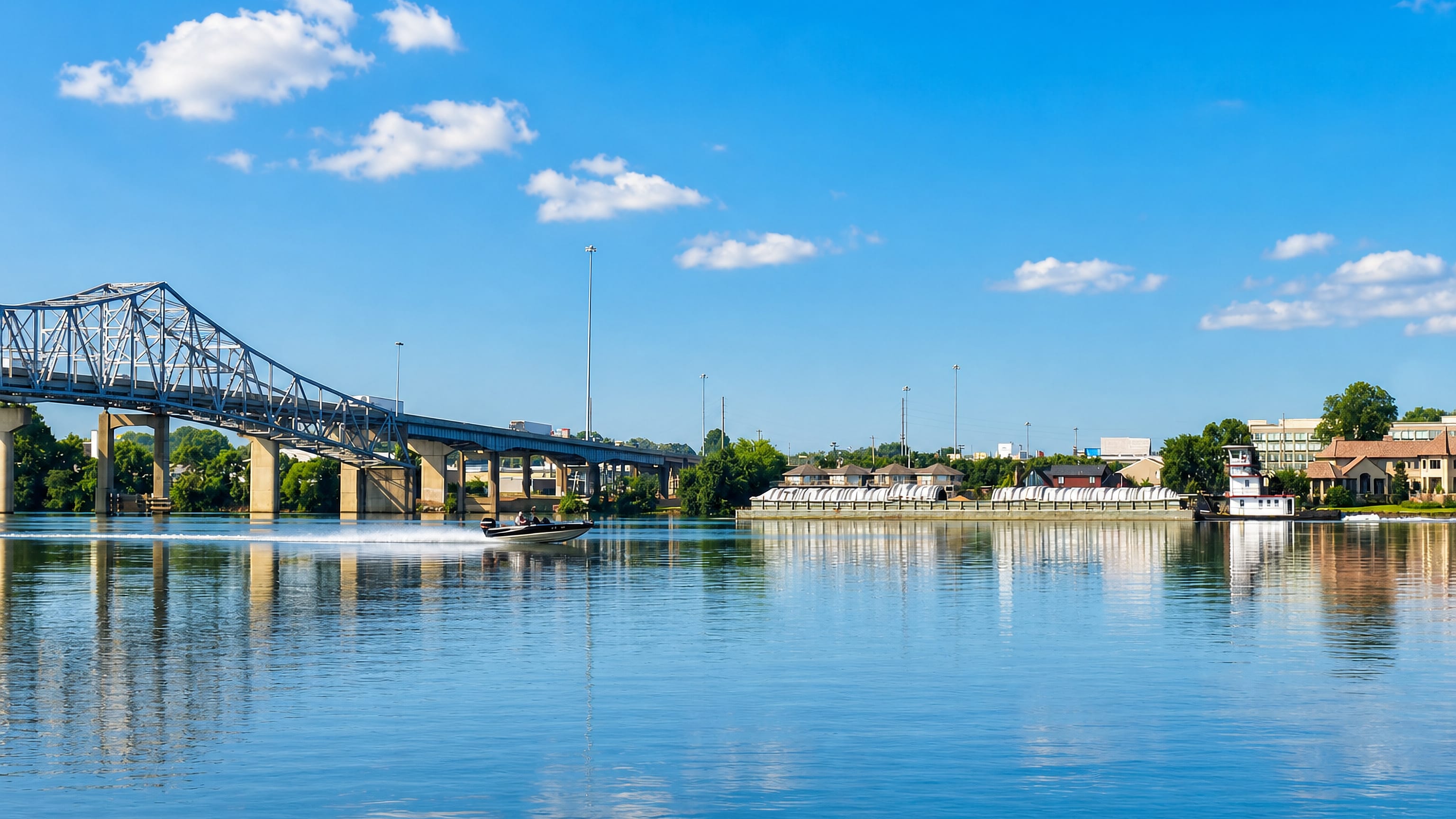
Decatur, founded in 1821, is the seat of Morgan County, Alabama, standing on the banks of Wheeler Lake along the Tennessee River.
Hotel links are affiliate links: booking through them may earn us a commission, at no extra cost to you. It never affects how places are ranked. How this works


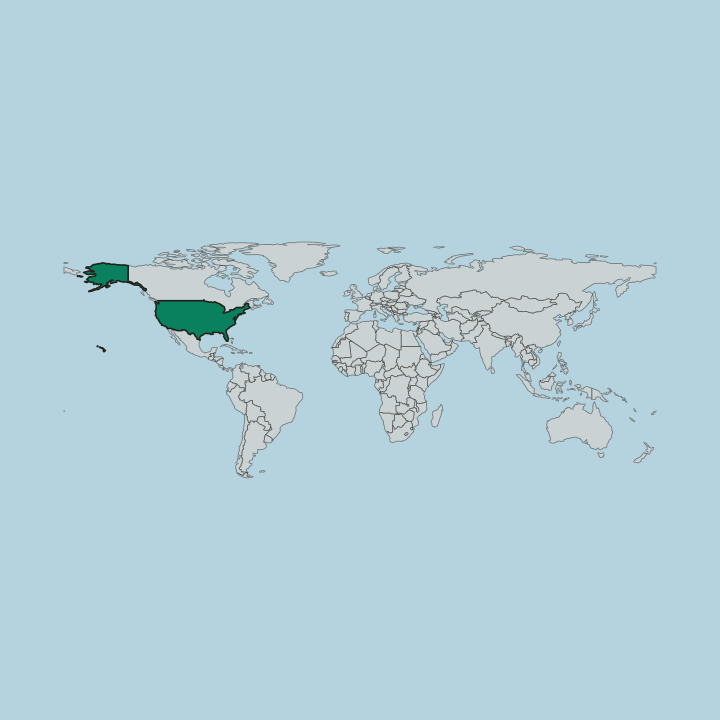
Where to stay in Decatur
How the choice of base plays out on the ground.
The oldest blocks are on Bank Street. The Bank Street-Old Decatur Historic District keeps the earliest surviving fabric, and a stay among those streets leaves the Princess Theatre, the Dancy-Polk House and the Southern Railway Depot inside one evening's walk. Lodging on those blocks is scarce.
Decatur's protected districts were never rebuilt for lodging, so most rooms sit out along the newer roads, and the walkable option runs short whenever a theatre run or a balloon weekend lands on the same dates. The New Decatur-Albany Historic District is the calmer half. Its streets run beside the Albany Heritage Neighborhood Historic District and take in First Baptist Church, First United Methodist Church and Westminster Presbyterian Church, which makes an unhurried base for anyone not chasing a schedule.
Wheeler Lake pulls the other way. Rooms toward the Tennessee River suit a visitor here for the water rather than the buildings, though the East Old Town Historic District and the West Old Town Historic District then become a drive instead of a stroll. Morgan County has the rest of the beds.
Staying outside the city works on the fullest weekends, and the roads back in are short enough that the Cotaco Opera House or the Blue and Gray Museum stays a reasonable plan for the evening.
Find hotels in Decatur
Direct booking searches for these neighbourhoods.
Bank Street–Old Decatur Historic District
The Bank Street–Old Decatur Historic District is the one part of Decatur where the Princess Theatre, the Dancy-Polk House and the Southern Railway Depot fall inside a single walk. Few places to stay nearby — book ahead.Find hotels in Bank Street–Old Decatur Historic DistrictQuiet nights among the Albany Heritage streets and their three old churchesNew Decatur–Albany Historic District
The New Decatur–Albany Historic District runs beside the Albany Heritage Neighborhood Historic District, with First Baptist Church, First United Methodist Church and Westminster Presbyterian Church along the same streets.Find hotels in New Decatur–Albany Historic DistrictWater days on Wheeler Lake and the Tennessee River rather than old buildingsThe Wheeler Lake shore
Rooms toward Wheeler Lake put the Tennessee River shoreline first and the Old Town districts second, which suits a boating trip and nobody else.Find hotels in The Wheeler Lake shoreHotel links are affiliate links: booking through them may earn us a commission, at no extra cost to you. It never affects how places are ranked. How this works
Things to do in Decatur
Ranked by global recognition; descriptions from Wikidata (CC0).
Museums & Galleries
1- Blue and Gray Museum
Churches & Religious Sites
3- First Baptist Church (Decatur, Alabama)
- First United Methodist Church (Decatur, Alabama)
- Westminster Presbyterian Church (Decatur, Alabama)
Castles & Historic Sites
5- Bank Street–Old Decatur Historic District Heritage
- New Decatur–Albany Historic District Heritage
- East Old Town Historic District Heritage
- West Old Town Historic District Heritage
- Albany Heritage Neighborhood Historic District Heritage
Landmarks & Notable Places
1- Dancy-Polk House Heritage
worth knowingacross 4 categories in Decatur
About Decatur
Water gives the city its name.
What is Decatur known for?
Decatur stands along the Tennessee River on the banks of Wheeler Lake, which is where the River City tag comes from, while ballooning supplied a second one as the Ballooning Capital of Alabama. Old streets carry the rest. The Bank Street-Old Decatur Historic District and the New Decatur-Albany Historic District hold more protected fabric than most Morgan County towns, and the Princess Theatre and the Cotaco Opera House keep the performing part of that inheritance in use.
What are the main landmarks in Decatur?
Five historic districts share the older city. The Bank Street-Old Decatur Historic District, the New Decatur-Albany Historic District, the Albany Heritage Neighborhood Historic District, the East Old Town Historic District and the West Old Town Historic District cover between them a large share of what Decatur built before the roads came. Single buildings stand out as well.
The Princess Theatre and the Cotaco Opera House are the performing venues, the Dancy-Polk House and the Southern Railway Depot the survivors of an earlier working town, and the Blue and Gray Museum the one address with an interpretive brief.
What is the history of Decatur?
Decatur dates from 1821. The Tennessee River gave the settlement its reason for being, and the Dancy-Polk House survives from the decades when water carried more into Morgan County than any road did. Rail arrived afterwards.
The Southern Railway Depot marks that change, and the Bank Street-Old Decatur Historic District preserves the commercial streets that grew to serve the traffic. Two of the districts carry another name entirely. The New Decatur-Albany Historic District and the Albany Heritage Neighborhood Historic District keep the Albany name in use beside Decatur's own, and their streets are laid out on a later plan than the blocks around Bank Street.
Churches anchor them. First Baptist Church, First United Methodist Church and Westminster Presbyterian Church stand within that newer half, while the East Old Town Historic District and the West Old Town Historic District complete the protected map of the city. Stages came with the money.
The Cotaco Opera House and the Princess Theatre belong to a period when a Tennessee River town of this size could support its own halls, and both are part of what Decatur chose to keep rather than clear. The Blue and Gray Museum takes on the harder chapters. Wheeler Lake fronts the city now, and the shoreline it made is a later thing than any of the buildings the historic districts protect.
Where is Decatur?
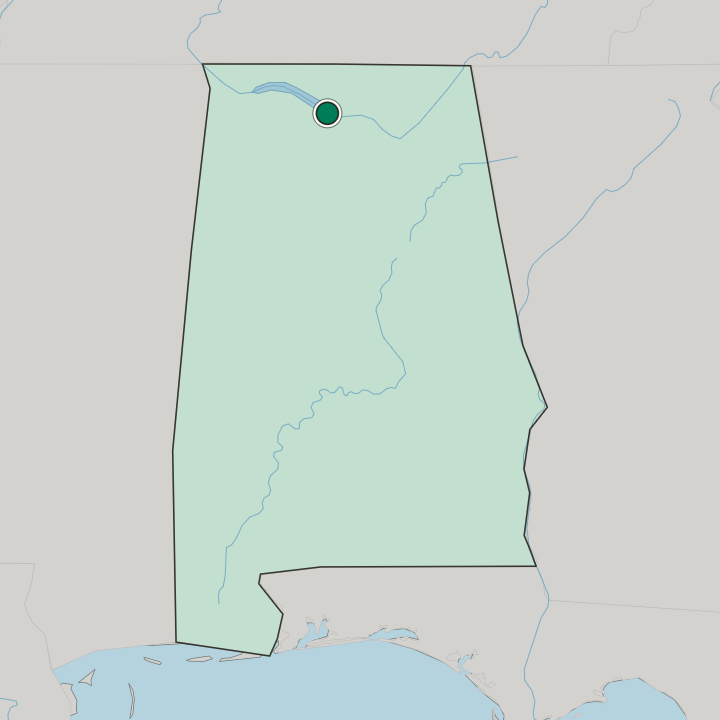
Wheeler Lake fronts the city. Decatur stands on its banks along the Tennessee River, which is the shape the whole place is organised around, and Morgan County reaches back from that shoreline into farming country. The built area runs to about 158 square kilometres.
Old streets keep close to the water, while the newer roads spread out toward the county line under a subtropical sky.
What is the climate of Decatur?
Wheeler Lake and the Tennessee River keep the air heavy through a long subtropical summer, and the mornings over that water stay still well past the point where the day turns hot. Winters pass quickly here. The Princess Theatre carries the indoor months, while the Bank Street-Old Decatur Historic District is best walked in the shoulder seasons, when the heat has dropped away and the river has not yet turned raw.
How do you get to Decatur?
The Southern Railway Depot records the older answer. Rail once built the approach to Decatur, and the depot survives as the monument to it, though arrival now is by road across Morgan County. Cars do the work.
Wheeler Lake and the Tennessee River shape every approach, so the water costs more time than a map suggests for anyone aiming at the Princess Theatre or the Blue and Gray Museum on a fixed hour.
Common questions
What is the best area to stay in Decatur?
Bank Street–Old Decatur Historic District: Evenings at the Princess Theatre with the Dancy-Polk House on the way. New Decatur–Albany Historic District: Quiet nights among the Albany Heritage streets and their three old churches. The Wheeler Lake shore: Water days on Wheeler Lake and the Tennessee River rather than old buildings.
Good for
More cities in Alabama
Updated September 2026