United States · Alabama
Where to Stay in Huntsville, Alabama
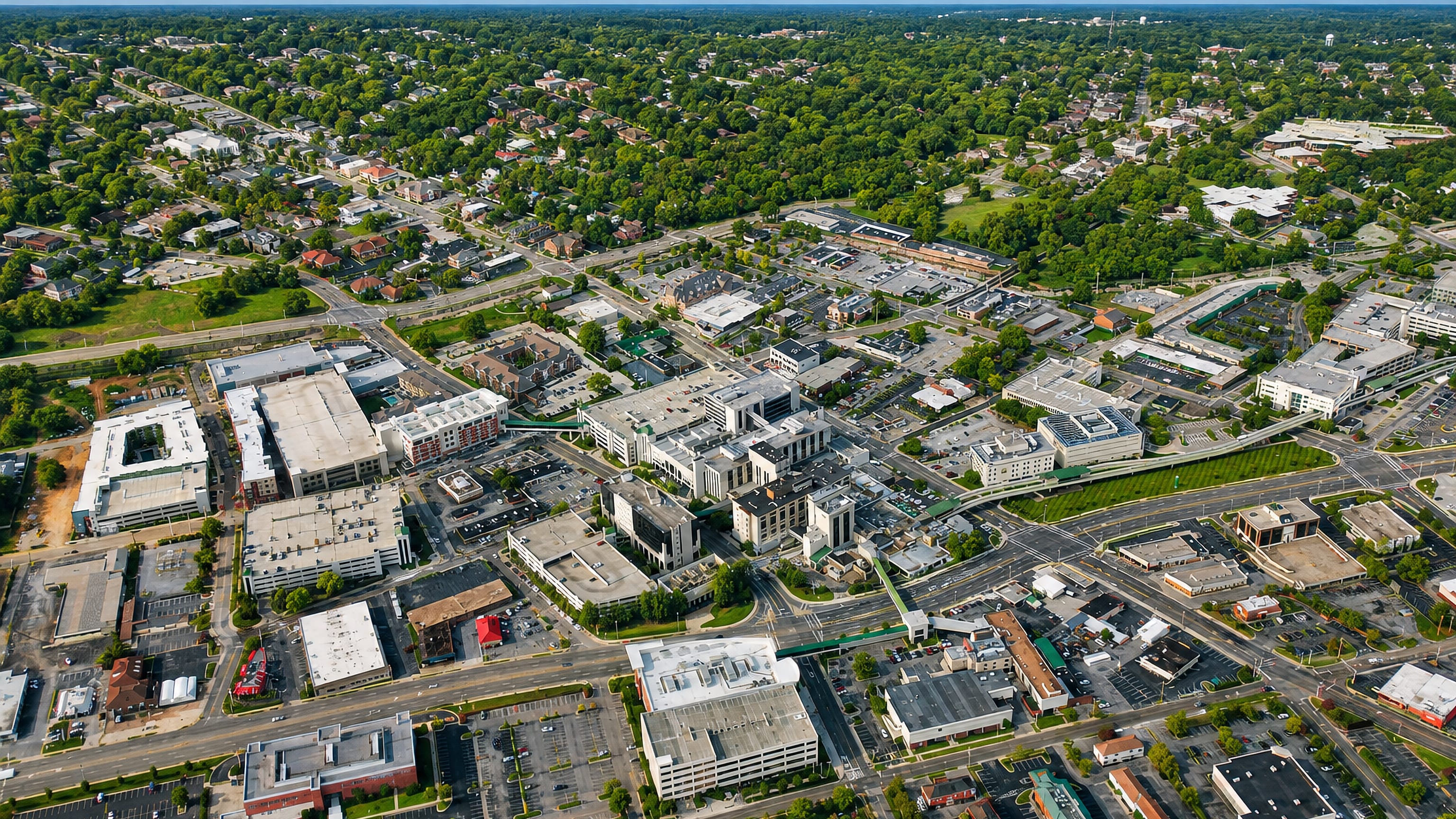
Huntsville rises off the Tennessee Valley in Alabama, a rocket city below the Appalachians, with its space industry and the Huntsville Museum of Art.
Hotel links are affiliate links: booking through them may earn us a commission, at no extra cost to you. It never affects how places are ranked. How this works


Where to stay in Huntsville
The practical side of choosing where to sleep.
Huntsville spreads across a wide valley floor, and most visitors settle near the old downtown or out by the research parks. Start at the square. The historic core holds the courthouse, the Huntsville Museum of Art, and Alabama Constitution Village, with restaurants and bars along the surrounding streets, and it makes the easiest base for a first stay.
The Episcopal Church of the Nativity and a run of preserved antebellum houses stand within a short walk of these blocks. Stay here if you want the museums, the square, and evenings out on foot. West of the centre, the ground rises toward the research campuses and the aerospace corridor, a district of low office parks and hotels built for the space industry.
Families often choose the greener suburbs toward Southern Adventures and the ridgeline parks, quieter and set back from the highways. The Tennessee Valley opens flat in every direction from the city. Its long ridges, warm air, and green summers set the whole feel of a stay in Huntsville.
Find hotels in Huntsville
Direct booking searches for these neighbourhoods.
Downtown courthouse square
The historic core around the Huntsville Museum of Art and Alabama Constitution Village, walkable and central to the square.Find hotels in Downtown courthouse squarespace-industry visitors and easy highway accessThe research and aerospace corridor
The office-park belt west of downtown built around the aerospace and defence campuses, close to the working heart of the rocket city.Find hotels in The research and aerospace corridorfamilies wanting a quieter green baseSuburbs toward Southern Adventures
The set-back residential edge near Southern Adventures and the ridge parks, away from the interstate and the downtown bustle.Find hotels in Suburbs toward Southern AdventuresHotel links are affiliate links: booking through them may earn us a commission, at no extra cost to you. It never affects how places are ranked. How this works
Things to do in Huntsville
Ranked by global recognition; descriptions from Wikidata (CC0).
Museums & Galleries
2- Huntsville Museum of Art
- Alabama Constitution Village
Churches & Religious Sites
3- Episcopal Church of the Nativity Heritage
- Randolph Street Church of Christ Heritage
- First Baptist Church Heritage
Stadiums & Sports
1- Joe W. Davis Stadium
Parks & Gardens
1- Southern Adventures
Landmarks & Notable Places
2- Lowry House Heritage
- Vaught House Heritage
worth knowingacross 5 categories in Huntsville
About Huntsville
What is Huntsville known for?
Huntsville is Alabama's centre of aerospace and defence research, a cotton town remade into the rocket city over the course of the last century. Space work reshaped it. Downtown keeps its early streets around the courthouse square, where the Huntsville Museum of Art and Alabama Constitution Village anchor the old core alongside the columned antebellum houses of the cotton era.
The Episcopal Church of the Nativity stands among the historic blocks, its Gothic spire a fixture of the skyline. Green ridges ring the valley.
What are the main landmarks in Huntsville?
Huntsville's landmarks cluster around the downtown square. The Huntsville Museum of Art holds the city's collections beside the central park, and Alabama Constitution Village reconstructs the buildings where the state's founding convention met. The Episcopal Church of the Nativity raises its Gothic spire over the historic blocks, with the First Baptist Church nearby.
Preserved houses record the cotton-era town, among them the Lowry House and the Vaught House with their columned porches. Southern Adventures and Joe W. Davis Stadium draw families and crowds out from the centre.
What is the history of Huntsville?
Huntsville was founded in 1805 around a spring on the floor of the Tennessee Valley, one of the earliest English-speaking settlements in the region. It grew as a cotton town, and its early wealth raised the courthouse square and the antebellum houses that still stand across the older streets. Delegates met here to draft Alabama's founding charter.
The event is marked at Alabama Constitution Village, and the columned homes and the Episcopal Church of the Nativity date from those long decades of the cotton trade. The twentieth century remade the city. Rocket and missile work arrived after the Second World War, and the research campuses west of town turned Huntsville from a farming centre into the heart of American aerospace.
The built-up area spread far across the valley as the space programme grew, and the Huntsville Museum of Art and the modern civic buildings rose alongside the old core. Cotton, then rockets. Each shaped the city on the valley floor.
Where is Huntsville?
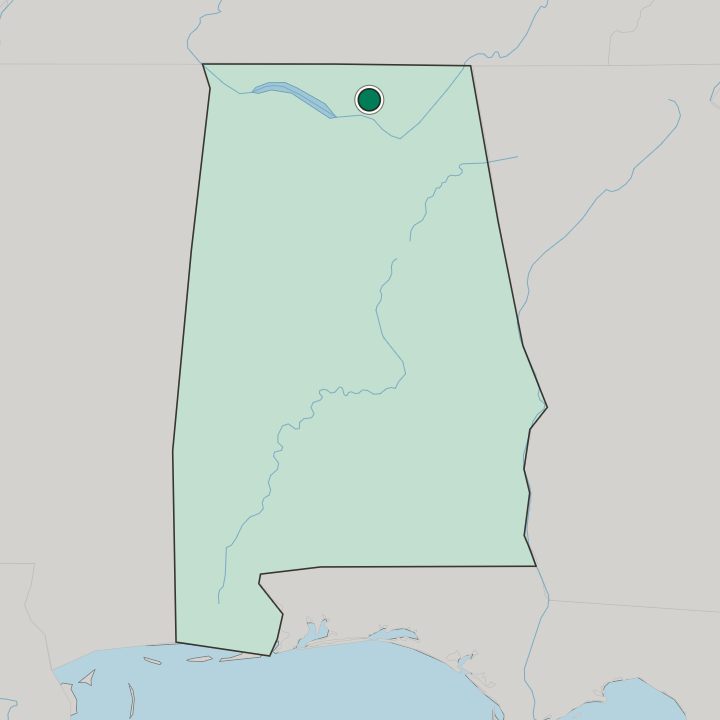
Huntsville lies on the floor of the Tennessee Valley in Alabama, ringed by the long ridges of the Appalachian foothills. The land here is broken. Flat valley bottom gives way to steep wooded mountains that rise close above the city, among them the ridgelines that frame the southern edge of town.
The Tennessee River runs across the wider valley below, draining the farmland and the low ground. Springs and creeks thread down from the highlands into the built-up plain.
What is the climate of Huntsville?
Huntsville has a warm, humid subtropical climate, with hot summers and short mild winters on the valley floor. Summers are long and green. Warm, moist air settles over the Tennessee Valley for much of the year, bringing heavy thunderstorms and the risk of spring severe weather across the low ground.
Winters stay mild, with only occasional frost and rare snow reaching down from the Appalachian foothills. The wooded ridges around the city hold the humidity and shade the valley through the long warm season.
How do you get to Huntsville?
Huntsville sits on the interstate routes crossing the Tennessee Valley, reached by road from across Alabama and the neighbouring states. Roads run flat here. Huntsville International Airport serves the city with regional and connecting flights, standing west of the centre near the research corridor where the aerospace campuses draw much of the arriving traffic.
Long highways climb over the Appalachian foothills toward the surrounding towns and the wider South. Rail freight follows the old cotton routes.
Common questions
What is the best area to stay in Huntsville?
Downtown courthouse square: first-time visitors and museum days on foot. The research and aerospace corridor: space-industry visitors and easy highway access. Suburbs toward Southern Adventures: families wanting a quieter green base.
Good for
More cities in Alabama
Updated September 2026