United States · Alabama
Where to Stay in Tuscaloosa, Alabama
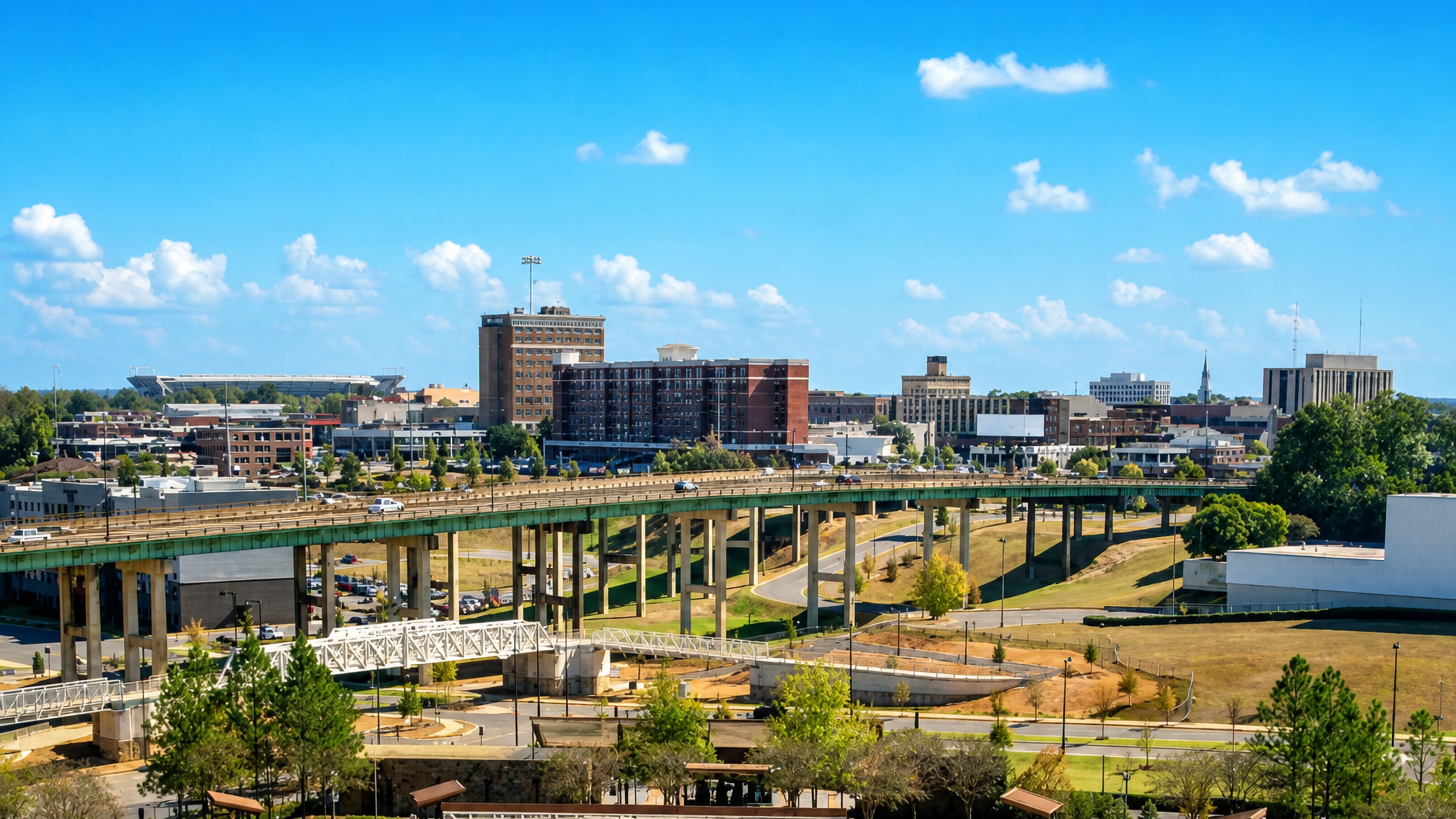
Tuscaloosa holds the county seat of Tuscaloosa County, on the Black Warrior River. Water oaks shade its downtown.
Hotel links are affiliate links: booking through them may earn us a commission, at no extra cost to you. It never affects how places are ranked. How this works


Where to stay in Tuscaloosa
The practical side of choosing where to sleep.
Beds cluster near the University of Alabama. Anyone arriving for a game at Sewell-Thomas Stadium or an afternoon inside the Paul W. Bryant Museum will find the campus fringe the shortest approach to both, and the Alabama Museum of Natural History stands on the same ground. Downtown is the alternative.
Its blocks hold the Battle-Friedman House and Christ Episcopal Church, with the water oaks that gave the Druid City its nickname still standing along the streets between them. Riverside blocks suit a slower stay. The Black Warrior River gives that side of Tuscaloosa its edge, and the Queen City Pool and Pool House sits within reach of anyone who prefers water and shade to a stadium crowd on a Saturday.
Mileage adds up in Tuscaloosa. Visitors hoping to take in the Guild-Verner House, the Collier-Overby House and the Wheeler House in a single day should weigh the campus side first, because those addresses sit apart from one another across a municipal area that covers much of central Tuscaloosa County. Parking is easier away from the university, harder on game weekends, and worth thinking about before booking.
Find hotels in Tuscaloosa
Direct booking searches for these neighbourhoods.
University of Alabama campus edge
The Paul W. Bryant Museum and the Alabama Museum of Natural History stand within the same short walk.Find hotels in University of Alabama campus edgeOld houses under the Druid City water oaksDowntown Tuscaloosa
Battle-Friedman House and Christ Episcopal Church sit a few blocks apart on shaded streets.Find hotels in Downtown TuscaloosaSlow days near the Queen City Pool and Pool HouseBlack Warrior River side
The river edge keeps its distance from campus traffic without leaving Tuscaloosa County's core.Find hotels in Black Warrior River sideHotel links are affiliate links: booking through them may earn us a commission, at no extra cost to you. It never affects how places are ranked. How this works
Things to do in Tuscaloosa
Ranked by global recognition; descriptions from Wikidata (CC0).
Museums & Galleries
3- Queen City Pool and Pool House Heritage
- Alabama Museum of Natural History
- Paul W. Bryant Museum
Churches & Religious Sites
1- Christ Episcopal Church
Stadiums & Sports
1- Sewell–Thomas Stadium
Landmarks & Notable Places
4- Battle-Friedman House Heritage
- Collier-Overby House Heritage
- Guild-Verner House Heritage
- Wheeler House Heritage
worth knowingacross 4 categories in Tuscaloosa
About Tuscaloosa
The University of Alabama sets the rhythm.
What is Tuscaloosa known for?
Its campus carries the Alabama Museum of Natural History and the Paul W. Bryant Museum, two collections that pull in visitors who never planned a day indoors, and baseball fills Sewell-Thomas Stadium in season. Locals answer to a second name, the Druid City, earned by the water oaks planted along downtown streets from the 1840s onward. Tuscaloosa County keeps its seat of government here.
What are the main landmarks in Tuscaloosa?
Old houses carry the record here. The Battle-Friedman House, the Collier-Overby House, the Guild-Verner House and the Wheeler House survive in the older streets as domestic architecture, and Christ Episcopal Church keeps a congregation's fabric on a downtown corner. Performance has its own museum.
The Alabama Stage and Screen Hall of Fame gathers figures with Alabama ties, while the Paul W. Bryant Museum and Sewell-Thomas Stadium stand on University of Alabama ground beside the Alabama Museum of Natural History.
What is the history of Tuscaloosa?
Tuscaloosa dates from 1819. The settlement took hold on the Black Warrior River at the seam where the Gulf Coastal and Piedmont plains meet, a position that put boats within reach of the interior and gave the farms of Tuscaloosa County a market town of their own. Spelling shifted later.
The name stood as Tuskaloosa into the early twentieth century, and the older form still turns up wherever printed matter from those decades survives. Trees supplied the second name. Water oaks went into the downtown streets from the 1840s, in numbers large enough that Tuscaloosa answers to the Druid City in ordinary speech.
Houses from the older town survive in scattered blocks, among them the Battle-Friedman House, the Collier-Overby House, the Guild-Verner House and the Wheeler House, while Christ Episcopal Church holds ground that a congregation has kept through the same long span. The University of Alabama built the other layer. Its campus carries the Alabama Museum of Natural History and the Paul W. Bryant Museum, the Alabama Stage and Screen Hall of Fame gathers the performing side of the state's record, and Sewell-Thomas Stadium fills with crowds on days when the rest of Alabama's fifth city goes quiet.
Where is Tuscaloosa?
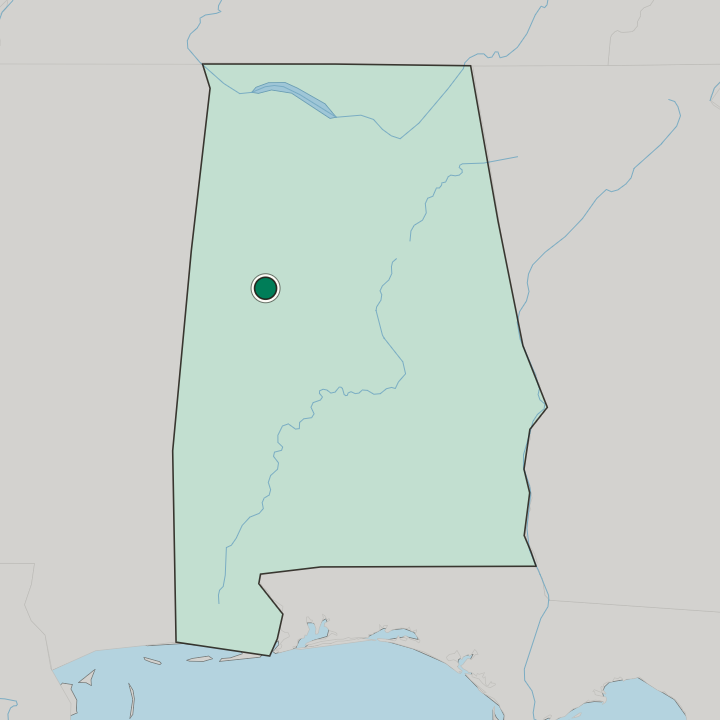
Water oaks close the view downtown. Tuscaloosa stands where the Gulf Coastal and Piedmont plains meet, and the Black Warrior River crosses that seam on its way through Tuscaloosa County, giving the city a waterfront as well as the level ground the University of Alabama campus occupies. The municipal area is broad.
Shade, water and campus lawn account for most of what anyone sees on foot.
What is the climate of Tuscaloosa?
Shade is not decoration here. Tuscaloosa lies in the subtropical band, near enough to the Gulf Coastal plain that heat and damp air settle over the city for a long stretch of the year and turn the downtown water oaks into a practical matter. Winter runs short.
Rain reaches the Black Warrior River in every season, and nothing across the surrounding plains blocks the moist air arriving from the coast.
How do you get to Tuscaloosa?
Most visitors come by road. Tuscaloosa County spreads wide enough that a car does the real work, and the University of Alabama campus, the downtown blocks and the Black Warrior River frontage sit far enough apart to make walking between them a choice rather than a plan. Campus is the exception.
The Paul W. Bryant Museum, the Alabama Museum of Natural History and Sewell-Thomas Stadium stand close together, while the Battle-Friedman House and Christ Episcopal Church anchor a downtown walk a short drive away.
Common questions
What is the best area to stay in Tuscaloosa?
University of Alabama campus edge: Game days at Sewell–Thomas Stadium. Downtown Tuscaloosa: Old houses under the Druid City water oaks. Black Warrior River side: Slow days near the Queen City Pool and Pool House.
Good for
More cities in Alabama
Updated September 2026