United States · California
Where to Stay in San Ramon, California
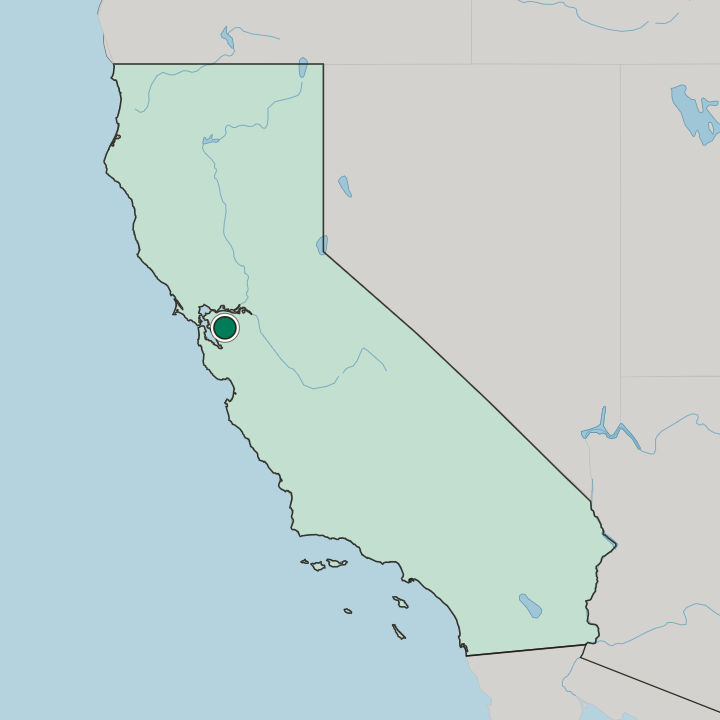
San Ramon fills its own valley in the southwest of Contra Costa County, a Bay Area city east of San Francisco that incorporated in 1983.
Hotel links are affiliate links: booking through them may earn us a commission, at no extra cost to you. It never affects how places are ranked. How this works


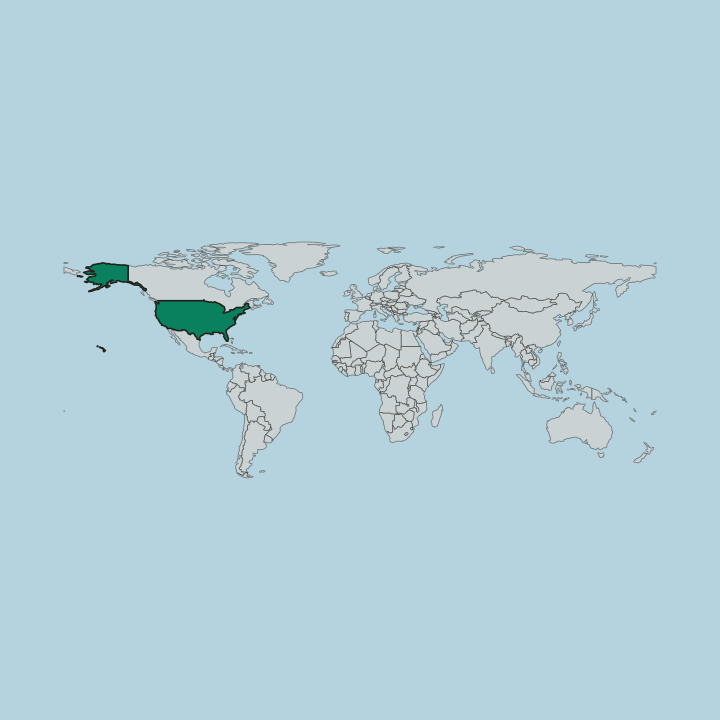
Where to stay in San Ramon
Where the beds are, and what that means for the visit.
Beds here answer to the office parks and the through-roads rather than to any old core, so the real question is which end of the San Ramon Valley suits the trip. The middle of the city holds the practical rooms. Shops, offices, and the preserved farmstead at Forest Home Farms all sit on the same flat stretch of valley floor, which makes it the easiest base for anyone whose day involves driving somewhere else in Contra Costa County.
Parking is assumed rather than negotiated. The far end of town leans on the Blackhawk Museum, whose pull is strong enough to justify a stay out that way instead of central, and the hills behind it keep those streets quiet after dark. If San Ramon fills up, the rest of Contra Costa County absorbs the overflow, since Concord, Richmond, and Antioch all carry more rooms than a city of this size can.
San Francisco is 34 miles (55 km) west, which makes a day out plausible in either direction and a twice-daily commute punishing. Choose by your errand. Forest Home Farms and Old St. Raymond's Church reward a car and an unhurried morning, while a stay pinned to the museum or to the business campuses barely needs one.
Find hotels in San Ramon
Direct booking searches for these neighbourhoods.
Central San Ramon
The flat middle of the valley floor, where the everyday shops and offices share ground with the preserved farmstead at Forest Home Farms.Find hotels in Central San Ramonvisitors whose trip is built around the Blackhawk MuseumThe Blackhawk Museum end
The quieter end of the city, with the Blackhawk Museum as the reason to be there and the valley hills closing the view behind it. Beds are limited here, so book early.Find hotels in The Blackhawk Museum endoverflow nights within reach of the valleyElsewhere in Contra Costa County
Concord, Richmond, and Antioch hold the county's larger stock of rooms when the San Ramon Valley has none free.Find hotels in Elsewhere in Contra Costa CountyHotel links are affiliate links: booking through them may earn us a commission, at no extra cost to you. It never affects how places are ranked. How this works
About San Ramon
Suburban California at valley scale.
What is San Ramon known for?
San Ramon grew inside the San Ramon Valley in the southwest of Contra Costa County, close enough to San Francisco that the drive west shapes the working week and far enough out that the surrounding hills stay in the frame. Its best-known draw is the Blackhawk Museum. Older ground survives at Forest Home Farms and at Old St. Raymond's Church.
Only Concord, Richmond, and Antioch rank larger among the county's cities.
What are the main landmarks in San Ramon?
Just three sites make the roster. The Blackhawk Museum is the one that pulls visitors in from outside the San Ramon Valley, a collection substantial enough to fill an afternoon and the landmark most often attached to San Ramon in print. Forest Home Farms keeps the agricultural valley on the ground, its barns, outbuildings, and worked acreage held as a public site instead of a subdivision.
The third is Old St. Raymond's Church. Its name marks the era when this corner of Contra Costa County ran to ranches and farm roads.
What is the history of San Ramon?
The city is younger than the ground it stands on. San Ramon incorporated in 1983, a late arrival among California municipalities, even though the valley it occupies had been named, settled, and farmed long before any council sat, first under Spanish naming and then under the ranch economy that shaped the interior of Contra Costa County. The name predates the city, the ranches, and everything built since.
It is Spanish, and it attached itself to the San Ramon Valley well before it attached to a city. Farming came first, and what survives of it survives on purpose. Forest Home Farms is a public site because someone chose to keep a working property whole rather than sell it into the housing that filled the rest of the valley floor.
Old St. Raymond's Church belongs to the same layer, a plain building from a period when this end of the county counted its distances in ranch roads. Both predate the incorporated city by a wide margin. Proximity did the rest.
San Francisco lies 34 miles (55 km) west, near enough that Bay Area employers reached inland, and the campuses and subdivisions that followed turned a farming corridor into one of the larger cities in the county inside a couple of generations. Concord, Richmond, and Antioch still outrank it. Incorporation in 1983 formalised a place that growth had already made.
Where is San Ramon?
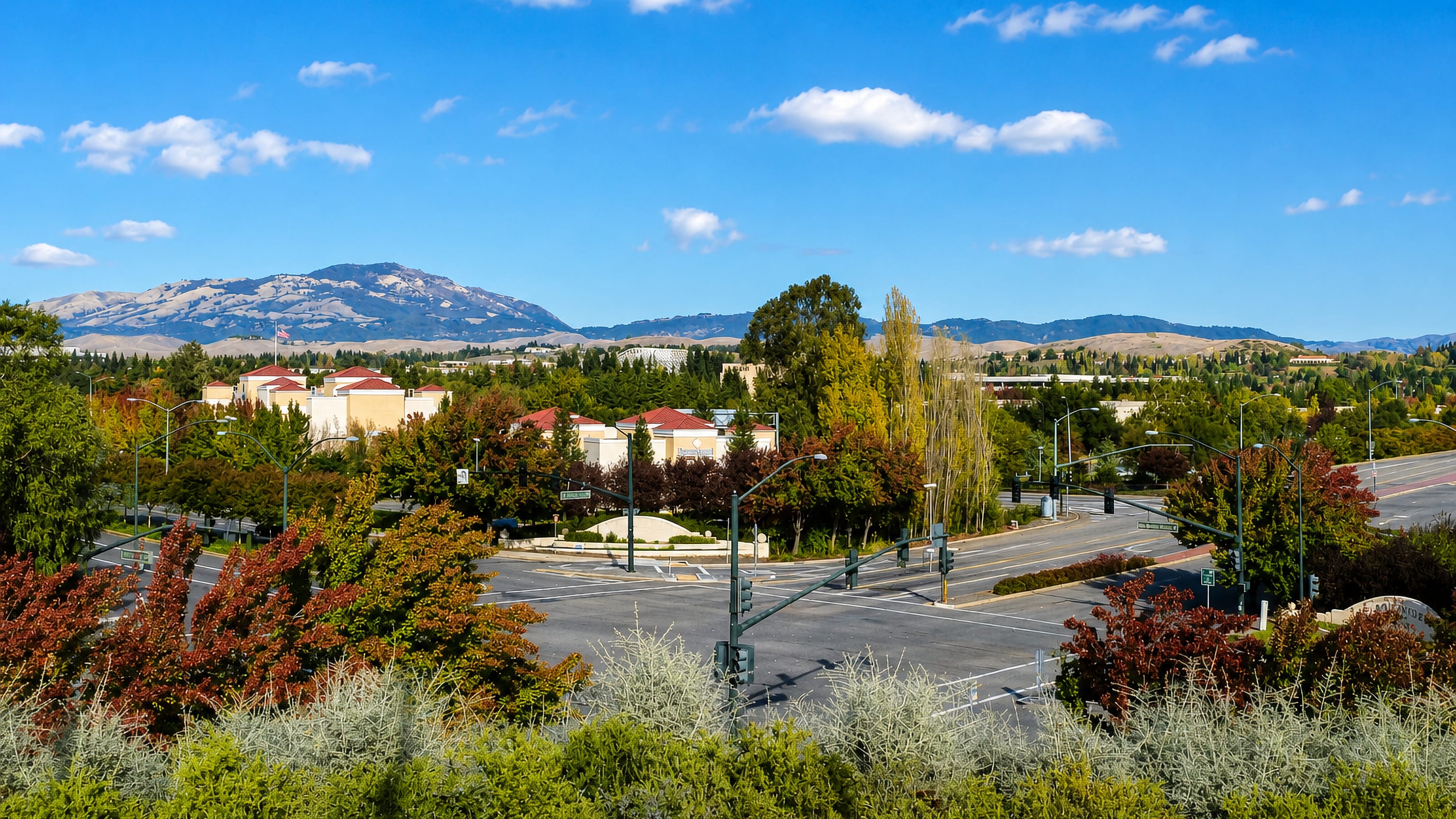
The valley does the defining. San Ramon occupies the San Ramon Valley in the southwest of Contra Costa County, a trough in the inland hills of the Bay Area that carries the city's streets, its through-roads, and nearly all of its level ground. Hills close it on both sides.
The built-up area covers roughly 48 square kilometres of that floor, small enough that the edge of the city stays visible from inside it. San Francisco is 34 miles (55 km) west.
What is the climate of San Ramon?
Distance from the ocean sets the pattern. The San Ramon Valley sits behind the hills that screen it from San Francisco and the open water, so the marine air cooling the bayshore arrives thinned out, and summer afternoons on the valley floor run warmer than they do at the coast. Winters here pass gently.
The temperate band this part of California falls in keeps hard freezes uncommon and pushes what rain arrives into the cooler half of the year.
How do you get to San Ramon?
Most visitors arrive by car. The run in from San Francisco covers 34 miles (55 km) east, which places San Ramon inside the daily commuting range of the Bay Area and explains the two heavy peaks its through-routes carry. Contra Costa County spreads out around it.
Concord, Richmond, and Antioch sit at other points across the county, and moving between them and the San Ramon Valley is a drive rather than a walk-and-transfer, as is reaching Forest Home Farms or the Blackhawk Museum once here.
Common questions
What is the best area to stay in San Ramon?
Central San Ramon: a workaday base inside the San Ramon Valley. The Blackhawk Museum end: visitors whose trip is built around the Blackhawk Museum. Elsewhere in Contra Costa County: overflow nights within reach of the valley.
More cities in California
Updated October 2026