United States · Illinois
Where to Stay in Orland Park, Illinois
Orland Park is a village in Cook County, Illinois, a south suburb of Chicago served by Metra trains running in to the Loop.
Hotel links are affiliate links: booking through them may earn us a commission, at no extra cost to you. It never affects how places are ranked. How this works


Where to stay in Orland Park
How the choice of base plays out on the ground.
Orland Park spreads wide across Cook County, and its two working ends serve different visitors: the Metra platforms at one, the golf ground at the other. Commuters take the first. A room near the line puts the Chicago Loop within a single ride, and O'Hare and Midway follow from there without a car at any point in the trip.
Golfers take the second. Cog Hill Golf & Country Club sits out on that side, and a second large public course lies near it, which is why the outer reaches of the village fill with weekend players. The I-80 forms the southern border.
Drivers who need it, heading east or west or south into Will County, do better on that flank of Orland Park than up near the trains, and the road out is immediate. Chicago is the third answer. Anyone whose days run in the Loop rather than at Ozinga Field or the John Humphrey House should stay in the city and ride out here for an afternoon instead.
Beds in the village are ordinary suburban stock, and the choice between them turns less on character than on which of the three, train or fairway or interstate, the week is built around.
Find hotels in Orland Park
Direct booking searches for these neighbourhoods.
Near the Metra platforms
Ground within walking reach of the commuter platforms that link Orland Park to the Loop and, beyond it, to O'Hare and Midway.Find hotels in Near the Metra platformsgolfers booked at Cog Hill Golf & Country Club and drivers keeping the interstate closeThe Cog Hill and I-80 flank
The southern reach of Orland Park, where the I-80 draws the village boundary and the Cog Hill fairways lie out beyond it. Beds are limited here, so book early.Find hotels in The Cog Hill and I-80 flanktrips spent in the Loop with Orland Park as an afternoon outChicago
The city 25 miles up the Metra line from Orland Park, where the Loop, O'Hare and Midway all sit inside one transit network.Find hotels in ChicagoHotel links are affiliate links: booking through them may earn us a commission, at no extra cost to you. It never affects how places are ranked. How this works
Things to do in Orland Park
Ranked by global recognition; descriptions from Wikidata (CC0).
Churches & Religious Sites
2- Twin Tower Sanctuary Heritage
- Parkview Christian Church
Stadiums & Sports
3- Cog Hill Golf & Country Club
- Ozinga Field
- George W. Dunne Golf Course and Driving Range
Landmarks & Notable Places
1- John Humphrey House Heritage
worth knowingacross 3 categories in Orland Park
About Orland Park
Golf carries the name.
What is Orland Park known for?
Cog Hill Golf & Country Club draws players out from Chicago, and the village keeps a second large public course besides, so a Cook County suburb better known for its subdivisions ended up with a golfing reputation that travels well past its own boundary. Ozinga Field puts baseball on the same map. Parkview Christian Church and the Twin Tower Sanctuary account for the largest buildings, while the John Humphrey House holds the oldest thread.
What are the main landmarks in Orland Park?
The John Humphrey House is the oldest thing on the list. Cog Hill Golf & Country Club is the best known of them, a course whose name carries further than the village's own does, and Ozinga Field gives Orland Park a ballpark to set beside it. Two churches stand out.
Parkview Christian Church and the Twin Tower Sanctuary are the buildings that break the low suburban skyline of this part of Cook County.
What is the history of Orland Park?
Nothing in the record dates the founding of Orland Park. The John Humphrey House is the marker the record does keep, a survivor from the era when this ground was farmland rather than suburb, and it stands on a list otherwise made up of churches, ballfields and golf courses. The village grew after.
Its shape came from Chicago, 25 miles off, and from the willingness of families to live at that distance and travel in, which is the ordinary story of the southern edge of Cook County. Two pieces of infrastructure fixed the pattern. The Metra commuter rail tied Orland Park to the Chicago Loop and gave the village a direct line in, while the I-80 drew a hard southern border across the same ground and connected it to the road network running east and west.
Boundaries followed the growth rather than preceding it. Most of Orland Park lies in Cook County, but a small portion crossed into Will County as the built-up area spread, which is why the village answers to two county governments at once. The rest is later work.
Cog Hill Golf & Country Club, Ozinga Field, Parkview Christian Church and the Twin Tower Sanctuary all belong to the suburb Orland Park became, not to whatever settlement the John Humphrey House once served.
Where is Orland Park?
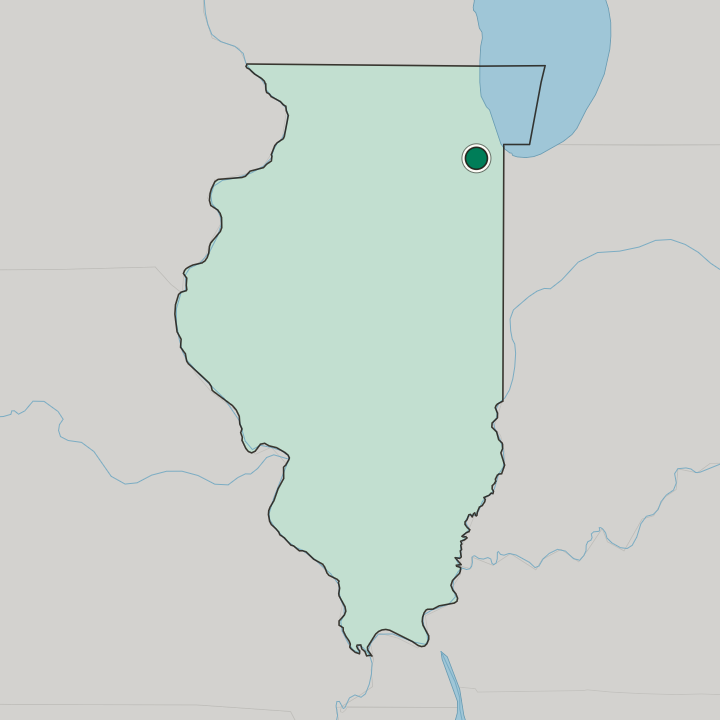
Orland Park sits 25 miles southwest of Chicago. Most of the village lies in Cook County, with a small portion over the line in Will County, and the I-80 runs along its southern border, which gives the built-up area a hard edge on that side. Open space here means fairways.
Cog Hill Golf & Country Club and a second large public course account for much of the undeveloped ground, while the rest carries subdivisions and the Metra line running toward the Chicago Loop.
What is the climate of Orland Park?
Chicago's weather is Orland Park's weather. The village lies in the temperate band of the northern hemisphere, near enough to the city that one run of warm and cold seasons governs both, from the fairways at Cog Hill Golf & Country Club to the platforms of the Metra line. Summer suits the courses.
Colder months push the day indoors, toward Parkview Christian Church, the shops and the trains that run in to the Chicago Loop whatever the season.
How do you get to Orland Park?
The Metra commuter line is the simple way in. It links Orland Park to the Chicago Loop, and from the Loop the same network carries on to O'Hare and Midway, which is how most arrivals by air reach the village. Everything else arrives by road.
The I-80 runs along the southern border of Orland Park and ties it to the interstate routes crossing Cook County and Will County.
Common questions
What is the best area to stay in Orland Park?
Near the Metra platforms: riders using the Metra line into the Chicago Loop each morning. The Cog Hill and I-80 flank: golfers booked at Cog Hill Golf & Country Club and drivers keeping the interstate close. Chicago: trips spent in the Loop with Orland Park as an afternoon out.
Good for
More cities in Illinois
Updated September 2026