United States · Indiana
Where to Stay in Indianapolis, Indiana
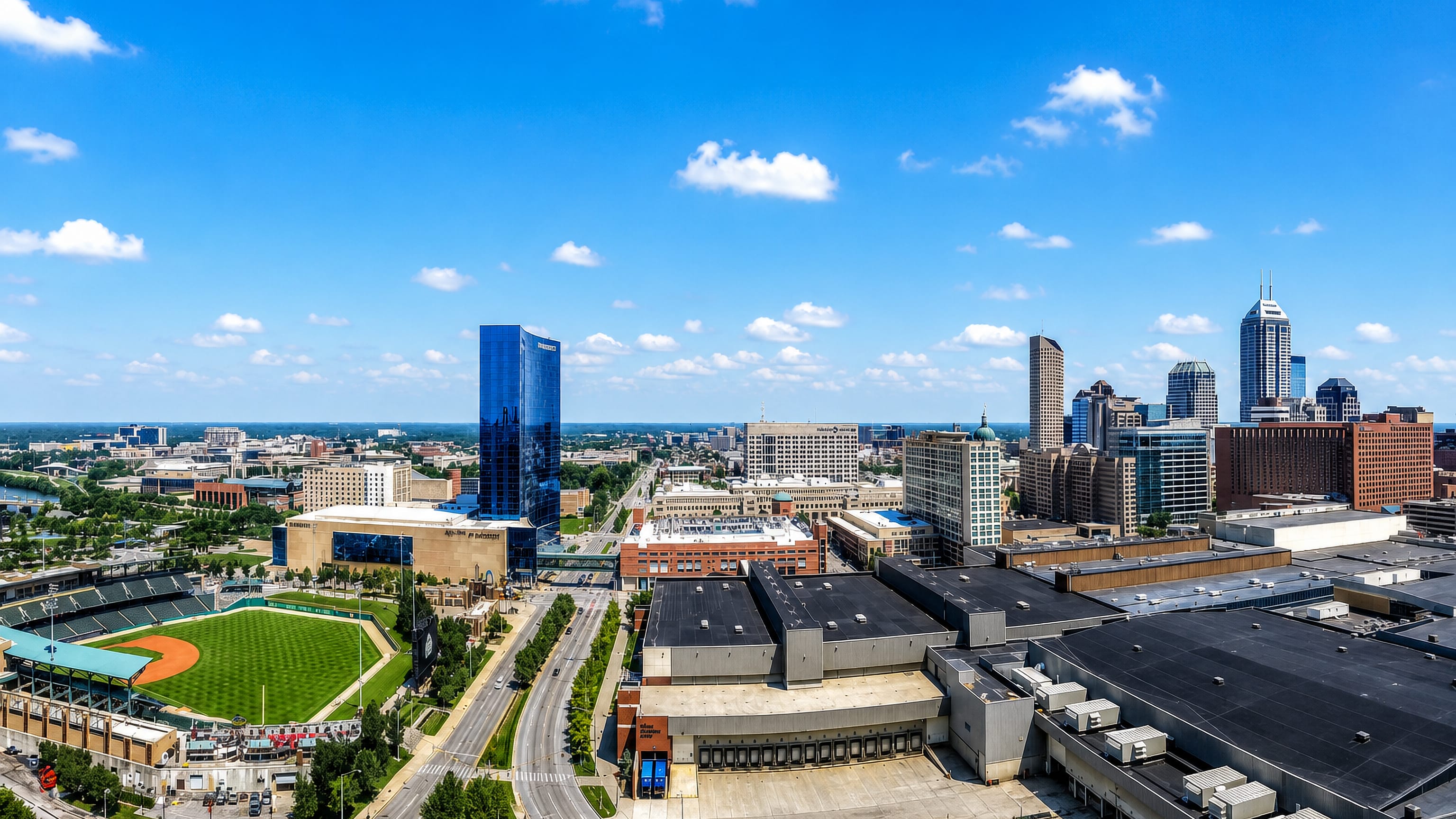
The White River runs through Indianapolis, the capital of Indiana, known for its Soldiers' and Sailors' Monument and the Indianapolis Zoo.
Hotel links are affiliate links: booking through them may earn us a commission, at no extra cost to you. It never affects how places are ranked. How this works


Where to stay in Indianapolis
One neighbourhood here has its own guide — here's what it is best for.
 IndianapolisUnited States
Ransom Place
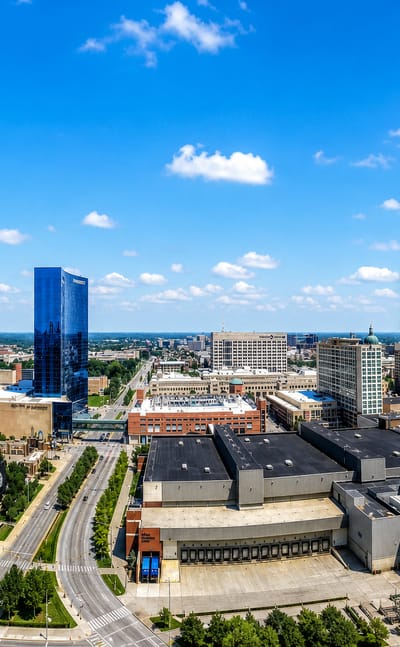
Ransom Place is a historic district of downtown Indianapolis, a short walk from the Indiana State Museum and the Indiana History Center.Where to stay →Hotel links are affiliate links: booking through them may earn us a commission, at no extra cost to you. It never affects how places are ranked. How this works
Find hotels in Indianapolis
Direct booking searches for these neighbourhoods.
The monument grid
The Soldiers' and Sailors' Monument anchors the central grid, with the Indiana State Museum and Victory Field within a short walk along the White River.Find hotels in The monument gridPresidential and literary homesThe old-house streets
The Benjamin Harrison Presidential Site and the James Whitcomb Riley Museum Home stand among quiet blocks of older brick away from the downtown arenas.Find hotels in The old-house streetsHotel links are affiliate links: booking through them may earn us a commission, at no extra cost to you. It never affects how places are ranked. How this works
Things to do in Indianapolis
Ranked by global recognition; descriptions from Wikidata (CC0).
Museums & Galleries
3- James Whitcomb Riley Museum Home Heritage
- Morris-Butler House Heritage
- Indiana State Museum
Churches & Religious Sites
5- St. John the Evangelist Catholic Church Heritage
- St. Mary's Catholic Church Heritage
- Bethel A.M.E. Church Heritage
- Roberts Park Methodist Episcopal Church Heritage
- Mt. Pisgah Lutheran Church Heritage
Castles & Historic Sites
1- Soldiers' and Sailors' Monument Heritage
Stadiums & Sports
3- Victory Field
- IU Michael A. Carroll Track & Soccer Stadium
- Indiana University Natatorium
Landmarks & Notable Places
4- Calvin I. Fletcher House Heritage
- John Fitch Hill House Heritage
- Lovel D. Millikan House Heritage
- Pierson–Griffiths House Heritage
worth knowingacross 5 categories in Indianapolis
About Indianapolis
What is Indianapolis known for?
Indianapolis is known as the capital of Indiana and for the monument at its centre. The Soldiers' and Sailors' Monument rises from the middle of the old street grid, and the Indianapolis Zoo and the Indiana State Museum stand along the White River. Museums cluster downtown.
The Eiteljorg Museum of American Indians and Western Art and the Kurt Vonnegut Museum and Library hold its collections. The Benjamin Harrison Presidential Site keeps the home of a president near the old city.
What are the main landmarks in Indianapolis?
Indianapolis centres on the Soldiers' and Sailors' Monument at the heart of its grid. The Indianapolis Zoo and the Indiana State Museum stand along the White River, and the Eiteljorg Museum of American Indians and Western Art holds its western art. Writers have their halls too.
The Kurt Vonnegut Museum and Library and the James Whitcomb Riley Museum Home keep the city's authors, and the Benjamin Harrison Presidential Site records a president. The USS Indianapolis Memorial marks the war dead.
What is the history of Indianapolis?
Indianapolis was founded in 1821 on the White River, in Indiana, chosen to be the capital of the new state. Planners laid out a grid around a central circle, and that circle now carries the Soldiers' and Sailors' Monument at the heart of the city. The plan drew the young state's business inward.
Roads and later railways met at the grid, and the town grew as a place where the routes of Indiana crossed and traffic gathered at the centre. The Morris-Butler House survives from the earlier city near the circle. Over the generations that followed, the capital filled with the institutions the city still keeps.
The Indiana State Museum and the Indiana Historical Society gathered the state's record, and the Benjamin Harrison Presidential Site preserved the home of a president who lived here. Writers left their marks. The James Whitcomb Riley Museum Home and the Kurt Vonnegut Museum and Library hold two of the city's authors, and the USS Indianapolis Memorial records a ship lost in war.
Indianapolis grew from a planned circle on the river. Its grid still holds that first design.
Where is Indianapolis?
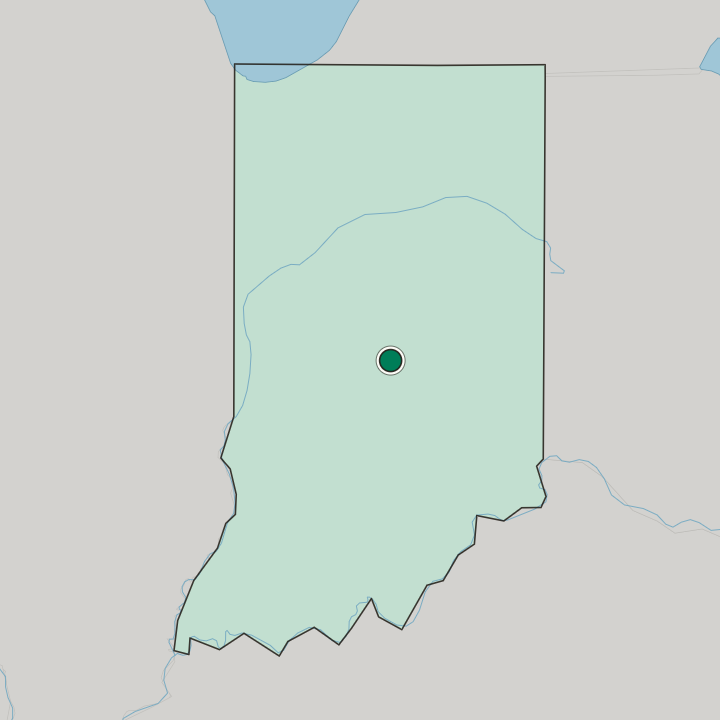
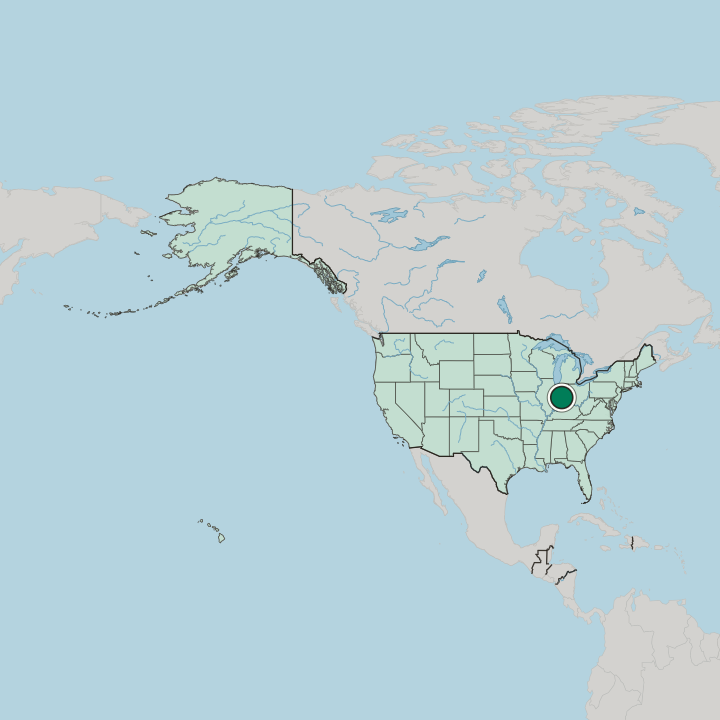
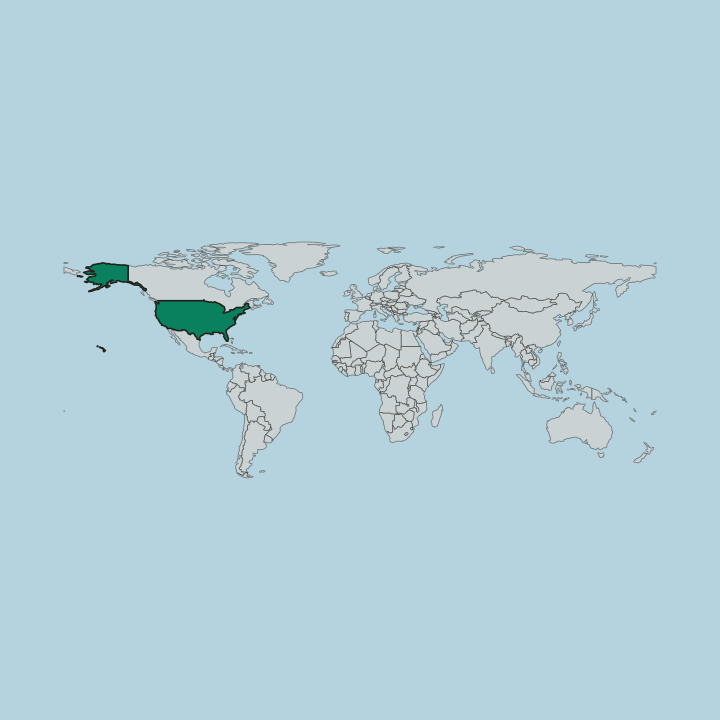
Indianapolis stands on the White River, in Indiana, one of the states of the United States. The city sits well inland, far from any coast, on the broad flat plains of the American Midwest. Level land runs on every side.
The river threads through the grid from the north, but no hills break the reach of the plain around Indianapolis.
What is the climate of Indianapolis?
Indianapolis has a temperate continental climate, set far inland with no sea to soften it. Summers are warm and humid, with thunderstorms rolling across the plains of Indiana through the long afternoons. Winters bite hard.
Snow and cold settle over the White River and the grid for months, and the swing between the seasons runs wide in this Midwest city.
How do you get to Indianapolis?
Indianapolis is reached by road and by air. Several interstate highways meet at the city, carrying traffic from across the United States, and long-haul routes have crossed Indiana here since the earliest roads. An airport lies southwest of the grid.
The old circle sits where the routes of the state converge, and most travellers reach Indianapolis by car.
Common questions
What is the best area to stay in Indianapolis?
The monument grid: Downtown museums and arenas. The old-house streets: Presidential and literary homes.
Good for
More cities in Indiana
Updated October 2026