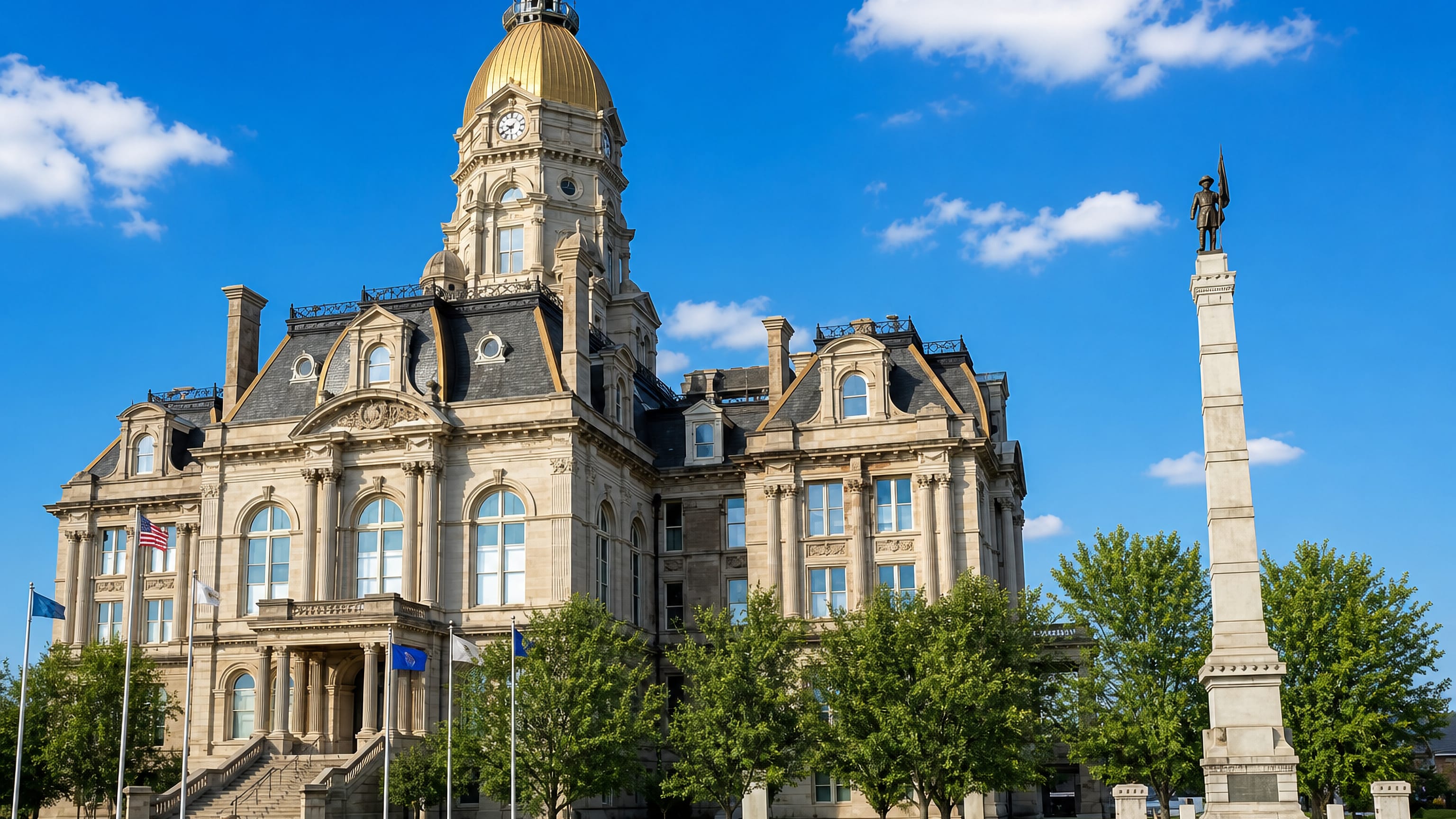
United States · Indiana
Where to Stay in Terre Haute, Indiana
Terre Haute is the seat of Vigo County, Indiana, the Queen City of the Wabash and a university town of the Wabash Valley.
Hotel links are affiliate links: booking through them may earn us a commission, at no extra cost to you. It never affects how places are ranked. How this works


Where to stay in Terre Haute
The practical side of choosing where to sleep.
Downtown holds most of what a visitor comes for. The Swope Art Museum, the CANDLES Holocaust Museum and Education Center and the Terre Haute Children's Museum all sit in or near the old core, and a room there puts the whole set on foot. Ohio Street runs through it.
The House at 823 Ohio Street and the Kesler Law Building stand on that side, with the First Congregational Church and the Condit House nearby. The campuses pull the other way. Indiana State University, Rose-Hulman Institute of Technology and Ivy Tech Community College of Indiana each draw visitors to a different part of Terre Haute, and a stay chosen for one of them will not serve the others well. Bob Warn Field at Sycamore Stadium fills rooms on game days, and the Michael Simmons Student Activity Center keeps its own calendar alongside it.
Book early for those. The Wabash Valley spreads out past the edge of the city, and addresses that way trade the walk downtown for parking and a clear run toward Indianapolis. Allen Chapel African Methodist Episcopal Church and the Paul Dresser Birthplace mark the older residential ground.
If you want the museums on foot, book downtown; if a campus errand is the reason for the trip, take the address that suits it and accept the driving.
Find hotels in Terre Haute
Direct booking searches for these neighbourhoods.
Downtown Terre Haute
Downtown Terre Haute keeps the Swope Art Museum, the CANDLES Holocaust Museum and Education Center and the Terre Haute Children's Museum inside one walk.Find hotels in Downtown Terre HauteAnyone drawn to the Kesler Law Building and the older streetsThe Ohio Street blocks
The Ohio Street blocks hold the House at 823 Ohio Street, the Kesler Law Building and the Condit House within a few minutes of one another. Lodging is scarce in this area; reserve in advance.Find hotels in The Ohio Street blocksTerm-time errands at Indiana State University or Rose-HulmanThe campus edges
Rooms near Indiana State University or Rose-Hulman Institute of Technology cut the drive that any Terre Haute campus visit otherwise involves.Find hotels in The campus edgesHotel links are affiliate links: booking through them may earn us a commission, at no extra cost to you. It never affects how places are ranked. How this works
Things to do in Terre Haute
Ranked by global recognition; descriptions from Wikidata (CC0).
Museums & Galleries
3- Paul Dresser Birthplace Heritage
- Kesler Law Building Heritage
- Swope Art Museum
Churches & Religious Sites
2- Allen Chapel African Methodist Episcopal Church Heritage
- First Congregational Church Heritage
Stadiums & Sports
2- Bob Warn Field at Sycamore Stadium
- Michael Simmons Student Activity Center
Landmarks & Notable Places
3- Eugene V. Debs Home Heritage
- Condit House Heritage
- House at 823 Ohio Street Heritage
worth knowingacross 4 categories in Terre Haute
About Terre Haute
Schools and museums carry it.
What is Terre Haute known for?
Indiana State University, Rose-Hulman Institute of Technology and Ivy Tech Community College of Indiana all teach in Terre Haute, which gives a city of this size an unusual amount of term-time traffic. The CANDLES Holocaust Museum and Education Center draws visitors from well beyond Vigo County. The Swope Art Museum holds the art.
Terre Haute Children's Museum and the Paul Dresser Birthplace round out a set of stops that a visitor can cover in a day without leaving the city.
What are the main landmarks in Terre Haute?
One house carries the city's name outward. The Eugene V. Debs Home is the best known address in Terre Haute, and the CANDLES Holocaust Museum and Education Center brings people from a distance. The Swope Art Museum and the Terre Haute Children's Museum hold the rest of the collections.
Churches and houses fill the register. Allen Chapel African Methodist Episcopal Church, the First Congregational Church, the Condit House and the Paul Dresser Birthplace all stand within the city, with Bob Warn Field at Sycamore Stadium on the sporting side.
What is the history of Terre Haute?
Terre Haute dates from 1811. The Wabash Valley set the ground it grew on, and the city has been called the Queen City of the Wabash for long enough that the title has stuck. Vigo County seated its business here.
The Kesler Law Building and the House at 823 Ohio Street belong to that older working centre, and the Condit House and the First Congregational Church stand from the same stretch of building. Two houses are kept for the people who lived in them. The Eugene V. Debs Home and the Paul Dresser Birthplace are both held as sites in Terre Haute.
Education became the city's steady trade. Indiana State University, Rose-Hulman Institute of Technology and Ivy Tech Community College of Indiana all took root in Terre Haute, and between them they keep a small city busier through term than its size would suggest. Congregations built alongside them.
Allen Chapel African Methodist Episcopal Church records one strand of that, and the CANDLES Holocaust Museum and Education Center was founded later to carry a history reaching far outside Vigo County. The Swope Art Museum and the Terre Haute Children's Museum came out of the same civic habit, and Bob Warn Field at Sycamore Stadium and the Michael Simmons Student Activity Center belong to the campus side of it. Chicago and Indianapolis both lie within a day's reach.
Where is Terre Haute?
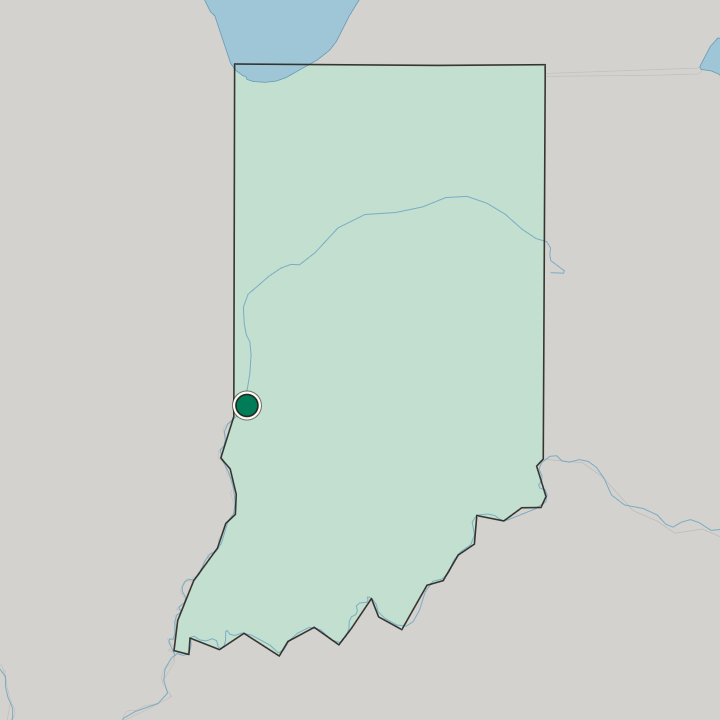
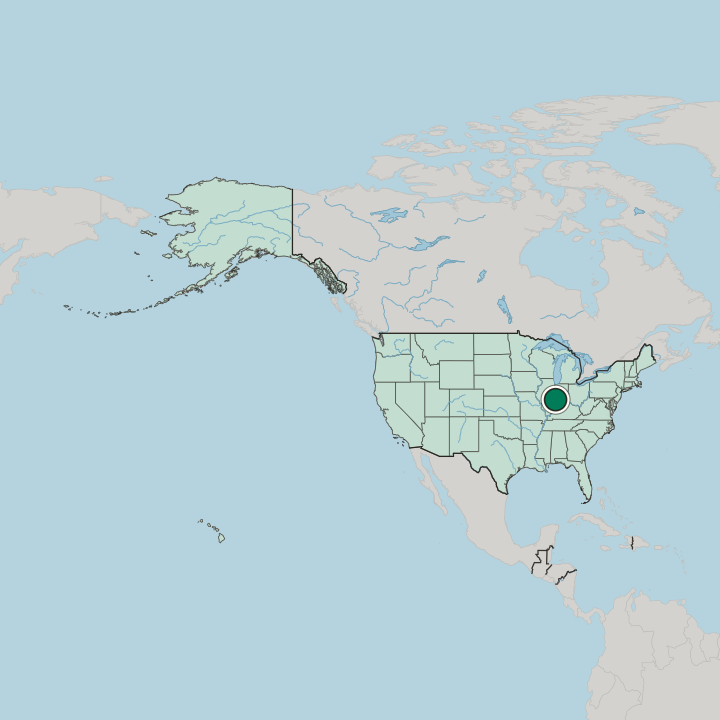
The Wabash Valley is the setting. Terre Haute covers about 91 square kilometres of Vigo County, and the valley ground around it carries on well past the city limits without much to interrupt it. Chicago lies about 300 kilometres off.
Indianapolis is roughly an hour away, which puts Terre Haute inside the orbit of the larger city without being part of it. Ohio Street runs through the old centre, and the campuses of Indiana State University and Rose-Hulman Institute of Technology sit at separate points across the built area.
What is the climate of Terre Haute?
The valley holds the heat. Summer air settles over the Wabash Valley and stays there, and winter in this part of the temperate band arrives without any coast near enough to take the edge off it. The museums cover the worst of it.
The Swope Art Museum, the CANDLES Holocaust Museum and Education Center and the Terre Haute Children's Museum all work as indoor days when the valley weather turns.
How do you get to Terre Haute?
Indianapolis is the nearest big arrival point, roughly an hour away by road, and most visitors to Vigo County come the last stretch by car. Chicago is the longer run. About 300 kilometres separate the two, which makes Terre Haute a stop on a longer journey more often than a destination in its own right.
Ohio Street and the old centre are walkable, but Rose-Hulman Institute of Technology and Ivy Tech Community College of Indiana sit far enough out that a car decides the day. Plan the driving first.
Common questions
What is the best area to stay in Terre Haute?
Downtown Terre Haute: Museum days running out from the Swope Art Museum. The Ohio Street blocks: Anyone drawn to the Kesler Law Building and the older streets. The campus edges: Term-time errands at Indiana State University or Rose-Hulman.
Good for
More cities in Indiana
Updated September 2026