United States · Iowa
Where to Stay in Council Bluffs, Iowa
Council Bluffs, seat of Pottawattamie County, Iowa, stands on the Missouri River opposite Omaha, where the transcontinental railroad was reckoned to begin.
Hotel links are affiliate links: booking through them may earn us a commission, at no extra cost to you. It never affects how places are ranked. How this works


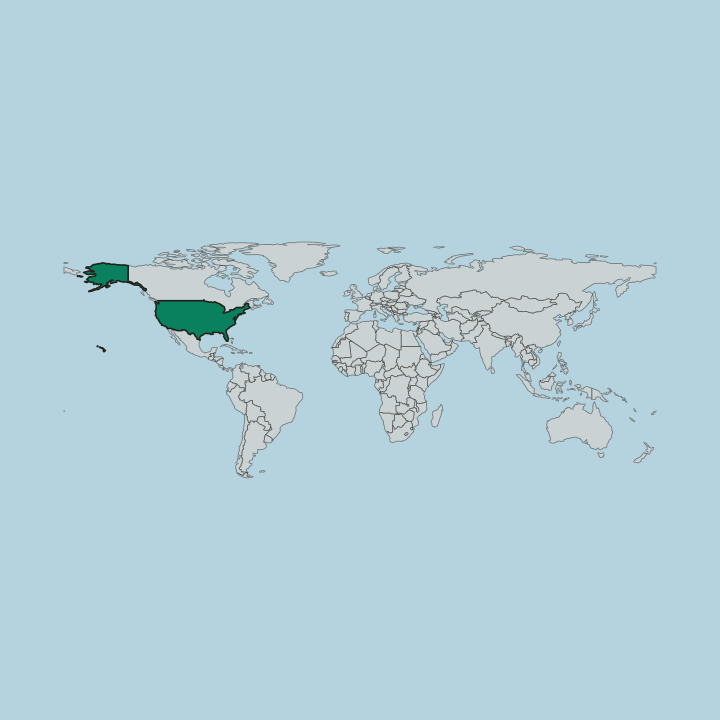
Where to stay in Council Bluffs
Where visitors usually base themselves, and why.
The Golden Spike Monument and the Missouri River set the two ends of the choice. Rooms toward the monument put the railroad material within reach, with the RailsWest Railroad Museum and the Pottawattamie County Jail falling inside a compact stretch of Council Bluffs that repays a day on foot. The river end works differently.
Beds near the Missouri look across to Omaha, and the crossing is short enough that the Iowa bank serves anyone whose plans sit mostly on the Nebraska side. Pottawattamie County spreads well past the built-up area, and much of the visitor accommodation gathers where the casino trade concentrates rather than where the older architecture stands. Those streets tell a different story.
The Martin Hughes House, the Thomas E. Cavin House, the Shepard and Emma Farnsworth House, and the John J. and Agnes Shea House survive among residential blocks with almost nothing to rent, so if you are here for the register listings, expect to sleep elsewhere and walk in. Omaha holds the deeper supply. Plenty of visitors book across the water and treat the Ruth Anne Dodge Memorial, the Kinsman Monument, and the county seat itself as a half-day out.
Find hotels in Council Bluffs
Direct booking searches for these neighbourhoods.
Golden Spike side
The Golden Spike Monument and the RailsWest Railroad Museum sit on one easy circuit, with the Pottawattamie County Jail a short walk on. Beds are limited here, so book early.Find hotels in Golden Spike sideCasino evenings and a quick run over to OmahaMissouri bank
Rooms on the Iowa side of the Missouri River, where the casino trade concentrates and the Nebraska bank stays a few minutes off.Find hotels in Missouri bankArchitecture walks past the Martin Hughes House and the Thomas E. Cavin HouseRegister-house streets
Residential blocks holding the Shepard and Emma Farnsworth House and the John J. and Agnes Shea House, where the appeal is the building stock and not the room supply. Lodging is scarce in this area; reserve in advance.Find hotels in Register-house streetsSleeping in the larger city across the Missouri RiverOmaha
Omaha carries the deeper room supply of the Omaha-Council Bluffs metropolitan area, which suits a visit built around the Kinsman Monument and a half-day in Pottawattamie County.Find hotels in OmahaHotel links are affiliate links: booking through them may earn us a commission, at no extra cost to you. It never affects how places are ranked. How this works
Things to do in Council Bluffs
Ranked by global recognition; descriptions from Wikidata (CC0).
Museums & Galleries
1- Pottawattamie County Jail Heritage
Castles & Historic Sites
2- Golden Spike Monument
- Kinsman Monument
Landmarks & Notable Places
4- Martin Hughes House Heritage
- Thomas E. Cavin House Heritage
- John J. and Agnes Shea House Heritage
- Shepard and Emma Farnsworth House Heritage
worth knowingacross 3 categories in Council Bluffs
About Council Bluffs
Casinos and railroad history carry the name here.
What is Council Bluffs known for?
The Golden Spike Monument marks the spot taken as the eastern start of the transcontinental railroad, a designation that has shaped how Council Bluffs presents itself to anyone crossing the Missouri River from Omaha. Nine sites make the short list. The RailsWest Railroad Museum keeps the working end of the rail story, while the Ruth Anne Dodge Memorial and the Kinsman Monument stand as the best-known public sculpture in Pottawattamie County.
What are the main landmarks in Council Bluffs?
Nine sites carry the public memory. The Golden Spike Monument stakes the railroad claim, the RailsWest Railroad Museum keeps the equipment, and the Pottawattamie County Jail survives as one of the odder pieces of civic building anywhere in Iowa. Sculpture accounts for two more.
The Ruth Anne Dodge Memorial and the Kinsman Monument stand apart from the register houses, which run to the Martin Hughes House, the Shepard and Emma Farnsworth House, the Thomas E. Cavin House, and the John J. and Agnes Shea House.
What is the history of Council Bluffs?
Council Bluffs was founded in 1854. The town took the county seat of Pottawattamie County and grew on the east bank of the Missouri River, where the crossing to Omaha and the choice of this bank as the eastern point of the transcontinental railroad fixed its role for the century that followed. The Golden Spike Monument records that decision.
Rail work drew people in. Houses from the decades of expansion still stand, among them the Martin Hughes House, the Thomas E. Cavin House, and the Shepard and Emma Farnsworth House. Civic building left a record of its own, and the Pottawattamie County Jail is the strangest survivor of it.
The John J. and Agnes Shea House belongs to the same residential wave. Later generations put up memorials rather than mills, and both the Ruth Anne Dodge Memorial and the Kinsman Monument come out of that commemorative habit. A small part of the city crosses into Mills County.
The RailsWest Railroad Museum gathers what remains of the working railroad, and the nickname Iowa's Leading Edge sums up how Council Bluffs has read its own position on the Missouri.
Where is Council Bluffs?
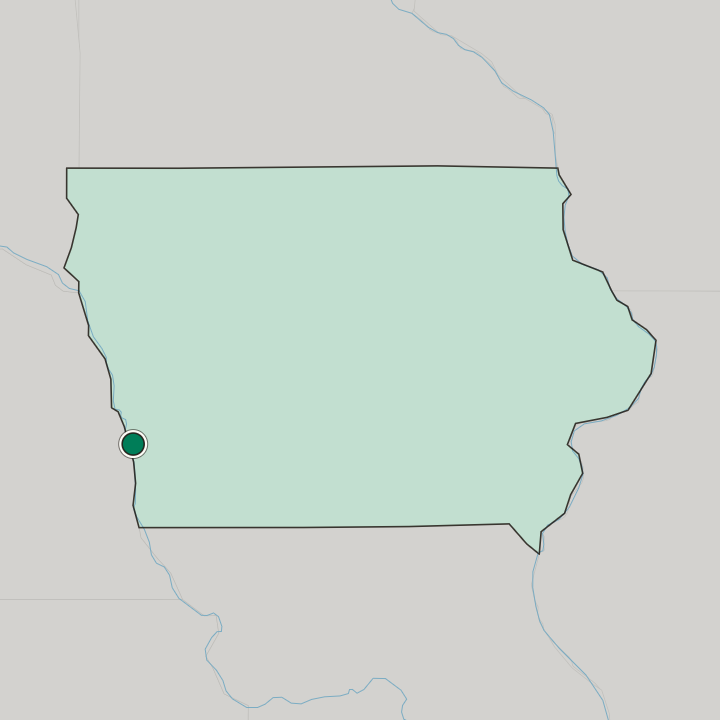
Council Bluffs occupies the east bank of the Missouri River, opposite Omaha in Nebraska. The ground rises from the river flats into the bluffs that gave the place its name, and nearly the whole of the built area falls inside Pottawattamie County, with a small portion extending into Mills County. Two states share one urban area.
The Omaha-Council Bluffs metropolitan area counts this city among its principal members, and the river reads less as a boundary than as a street between them.
What is the climate of Council Bluffs?
Continental air governs the year. Council Bluffs lies far from any ocean, so the Missouri valley heats through a humid summer and then holds cold air in the bottoms below the bluffs once winter settles. Snow belongs to the season.
Spring storms cross the open country beyond the Missouri River and reach Pottawattamie County with room to build.
How do you get to Council Bluffs?
Anyone heading for Council Bluffs generally reaches it by way of Omaha, which stands directly across the Missouri River and shares a single metropolitan area with it, so the crossing counts as part of the day rather than as a journey. Rail history runs alongside. The Golden Spike Monument marks the point taken as the eastern start of the transcontinental railroad, and the RailsWest Railroad Museum keeps the equipment that worked those lines.
Pottawattamie County carries the local traffic.
Common questions
What is the best area to stay in Council Bluffs?
Golden Spike side: Railroad visitors making straight for the Golden Spike Monument. Missouri bank: Casino evenings and a quick run over to Omaha. Register-house streets: Architecture walks past the Martin Hughes House and the Thomas E. Cavin House. Omaha: Sleeping in the larger city across the Missouri River.
Good for
More cities in Iowa
Updated September 2026