United States · Iowa
Where to Stay in Davenport, Iowa
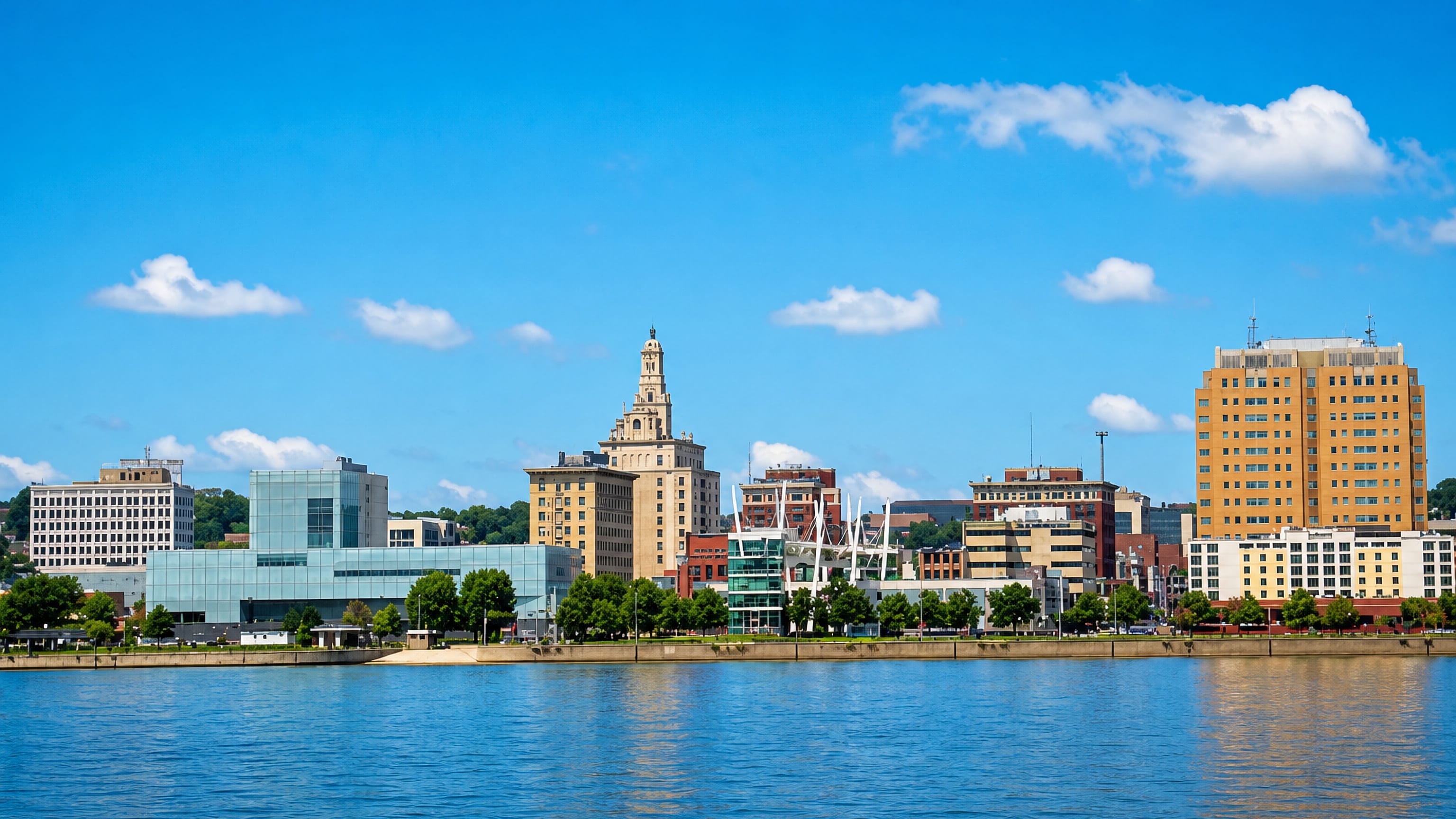
Davenport, county seat of Scott County and largest of the Quad Cities, stands on the Iowa bank of the Mississippi River facing Illinois.
Hotel links are affiliate links: booking through them may earn us a commission, at no extra cost to you. It never affects how places are ranked. How this works


Where to stay in Davenport
Where the beds are, and what that means for the visit.
The Figge Art Museum fixes one end of the decision and the Quad Cities road network fixes the other. Rooms near the Figge put the Mississippi River waterfront, the Dillon Memorial, and the walk into the old commercial blocks on a single short loop, which suits a visit spent mostly in Davenport itself. Above the water the ground changes.
The Putnam Museum sits on that higher shelf, with St. Anthony's Catholic Church and the parish streets around it, and rooms up there trade the river view for quieter nights. Bettendorf runs on from Davenport along the Iowa bank without any real break in the built-up area, so a bed there costs nothing in travel time and often reads as the same city. The Illinois side is the other option.
Rock Island, Moline, and East Moline face Scott County across the Mississippi, and if you are working through all five Quad Cities the crossing matters less than which bank your first morning starts on. Older streets hold few rooms. The Renwick House, the Selma Schricker House, and the Fred B. Sharon House stand among residential blocks that reward a walk rather than a booking, and the same goes for Bethel AME Church and the First Presbyterian Church nearby.
Find hotels in Davenport
Direct booking searches for these neighbourhoods.
Figge waterfront
The Mississippi River frontage around the Figge Art Museum, with the Dillon Memorial and the old commercial blocks within a short walk.Find hotels in Figge waterfrontQuieter nights above the river near the Putnam MuseumPutnam shelf
The higher ground carrying the Putnam Museum and St. Anthony's Catholic Church, back from the Mississippi frontage and its traffic. Lodging is scarce in this area; reserve in advance.Find hotels in Putnam shelfStaying on the Iowa bank with Davenport a few minutes offBettendorf
Bettendorf continues the built-up area along the Iowa side of the Mississippi River, close enough that the two run together as one Quad Cities street grid.Find hotels in BettendorfWorking through Rock Island, Moline, and East Moline in turnIllinois bank
Rock Island, Moline, and East Moline face Scott County from the Illinois side of the Mississippi, a base for anyone taking all five Quad Cities.Find hotels in Illinois bankHotel links are affiliate links: booking through them may earn us a commission, at no extra cost to you. It never affects how places are ranked. How this works
Things to do in Davenport
Ranked by global recognition; descriptions from Wikidata (CC0).
Museums & Galleries
2- Figge Art Museum
- Putnam Museum
Churches & Religious Sites
5- St. Anthony's Catholic Church Heritage
- St. Mary's Catholic Church Heritage
- First Presbyterian Church Heritage
- Bethel AME Church Heritage
- First Church of Christ, Scientist Heritage
Landmarks & Notable Places
8- B.J. Palmer House Heritage
- Fred B. Sharon House Heritage
- J. Monroe Parker-Ficke House Heritage
- Leon Bismark Beiderbecke House Heritage
- Antoine LeClaire House Heritage
Show 3 more →
- Renwick House Heritage
- Hillside Heritage
- Selma Schricker House Heritage
worth knowingacross 3 categories in Davenport
About Davenport
Two museums do the heavy lifting.
What is Davenport known for?
The Figge Art Museum stands over the Mississippi River waterfront and the Putnam Museum holds the older collections, and between them they account for much of what brings visitors into Davenport rather than merely through it. Congregations supply the next tier, with Bethel AME Church and First Presbyterian Church among the named buildings of Scott County. Houses carry the rest, from the Antoine LeClaire House to the Leon Bismark Beiderbecke House and the Renwick House.
What are the main landmarks in Davenport?
Art first, then congregations, then houses. The Figge Art Museum and the Putnam Museum head the list, the Dillon Memorial marks the waterfront, and the churches run from St. Mary's Catholic Church and St. Anthony's Catholic Church through First Presbyterian Church, Bethel AME Church, and the First Church of Christ, Scientist. Domestic architecture supplies the bulk.
Hillside, the Renwick House, the B.J. Palmer House, the George Copeland House, the Lambert-Iles-Petersen House, and the House at 919 Oneida Street all carry names on the city's landmark roll.
What is the history of Davenport?
The founding year is 1836. Antoine LeClaire belongs to that first chapter and his house survives to prove it, one of the earliest names on a list that grew long as Davenport spread back from the Mississippi River and took the county seat of Scott County. Growth came in waves.
Each wave left buildings behind, among them the Renwick House, the George Copeland House, and the Lambert-Iles-Petersen House on the older residential blocks. Worship marked the same decades, and Bethel AME Church, First Presbyterian Church, and the First Church of Christ, Scientist each record a separate strand of settlement in the city. Prosperous families built outward, leaving the Selma Schricker House and the Fred B. Sharon House scattered through streets that had been farmland a generation earlier.
Hillside dates from the same stretch. The House at 919 Oneida Street keeps a street address in place of a family name. Later came the institutions the city still runs on, with the Putnam Museum gathering the regional collections and the Figge Art Museum taking the art down to the waterfront beside the Dillon Memorial.
Bettendorf, Rock Island, Moline, and East Moline grew alongside on both banks, and the five settled into the arrangement known as the Quad Cities.
Where is Davenport?
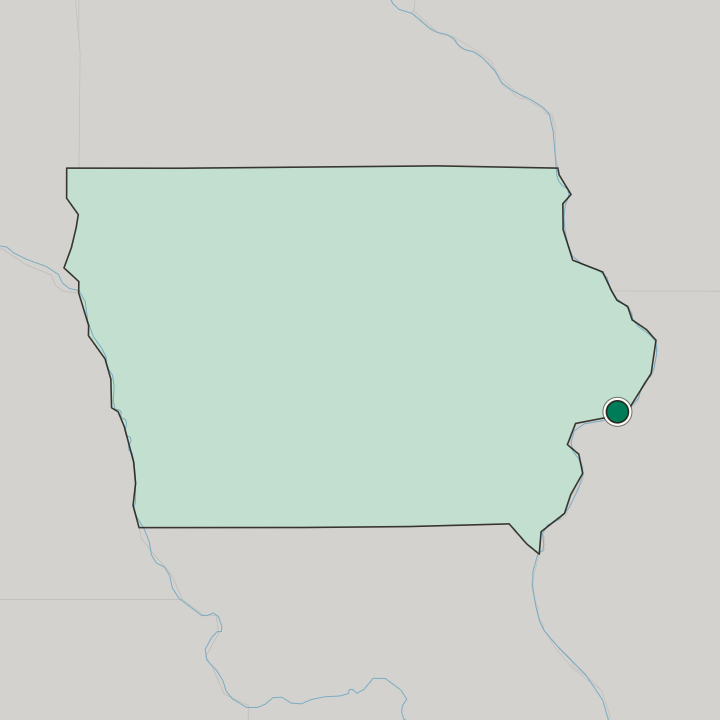
Scott County holds the city and the Mississippi River bounds it. Davenport occupies the Iowa bank at the state's edge with Illinois, and the ground climbs away from the water in shelves that put the Putnam Museum well above the level of the Figge Art Museum. Bettendorf adjoins it upstream.
Rock Island, Moline, and East Moline lie opposite on the Illinois side, and the five together make up the Quad Cities.
What is the climate of Davenport?
Davenport keeps a continental calendar. Summer heat draws humidity off the Mississippi River and holds it over the streets, while winter arrives hard from the interior with no coast anywhere near enough to soften the edge of it. Snow falls most winters.
Spring carries the river's own hazard, since high water on the Mississippi has always been part of the year in Scott County.
How do you get to Davenport?
The Quad Cities move as one road network. Bridges over the Mississippi River tie Davenport to Rock Island, Moline, and East Moline on the Illinois bank, while Bettendorf carries the built-up area on along the Iowa side without a break. Colour-coded signs mark the routes between them.
Scott County roads take everything that is not crossing the river, and the Figge Art Museum sits close enough to the waterfront to be the first thing many arrivals see.
Common questions
What is the best area to stay in Davenport?
Figge waterfront: Museum days that start at the Figge Art Museum. Putnam shelf: Quieter nights above the river near the Putnam Museum. Bettendorf: Staying on the Iowa bank with Davenport a few minutes off. Illinois bank: Working through Rock Island, Moline, and East Moline in turn.
Good for
More cities in Iowa
Updated September 2026