United States · Iowa
Where to Stay in Dubuque, Iowa
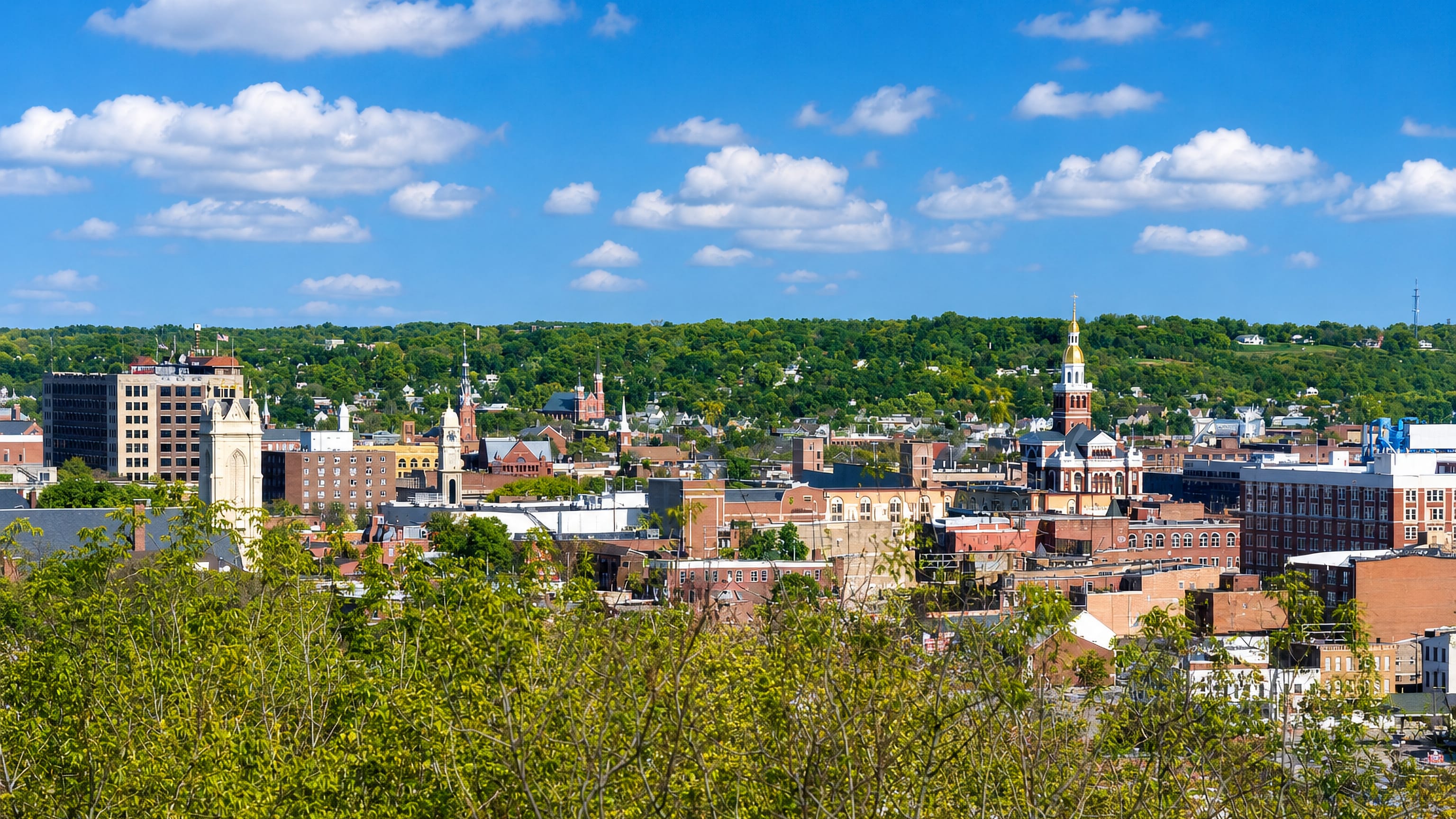
Dubuque, the oldest city in Iowa and seat of Dubuque County, rises on bluffs above the upper Mississippi River in the Tri-State Area.
Hotel links are affiliate links: booking through them may earn us a commission, at no extra cost to you. It never affects how places are ranked. How this works




Where to stay in Dubuque
How the choice of base plays out on the ground.
Dubuque splits between the landing and the bluff top. Rooms down by the water put the National Mississippi River Museum & Aquarium and the old port frontage within a few minutes on foot, which is the shorter walk for anyone whose visit is mostly about the Mississippi itself. The climb changes the character.
Up on the shelf, Holy Ghost Catholic Church and Saint Patrick's Church mark streets of older housing where the outlook runs down over the river and across toward Illinois and Wisconsin. The Dubuque Museum of Art anchors the civic blocks, and rooms in that direction leave a short walk to St. John's Episcopal Church and the length of the older commercial street. Past that stretch, rooms run out.
The Kelley House and the McMahon House sit among residential streets that offer architecture and little else, so if you are here for that, plan on walking to them from a base elsewhere. Flatter ground away from the bluffs carries the Mystique Ice Center, which draws its own weekend traffic in Dubuque County and puts rooms near a rink rather than near the water. Illinois and Wisconsin both lie a short drive off across the Tri-State Area.
Find hotels in Dubuque
Direct booking searches for these neighbourhoods.
The landing
The old port frontage under the bluffs, where the National Mississippi River Museum & Aquarium occupies the ground the Mississippi trade once used.Find hotels in The landingSpires and an outlook over the upper MississippiBluff shelf
The high ground carrying Holy Ghost Catholic Church and Saint Patrick's Church, with the river and the Wisconsin shore below. Beds are limited here, so book early.Find hotels in Bluff shelfGallery afternoons at the Dubuque Museum of ArtMuseum of Art blocks
The civic streets around the Dubuque Museum of Art, a short walk from St. John's Episcopal Church and the older commercial frontage.Find hotels in Museum of Art blocksRink weekends away from the Dubuque bluffsMystique Ice Center side
The flat ground beyond the bluffs where the Mystique Ice Center pulls its own traffic across Dubuque County. Lodging is scarce in this area; reserve in advance.Find hotels in Mystique Ice Center sideHotel links are affiliate links: booking through them may earn us a commission, at no extra cost to you. It never affects how places are ranked. How this works
Things to do in Dubuque
Ranked by global recognition; descriptions from Wikidata (CC0).
Museums & Galleries
2- National Mississippi River Museum & Aquarium
- Dubuque Museum of Art
Churches & Religious Sites
3- Holy Ghost Catholic Church Heritage
- Saint Patrick's Church Heritage
- St. John's Episcopal Church Heritage
Stadiums & Sports
1- Mystique Ice Center
Landmarks & Notable Places
2- Kelley House Heritage
- McMahon House Heritage
worth knowingacross 4 categories in Dubuque
About Dubuque
The oldest city in Iowa keeps its age on show.
What is Dubuque known for?
Julien Dubuque worked lead in the ground here from 1788, the charter came in 1833, and the National Mississippi River Museum & Aquarium tells the river's part of that story from the landing below the bluffs. Churches crowd the skyline. Holy Ghost Catholic Church and Saint Patrick's Church stand on the upper streets, while the Dubuque Museum of Art holds the city's collection.
What are the main landmarks in Dubuque?
Eight names carry the list. The National Mississippi River Museum & Aquarium stands at the landing and the Dubuque Museum of Art holds the collections up in the city, while Holy Ghost Catholic Church, Saint Patrick's Church, and St. John's Episcopal Church account for the spires. Two houses complete it.
The Kelley House and the McMahon House survive on residential ground, and the Mystique Ice Center adds the one wholly modern entry.
What is the history of Dubuque?
Julien Dubuque came for lead. The Quebec-born trader established a mining and trading settlement on this stretch of the upper Mississippi River in 1788, working ground that would keep his name long after the workings themselves had gone quiet. A charter followed in 1833.
That charter makes Dubuque the oldest city in Iowa, a distinction the place has never had to share, and it fixed the county seat of Dubuque County on the bluffs rather than inland. The port did the rest. River trade on the upper Mississippi drew people to a landing hemmed in by bluffs, and the churches went up as fast as the congregations formed, among them Holy Ghost Catholic Church, Saint Patrick's Church, and St. John's Episcopal Church.
Houses followed the same money. The Kelley House and the McMahon House survive from those decades of building on the slopes above the water. Later generations turned the waterfront over to display rather than cargo, and the National Mississippi River Museum & Aquarium took the river itself as its subject, while the Dubuque Museum of Art gathered the collections the older city had accumulated.
The Mystique Ice Center belongs to a much later chapter. Illinois and Wisconsin reach the water close by, and the Tri-State Area has shaped the city's dealings for as long as there has been a crossing here.
Where is Dubuque?
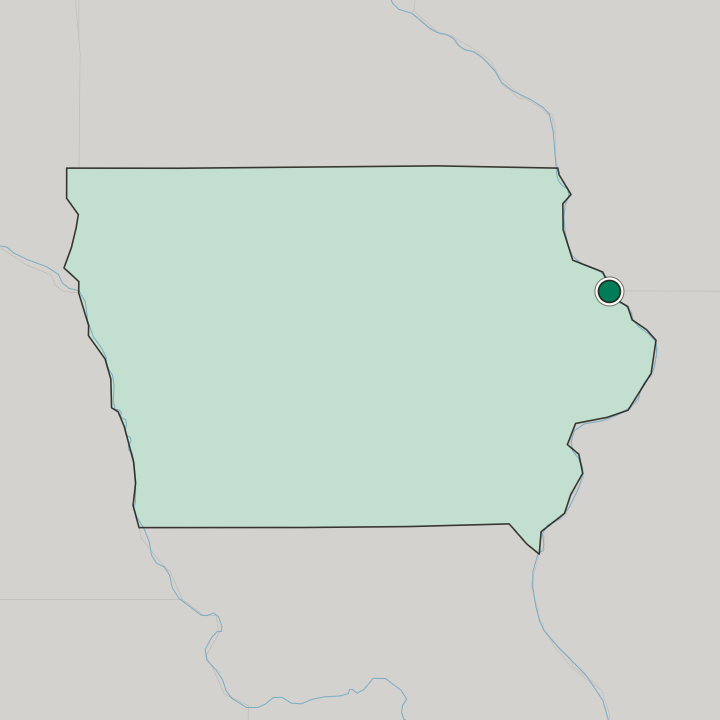
The city occupies two levels. Dubuque stands on the Iowa side of the upper Mississippi River, built partly on the narrow landing at the water and partly on the bluff shelf above it, with Dubuque County running back into farmland. Three states almost touch here.
Illinois and Wisconsin both reach the river close by, which is why the surrounding country goes under the name Tri-State Area.
What is the climate of Dubuque?
Winter arrives from the north with nothing in the way. Cold air runs down the upper Mississippi valley and settles in the trough below the bluffs, so Dubuque holds frost longer than the open farmland of Dubuque County above it. Summers turn humid.
Storms build over the Tri-State Area through the warm months, and the river adds its own moisture to every one of them.
How do you get to Dubuque?
Three state lines converge near the crossing. Roads into Dubuque come from Illinois and Wisconsin as readily as from the rest of Iowa, and the Tri-State Area works as a single catchment for anyone driving toward the river. The port explains the older routes.
Traffic once arrived by water at the landing occupied by the National Mississippi River Museum & Aquarium, and Dubuque County roads carry what comes overland.
Common questions
What is the best area to stay in Dubuque?
The landing: Days built around the National Mississippi River Museum & Aquarium. Bluff shelf: Spires and an outlook over the upper Mississippi. Museum of Art blocks: Gallery afternoons at the Dubuque Museum of Art. Mystique Ice Center side: Rink weekends away from the Dubuque bluffs.
Good for
More cities in Iowa
Updated September 2026