United States · Iowa
Where to Stay in Des Moines, Iowa
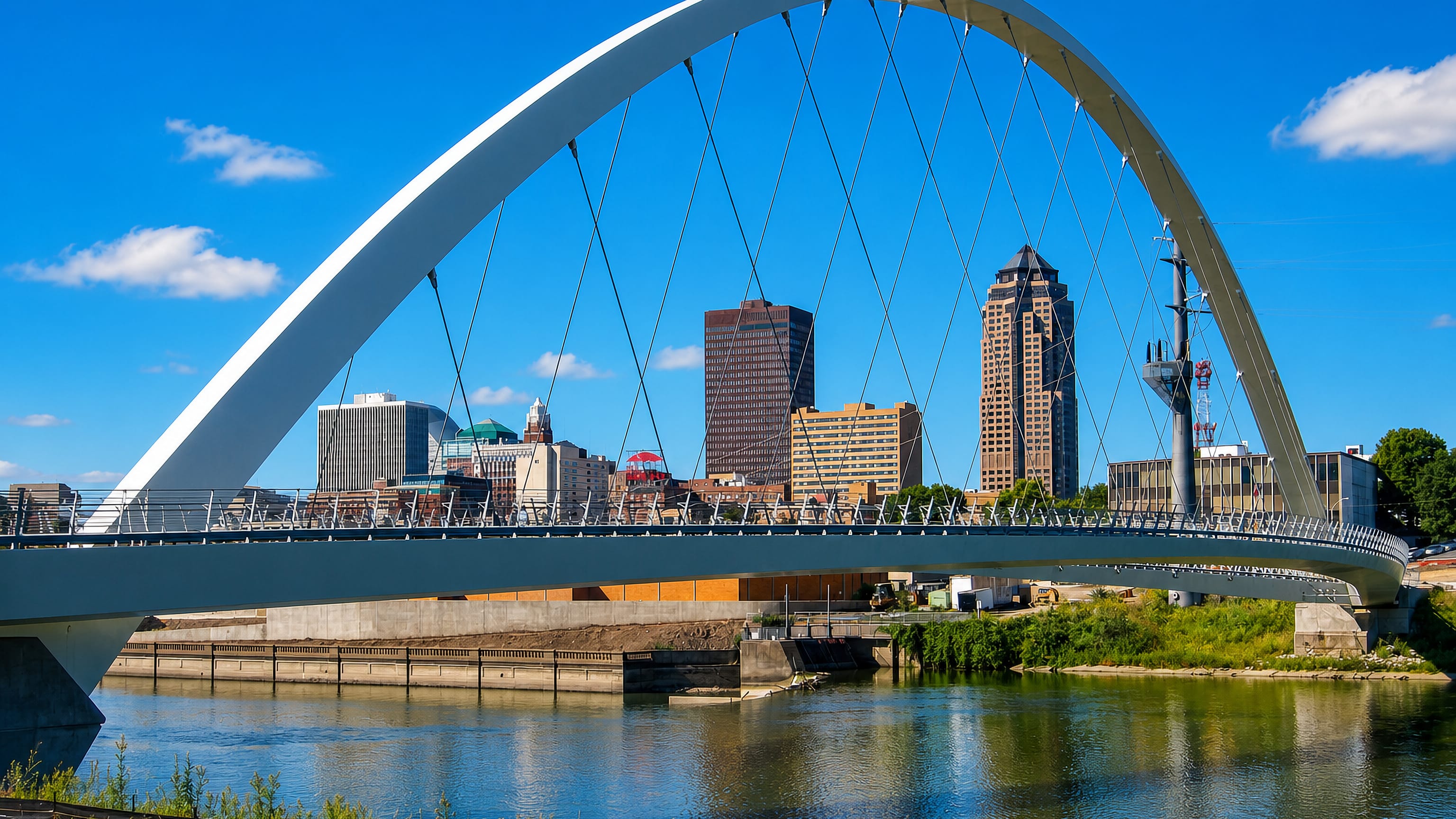
The gold dome of the Iowa State Capitol crowns Des Moines, a prairie capital in Iowa known for the Pappajohn Sculpture Park and its river parks.
Hotel links are affiliate links: booking through them may earn us a commission, at no extra cost to you. It never affects how places are ranked. How this works


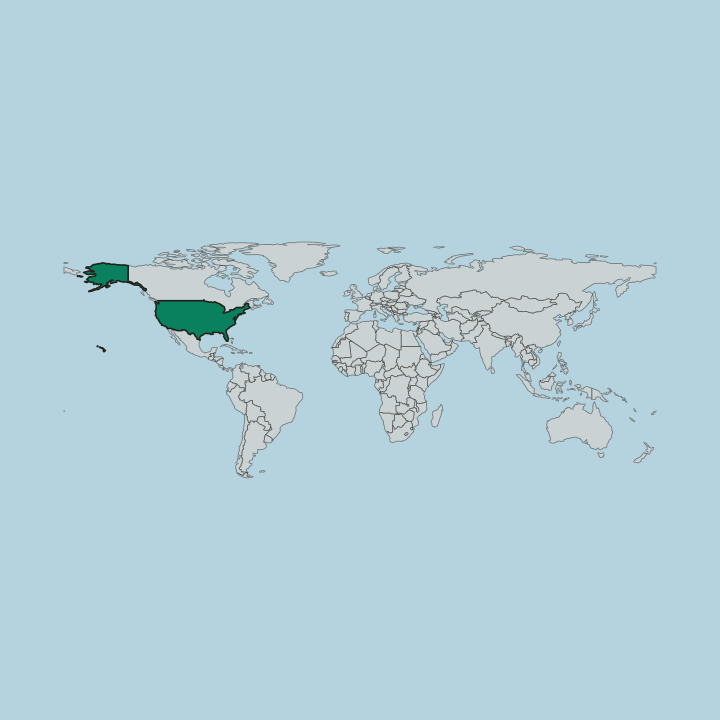
Where to stay in Des Moines
How the choice of base plays out on the ground.
Des Moines lays out its lodging between the government core and the older residential streets. Stay near the Iowa State Capitol and you sit above the river flats, within reach of the state offices and the downtown lawn of the Pappajohn Sculpture Park, a compact stretch that stays busy through the working day. The historic streets read quieter.
Blocks near the Basilica of St. John and the Albert Baird Cummins House keep rows of preserved houses and church spires, a calm grain away from the offices. This is where the old city shows. If you want green at the door, rooms toward Riverview Park sit among the parkland that follows the water through the city.
You pick by pace. Downtown stays put the Pappajohn Sculpture Park and the capitol grounds within a walk, good for a short, central visit. The residential blocks around the Lampson P. Sherman House suit a slower stay, close enough to reach the center yet held among trees and older streets.
Find hotels in Des Moines
Direct booking searches for these neighbourhoods.
Capitol core by the Iowa State Capitol
Above the river flats, the Iowa State Capitol and the downtown lawn of the Pappajohn Sculpture Park sit within a short walk.Find hotels in Capitol core by the Iowa State CapitolQuiet stays near the Basilica of St. JohnHistoric streets near the Basilica of St. John
Rows of preserved houses and the Albert Baird Cummins House give the blocks around the Basilica of St. John a calm nineteenth-century grain.Find hotels in Historic streets near the Basilica of St. JohnHotel links are affiliate links: booking through them may earn us a commission, at no extra cost to you. It never affects how places are ranked. How this works
Things to do in Des Moines
Ranked by global recognition; descriptions from Wikidata (CC0).
Museums & Galleries
1- Iowa State Capitol Heritage
Churches & Religious Sites
3- Basilica of St. John, Des Moines Heritage
- Cottage Grove Avenue Presbyterian Church Heritage
- Trinity United Methodist Church (Des Moines, Iowa) Heritage
Parks & Gardens
1- Riverview Park (Iowa)
Landmarks & Notable Places
8- Ralph Rollins House Heritage
- Rees Gabriel House Heritage
- Edward B. and Nettie E. Evans House Heritage
- Dr. John B. and Anna M. Hatton House Heritage
- Albert Baird Cummins House Heritage
Show 3 more →
- William B. Hayes House Heritage
- Josiah Andrews House Heritage
- Capt. Nicholas W. and Emma Johnson House Heritage
worth knowingacross 4 categories in Des Moines
About Des Moines
What is Des Moines known for?
Des Moines is known as the seat of Iowa's state government and its open sculpture grounds. The Iowa State Capitol dominates the skyline, and the Pappajohn Sculpture Park spreads modern work across a downtown lawn. Green space runs through it.
Riverview Park and the older churches like the Basilica of St. John set a settled, low-rise character, while streets of preserved houses give the city its nineteenth-century grain.
What are the main landmarks in Des Moines?
Des Moines gathers its landmarks around the state grounds and the old residential streets. The Iowa State Capitol and its gold dome mark the skyline, and the Pappajohn Sculpture Park sets modern work on a downtown lawn. Churches anchor the neighborhoods, from the domed Basilica of St. John to St. Anthony's Catholic Church, both rising among preserved houses that give the older blocks their period grain.
The Albert Baird Cummins House and the Lampson P. Sherman House survive nearby. Riverview Park then carries the city's parkland. The parkland follows the water.
What is the history of Des Moines?
Des Moines dates to 1843, when a garrison at the meeting of two rivers grew into a settlement on the Iowa prairie. Statehood pulled it upward. The city became the seat of Iowa's government, and the Iowa State Capitol rose to crown the ground above the river flats as the young state built its institutions.
Growth followed the railroads and the river trade. Merchants and officials raised the houses that still stand, from the Albert Baird Cummins House to the Lampson P. Sherman House and the Josiah Andrews House, and congregations built churches like the Basilica of St. John and Trinity United Methodist Church across the expanding grid. Public space came with the century's later years.
Riverview Park and, much later, the Pappajohn Sculpture Park added the parkland and the open art grounds that give the modern center its shape.
Where is Des Moines?
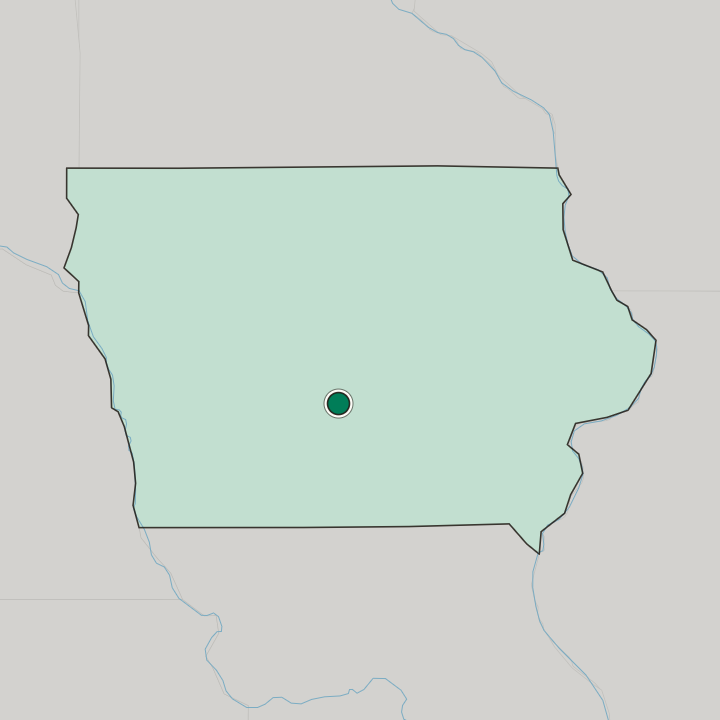
Des Moines sits where two rivers meet on the Iowa prairie, its center built on the higher ground above the flats. The land rolls gently around it. The Iowa State Capitol stands on a rise east of the confluence, and the parkland of Riverview Park follows the water north through low, open country.
Beyond the built grid the plains of Iowa run flat toward the horizon.
What is the climate of Des Moines?
Des Moines has a temperate continental climate with hot summers and cold, snowy winters. In Des Moines the year swings hard from one season to the next. Long warm afternoons settle over the prairie through the middle months, then give way to sharp cold and snow that whitens the grounds around the Iowa State Capitol across a long Iowa winter.
Between them, spring and autumn barely pause.
How do you get to Des Moines?
Des Moines sits at the crossing of the interstate highways that run through central Iowa. Roads reach it from every side. Long-distance routes link the city east and west and north and south across the plains, and an airport on the edge of town brings visitors within a short drive of the Iowa State Capitol and the downtown lawn of the Pappajohn Sculpture Park.
Common questions
What is the best area to stay in Des Moines?
Capitol core by the Iowa State Capitol: Central stays near the Iowa State Capitol. Historic streets near the Basilica of St. John: Quiet stays near the Basilica of St. John.
Good for
More cities in Iowa
Updated September 2026