United States
Iowa, United States — Towns & Travel Guide
Iowa is a landlocked prairie state in the upper Midwest, framed by the Mississippi and Missouri rivers at the heart of the Corn Belt.
Hotel links are affiliate links: booking through them may earn us a commission, at no extra cost to you. It never affects how places are ranked. How this works


Towns & cities in Iowa
Pick a town or city — each links to where to stay.
 United States
Des Moines
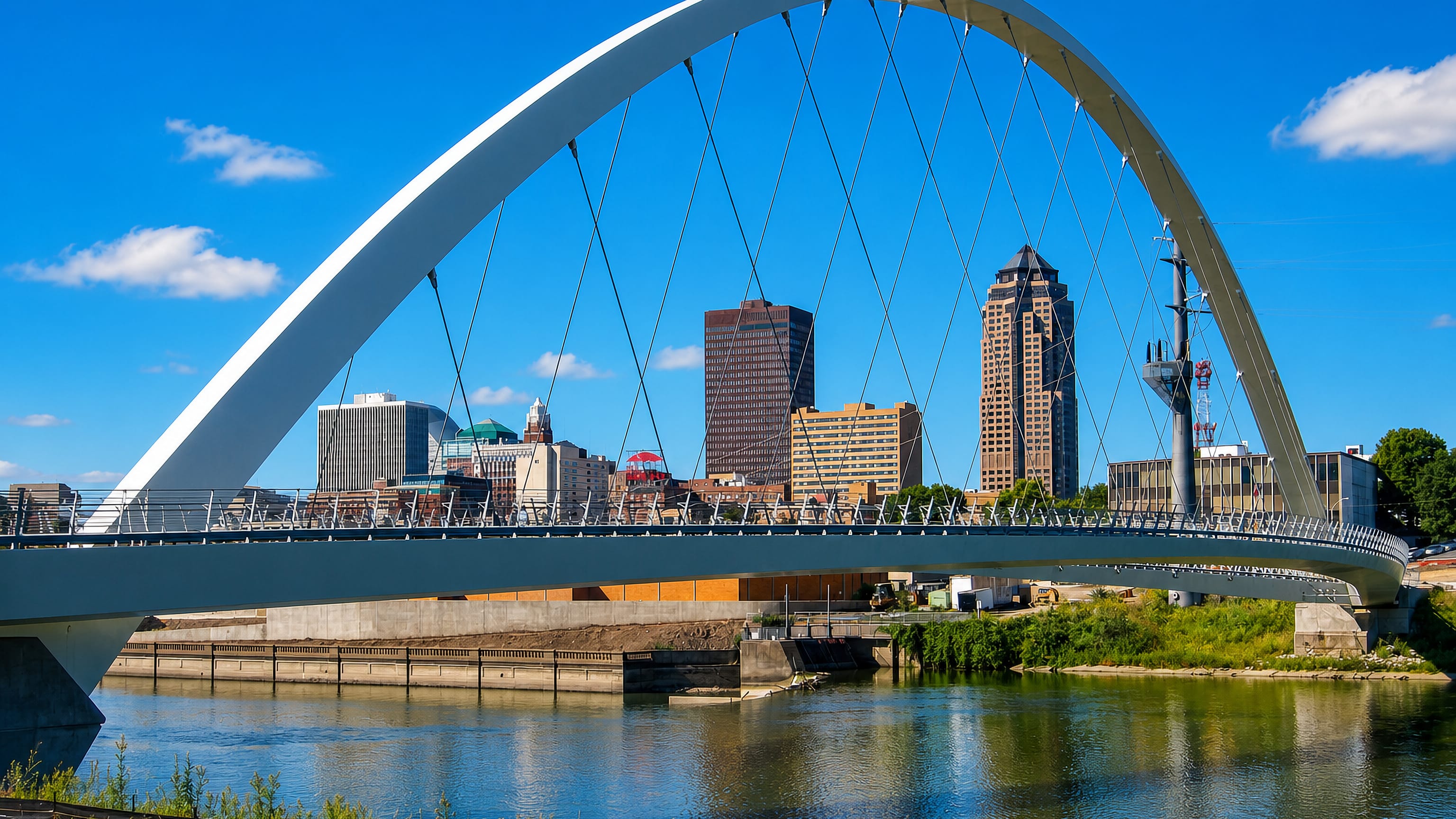
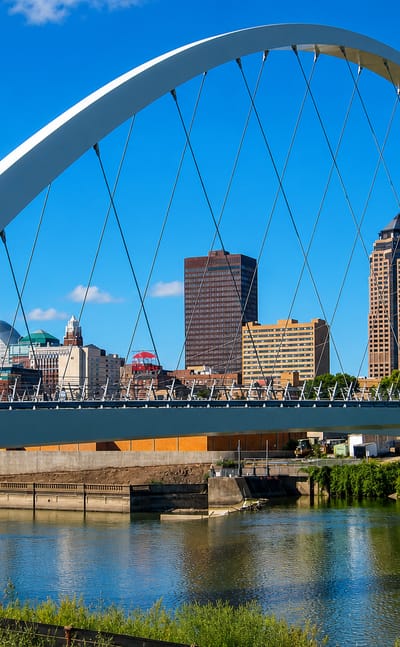
The gold dome of the Iowa State Capitol crowns Des Moines, a prairie capital in Iowa known for the Pappajohn Sculpture Park and its river parks.Where to stay →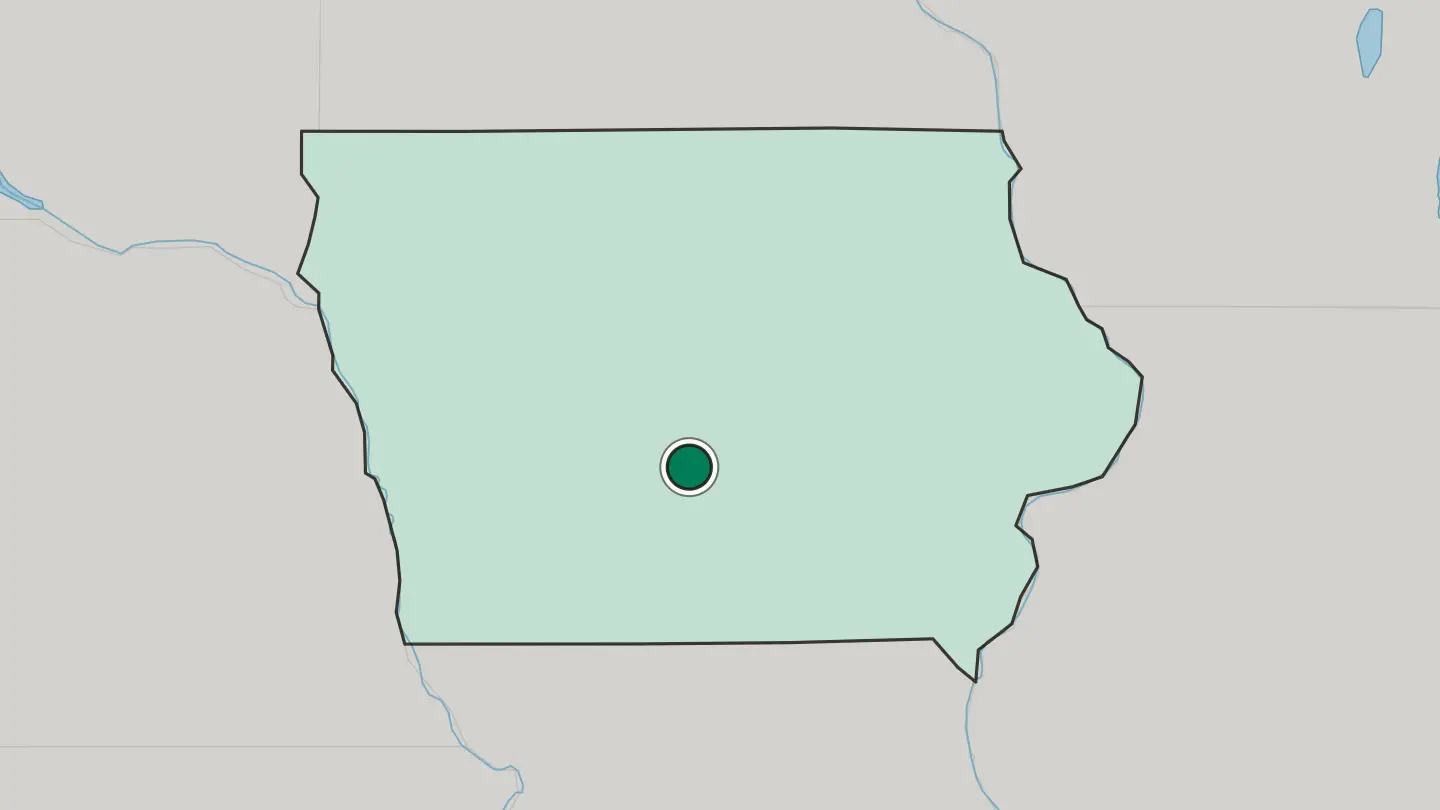
 United States
Cedar Rapids
Cedar Rapids is the seat of Linn County, Iowa, a working city on both banks of the Cedar River, 20 miles north of Iowa City.Where to stay →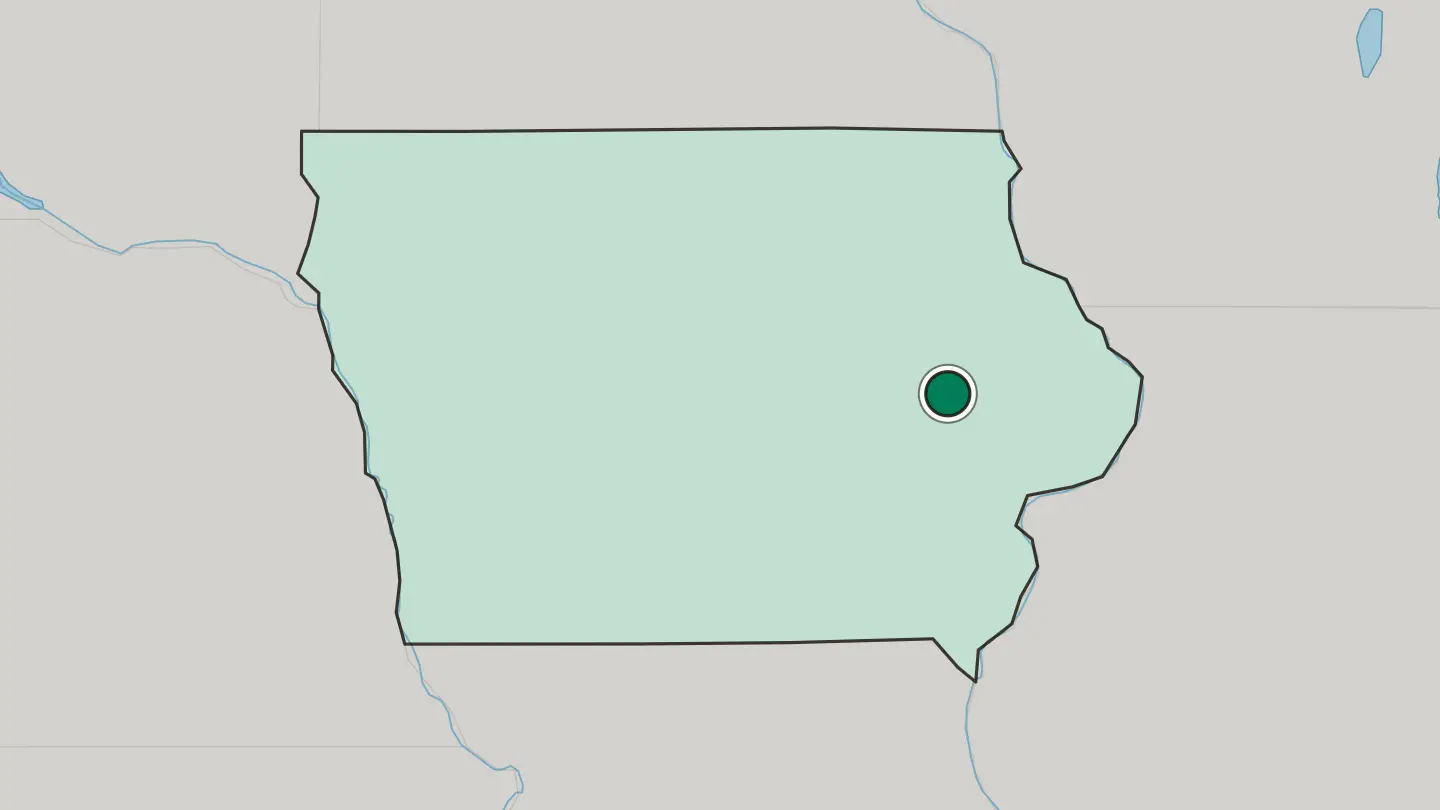
 United States
Davenport
Davenport, county seat of Scott County and largest of the Quad Cities, stands on the Iowa bank of the Mississippi River facing Illinois.Where to stay →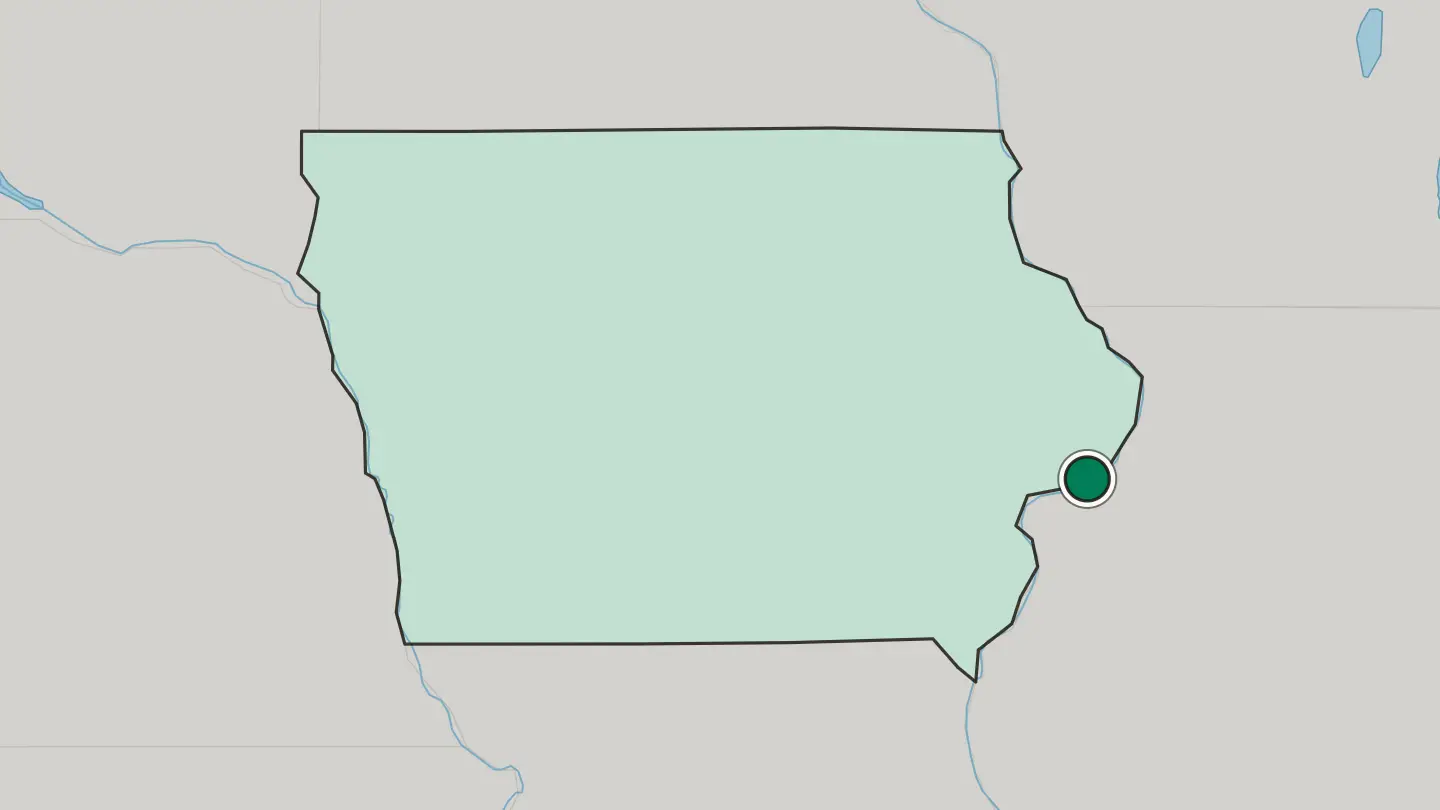
 United States
Sioux City
Sioux City, seat of Woodbury County, rises out of the Loess Hills on the Missouri River, at the centre of the region called Siouxland.Where to stay →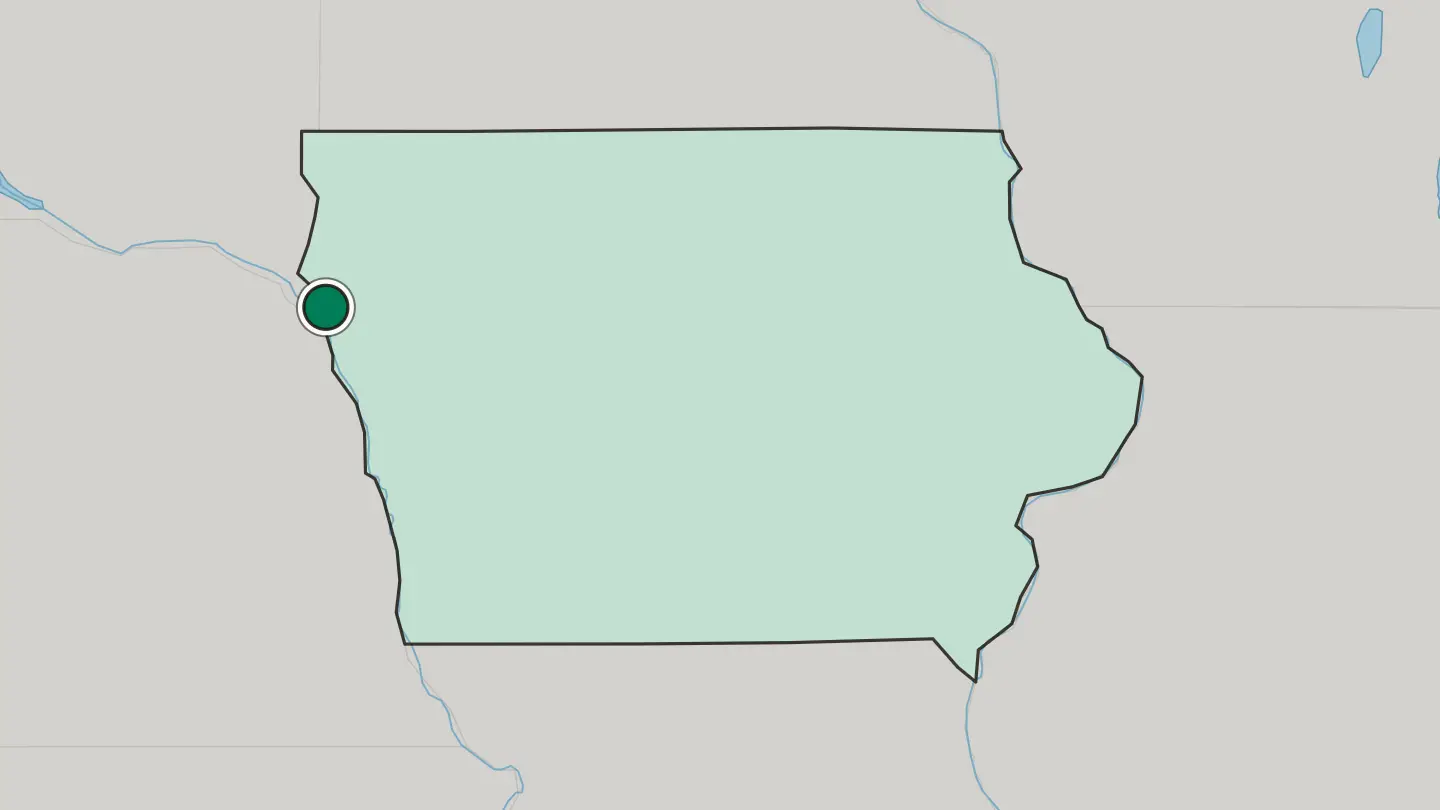
 United States
Iowa City
Iowa City, seat of Johnson County, is the college town built around the University of Iowa, with Coralville adjoining it on the west.Where to stay →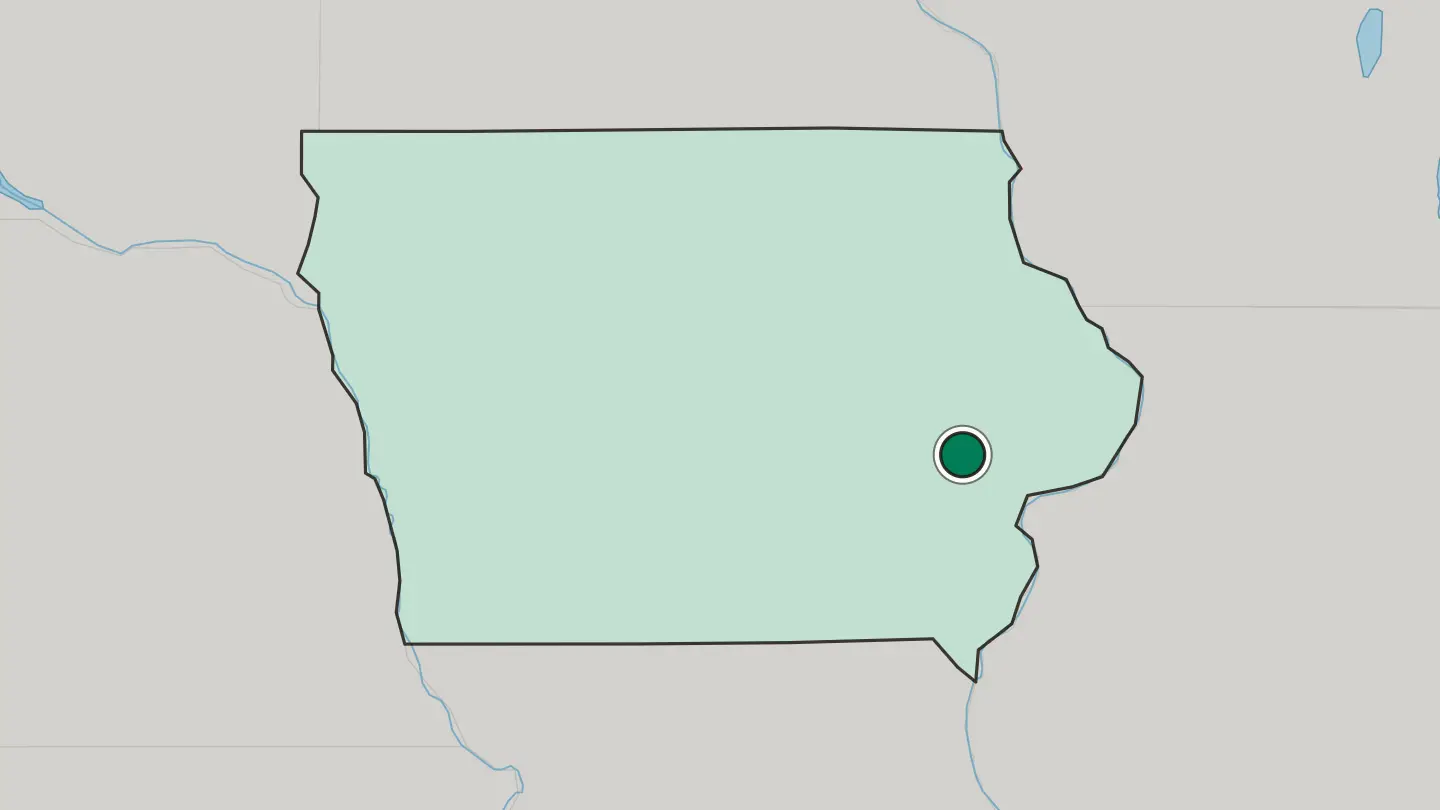
 United States
Waterloo
Waterloo, seat of Black Hawk County in Iowa, is split into east and west sides by the Cedar River and joined to Cedar Falls as a twin city.Where to stay →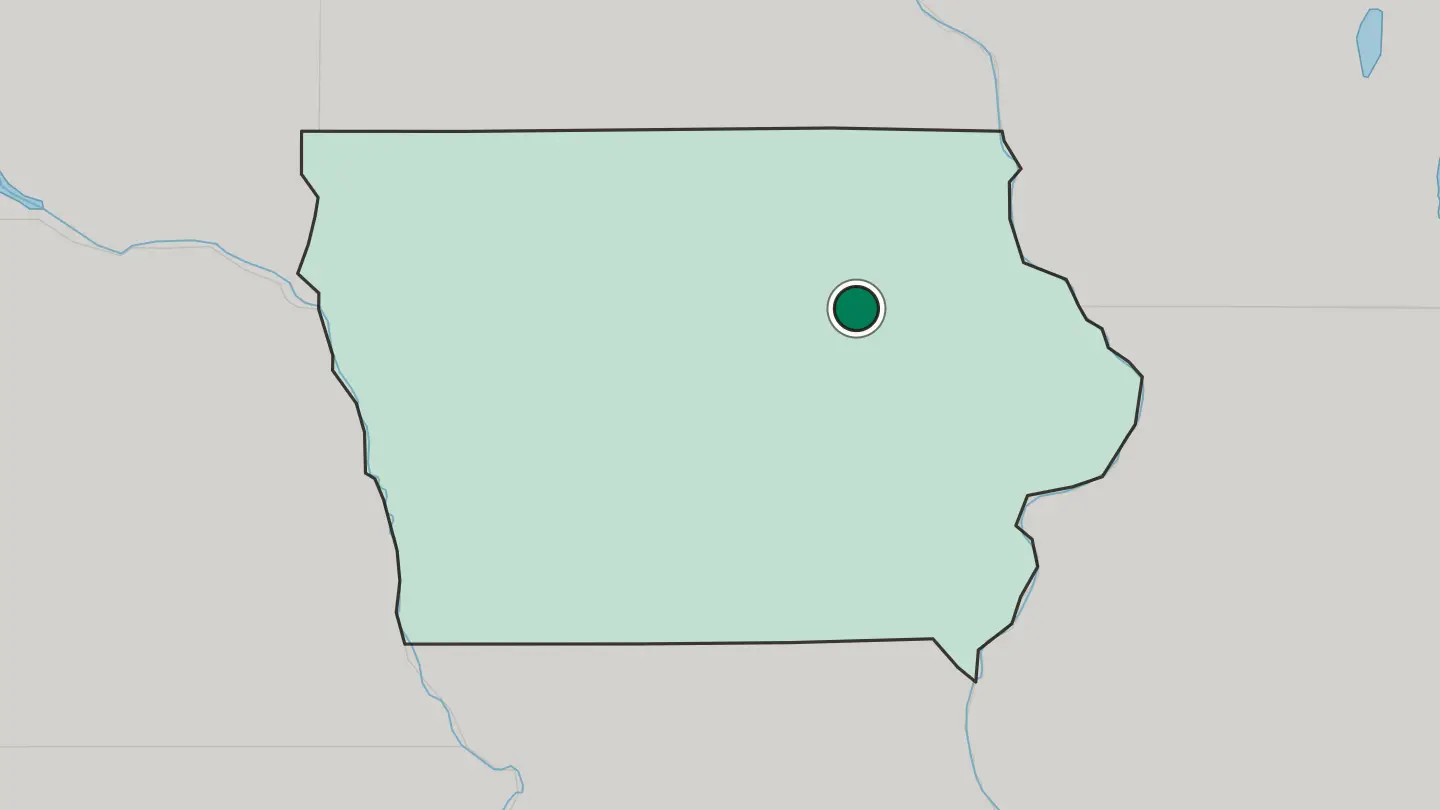
 United States
Ames
Ames is a college town in Story County, Iowa, built around Iowa State University and set astride the Skunk River north of Des Moines.Where to stay →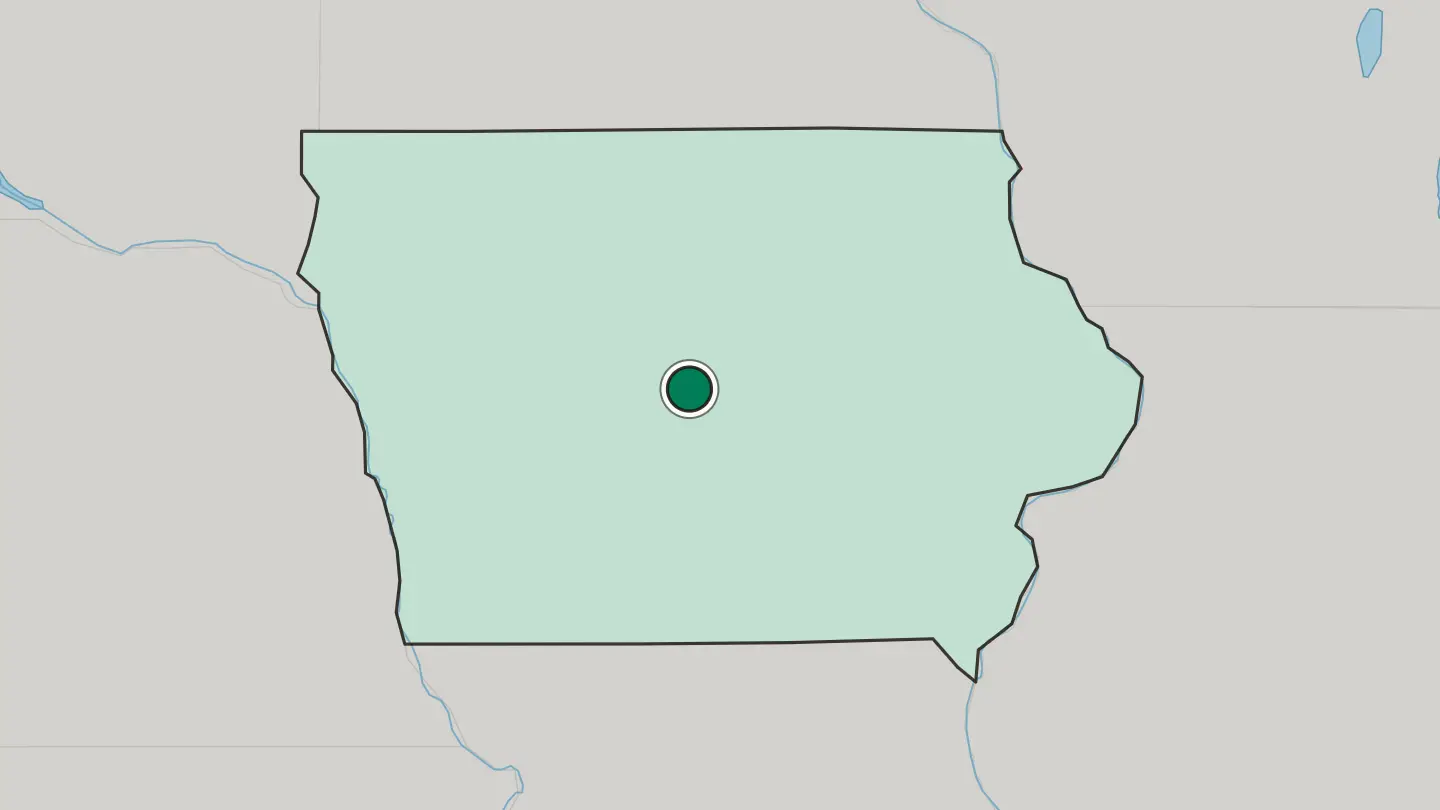 United States
West Des Moines
West Des Moines, the largest suburb of Des Moines, spreads across Polk, Dallas, Warren and Madison counties in Iowa and dates from 1893.Where to stay →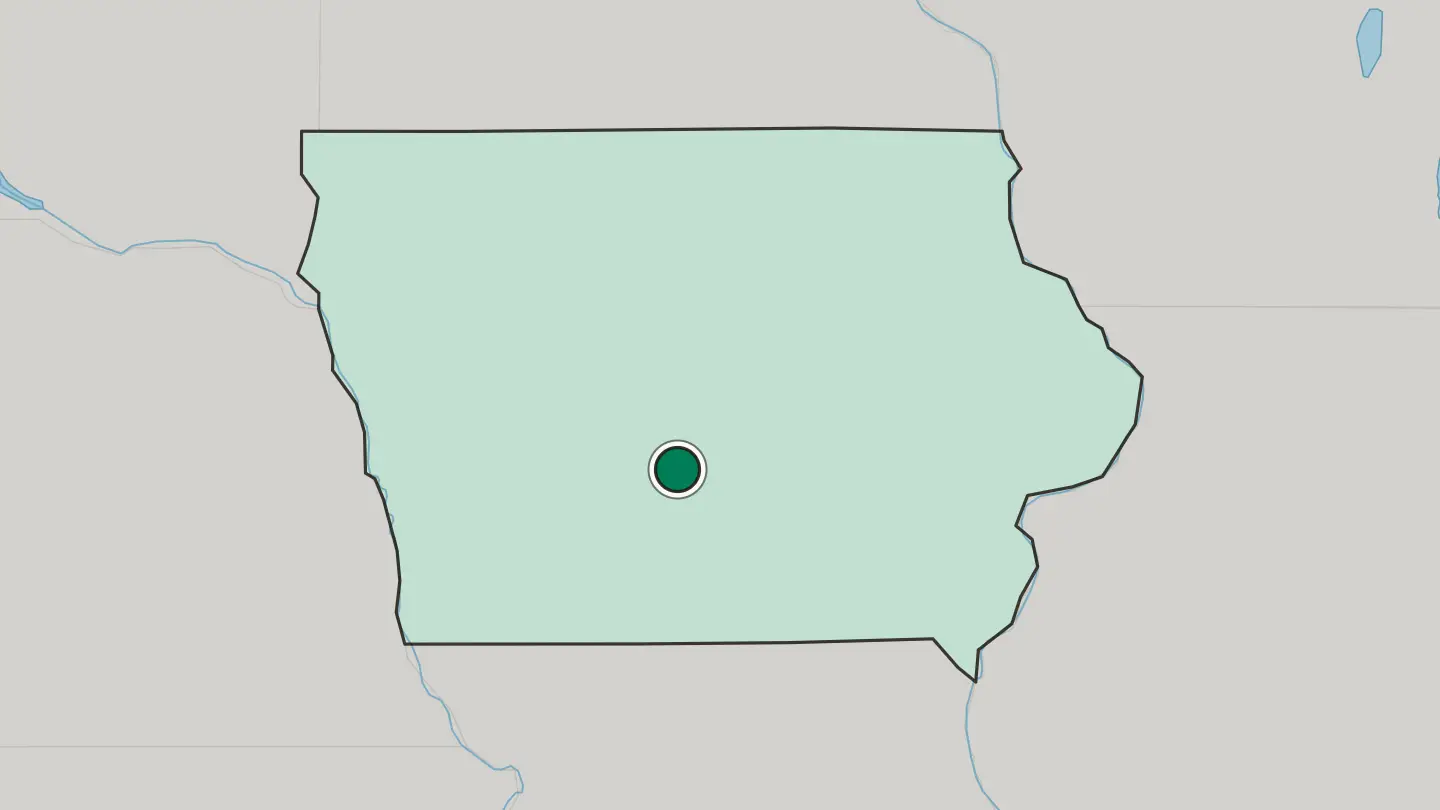
All towns & cities (10)
 United States
Council Bluffs
Council Bluffs, seat of Pottawattamie County, Iowa, stands on the Missouri River opposite Omaha, where the transcontinental railroad was reckoned to begin.Where to stay →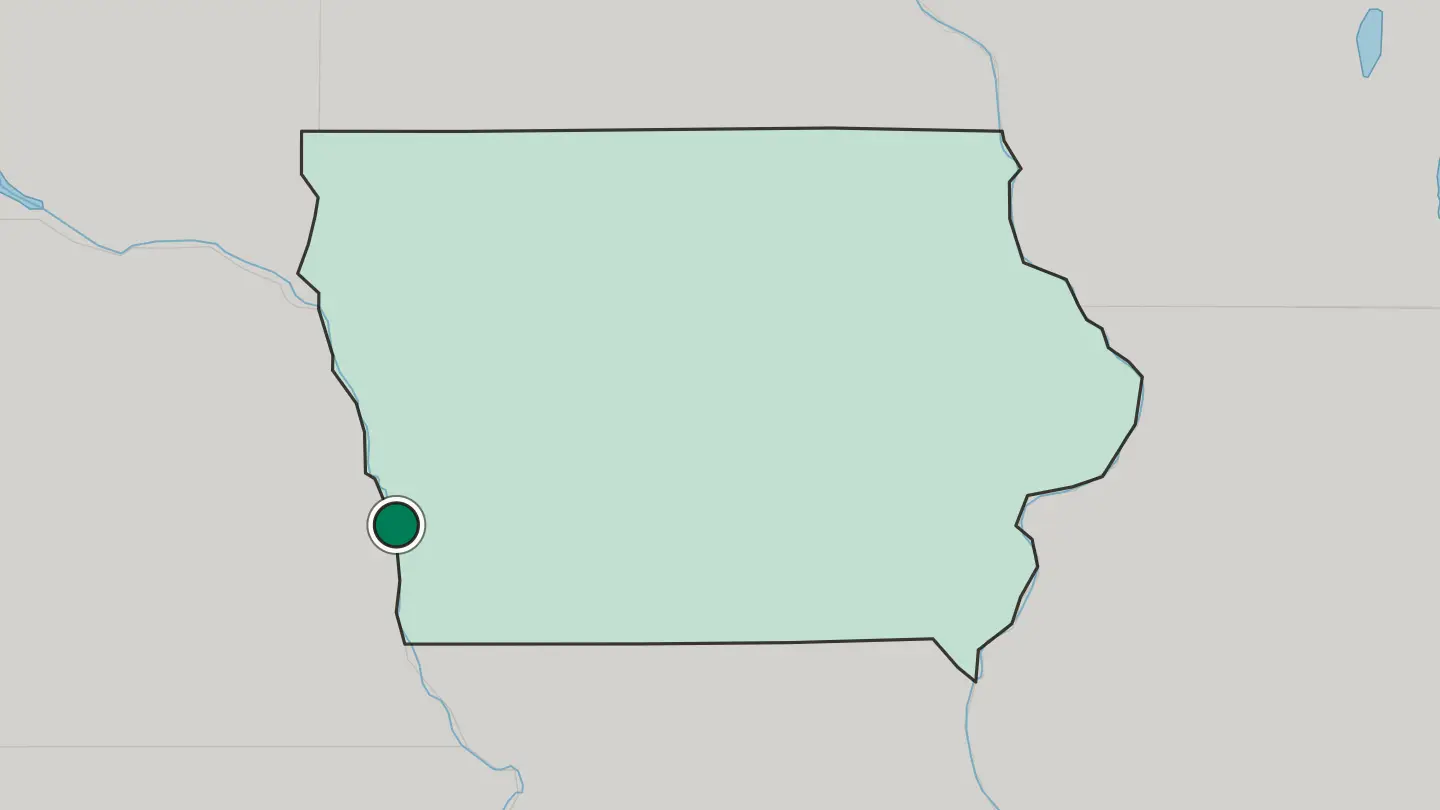
 United States
Dubuque
Dubuque, the oldest city in Iowa and seat of Dubuque County, rises on bluffs above the upper Mississippi River in the Tri-State Area.Where to stay →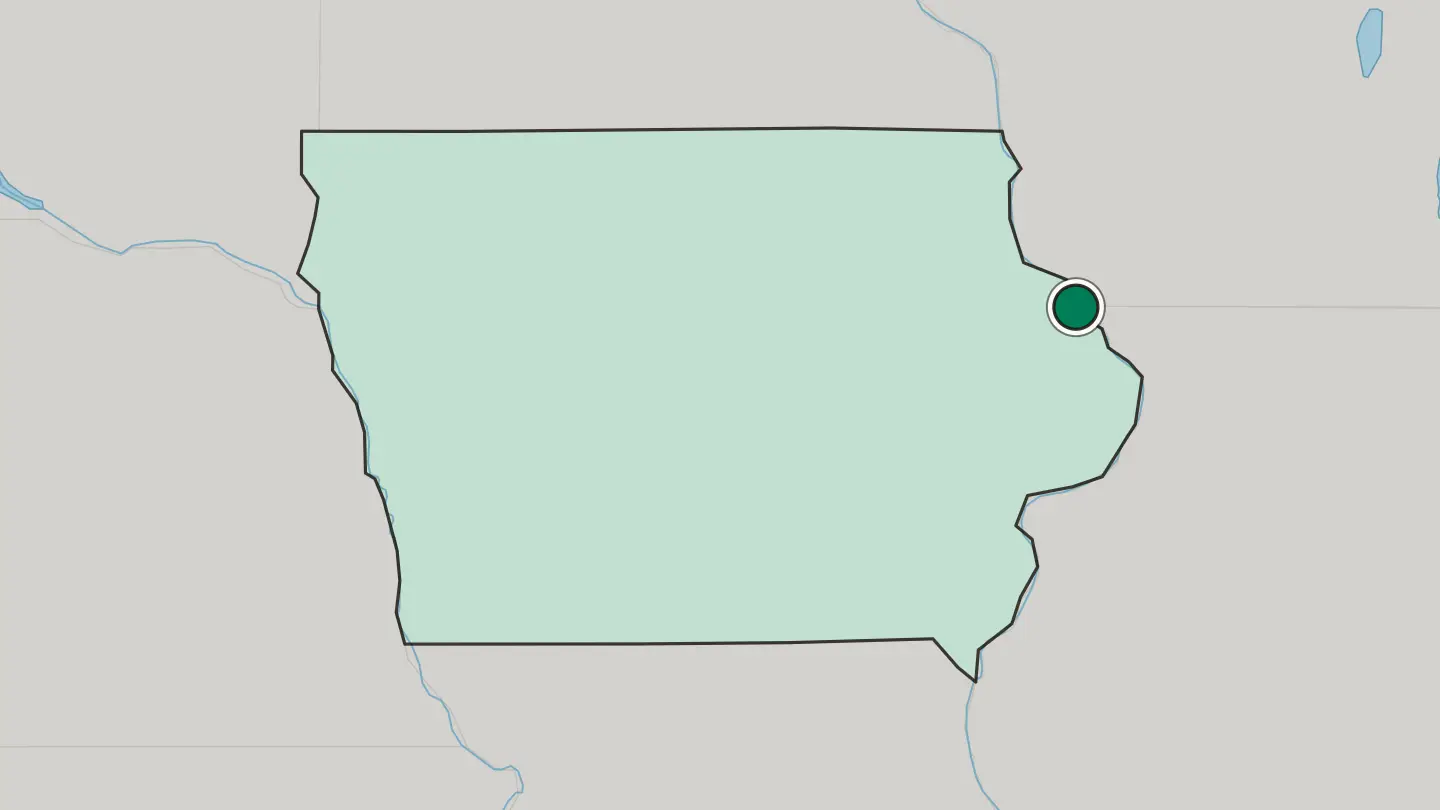
Hotel links are affiliate links: booking through them may earn us a commission, at no extra cost to you. It never affects how places are ranked. How this works
About Iowa
Iowa is farm country.
What is Iowa known for?
Corn and soybeans run to the horizon across its rolling plains, and the state anchors the Corn Belt that helps feed much of the United States. The painter Grant Wood grew up among these barns and gable-roofed farmhouses and turned them into American Gothic. Des Moines, the capital, throws the Iowa State Fair each August, one of the largest gatherings of its kind in the country.
Every four years, its caucuses open the race for the White House.
Where is Iowa?
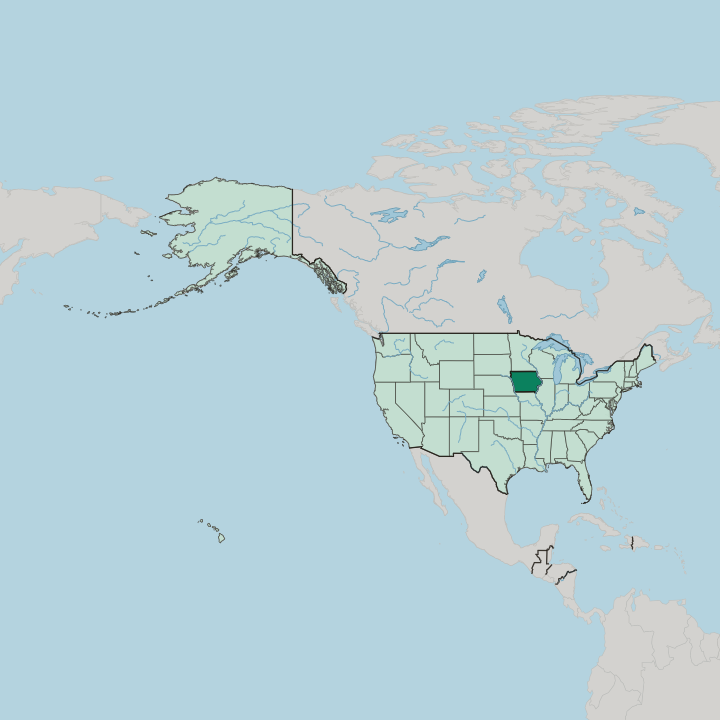
Iowa sits in the upper Midwest of the United States, a landlocked square of prairie between two great rivers. The Mississippi River draws its entire eastern edge; the Missouri River and the Big Sioux River draw the west. No other state is bracketed by rivers on both sides like this.
Six states ring it. Wisconsin and Illinois lie across the Mississippi River to the east, Missouri to the south, Nebraska and South Dakota to the west, and Minnesota along the northern line. The land between tilts gently, drained by rivers that run from the higher northwest toward the Mississippi in the southeast. The interior is not as flat as its reputation suggests.
In the far west, wind-piled silt has built the Loess Hills, a ridge of bluffs standing a couple of hundred feet above the Missouri River valley; only the loess near the Yellow River in China lies deeper. The northeast tells the opposite story. There the glaciers of the last ice age never reached, leaving the Driftless Area, a country of limestone bluffs, spring-fed creeks and wooded valleys that most of the Midwest lost to the flattening ice.
Between these two edges spreads the rolling farmland that made the state famous, dark-soiled and gridded into fields. Des Moines sits near the middle of it all.
What is Iowa like?
Iowa's identity is rooted in the land and the people who farm it. This is quiet, practical country. Agriculture sets the rhythm of the year, from spring planting to the autumn harvest, and it shows up in the food, the fairs and the talk.
The Iowa State Fair in Des Moines is the fullest expression of it, drawing a crowd from every county for prize hogs, butter sculptures and food served on a stick. Small-town life still matters here, and civic pride runs through the Fourth of July parades and the Friday-night football lights. For a farm state, Iowa carries an outsized cultural weight.
Grant Wood painted its gable-roofed farmhouses into American Gothic and led the Regionalist movement from a studio in Cedar Rapids. Iowa City, a UNESCO City of Literature, has trained generations of writers through the Iowa Writers' Workshop, the oldest graduate creative-writing program in the country. German communal settlers built the seven villages of the Amana Colonies, whose craft workshops and family-style restaurants still run.
Older still are the Meskwaki, who bought their land back in Tama County and never left. Faith, education and a plain-spoken civility shape the public character.
What is the history of Iowa?
The land belonged to the Meskwaki, Sauk and other nations long before it was surveyed into farms. American settlers pushed west across the Mississippi River after the Black Hawk War opened the territory to purchase. Iowa entered the Union as a free state in 1846, the twenty-ninth star on the flag and a northern vote in the long argument over slavery.
Railroads and steamboats then bound its river towns to Chicago and the wider country. Corn and hogs did the rest.
What is the climate of Iowa?
Iowa has a humid continental climate, with a wide swing between the seasons. Summers are hot and sticky, when moisture drawn up from the Gulf feeds towering thunderstorms and the tornadoes that give the state its share of spring and early-summer warnings. Winters bite.
Snow and hard freezes settle in from the northwest, colder there than in the milder southeast corner. Rain and snow together water the corn without the need for much irrigation. Autumn is the traveller's season, dry and gold over the harvested fields.
How do you get to Iowa?
Arrivals mostly come by air. Des Moines International Airport handles most arrivals, backed by the Eastern Iowa Airport in Cedar Rapids. On the ground the state is easy to cross: Interstate 80 runs its full width from east to west, and Interstate 35 cuts north to south, the two meeting at Des Moines.
Amtrak's California Zephyr threads the southern counties on its long run between Chicago and the Pacific coast. From the river cities, bridges step straight across the Mississippi River into Illinois and Wisconsin.
Common questions
What is the best area to stay in Iowa?
Des Moines: a first foothold in the state. Cedar Rapids: eastern Iowa's arts weekend. Iowa City: a literary college town. Davenport: the Quad Cities riverfront. Dubuque: river-bluff heritage.
More regions in United States
Updated September 2026