United States · Kansas
Where to Stay in Kansas City, Kansas
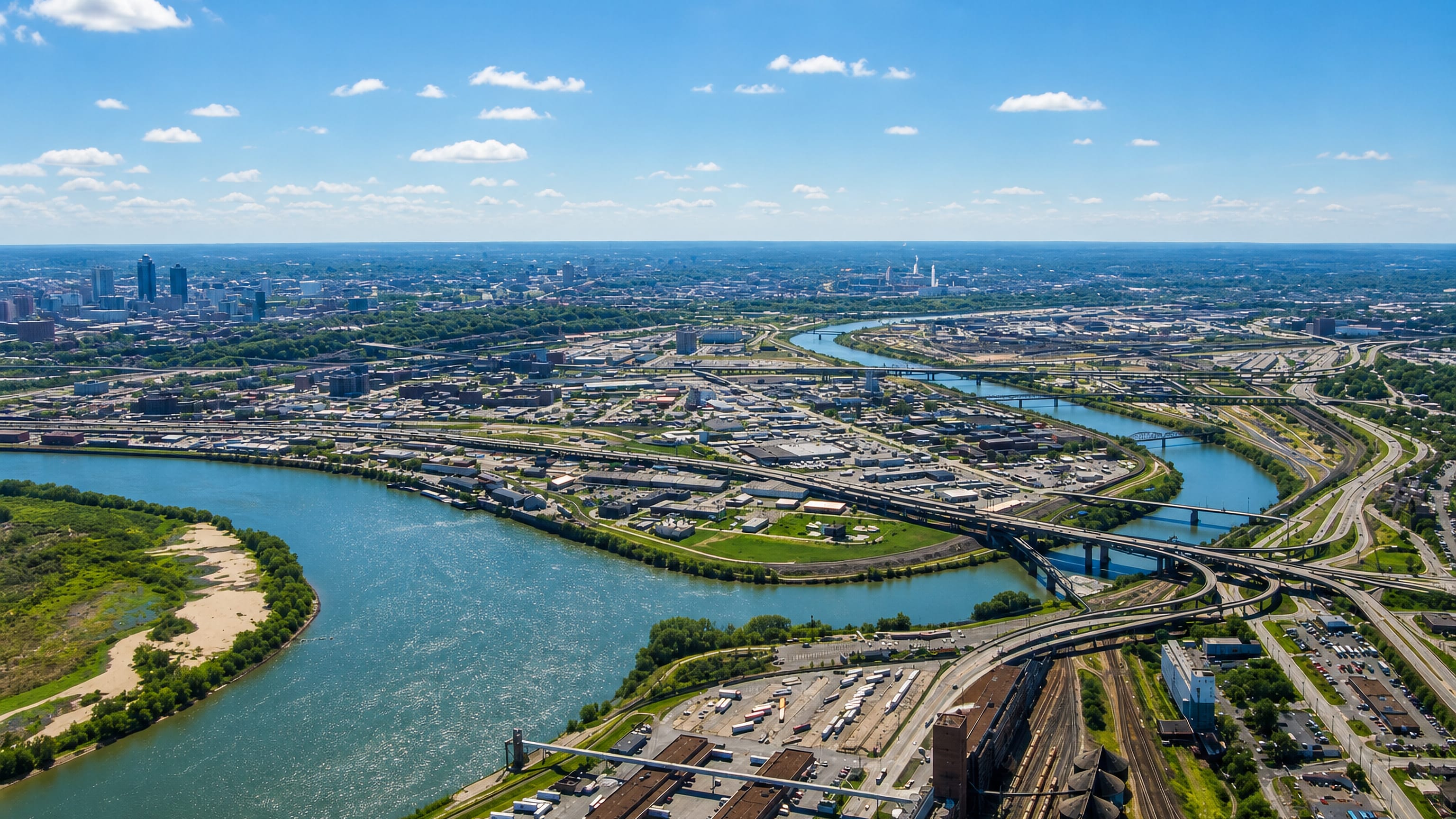
Kansas City sits where the Kansas River meets the Missouri River, a Wyandotte County city on the state line, with the Rosedale World War I Memorial Arch.
Hotel links are affiliate links: booking through them may earn us a commission, at no extra cost to you. It never affects how places are ranked. How this works


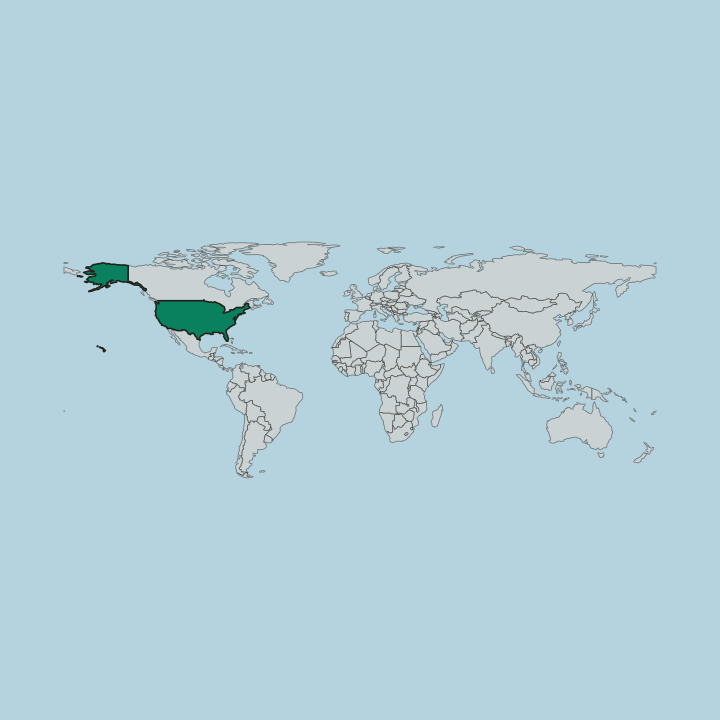
Where to stay in Kansas City
Where visitors usually base themselves, and why.
Kansas City spreads across the bluffs and bottoms of Wyandotte County, and most visitors base themselves near the downtown core or out by the interstate junctions. Start downtown. The blocks around the Wyandotte County Courthouse hold the civic core and the older commercial streets, close to the river junction where the Kansas River meets the Missouri River, and it makes a central base on the Kansas side of the line.
Stay here for the courthouse district and the river valleys. West and south, the residential hills climb away from the bottoms toward Grinter Place and the Rosedale World War I Memorial Arch, quieter ground set above the industrial flats. Stockyard and rail land still fills the low valleys along the rivers, and newer hotels gather near the highway interchanges out toward the county edge.
The Missouri line runs close by to the east. Its river junction, the wooded bluffs, and the open Kansas sky set the whole feel of a stay in Kansas City.
Find hotels in Kansas City
Direct booking searches for these neighbourhoods.
Downtown courthouse district
The older commercial blocks around the Wyandotte County Courthouse on the Kansas side, close to where the Kansas River meets the Missouri River.Find hotels in Downtown courthouse districta quieter base above the river bottomsThe Rosedale and southern hills
The residential hills climbing toward the Rosedale World War I Memorial Arch and Grinter Place, set above the industrial valleys of Wyandotte County.Find hotels in The Rosedale and southern hillshighway access and stopover staysThe interstate-junction edge
The newer hotels near the interchanges toward the western edge of Wyandotte County, away from the rail-and-stockyard bottoms by the rivers.Find hotels in The interstate-junction edgeHotel links are affiliate links: booking through them may earn us a commission, at no extra cost to you. It never affects how places are ranked. How this works
Things to do in Kansas City
Ranked by global recognition; descriptions from Wikidata (CC0).
Churches & Religious Sites
1- Old St. Mary's Catholic Church Heritage
Castles & Historic Sites
3- Quindaro Townsite Heritage
- Trowbridge Archeological Site Heritage
- Hanover Heights Neighborhood Historic District Heritage
Landmarks & Notable Places
6- Sauer Castle Heritage
- Grinter Place Heritage
- A. Porter Davis Residence Heritage
- Judge Louis Gates House Heritage
- Schleifer-McAlpine House Heritage
Show 1 more →
- Theodore Shafer House Heritage
worth knowingacross 3 categories in Kansas City
About Kansas City
What is Kansas City known for?
Kansas City is the seat of Wyandotte County in Kansas, set on the west side of the state line where the Kansas River joins the Missouri River. Rail and river built it. The city grew as a stockyard, packing, and railroad town at the river junction, distinct from its larger namesake across the line in Missouri.
The Wyandotte County Courthouse anchors the civic core, and the Rosedale World War I Memorial Arch crowns a hilltop above the valleys. Older landmarks like Grinter Place and the Huron Cemetery record the settlement's earliest days.
What are the main landmarks in Kansas City?
Kansas City's landmarks trace Wyandotte County's history from the frontier to the war years. The Rosedale World War I Memorial Arch crowns a hilltop above the valleys, and the Wyandotte County Courthouse anchors the downtown core. Grinter Place preserves a pioneer ferry-keeper's home from the earliest settlement, while the Huron Cemetery and the Quindaro Townsite mark the land's Native American and abolitionist past.
Older buildings survive across the bluffs. The Scottish Rite Temple, Memorial Hall, and Sauer Castle stand among the city's other landmarks.
What is the history of Kansas City?
Kansas City in Kansas grew from several towns at the meeting of the Kansas River and the Missouri River, incorporated in 1868 on the west bank of the state line. The Wyandot people, removed here from the east, settled the bluffs and left their mark in the Huron Cemetery, and the abolitionist port of Quindaro rose nearby before the Civil War. Grinter Place recalls the ferry crossing that first drew traffic to the junction.
The rivers made the site a natural gathering point for the young frontier. Rail and meatpacking made the modern city. Stockyards and packing houses filled the river bottoms as the railroads converged on the junction, and the town spread up the bluffs above the working valleys.
Immigrant neighbourhoods grew around the yards, and civic buildings like the Wyandotte County Courthouse and Memorial Hall rose to serve them. The Rosedale World War I Memorial Arch was raised on a hilltop to honour the district's war dead. Rivers, rails, and the packing trade shaped every stage of the Kansas city.
Where is Kansas City?
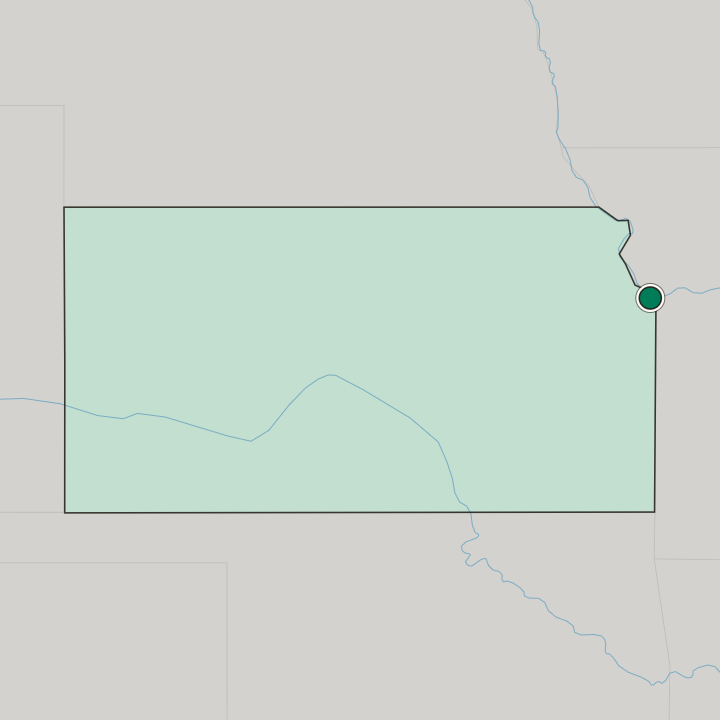
Kansas City lies at the junction of the Kansas River and the Missouri River in Wyandotte County, on the western side of the Kansas-Missouri state line. The ground is broken. Wooded bluffs rise steeply above the wide river bottoms, and the built-up city climbs from the industrial flats onto the hills of the plain.
The Kansas River flows in from the west to meet the larger Missouri River at the city's edge. Beyond the bluffs the open prairie of Kansas rolls away to the west.
What is the climate of Kansas City?
Kansas City has a continental climate, with hot humid summers and cold winters on the prairie edge. Seasons swing hard. Warm moist air pushes up from the south in summer, bringing thunderstorms and the risk of severe weather across the river valleys, while cold fronts drop temperatures sharply in winter over the open Kansas plain.
Winters bring frost and snow to the bluffs above the rivers. Spring and autumn run short and changeable between the hard extremes of the year.
How do you get to Kansas City?
Kansas City sits at a major crossing of interstate routes on the western edge of the Kansas-Missouri metropolitan area. Highways converge here. The interstates meet near the junction of the Kansas River and the Missouri River, carrying road traffic across the state line and out onto the plains, while the regional airport serves the wider metro area to the north.
Freight rail still runs heavy through the river bottoms on the old converging lines. Prairie highways carry on west across Kansas from the bluffs.
Common questions
What is the best area to stay in Kansas City?
Downtown courthouse district: the civic core and river-junction sights. The Rosedale and southern hills: a quieter base above the river bottoms. The interstate-junction edge: highway access and stopover stays.
Good for
More cities in Kansas
Updated September 2026