United States · Kansas
Where to Stay in Overland Park, Kansas
Overland Park is the largest city in Johnson County, a Kansas suburb of 1960 among the principal cities of the Kansas City metropolitan area.
Hotel links are affiliate links: booking through them may earn us a commission, at no extra cost to you. It never affects how places are ranked. How this works


Where to stay in Overland Park
Where visitors usually base themselves, and why.
The Museum at Prairiefire end of the city carries the newer hotels, and it suits anyone whose reason for coming is the museum itself or a straightforward night beside the road. The Rio Theatre marks older ground. Streets near it feel more like a town than a suburb, which is the difference most visitors notice between one part of Overland Park and another.
Johnson County spreads wide here. Rooms are plentiful across the whole city, so the choice is less about finding a bed than about deciding which of the Kansas City metropolitan area's four principal cities a traveller wants to wake up in. Overland Park covers about 76 square miles.
That is a great deal of ground for a single suburb, and it means the drive between Shawnee Mission District Stadium and the Museum at Prairiefire is a real journey rather than a hop. Plan on having a car. Kansas City, Missouri lies on the far side of the state line, and travellers who want a dense downtown evening usually take a room there and use Overland Park for the quieter night.
First Family Church and the Rio Theatre are the other named fixtures. Neither is a reason to pick one side of Overland Park over another, and the honest advice is to stay wherever the day's driving starts, because everything here is measured in minutes on the road.
Find hotels in Overland Park
Direct booking searches for these neighbourhoods.
The Museum at Prairiefire side
The newer end of Overland Park, built around the Museum at Prairiefire and the roads that serve itFind hotels in The Museum at Prairiefire sideAn evening in the older commercial streets rather than the highway stripThe Rio Theatre blocks
Where the Rio Theatre and First Family Church give Overland Park something older than its 1960 charterFind hotels in The Rio Theatre blocksFixtures at Shawnee Mission District Stadium and school-sport weekendsNear Shawnee Mission District Stadium
Residential Johnson County ground within reach of the stadium and the Campbell Dome House. Rooms are few around here — worth securing early.Find hotels in Near Shawnee Mission District StadiumHotel links are affiliate links: booking through them may earn us a commission, at no extra cost to you. It never affects how places are ranked. How this works
About Overland Park
What is Overland Park known for?
The Museum at Prairiefire is the best known of the city's collections, and the Rio Theatre stands from an older commercial layer than most of what surrounds it. Scale is the other headline. Overland Park is the second-largest city in Kansas and one of four principal cities in the Kansas City metropolitan area, which is unusual company for a place incorporated in 1960.
Shawnee Mission District Stadium handles the sport.
What are the main landmarks in Overland Park?
The Museum at Prairiefire is the headline, a collection that gives a suburban city a reason to be visited rather than merely passed through, and the Rio Theatre supplies the older counterpoint. One stadium serves the schools. Shawnee Mission District Stadium takes that role, while First Family Church and the Campbell Dome House round out a register of five named sites.
That is a thin list for the second city of Kansas, and much of what a visitor sees here is newer than anything the record bothers to name.
What is the history of Overland Park?
Overland Park is a young city. It has been a city only since 1960, which is late enough to explain why so little of the city's fabric appears on any heritage register. The Rio Theatre is one exception.
The Campbell Dome House is another, and between them they stand for the small amount of built history that the suburb absorbed as it grew across Johnson County. Nothing about the place is old by the standards of the region, and a register of five named sites is all that the record carries for a city of this size. Kansas City, Missouri is the reason any of this happened.
The suburb grew as that city's population spread across the state line, and Overland Park became the most populous of the suburbs on the Kansas side. Growth kept going. It ended as the second-largest city in Kansas and one of four principal cities in the Kansas City metropolitan area, a standing it reached in a single lifetime.
The institutions came afterwards. Shawnee Mission District Stadium, First Family Church and the Museum at Prairiefire all belong to the city that the suburb turned into, rather than to anything that stood here before it.
Where is Overland Park?
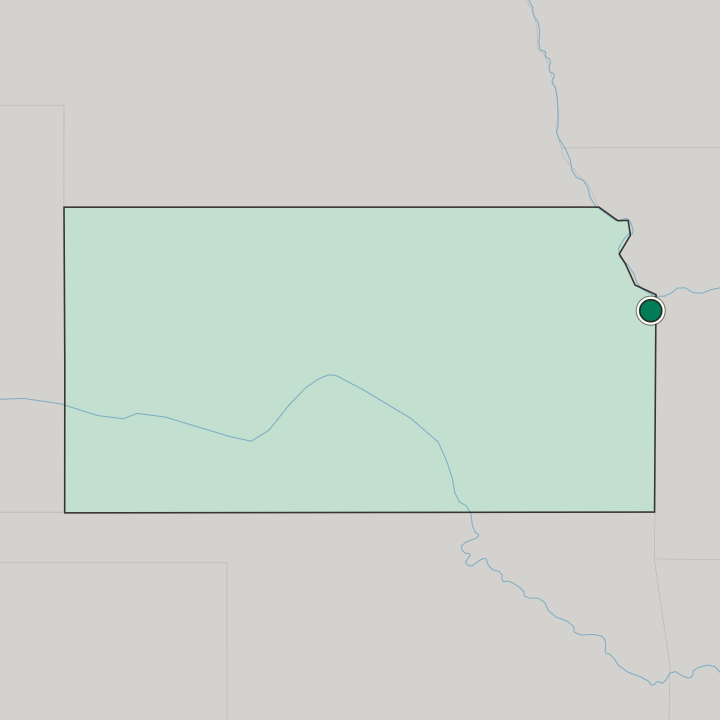
Overland Park fills about 76 square miles of Johnson County, a footprint large enough that the city has no single obvious centre to orient a visitor. The metropolitan area continues past it. Kansas City, Missouri sits within the same urban region, and Overland Park counts as one of four principal cities in that metropolitan area rather than as a place with edges of its own.
Suburban building covers nearly all of it.
What is the climate of Overland Park?
Nothing coastal reaches this far inland, so Overland Park takes the full continental year that the middle of the country hands it. July is heavy. January turns sharply the other way, and the temperate band the city occupies means both ends arrive in force without either of them lasting the whole season.
That leaves spring and fall as brief interludes.
How do you get to Overland Park?
Overland Park is reached by road from every direction, and the highway network that ties the Kansas City metropolitan area together serves it directly. Kansas City, Missouri lies across the state line. Most visitors arrive with a car already, which is just as well, because about 76 square miles of Johnson County lie between the far ends of the city.
The Museum at Prairiefire and Shawnee Mission District Stadium are the two fixed destinations, and a visitor without a car will spend more of the day travelling than looking. Johnson County roads do the rest.
Common questions
What is the best area to stay in Overland Park?
The Museum at Prairiefire side: Nights beside the museum with parking at the door. The Rio Theatre blocks: An evening in the older commercial streets rather than the highway strip. Near Shawnee Mission District Stadium: Fixtures at Shawnee Mission District Stadium and school-sport weekends.
More cities in Kansas
Updated October 2026