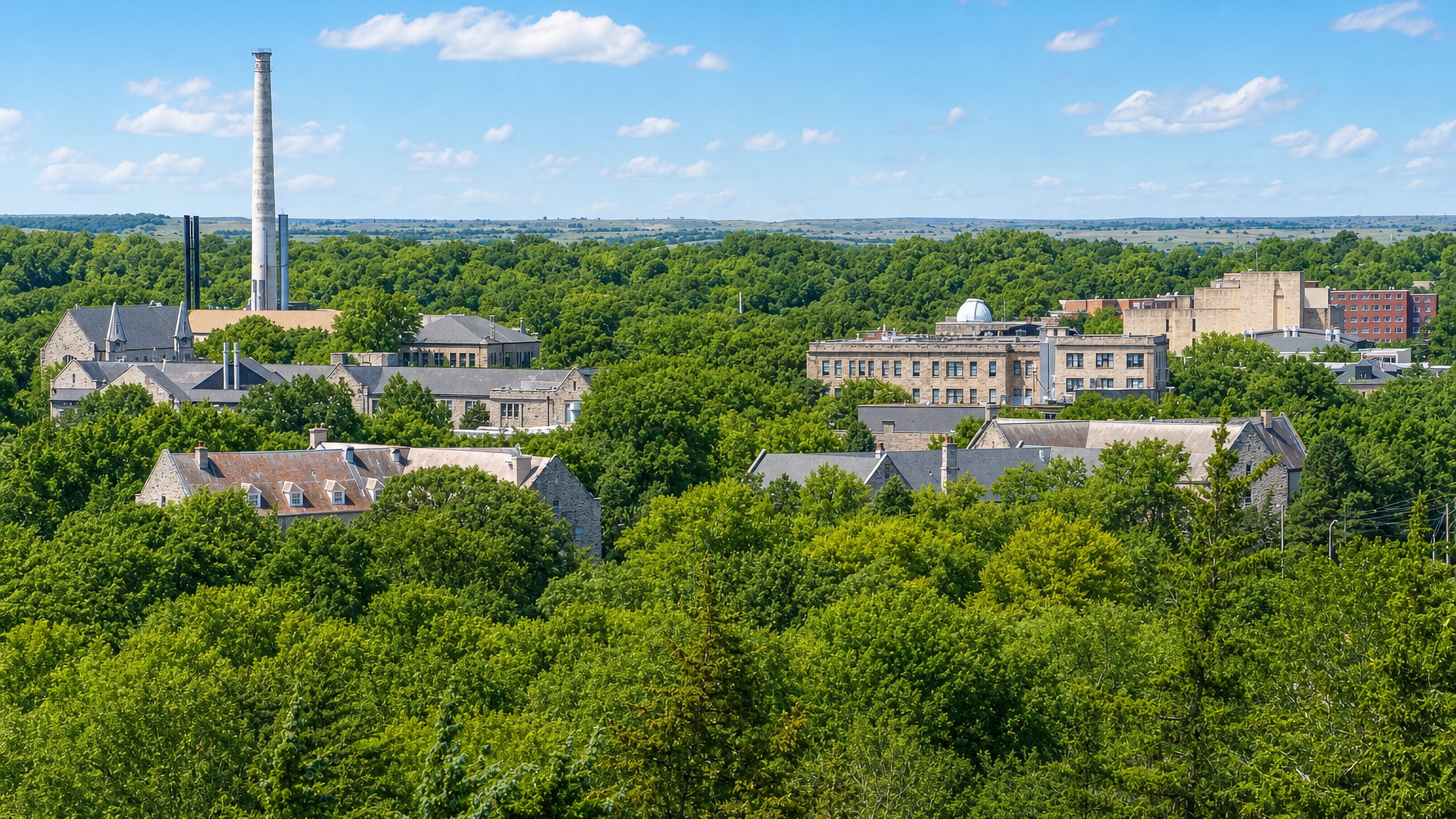
United States · Kansas
Where to Stay in Manhattan, Kansas
Manhattan holds the junction of the Kansas River and the Big Blue River, a Riley County college town dating from 1855.
Hotel links are affiliate links: booking through them may earn us a commission, at no extra cost to you. It never affects how places are ranked. How this works


Where to stay in Manhattan
Where the beds are, and what that means for the visit.
The Kansas State University side is where most rooms sit, close to Bramlage Coliseum and Tointon Family Stadium, and it is the obvious base for anyone here on university business or for a game. Downtown works differently. The Flint Hills Discovery Center and the Marianna Kistler Beach Museum of Art draw visitors toward the civic quarter, where Seven Dolors Catholic Church and First Congregational Church stand among the older blocks.
Sunset Zoo pulls families further out. Rooms on that side put the Goodnow House and the Damon Runyon House within reach of a short drive, and the ground is quieter than anywhere near the stadiums. Manhattan covers about 19 square miles.
That is small enough to cross quickly by car and too spread out to walk end to end, so most visitors pick one side and drive to the other. The rivers set the limits. Riley County holds the greater part of the town and Pottawatomie County takes the rest, which matters less to a visitor than the distance between the Flint Hills Discovery Center and the university ground.
Beds near Bramlage Coliseum go first on match days. Anyone without a car should stay near the campus rather than out toward Sunset Zoo, because the walk back is longer than it looks on a map.
Find hotels in Manhattan
Direct booking searches for these neighbourhoods.
The Kansas State University edge
The university side of Manhattan, with both arenas and the campus within a short hopFind hotels in The Kansas State University edgeMuseum days at the Discovery Center and the Marianna Kistler Beach Museum of ArtThe Flint Hills Discovery Center quarter
The civic blocks where Seven Dolors Catholic Church and First Congregational Church standFind hotels in The Flint Hills Discovery Center quarterFamilies with a car and a day at Sunset ZooOut by Sunset Zoo
Quieter ground within a short drive of the Goodnow House and the Damon Runyon House. Beds are limited here, so book early.Find hotels in Out by Sunset ZooHotel links are affiliate links: booking through them may earn us a commission, at no extra cost to you. It never affects how places are ranked. How this works
Things to do in Manhattan
Ranked by global recognition; descriptions from Wikidata (CC0).
Churches & Religious Sites
2- Seven Dolors Catholic Church Heritage
- First Congregational Church Heritage
Stadiums & Sports
2- Bramlage Coliseum
- Tointon Family Stadium
Landmarks & Notable Places
8- Goodnow House Heritage
- Jeremiah Platt House Heritage
- E. A. and Ura Wharton House Heritage
- Hulse-Daughters House Heritage
- Damon Runyon House Heritage
Show 3 more →
- Daniel and Maude Walters House Heritage
- Francis Byron (Barney) Kimble House Heritage
- Grimes House Heritage
worth knowingacross 3 categories in Manhattan
About Manhattan
What is Manhattan known for?
Kansas State University sets the tone here, and Bramlage Coliseum and Tointon Family Stadium carry the sporting half of a town that runs on the academic year. The Flint Hills Discovery Center explains the country around. Sunset Zoo and the Marianna Kistler Beach Museum of Art fill out the day, while Seven Dolors Catholic Church and First Congregational Church mark the older civic ground of Riley County.
The junction of two rivers frames it.
What are the main landmarks in Manhattan?
The Flint Hills Discovery Center is the one that explains the country, and the Marianna Kistler Beach Museum of Art holds the art, with Sunset Zoo taking the family afternoon. Sport has two venues. Bramlage Coliseum and Tointon Family Stadium belong to the university, while Seven Dolors Catholic Church and First Congregational Church anchor the older streets and the Goodnow House, the Jeremiah Platt House and the Damon Runyon House survive from the domestic register.
Riley County counts the rest.
What is the history of Manhattan?
Manhattan dates from 1855. The site at the junction of the Kansas River and the Big Blue River gave the settlement its reason, and the earliest of the houses on the register belong to those first decades. Riley County took it as the seat.
The Goodnow House and the Jeremiah Platt House stand from that period, with First Congregational Church among the early congregations and the Strasser House and the Grimes House on the streets that followed. The university arrived and reordered everything. Kansas State University turned a county seat into a college town, and Bramlage Coliseum and Tointon Family Stadium came with the later expansion of that campus.
Seven Dolors Catholic Church served the growing town, and the Damon Runyon House, the McFarlane-Wareham House and the Daniel and Maude Walters House record the families who filled the streets around it. The city spilled into Pottawatomie County. Later additions gave it the Flint Hills Discovery Center, built to interpret the country around, along with the Marianna Kistler Beach Museum of Art and Sunset Zoo on the outer ground.
The rivers still mark the edge.
Where is Manhattan?
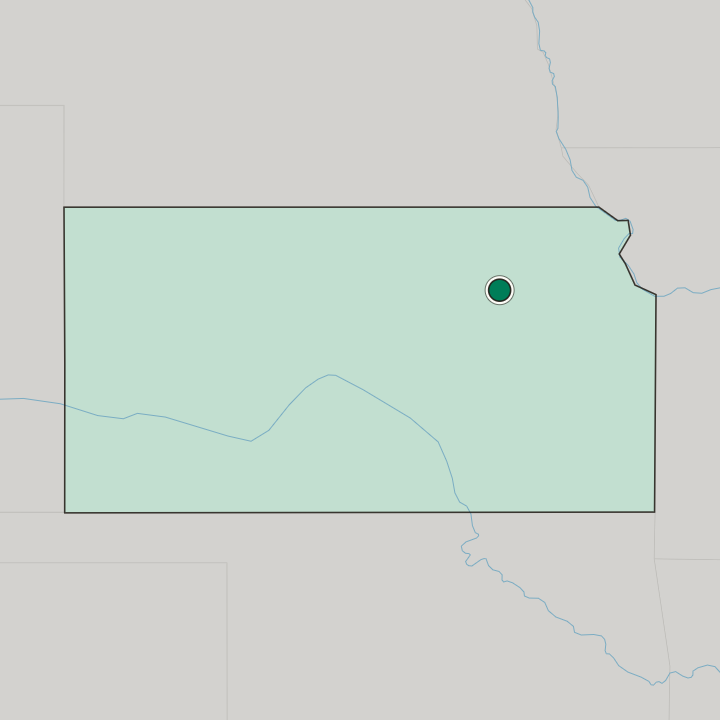
Manhattan takes in about 19 square miles at the junction of the Kansas River and the Big Blue River, most of it in Riley County with a share reaching into Pottawatomie County. The Flint Hills Discovery Center names the country around. Two river valleys shape the built ground, and the town spreads along them rather than in a ring around a single centre.
Riley County is the frame.
What is the climate of Manhattan?
Wind off the open country is the constant here, with the Kansas River and the Big Blue River doing little to soften a year that swings hard at both ends. Summers run hot. Winter brings hard cold to Riley County, and the temperate band this part of Kansas sits in still allows a wide gap between the two ends of the year.
Spring is the unsettled season.
How do you get to Manhattan?
Most people arrive by road, and Riley County carries the routes in from the rest of Kansas toward the junction of the two rivers. Kansas State University is the usual destination. Bramlage Coliseum and Tointon Family Stadium sit on that campus ground, and a visitor coming for either will find the walk between them short and everything else in Manhattan a drive.
The Flint Hills Discovery Center and Sunset Zoo need the car. About 19 square miles is not far, but the older streets around First Congregational Church and the outer ground do not connect on foot.
Common questions
What is the best area to stay in Manhattan?
The Kansas State University edge: Game nights at Bramlage Coliseum and Tointon Family Stadium. The Flint Hills Discovery Center quarter: Museum days at the Discovery Center and the Marianna Kistler Beach Museum of Art. Out by Sunset Zoo: Families with a car and a day at Sunset Zoo.
Good for
More cities in Kansas
Updated September 2026