United States · Louisiana · New Orleans
French Quarter, New Orleans — Area Guide & Where to Stay
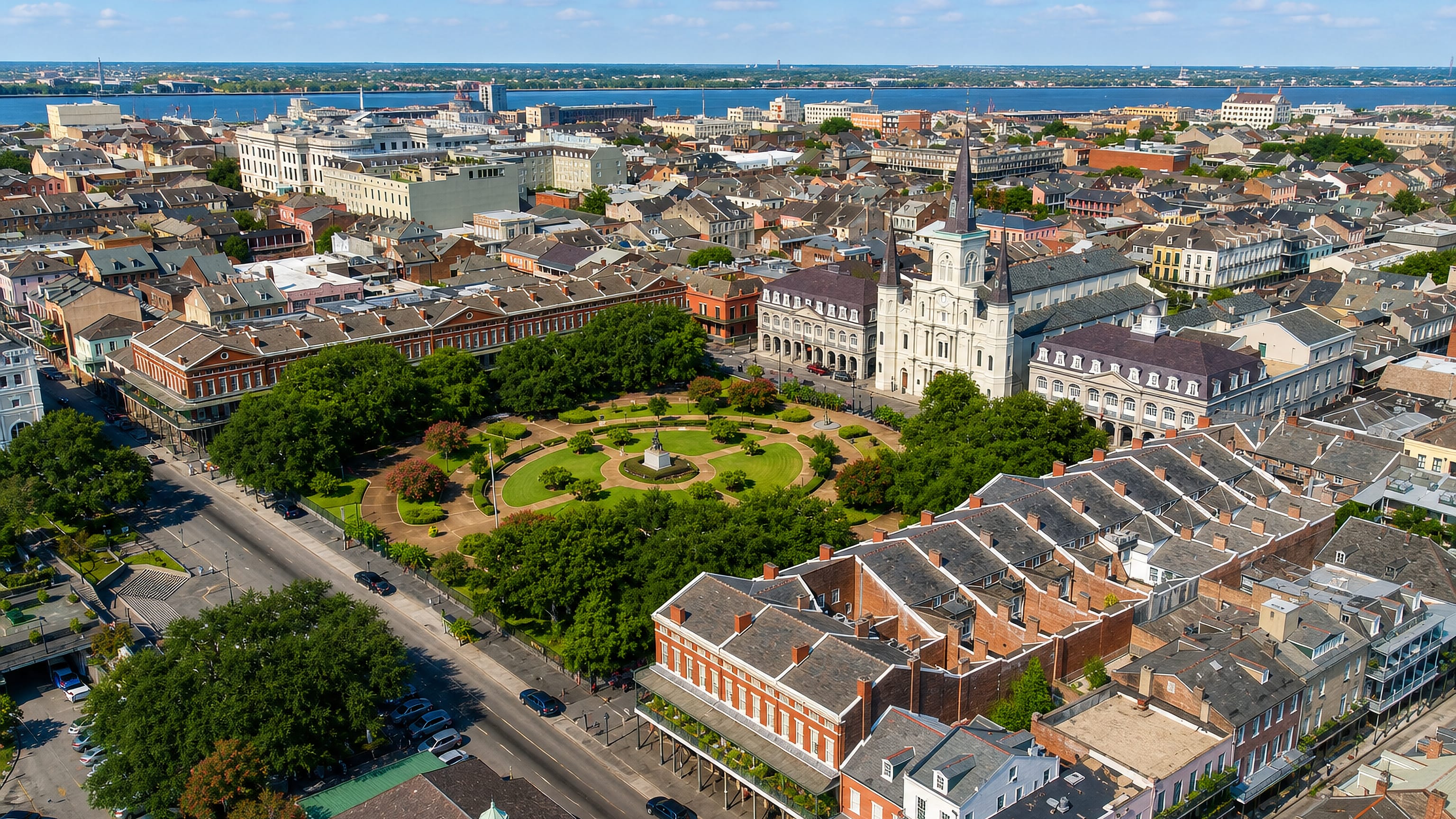
The French Quarter is the oldest part of New Orleans, the Vieux Carré, from Canal Street to Esplanade Avenue, with Jackson Square and St. Louis Cathedral.
Hotel links are affiliate links: booking through them may earn us a commission, at no extra cost to you. It never affects how places are ranked. How this works


Where to stay in French Quarter
Where the beds are, and what that means for the visit.
Staying in the French Quarter puts you within walking distance of nearly everything a first visit wants to see. Hotels here range from converted Creole townhouses with courtyard pools to larger inns along Chartres Street and Royal Street, many within a block or two of Jackson Square. The trade-off is noise.
Rooms near Bourbon Street stay lively well past midnight. The lower blocks toward Esplanade Avenue keep quieter evenings. Anyone who wants sightseeing on foot, from St. Louis Cathedral to the Old Ursuline Convent, is well placed here.
Those after calmer nights or cheaper rooms often look just across Canal Street or out to Faubourg Marigny.
Things to do in and around New Orleans
Ranked by global recognition; descriptions from Wikidata (CC0).
Museums & Galleries
3- The Cabildo Heritage
- Old Ursuline Convent Heritage
- Confederate Memorial Hall Heritage
Churches & Religious Sites
3- St. Patrick's Church Heritage
- St. Louis Cathedral
- St. Augustine Church
Castles & Historic Sites
1- Gayarre Place Monument
Landmarks & Notable Places
5- Napoleon House Heritage
- Beauregard-Keyes House Heritage
- Madame John's Legacy Heritage
- Hermann–Grima House Heritage
- Lafcadio Hearn House Heritage
worth knowingacross 4 categories in and around New Orleans
About French Quarter
What are the main landmarks in French Quarter?
Everything centres on Jackson Square. St. Louis Cathedral rises over it beside the former Spanish town hall now called the Cabildo, and the 1850 House museum fills part of the Lower Pontalba building alongside. Chartres Street carries much of the rest: the Old Ursuline Convent, the Beauregard-Keyes House, the New Orleans Pharmacy Museum, and the old Napoleon House bar.
Dumaine Street holds Madame John's Legacy, a French Creole house that came through the fire of 1794. The New Orleans Historic Voodoo Museum sits a few doors along the same street.
What is the history of French Quarter?
French colonists founded the Quarter in 1718 as the original town of New Orleans. Its engineer, Adrien de Pauger, drew the street grid the district still keeps. Fire changed everything.
The blazes of 1788 and 1794 destroyed most of the early French houses under Spanish rule, which is why the survivors read as Spanish colonial rather than French. At the Cabildo on Jackson Square, French officials handed Louisiana to the United States in 1803, and the old Creole blocks later took in immigrant families, many of them Sicilian.
Where is French Quarter?
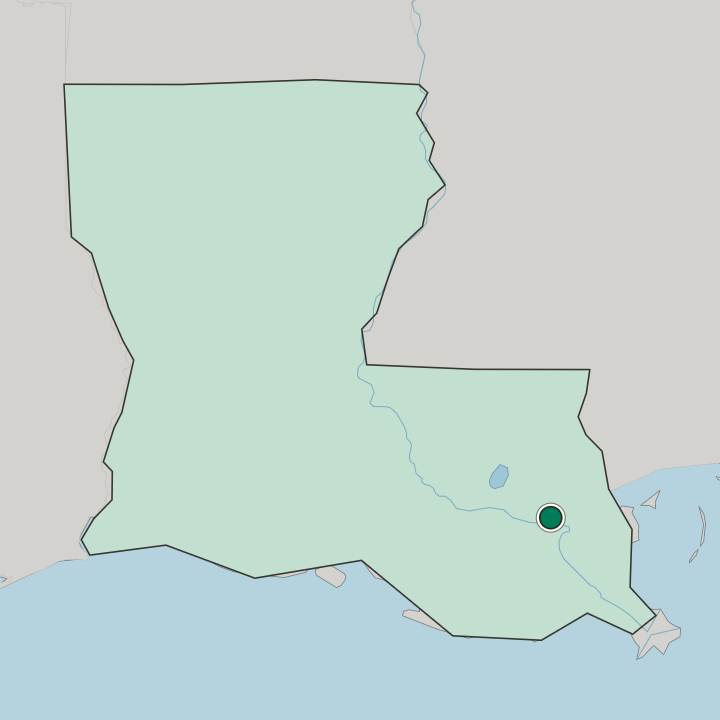
The Quarter sits on the East Bank of the Mississippi River, wrapped by the crescent bend that gives New Orleans its nickname. Canal Street forms its upriver boundary, dividing it from the Central Business District, while Esplanade Avenue marks the downriver edge against Faubourg Marigny. Rampart Street closes the inland side toward Tremé.
Toward the river, the strip beyond Decatur Street long held industry and warehousing.
Good for
More areas in New Orleans
Updated October 2026