United States · Louisiana · New Orleans
Storyville, New Orleans — Area Guide & Where to Stay
Storyville was the legal red-light district of New Orleans, laid out in 1897 by the French Quarter on Basin Street. Alderman Sidney Story named it.
Hotel links are affiliate links: booking through them may earn us a commission, at no extra cost to you. It never affects how places are ranked. How this works


Where to stay in Storyville
Where the beds are, and what that means for the visit.
You cannot really stay in Storyville. The district was cleared long ago, and the blocks that replaced it are housing, not hotels. Anyone who wants to stand where the old cabarets ran books a room instead in the neighboring French Quarter, an easy few minutes' walk that also puts St. Louis Cathedral, The Cabildo, and the Quarter's museum houses within reach.
The Quarter suits sightseeing and late nights alike. Storyville is for the history, not the bed.
Things to do in and around New Orleans
Ranked by global recognition; descriptions from Wikidata (CC0).
Museums & Galleries
3- The Cabildo Heritage
- Old Ursuline Convent Heritage
- Confederate Memorial Hall Heritage
Churches & Religious Sites
3- St. Patrick's Church Heritage
- St. Louis Cathedral
- St. Augustine Church
Castles & Historic Sites
1- Gayarre Place Monument
Stadiums & Sports
1- Fair Grounds Race Course
Landmarks & Notable Places
4- Beauregard-Keyes House Heritage
- Madame John's Legacy Heritage
- Hermann–Grima House Heritage
- Lafcadio Hearn House Heritage
worth knowingacross 5 categories in and around New Orleans
About Storyville
What are the main landmarks in Storyville?
Storyville keeps almost none of its own monuments; the sights worth the walk stand in the streets around it. The French Quarter, a few blocks off, holds St. Louis Cathedral on Jackson Square and The Cabildo beside it, along with the Old Ursuline Convent, among the oldest buildings in the city. Museums sit a little farther out.
The National World War II Museum and the Ogden Museum of Southern Art fill the warehouse blocks toward the river.
What is the history of Storyville?
The city created Storyville in 1897, when an ordinance by alderman Sidney Story set aside these blocks for licensed prostitution and shut it out of the rest of New Orleans. Basin Street drew the costliest houses, and pianists working the parlors helped carry early jazz into wider circulation. The United States Navy forced the district to close in 1917, during the First World War.
Trade drained away over the following years. Most of the buildings were demolished around 1940 to make room for the Iberville housing project.
Where is Storyville?
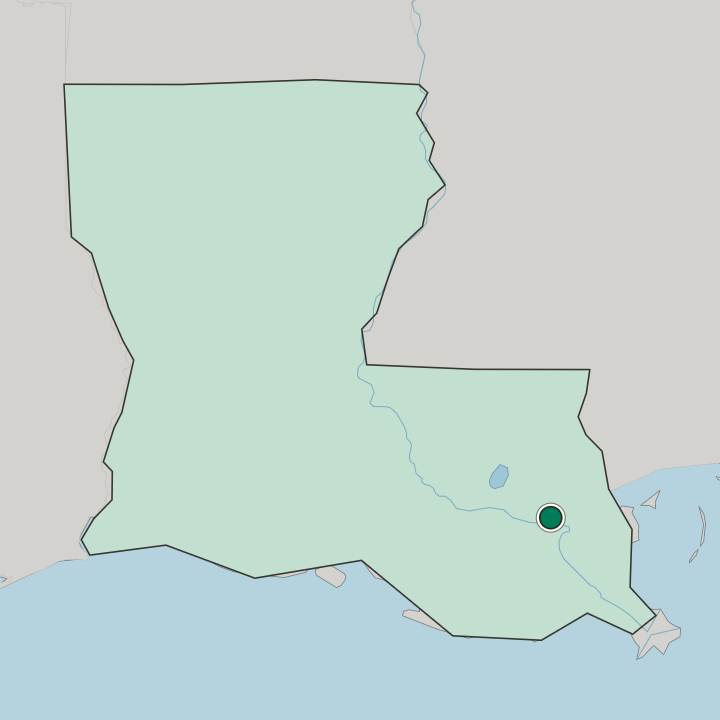
Storyville sat just beyond the lakeside edge of the French Quarter, across Rampart Street from the old town. Basin Street ran along its front, lined with the district's most expensive houses, while the plainer cribs filled the lanes toward North Robertson Street. Iberville Street closed off one end.
For decades the Iberville housing project covered most of the old footprint; the project has since been largely demolished.
Good for
More areas in New Orleans
Updated October 2026