United States · Minnesota
Where to Stay in Rochester, Minnesota
Rochester is the county seat of Olmsted County in Minnesota, a city on the south fork of the Zumbro River and the birthplace of the Mayo Clinic.
Hotel links are affiliate links: booking through them may earn us a commission, at no extra cost to you. It never affects how places are ranked. How this works


Where to stay in Rochester
Where the beds are, and what that means for the visit.
The Mayo Clinic organises the whole question. Most people arrive in Rochester for treatment or to accompany someone through it, so the blocks nearest the clinic are the obvious place to look before anything else is considered. Downtown is right there.
The Rochester Art Center and Mayo Field belong to the same central ground, which means a stay picked for the appointments also covers most of what the city offers between them. Older houses give a second option. The Plummer House and the James McBean Residence stand away from the clinic blocks, and rooms on that side suit you if the visit is about the city rather than the hospital.
Quiet comes with the distance. Soldiers Field Veterans Memorial is another name on that list, and the bluffs along the Zumbro River give these streets their setting. Distance is the last factor.
Rochester sits about 80 miles from Minneapolis, far enough that a room here is not a base for the larger city, and Olmsted County gives visitors little reason to travel in the other direction. Mayo Field and the Rochester Art Center remain within reach wherever the room ends up.
Find hotels in Rochester
Direct booking searches for these neighbourhoods.
Downtown by the Mayo Clinic
The central blocks holding the clinic, with Rochester Art Center and Mayo Field on the same short circuit.Find hotels in Downtown by the Mayo ClinicVisits built around the Plummer House and the bluffsThe Plummer House side
Older Rochester streets away from the clinic, near the James McBean Residence and the Zumbro River bluffs. Beds are limited here, so book early.Find hotels in The Plummer House sideQuiet nights by Soldiers Field Veterans MemorialSoldiers Field
Open ground at the rim of central Rochester, a short remove from the Mayo Clinic without leaving Olmsted County's core. Few places to stay nearby — book ahead.Find hotels in Soldiers FieldHotel links are affiliate links: booking through them may earn us a commission, at no extra cost to you. It never affects how places are ranked. How this works
Things to do in Rochester
Ranked by global recognition; descriptions from Wikidata (CC0).
Museums & Galleries
1- Rochester Art Center
Churches & Religious Sites
1- Co-Cathedral of St. John the Evangelist
Stadiums & Sports
1- Mayo Field
Landmarks & Notable Places
4- Plummer House Heritage
- Dr. William J. Mayo House Heritage
- Dr. Donald C. Balfour House Heritage
- Timothy A. Whiting House Heritage
worth knowingacross 4 categories in Rochester
About Rochester
Medicine defines the visitor traffic.
What is Rochester known for?
The Mayo Clinic began in Rochester and still draws people from far outside Olmsted County, which is why a city of this size carries hotels, restaurants and services that a Minnesota county seat would not otherwise need. The Plummer House stands among the older addresses. Rochester Art Center, Mayo Field and the Soldiers Field Veterans Memorial fill out what the city offers beyond the medical campus.
What are the main landmarks in Rochester?
Nine names make the list. The Plummer House and the James McBean Residence are the older addresses, joined by the Timothy A. Whiting House, while the Co-Cathedral of St. John the Evangelist gives the city its principal church. Medicine marks most of the rest.
The Dr. William J. Mayo House and the Dr. Donald C. Balfour House carry the surnames of the clinic, and Mayo Field, Rochester Art Center and the Soldiers Field Veterans Memorial account for the public ground.
What is the history of Rochester?
Rochester dates from 1854. The town took shape along the south fork of the Zumbro River, on the rolling bluffs that still define the ground, and became the seat of Olmsted County in the ordinary way of Minnesota settlements. Farming country surrounded it.
The James McBean Residence and the Timothy A. Whiting House survive from those decades, when nothing about the place suggested what would follow. The clinic changed the scale. Rochester is the birthplace of the Mayo Clinic.
Two of the surviving houses carry the surnames of its doctors, the Dr. William J. Mayo House among them, and the Plummer House belongs to the same circle of families who built the practice into an institution. The Dr. Donald C. Balfour House stands in that register too. Patients came from everywhere, and the city grew its services around them, which is why a county seat of this size in Minnesota keeps an infrastructure its own scale would not explain.
Memory has its own places. Mayo Field and the Soldiers Field Veterans Memorial belong to the later city rather than to the settlement, and the Co-Cathedral of St. John the Evangelist marks the Catholic congregation that grew with it.
Where is Rochester?
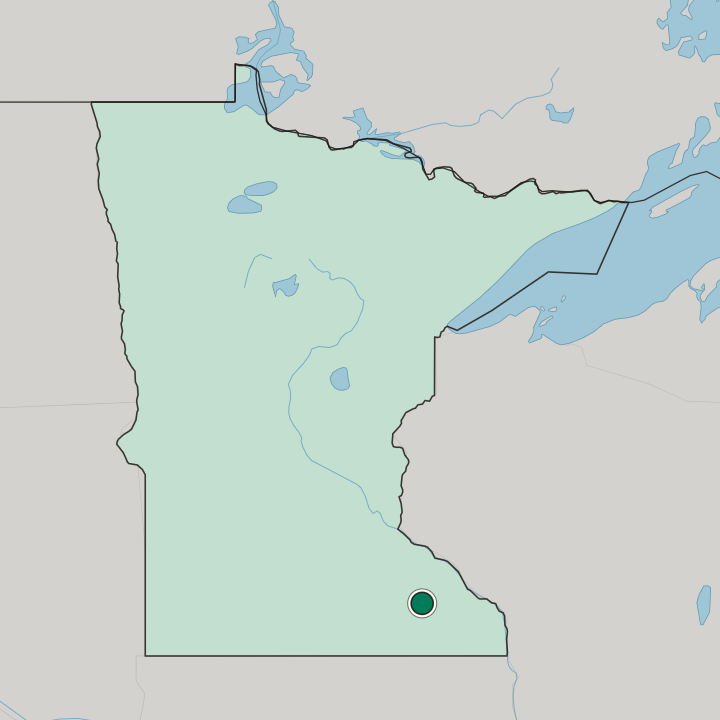
Bluffs give the city its shape. Rochester spreads over about 142 square kilometres of Olmsted County, with the south fork of the Zumbro River running through the middle and rolling ground rising on either side of it. Flat ground is scarce.
Minneapolis lies roughly 80 miles off, which leaves this part of Minnesota with its own centre rather than a suburban relationship to anywhere.
What is the climate of Rochester?
Winters here are genuinely cold. Summers turn warm and often hot, and the swing between the two is the plain fact of living in this part of Minnesota, where no ocean is near enough to hold either extreme in check. The Zumbro River valley carries the same conditions through the middle of Rochester.
Olmsted County offers no shelter from it.
How do you get to Rochester?
Most arrivals are medical. People travel to Rochester from well beyond Olmsted County for the Mayo Clinic, and the drive in from Minneapolis, about 80 miles, is the obvious approach for anyone coming from the larger cities. Few come by chance.
Once inside the city everything on the visitor list, from Mayo Field to the Rochester Art Center, is a short drive at most.
Common questions
What is the best area to stay in Rochester?
Downtown by the Mayo Clinic: Appointments: the Mayo Clinic on foot. The Plummer House side: Visits built around the Plummer House and the bluffs. Soldiers Field: Quiet nights by Soldiers Field Veterans Memorial.
More cities in Minnesota
Updated September 2026