United States · Missouri · St. Louis
College Hill, St. Louis — Area Guide & Where to Stay
Brick flats climb a crest over the Mississippi River in College Hill, a neighbourhood of north St. Louis named for a Saint Louis University farm.
Hotel links are affiliate links: booking through them may earn us a commission, at no extra cost to you. It never affects how places are ranked. How this works



Where to stay in College Hill
Where visitors usually base themselves, and why.
College Hill keeps no hotel of its own, so a bed here means a room elsewhere in St. Louis and a short run north for the day. What the neighbourhood holds instead is a long run of nineteenth-century housing: townhouses, four-family flats and single-family brick dwellings on large yards, much of it raised between 1880 and 1920.
Crest-of-hill blocks look over the river. If you come for the Grand Avenue Water Tower, East Grand Avenue is where the storefronts gather, with a second commercial strip along West Florissant Avenue.
Find hotels in College Hill
Direct booking searches for these neighbourhoods.
East Grand Avenue
East Grand Avenue carries the shops of College Hill and passes the Grand Avenue Water Tower at 20th Street. Rooms are few around here — worth securing early.Find hotels in East Grand Avenuewalkers who want the older street patternThe Lowell grid
College Avenue belongs to the grid of the town of Lowell, platted in 1849 at the river's angle rather than the city's. Few places to stay nearby — book ahead.Find hotels in The Lowell gridmornings beside the park that closes the northwest sideThe O'Fallon Park edge
O'Fallon Park adjoins College Hill on the northwest, ground the city bought from the O'Fallon estate in 1875. Rooms are few around here — worth securing early.Find hotels in The O'Fallon Park edgeHotel links are affiliate links: booking through them may earn us a commission, at no extra cost to you. It never affects how places are ranked. How this works
About College Hill
What are the main landmarks in College Hill?
College Hill counts two of the three surviving St. Louis standpipes. The Grand Avenue Water Tower, a Corinthian column of brick, stone and cast iron, stands at East Grand Avenue and 20th Street. It went into service in 1871.
The Bissell Street Water Tower rises a few blocks east, at Bissell Street and Blair Avenue. Tudor Revival timbering marks the Otto Kulage House on College Avenue. Our Lady of Perpetual Help Parish Hall, School, Convent, and Rectory and Lowell School both sit on Linton Avenue, and Bryan Hill School went up on Gano Avenue in 1912.
What is the history of College Hill?
College Hill takes its name from the College Farm, a 300-acre tract Saint Louis University bought in 1836 for gardens and recreation as it moved its seminary in from Florissant. Building on it failed twice. The first contractor died, and a theological school begun in 1858 was given up around 1860.
The university sold the ground in 1867 to pay for its campus at Grand and Lindell, and the farm was cut into lots in the early 1870s. Part of the district had already been platted in 1849 as the town of Lowell, which the city absorbed in 1876, and its grid still runs at the river's angle rather than the city's.
Where is College Hill?
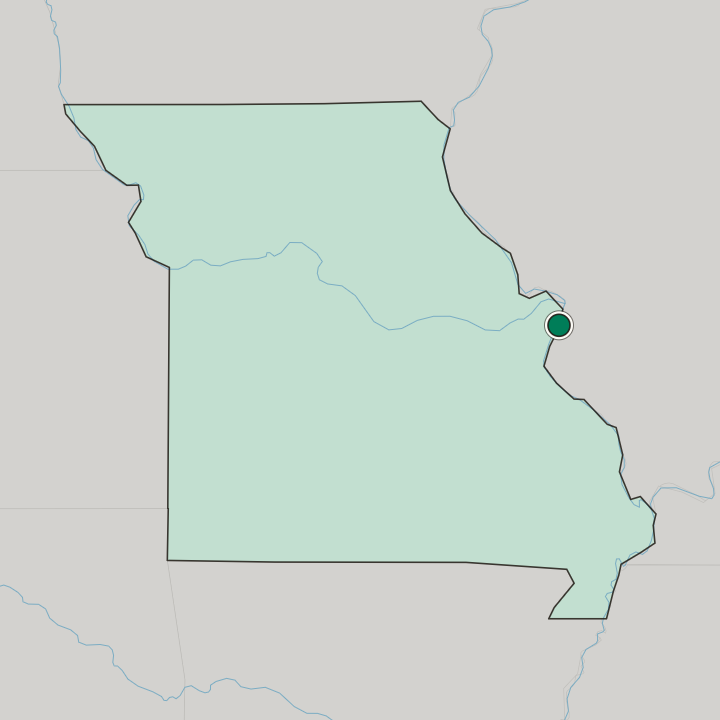
College Hill is a north St. Louis district drawn by five edges: Interstate 70, Grand Boulevard, West Florissant Avenue, Warne Avenue, and O'Fallon Park.
Common questions
What is the best area to stay in College Hill?
East Grand Avenue: days spent on the storefront run beneath the old water tower. The Lowell grid: walkers who want the older street pattern. The O'Fallon Park edge: mornings beside the park that closes the northwest side.
Good for
More areas in St. Louis
Updated October 2026