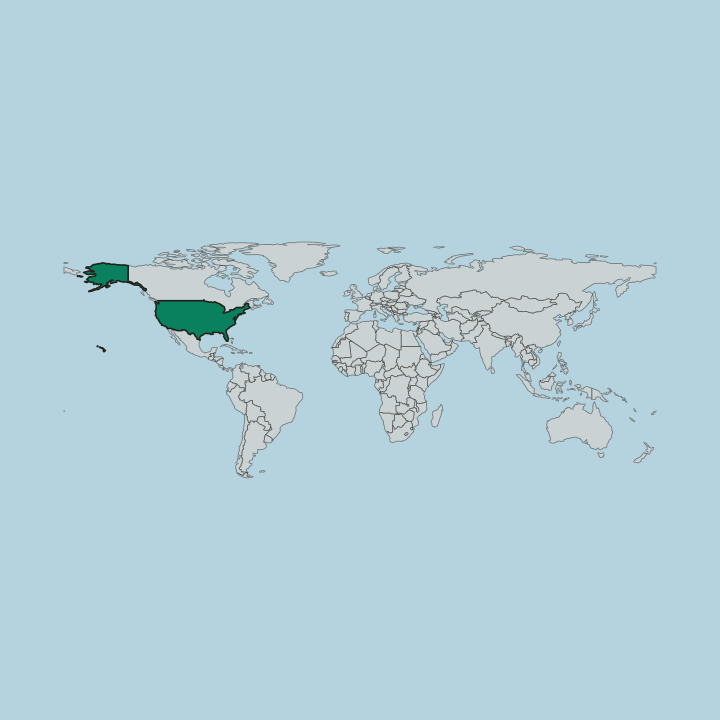
United States · Missouri
Where to Stay in St. Louis, Missouri
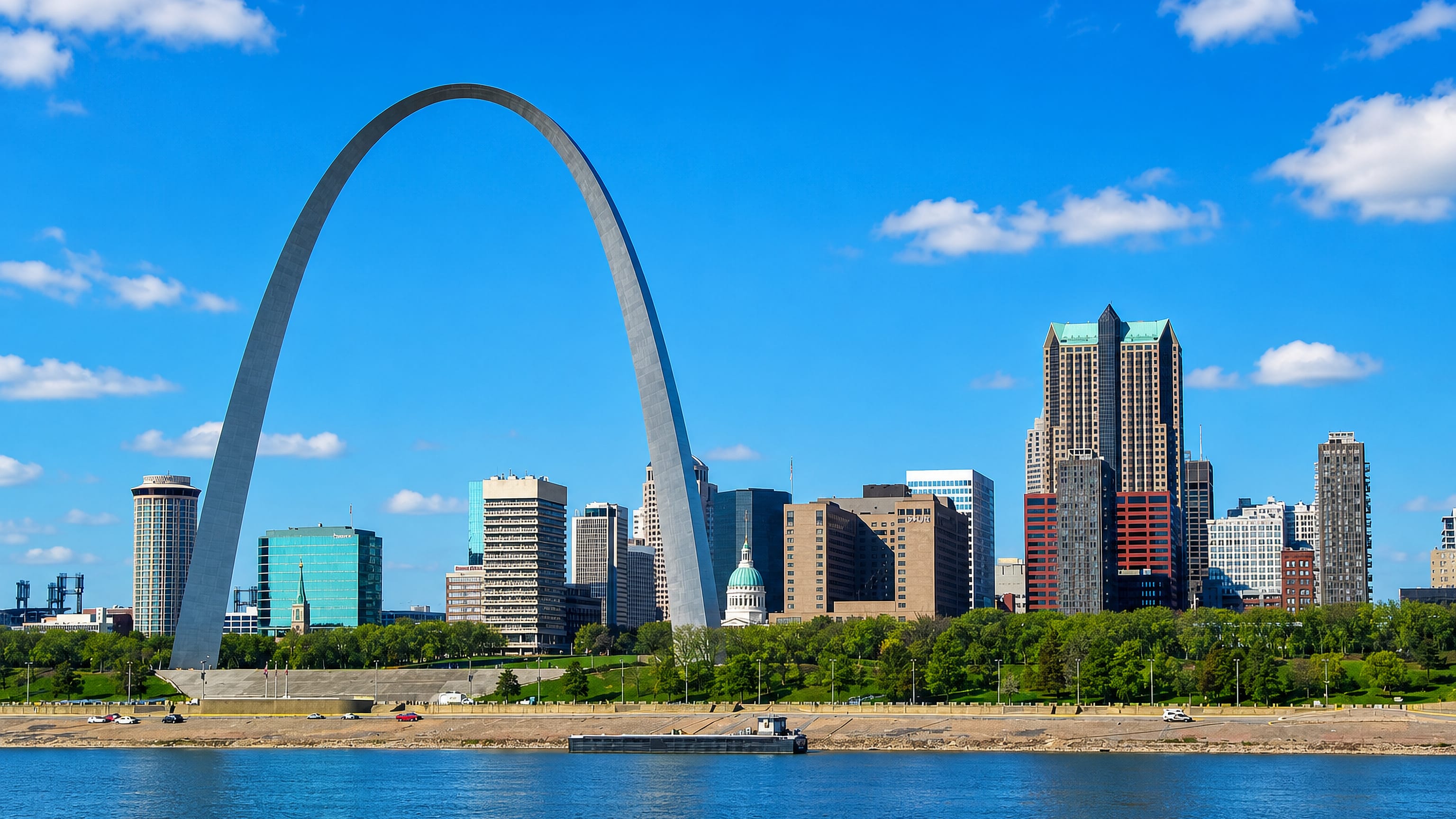
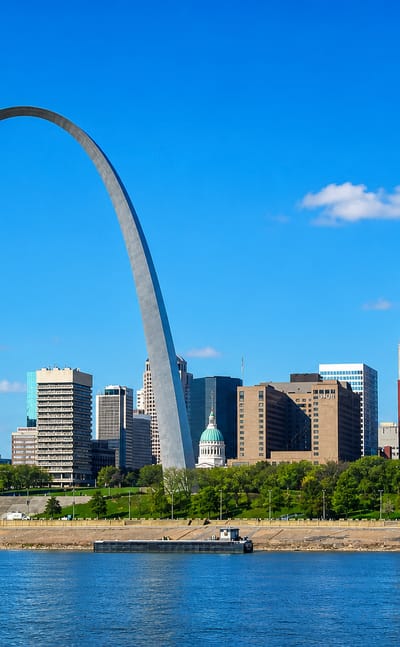
The Gateway Arch curves over the Mississippi. St. Louis is a river city in Missouri, founded in 1764 and known worldwide for that stainless span.
Hotel links are affiliate links: booking through them may earn us a commission, at no extra cost to you. It never affects how places are ranked. How this works


Where to stay in St. Louis
The right area depends on your trip — here's what each neighbourhood is best for.
 St. LouisUnited States
Downtown St. Louis
Downtown St. Louis is the central business district of St. Louis, running from Tucker Boulevard east to the river front under the Gateway Arch.Where to stay →St. LouisUnited StatesWashington Avenue Historic District
Terra cotta and brick face the old garment warehouses of the Washington Avenue Historic District, a loft quarter inside Downtown West in St. Louis.Where to stay →St. LouisUnited StatesDowntown West
Downtown West is the inland half of downtown, stretching from Tucker Boulevard west to Jefferson Avenue in St. Louis.Where to stay →St. LouisUnited StatesPeabody–Darst–Webbe
Peabody-Darst-Webbe, the Near Southside, runs from Chouteau Avenue down to the I-55/I-44 interchange in St. Louis.Where to stay →St. LouisUnited StatesLaSalle Park
Red brick rowhouses line the short streets of LaSalle Park, a St. Louis quarter drawn out of Soulard and sealed on the southeast by Interstate 55.Where to stay →St. LouisUnited StatesCarr Square
Carr Square is the St. Louis neighborhood bounded by Cass Avenue, Carr Street, North Tucker Boulevard and North Jefferson.Where to stay →St. LouisUnited StatesColumbus Square
Columbus Square is a St. Louis neighborhood north of downtown, where the Shrine of St. Joseph and rebuilt public housing share a short street grid.Where to stay →St. LouisUnited StatesSt. John Nepomuk Parish Historic District
St. John Nepomuk Parish Historic District surrounds the first Bohemian parish founded in the United States, in the Soulard neighbourhood of St. Louis.Where to stay →St. LouisUnited StatesLafayette Square
Lafayette Square rings Lafayette Park in St. Louis, the city's oldest public park, with Chouteau Avenue to the north and Interstate 44 to the south.Where to stay →St. LouisUnited StatesMcKinley Heights
McKinley Heights fills a wedge of south St. Louis between Interstate 44 and Gravois Avenue. Single-family houses date from the 1870s.Where to stay →St. LouisUnited StatesSoulard
A certified historic district of St. Louis, Soulard is built around the oldest farmers' market west of the Mississippi River.Where to stay →St. LouisUnited StatesOld North St. Louis
Old North St. Louis is a neighbourhood of nineteenth-century brick houses and community gardens just north of downtown, the home of Crown Candy Kitchen.Where to stay →All neighbourhoods (86)
St. LouisUnited StatesKosciusko
The Mississippi River front and 7th Boulevard bracket Kosciusko, a mostly non-residential neighborhood of St. Louis.Where to stay →St. LouisUnited StatesSt. Louis Place
St. Louis Place is a north St. Louis neighborhood of brick Victorian streets around St. Louis Place Park, the first linear park the city laid out.Where to stay →St. LouisUnited StatesGate District
Wholesale flower houses line LaSalle Street in the Gate District, a St. Louis quarter set between Chouteau Avenue and Interstate 44.Where to stay →St. LouisUnited StatesMidtown St. Louis
Midtown St. Louis holds Saint Louis University and the arts blocks along Grand Boulevard, three miles west of the city riverfront.Where to stay →St. LouisUnited StatesFox Park
Fox Park is a St. Louis neighborhood of brick two-family houses and corner storefronts, wrapped around its own park off Shenandoah Avenue.Where to stay →St. LouisUnited StatesGrand Center Arts District
Grand Center is the arts district of St. Louis, gathered on Strauss Park where Grand Boulevard crosses Washington Avenue.Where to stay →St. LouisUnited StatesJeffVanderLou
JeffVanderLou is a neighbourhood of St. Louis, Missouri, drawn between North Jefferson Avenue, North Vandeventer Avenue and Delmar Boulevard.Where to stay →St. LouisUnited StatesBenton Park
Benton Park is a south-side St. Louis neighbourhood west of Soulard, its brick blocks framed by Gravois Avenue and Cherokee Street.Where to stay →St. LouisUnited StatesCompton Heights
Compton Heights holds high ground east of South Grand Boulevard in St. Louis, its curving streets laid out in 1889 below the Compton Hill Water Tower.Where to stay →St. LouisUnited StatesTiffany
Tiffany sits west of Grand Boulevard in St. Louis, wrapped around the medical complex of Saint Louis University.Where to stay →St. LouisUnited StatesNear North Riverfront
The Cotton Belt Freight Depot stands five stories over the tracks at Near North Riverfront, a freight district of St. Louis on the Mississippi River.Where to stay →St. LouisUnited StatesHyde Park
Hyde Park is a historic neighborhood framed by Ferry, Palm Street and Natural Bridge Avenue on the north side of St. Louis.Where to stay →St. LouisUnited StatesTower Grove East
Two-story brick four-squares line the avenues of Tower Grove East, a residential quarter of south St. Louis facing Tower Grove Park.Where to stay →St. LouisUnited StatesBenton Park West
Brick storefronts line Cherokee Street in Benton Park West, a streetcar suburb of St. Louis held between Gravois Avenue and Jefferson Avenue.Where to stay →St. LouisUnited StatesBotanical Heights
Botanical Heights was McRee Town until a redevelopment plan changed the name, on the near south side of St. Louis above Interstate 44.Where to stay →St. LouisUnited StatesShaw
Shaw sits between Tower Grove Avenue and South Grand Boulevard, St. Louis, Flora Place running to the Missouri Botanical Garden. Tower Grove Park edges it.Where to stay →St. LouisUnited StatesVandeventer
Church fronts break the house rows of Vandeventer, a neighbourhood of St. Louis between Delmar Boulevard and Dr. Martin Luther King Drive.Where to stay →St. LouisUnited StatesMarine Villa
Marine Villa is a brick district of St. Louis on the Mississippi River bluffs, edged north by Cherokee Street's Antique Row and south by Gasconade Street.Where to stay →St. LouisUnited StatesFairground
Brick two-family flats line the grid at Fairground, a north St. Louis neighborhood named for the fairgrounds that ran beside it until 1902.Where to stay →St. LouisUnited StatesThe Grove
The Grove is the bar, restaurant, and club strip of Forest Park Southeast, running along Manchester Avenue in St. Louis, Missouri.Where to stay →St. LouisUnited StatesThe Ville
The Ville, in North St. Louis, covers forty-two blocks that were the centre of African-American culture in the city from 1911 to 1950.Where to stay →St. LouisUnited StatesGravois Park
Gravois Park is a historic St. Louis neighbourhood named for a park dating from 1812, between Jefferson Avenue and Grand Boulevard.Where to stay →St. LouisUnited StatesCentral West End
Central West End is the St. Louis neighbourhood reaching from Midtown's western edge to Union Boulevard, bordering Forest Park and its free museums.Where to stay →St. LouisUnited StatesForest Park Southeast
Forest Park Southeast is a quarter of St. Louis, Missouri, where parapets and glazed brick front the houses on Arco Avenue. The Grove lies a block south.Where to stay →St. LouisUnited StatesCollege Hill
Brick flats climb a crest over the Mississippi River in College Hill, a neighbourhood of north St. Louis named for a Saint Louis University farm.Where to stay →St. LouisUnited StatesGreater Ville
The brick Shelley House stands on Labadie Avenue in the Greater Ville, a north St. Louis neighbourhood wrapped around three sides of The Ville.Where to stay →St. LouisUnited StatesLewis Place
A stone gate on North Taylor Avenue guards the one way into Lewis Place, the St. Louis private street that voted down its own racial covenant.Where to stay →St. LouisUnited StatesO'Fallon
Brick and frame houses with tended porches line O'Fallon, a residential neighborhood on the north side of St. Louis below O'Fallon Park.Where to stay →St. LouisUnited StatesTower Grove South
Tower Grove South is a streetcar-built neighbourhood on the south side of St. Louis, once known as Oak Hill.Where to stay →St. LouisUnited StatesKings Oak
Kings Oak carries its boundary streets in its name, Kingshighway Boulevard and Oakland Avenue, a St. Louis quarter at the Saint Louis Science Center.Where to stay →St. LouisUnited StatesFountain Park
An oval park off Fountain Avenue names Fountain Park, a St. Louis neighbourhood laid out in 1857 and holding a bronze Martin Luther King Jr. since 1978.Where to stay →St. LouisUnited StatesDutchtown
Dutchtown is a St. Louis neighborhood named from Deutsch for its German settlers, with St Anthony of Padua Catholic Church towering over it.Where to stay →St. LouisUnited StatesPortland and Westmoreland Places
Portland and Westmoreland Places is a historic district of 94 houses in the Central West End of St. Louis, beside Forest Park.Where to stay →St. LouisUnited StatesKingsway East
Kingsway East is a north St. Louis neighborhood of brick bungalows between Kingshighway Boulevard and Marcus Avenue, with W. C. Handy Park inside.Where to stay →St. LouisUnited StatesMount Pleasant
Mount Pleasant slopes to the Mississippi River in south St. Louis, holding Sugarloaf Mound, the last intact Native American mound inside the city.Where to stay →St. LouisUnited StatesPenrose
Penrose is a residential district on the north side of St. Louis, held between Kingshighway Boulevard and Pope Avenue just south of Interstate 70.Where to stay →St. LouisUnited StatesSouthwest Garden
Kingshighway Boulevard cuts through Southwest Garden, a St. Louis neighbourhood of red brick flats named for the Missouri Botanical Garden to its east.Where to stay →St. LouisUnited StatesAcademy
Academy is a residential North St. Louis quarter of 1890s brick houses along Enright Avenue, closed by Delmar Boulevard and Dr. Martin Luther King Drive.Where to stay →St. LouisUnited StatesThe Hill
The Hill is one of the largest Little Italy neighbourhoods in the United States, on high ground south of Forest Park in St. Louis.Where to stay →St. LouisUnited StatesCheltenham
Cheltenham was mined for fire clay before the Forest Park Highlands and the St. Louis Arena rose on it, a neighbourhood in western St. Louis, Missouri.Where to stay →St. LouisUnited StatesKingsway West
Kingsway West is a north-side St. Louis neighborhood, a brick grid boxed in by Union Boulevard, Natural Bridge Avenue and North Kingshighway.Where to stay →St. LouisUnited StatesVisitation Park
Visitation Park is named for the academy that stood at Cabanne Avenue and Belt Avenue, a small neighbourhood in the west of St. Louis.Where to stay →St. LouisUnited StatesDeBaliviere Place
DeBaliviere Place is a St. Louis neighbourhood of gated private streets north of Forest Park, where a clock tower guards the Washington Terrace gate.Where to stay →St. LouisUnited StatesBevo Mill
Bevo Mill sits in south St. Louis, a Missouri neighborhood whose one recorded landmark is the Eugene and Mary A. Miltenberger House.Where to stay →St. LouisUnited StatesNorth Hampton
Tilles Park keeps 29 acres of open ground in North Hampton, a residential quarter of St. Louis edged by the old auto row on South Kingshighway.Where to stay →St. LouisUnited StatesMark Twain
Mark Twain fills a wedge of northwest St. Louis between Emerson Avenue and Interstate 70, with Bellefontaine Cemetery across West Florissant Avenue.Where to stay →St. LouisUnited StatesClayton/Tamm
Clayton-Tamm is the Irish neighborhood of Dogtown in St. Louis, lying just south of Forest Park, where the March parade runs down Tamm Avenue.Where to stay →St. LouisUnited StatesDogtown
Dogtown, a traditionally Irish parish neighbourhood south of Forest Park, meets The Hill along its southeastern edge in St. Louis.Where to stay →St. LouisUnited StatesHamilton Heights
Brick two- and four-family flats line Hamilton Avenue in Hamilton Heights, a district on the north side of St. Louis, edged south by Page Boulevard.Where to stay →St. LouisUnited StatesWells/Goodfellow
Streetcar tracks once ran to the city limit at Wells/Goodfellow, a neighbourhood on the north-west side of St. Louis edged by Natural Bridge Avenue.Where to stay →St. LouisUnited StatesHolly Hills
Brick Tudor gables face the landscaped medians of Holly Hills Boulevard in Holly Hills, a residential quarter of south St. Louis platted in 1923.Where to stay →St. LouisUnited StatesWest End
A stone house of about 1830 stands on Maple Place in West End, a neighbourhood on the western edge of St. Louis, at the city line with University City.Where to stay →St. LouisUnited StatesClifton Heights
Curving streets ring a lake and a playground in Clifton Heights, a hillside neighbourhood of St. Louis between Hampton Avenue and Interstate 44.Where to stay →St. LouisUnited StatesNorth Riverfront
Freight cars stand along Hall Street in North Riverfront, an industrial quarter of north St. Louis where the Wabash Railroad opened Luther Yard in 1890.Where to stay →St. LouisUnited StatesSouthampton
Brick and stone bungalows line Devonshire Avenue in Southampton, a southwest St. Louis neighborhood whose shops gather along Macklind Avenue.Where to stay →St. LouisUnited StatesMark Twain/I-70 Industrial
Interstate 70 runs the north edge of Mark Twain/I-70 Industrial, a warehouse quarter of northwest St. Louis, Missouri, off the Goodfellow Boulevard exit.Where to stay →St. LouisUnited StatesCarondelet
Carondelet, annexed by St. Louis in 1870, fills the city's extreme southeastern corner and was a separate city before that.Where to stay →St. LouisUnited StatesSkinker DeBaliviere
Skinker DeBaliviere is a neighbourhood of St. Louis, Missouri, where trains run under Forest Park Parkway. Forest Park opens across Lindell Boulevard.Where to stay →St. LouisUnited StatesHi-Pointe
Hi-Pointe climbs to one of the highest points in the city, a residential quarter in the Dogtown section of St. Louis, known for the Hi-Pointe Theatre.Where to stay →St. LouisUnited StatesWalnut Park East
Red brick under a slate roof marks the 1909 Walnut Park School in Walnut Park East, a working-class neighbourhood of northwest St. Louis, Missouri.Where to stay →St. LouisUnited StatesFranz Park
Franz Park is a Dogtown neighborhood of St. Louis between Dale Avenue and Manchester Avenue, built up by the families who worked its clay and brickworks.Where to stay →St. LouisUnited StatesWydown/Skinker
A Byzantine Revival dome stands over 225 South Skinker Boulevard in Wydown/Skinker, a St. Louis neighbourhood of tall flats facing Forest Park.Where to stay →St. LouisUnited StatesEllendale
Ellendale drops into the valley the River des Peres cut, a residential neighbourhood at the western edge of St. Louis holding Scullin Steel's old ground.Where to stay →St. LouisUnited StatesDeMun
Dark brick and limestone walk-ups line DeMun Avenue in DeMun, a 1920s apartment neighborhood straddling the St. Louis and Clayton city limits in Missouri.Where to stay →St. LouisUnited StatesPrinceton Heights
Arts and Crafts masonry lines the grid off Gardenville Avenue in Princeton Heights, a south St. Louis neighborhood platted on former farm ground.Where to stay →St. LouisUnited StatesLindenwood Park
Brick houses run in long ranks through Lindenwood Park, a neighbourhood between Hampton Avenue and the River Des Peres at the western edge of St. Louis.Where to stay →St. LouisUnited StatesParkview
Gated entrances on Skinker Boulevard open onto Parkview, a private subdivision of 255 houses whose curving streets straddle St. Louis and University City.Where to stay →St. LouisUnited StatesWalnut Park West
Goodfellow Boulevard threads the length of Walnut Park West, a house-lined wedge at the northwest corner of St. Louis, hard against the county line.Where to stay →St. LouisUnited StatesBaden
Baden is a neighbourhood of St. Louis, Missouri, joined to the city in 1876 and, though never incorporated, long a town in its own right.Where to stay →St. LouisUnited StatesSt. Louis Hills
St. Louis Hills covers the southwest corner of St. Louis between Chippewa Street and Gravois Avenue, with Ted Drewes Frozen Custard on its Chippewa edge.Where to stay →St. LouisUnited StatesBoulevard Heights
Boulevard Heights runs south to the concrete channel of the River des Peres, a corner of St. Louis built out mostly after the Second World War.Where to stay →St. LouisUnited StatesPatch
Civil War-era stone houses stand in Patch, the southern tip of Carondelet where St. Louis ends at the Mississippi River and the county line.Where to stay →St. LouisUnited StatesNorth Point
Halls Ferry Circle gathers six roads at the top of North Point, a triangular neighbourhood in far-north St. Louis, Missouri.Where to stay →St. LouisUnited StatesRiverview
Riverview is the far northern tip of St. Louis, a river panhandle on Riverview Drive where the Old Chain of Rocks Bridge crosses to Illinois.Where to stay →Hotel links are affiliate links: booking through them may earn us a commission, at no extra cost to you. It never affects how places are ranked. How this works
Find hotels in St. Louis
Direct booking searches for these neighbourhoods.
Riverfront Downtown
The Gateway Arch, the Basilica of St. Louis, King of France, and the squares of Citygarden gather on the downtown bank of the Mississippi.Find hotels in Riverfront DowntownGalleries and preserved housesArts and University Belt
The Pulitzer Foundation for the Arts, the Campbell House Museum, and the Scott Joplin House State Historic Site line the streets west of downtown.Find hotels in Arts and University BeltFamilies and the climbable warehouseCity Museum Quarter
The City Museum fills a rebuilt downtown warehouse a short walk from the Gateway Arch and the St. Louis riverfront.Find hotels in City Museum QuarterHotel links are affiliate links: booking through them may earn us a commission, at no extra cost to you. It never affects how places are ranked. How this works
Things to do in St. Louis
Ranked by global recognition; descriptions from Wikidata (CC0).
Museums & Galleries
3- Oakland House Heritage
- Saint Louis Art Museum
- Pulitzer Foundation for the Arts
Churches & Religious Sites
8- St. Francis de Sales Church Heritage
- St. Stanislaus Kostka Church Heritage
- St. Francis Xavier College Church Heritage
- Shrine of St. Joseph Heritage
- Immaculate Conception Church and Rectory Heritage
Show 3 more →
- St. Mary of Victories Church Heritage
- Assumption Greek Orthodox Church Heritage
- Second Presbyterian Church Heritage
Castles & Historic Sites
2- Gateway Arch Heritage
- Sugarloaf Mound Heritage
Stadiums & Sports
2- Saint Louis Chess Club
- St. Louis Coliseum
Landmarks & Notable Places
8- Chuck Berry House Heritage
- Campbell House Museum Heritage
- Emmanuel DeHodiamont House Heritage
- Chatillon-DeMenil House Heritage
- Kate Chopin House Heritage
Show 3 more →
- Gen. Daniel Bissell House Heritage
- Butler House Heritage
- Joseph Erlanger House Heritage
worth knowingacross 5 categories in St. Louis
About St. Louis
St. Louis is known first for the Gateway Arch.
What is St. Louis known for?
The monument defines it. Standing on the riverbank where the settlement began, the stainless curve marks the old jumping-off point for the westward routes and remains the tallest built monument in the country. Below and around it, the city keeps a dense run of museums: the City Museum, the Contemporary Art Museum St. Louis, and the Pulitzer Foundation for the Arts among them.
Music and rivers fill out the name.
What are the main landmarks in St. Louis?
The main landmarks of St. Louis begin at the Gateway Arch. Its stainless curve rises over the riverfront lawn where the city was founded, framing the Mississippi so completely that the whole downtown reads outward from that single span above the water. The Catholic Basilica of St. Louis, King of France stands inland as the oldest church.
The City Museum and the green Citygarden round out the core.
What is the history of St. Louis?
St. Louis was founded in 1764 by French traders on the bank of the Mississippi. The Catholic Basilica of St. Louis, King of France stands from that first Catholic parish, and the old French core grew into a fur-trade town near the meeting of the great rivers. The settlement passed to the United States and became the launching point for the routes west.
Trade made it rich. Steamboats and then railroads carried the wealth. The mansions of the merchant class rose across the growing city, and the Campbell House Museum keeps one such fur-trade fortune while the Eugene Field House recalls the writer's family.
Ragtime was born here. The Scott Joplin House State Historic Site preserves the composer's rooms. In the twentieth century the Gateway Arch was raised on the riverfront to mark the city's role in the westward expansion, and it became the tallest built monument in the land.
From a French landing to Missouri's second city, St. Louis kept its face to the water.
Where is St. Louis?
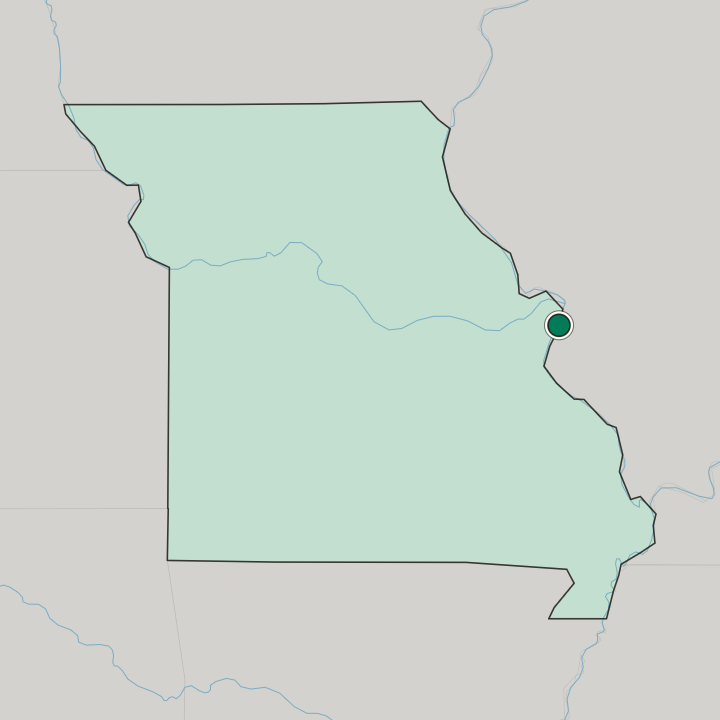
St. Louis sits on the west bank of the Mississippi in Missouri, near its confluence with the Missouri River. The riverfront is low and flat. Bluffs and rolling upland rise behind the levee, where the Gateway Arch marks the old landing and the downtown grid climbs away from the water.
The two great rivers meet just above the city.
What is the climate of St. Louis?
St. Louis has a temperate continental climate with sharp seasons. Summers turn hot and humid over the river valley, with storms building on the warmest days as moisture rides up from the south. The cold settles in over winter.
Snow and ice arrive most years, and spring and autumn bring the mild, shifting weather of the mid-continent between the two extremes.
How do you get to St. Louis?
St. Louis is reached by air, road, rail, and river. An international airport serves the metro to the northwest, and interstate highways bridge the Mississippi into Illinois to the east. Trains still call downtown near the Gateway Arch.
Barge traffic works the river below the levee, on the same water that carried the fur trade that founded the city.
Common questions
What is the best area to stay in St. Louis?
Riverfront Downtown: The Gateway Arch and river views. Arts and University Belt: Galleries and preserved houses. City Museum Quarter: Families and the climbable warehouse.
Good for
More cities in Missouri
Updated October 2026