United States
Missouri, United States — Towns & Travel Guide
Missouri is a landlocked state in the American Midwest, where the Missouri River joins the Mississippi just above St. Louis.
Hotel links are affiliate links: booking through them may earn us a commission, at no extra cost to you. It never affects how places are ranked. How this works


Towns & cities in Missouri
Pick a town or city — each links to where to stay.
 United States
Kansas City
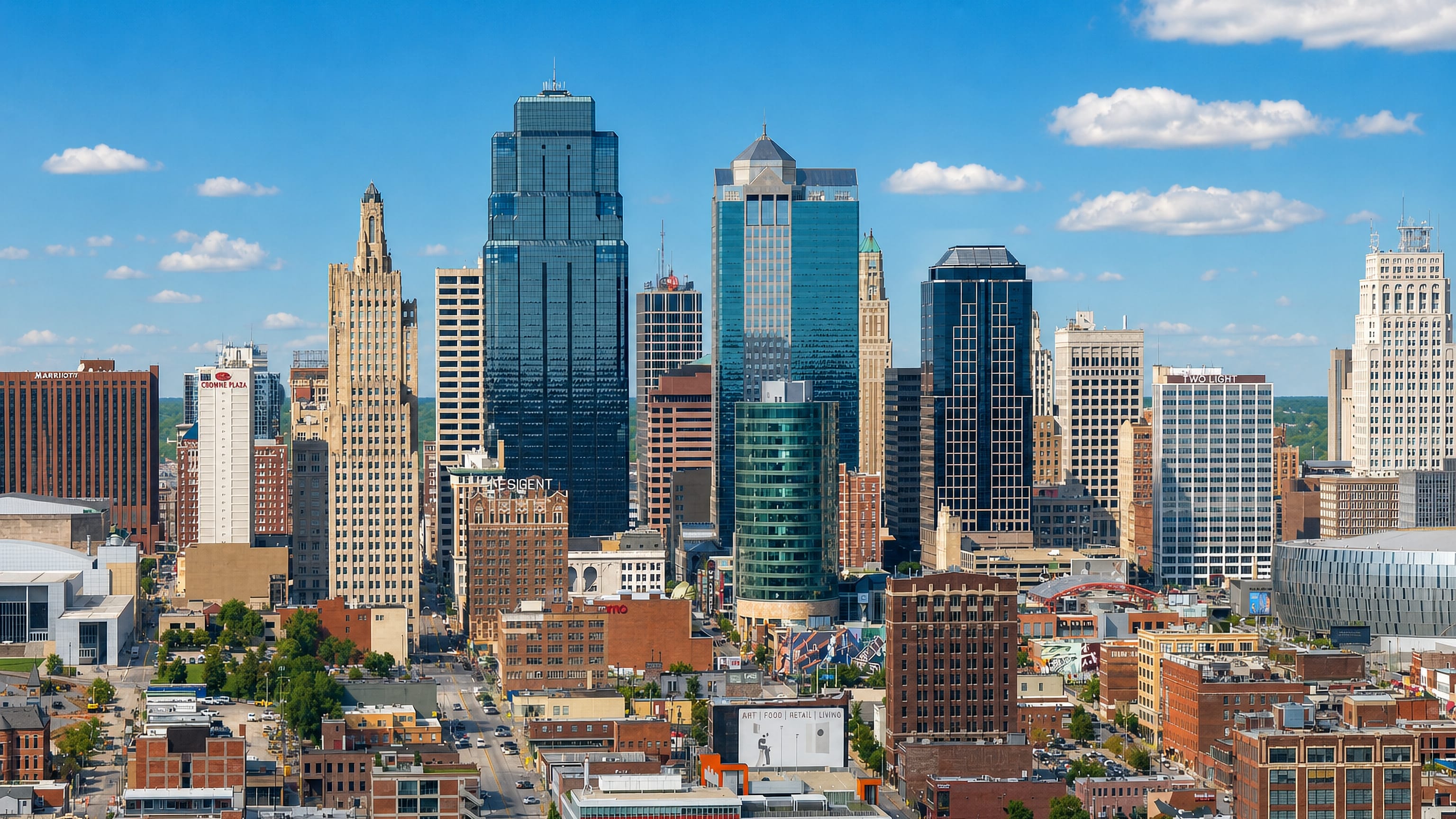
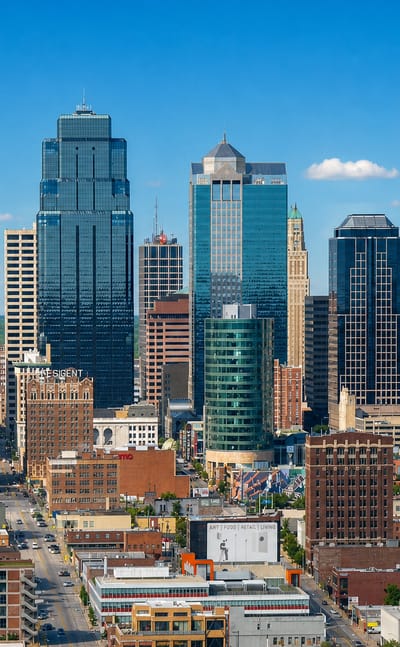
Fountains and boulevards run through Kansas City, a river city in Missouri where the Kansas River joins the Missouri and the Nelson-Atkins Museum stands.Where to stay →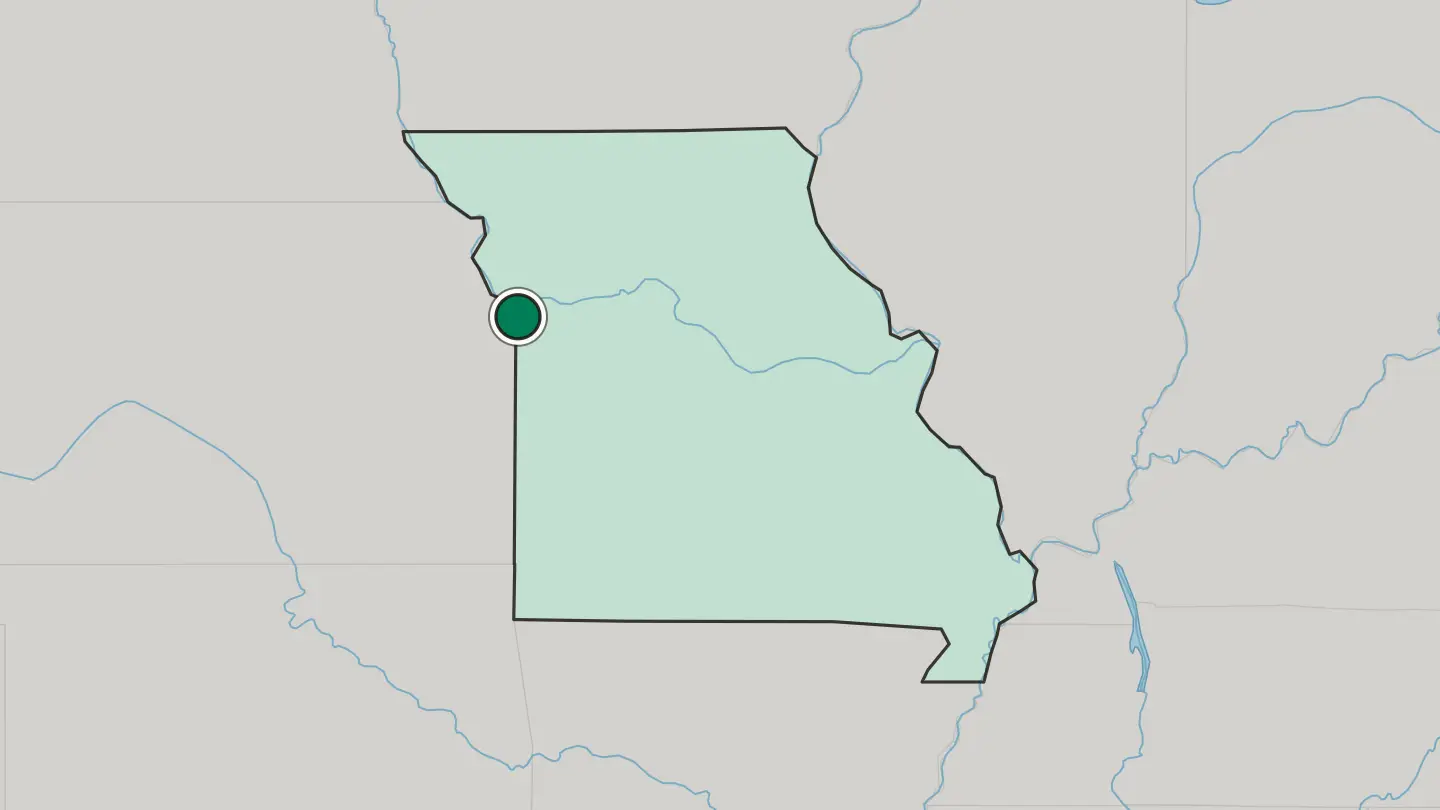
 United States
St. Louis
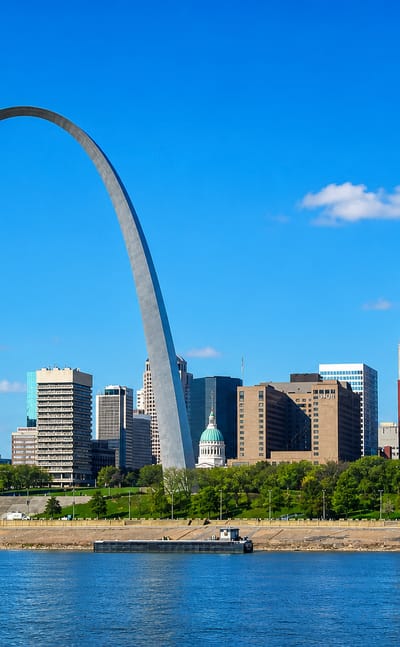
The Gateway Arch curves over the Mississippi. St. Louis is a river city in Missouri, founded in 1764 and known worldwide for that stainless span.Where to stay →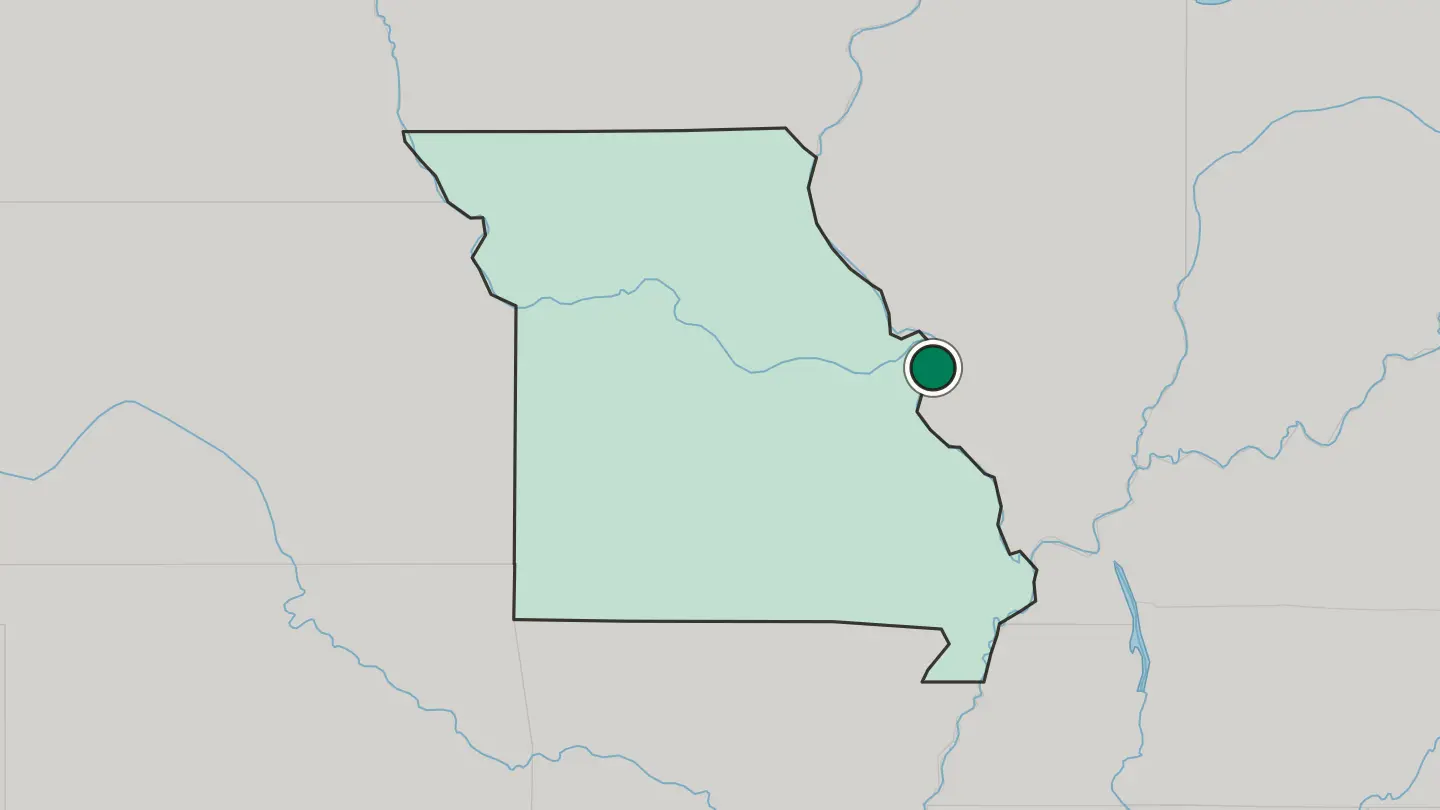
 United States
Springfield
Springfield spreads over the Springfield Plateau in Greene County, the Queen City of the Ozarks and the birthplace of Route 66.Where to stay →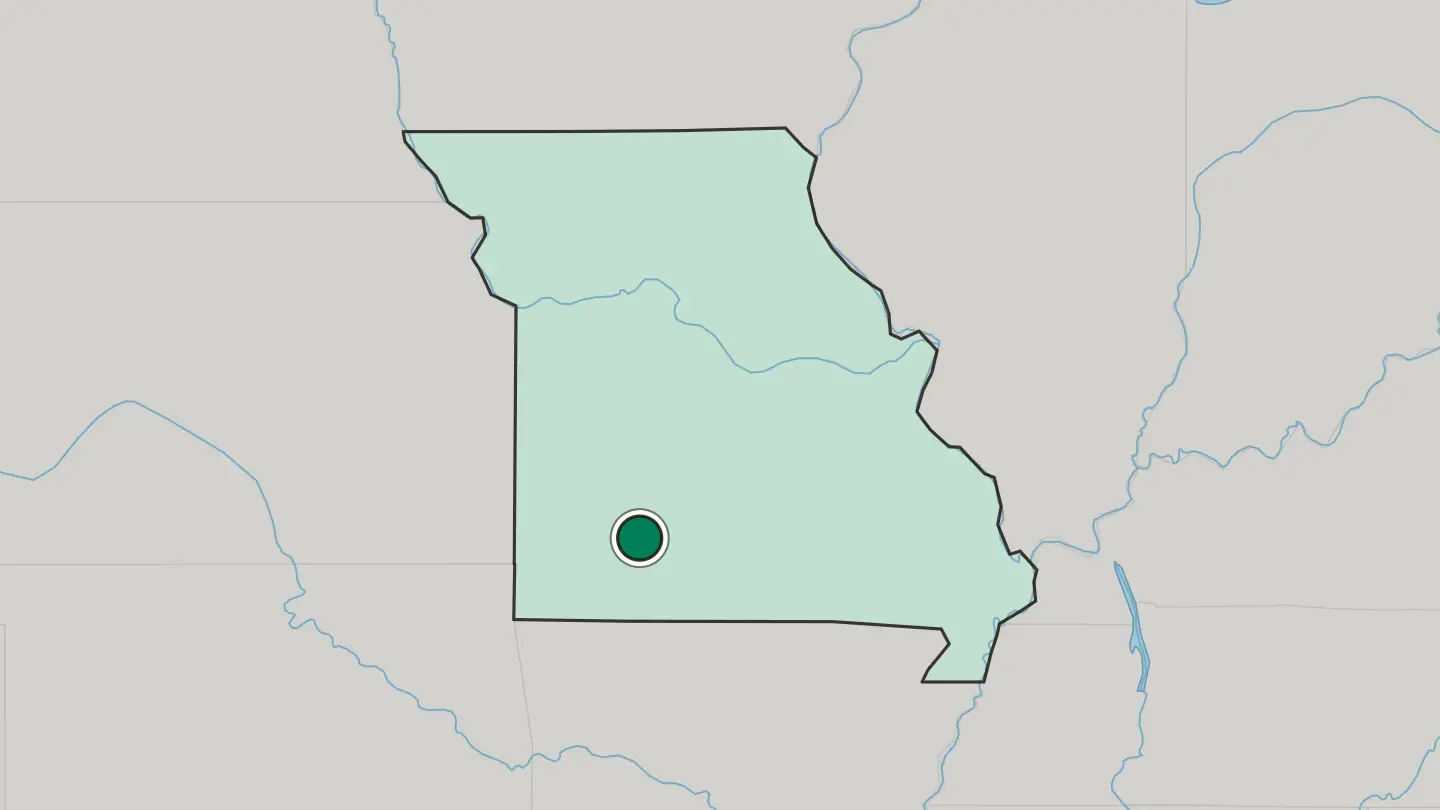
 United States
Columbia
Columbia is the county seat of Boone County, Missouri, a college town built around the University of Missouri, Stephens College and Columbia College.Where to stay →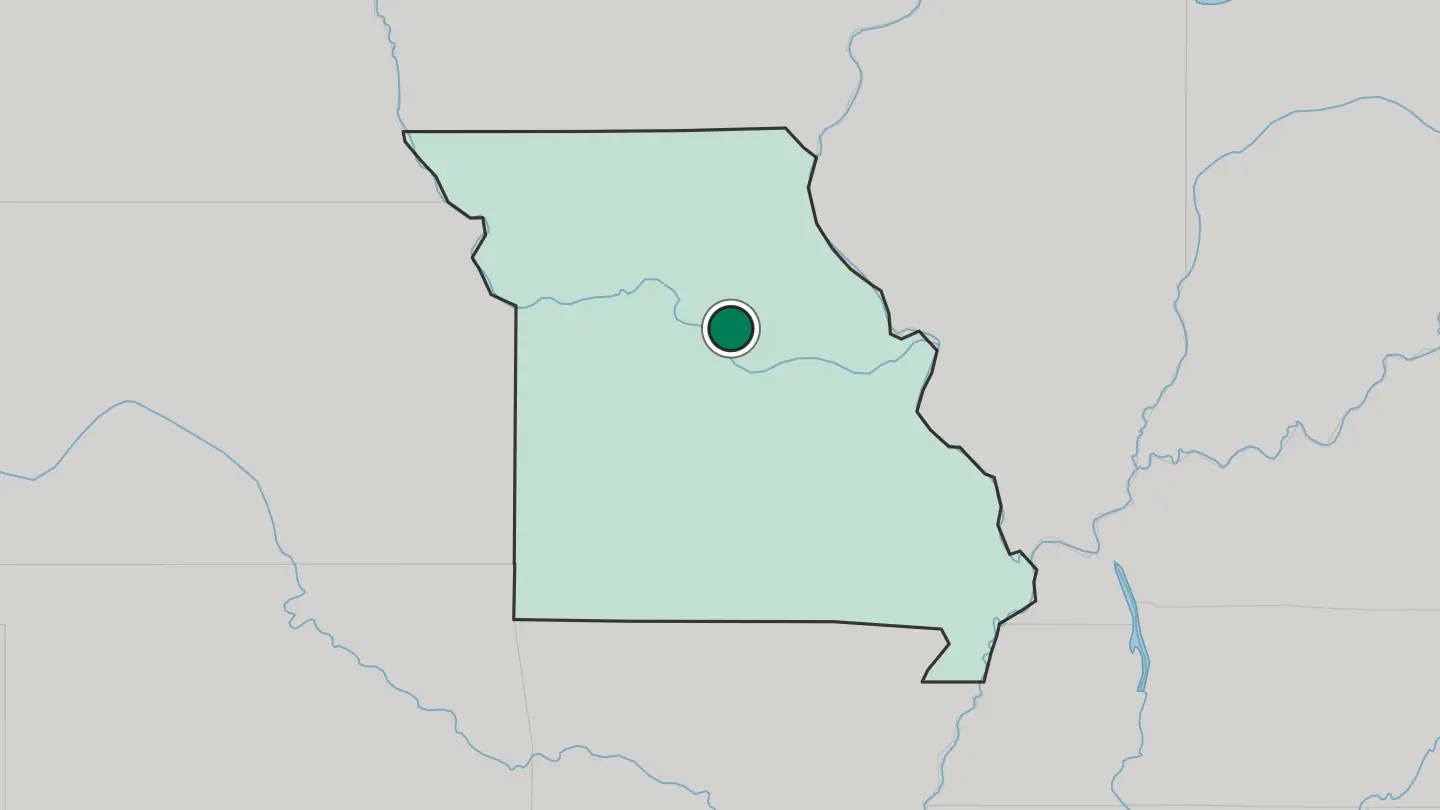 United States
Independence
Independence is a county seat of Jackson County, Missouri, the Queen City of the Trails, where the Santa Fe, California and Oregon Trails all began.Where to stay →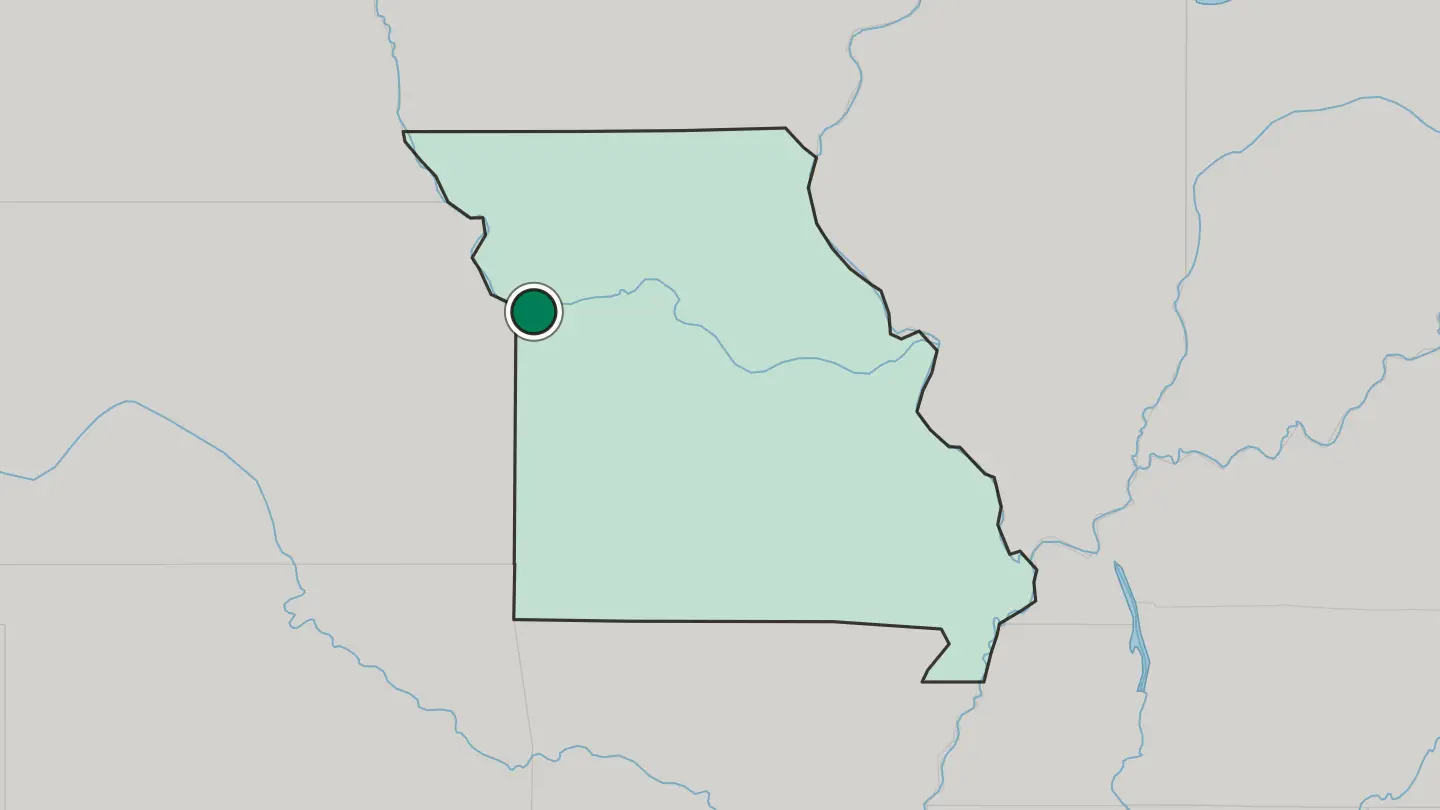 United States
Lee's Summit
Lee's Summit occupies Jackson and Cass counties in Missouri, a city of 1865 grown into the edge of the Kansas City metropolitan area.Where to stay →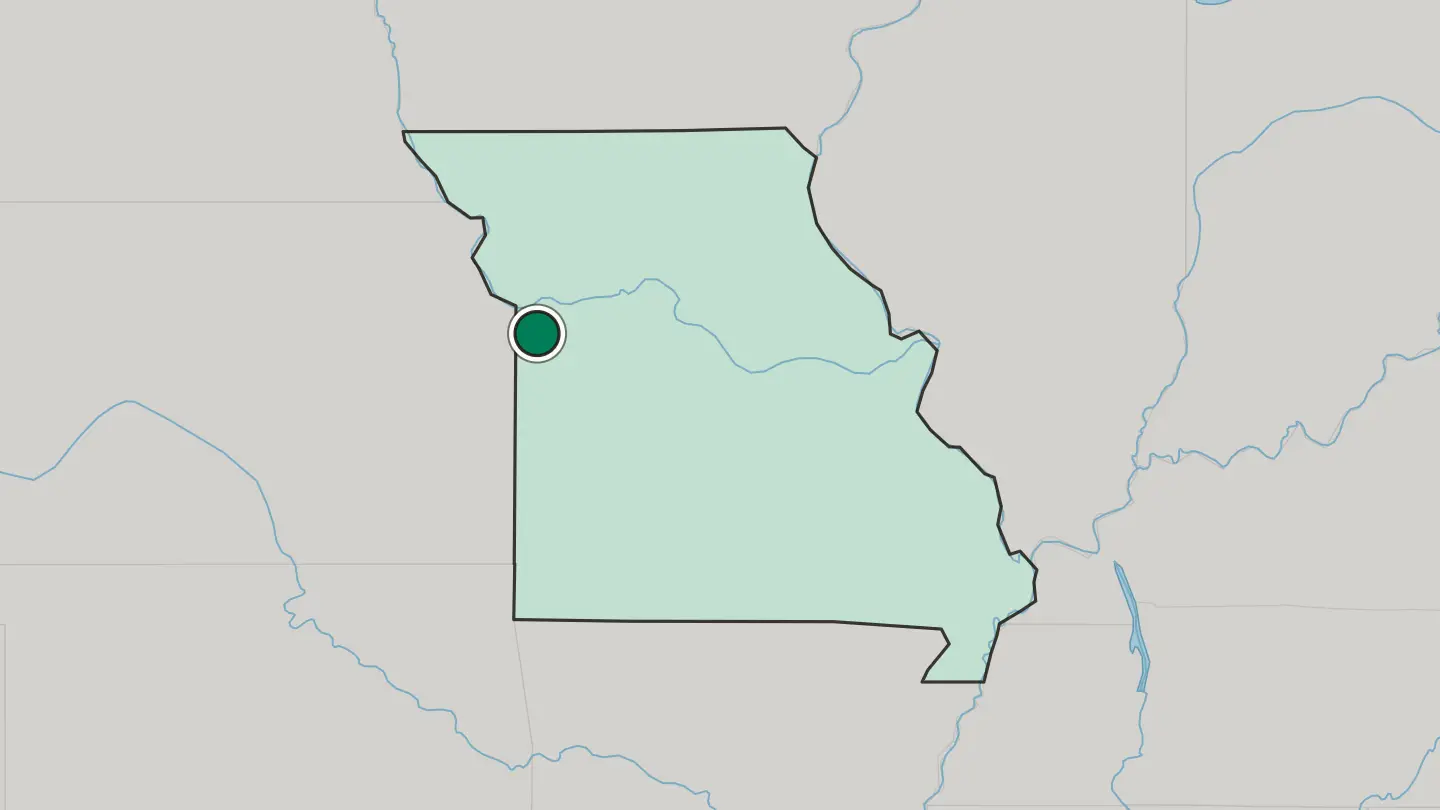 United States
O'Fallon
O'Fallon is the most populous suburb of St. Louis, a St. Charles County city on Interstates 64 and 70 in Missouri.Where to stay →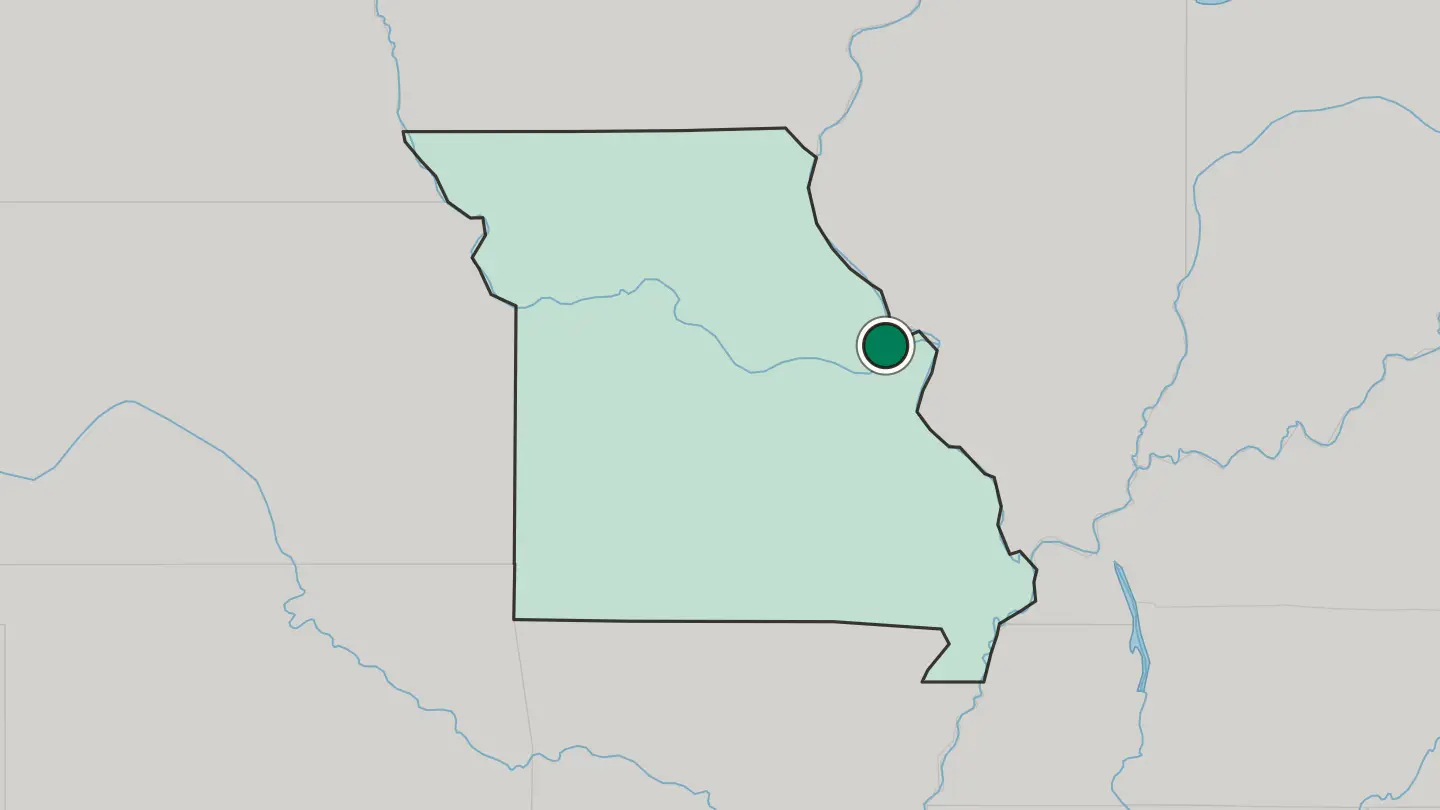
 United States
Saint Joseph
Saint Joseph sits on the Missouri River north of Kansas City, a Buchanan County seat of 1843 that held the headquarters of the Pony Express.Where to stay →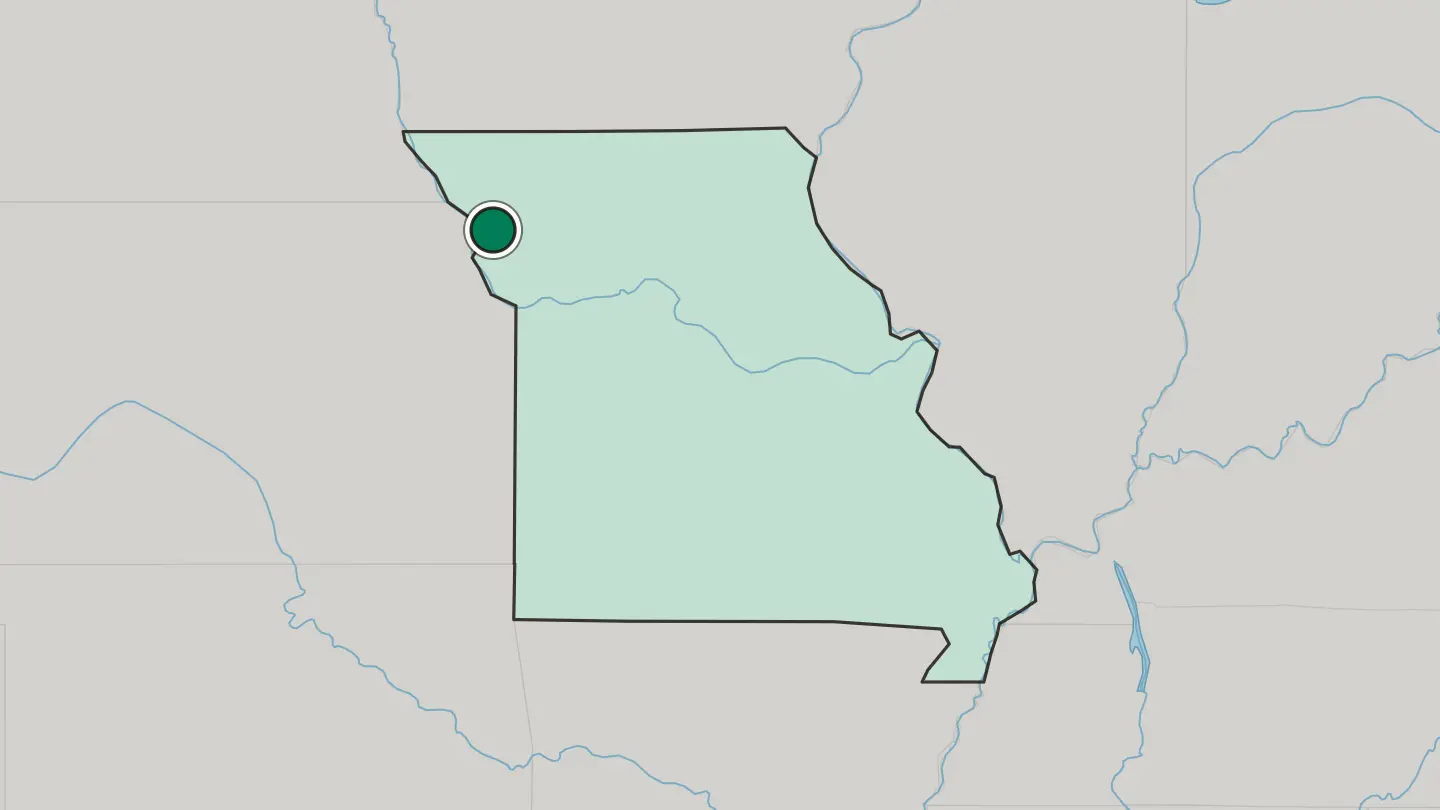
All towns & cities (10)
 United States
Saint Charles
Saint Charles rises on the Missouri River northwest of Saint Louis, Missouri's first state capital and a river town founded in 1765.Where to stay →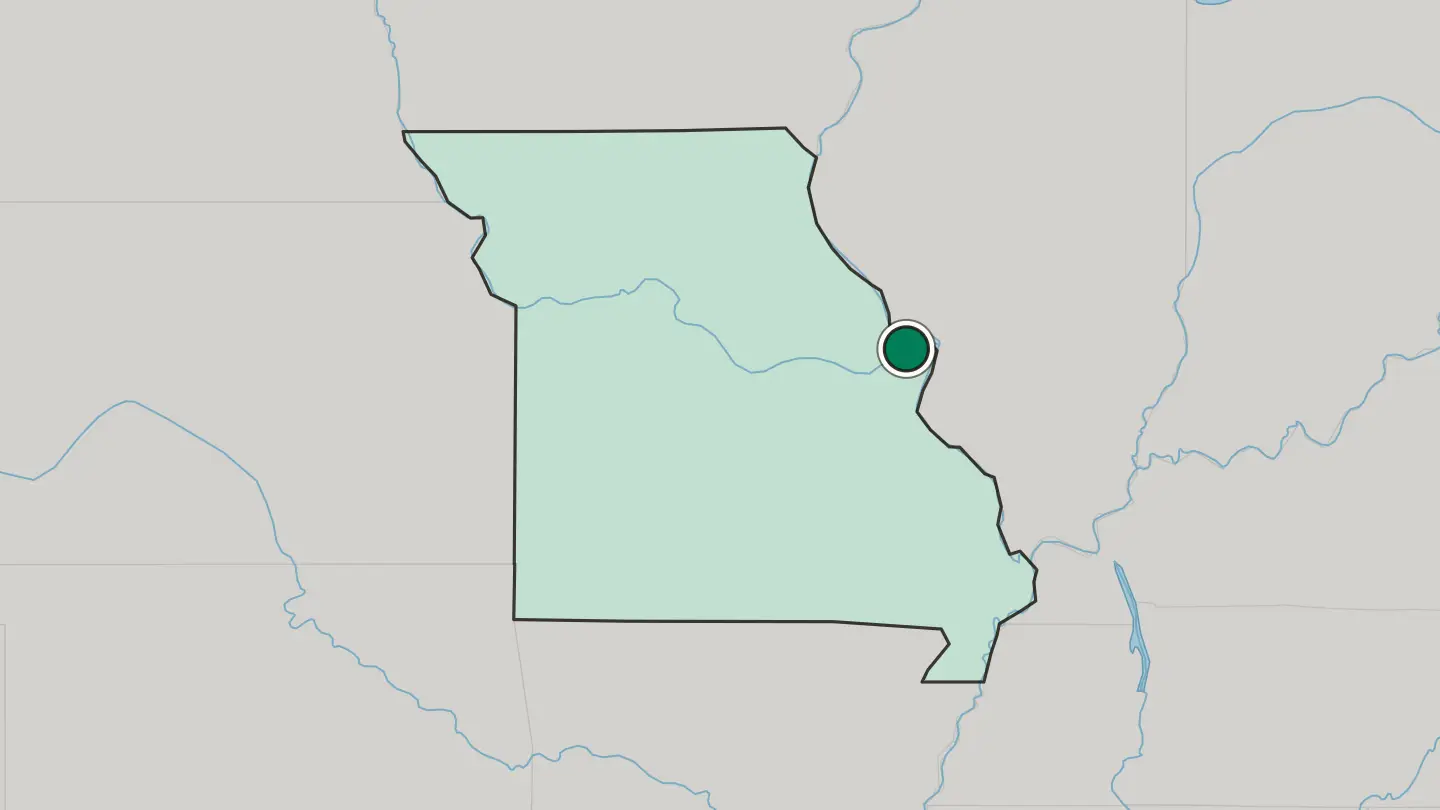
 United States
Joplin
Joplin spreads across Jasper and Newton counties on the outer rim of the Ozark Mountains, a Missouri city dating from 1873.Where to stay →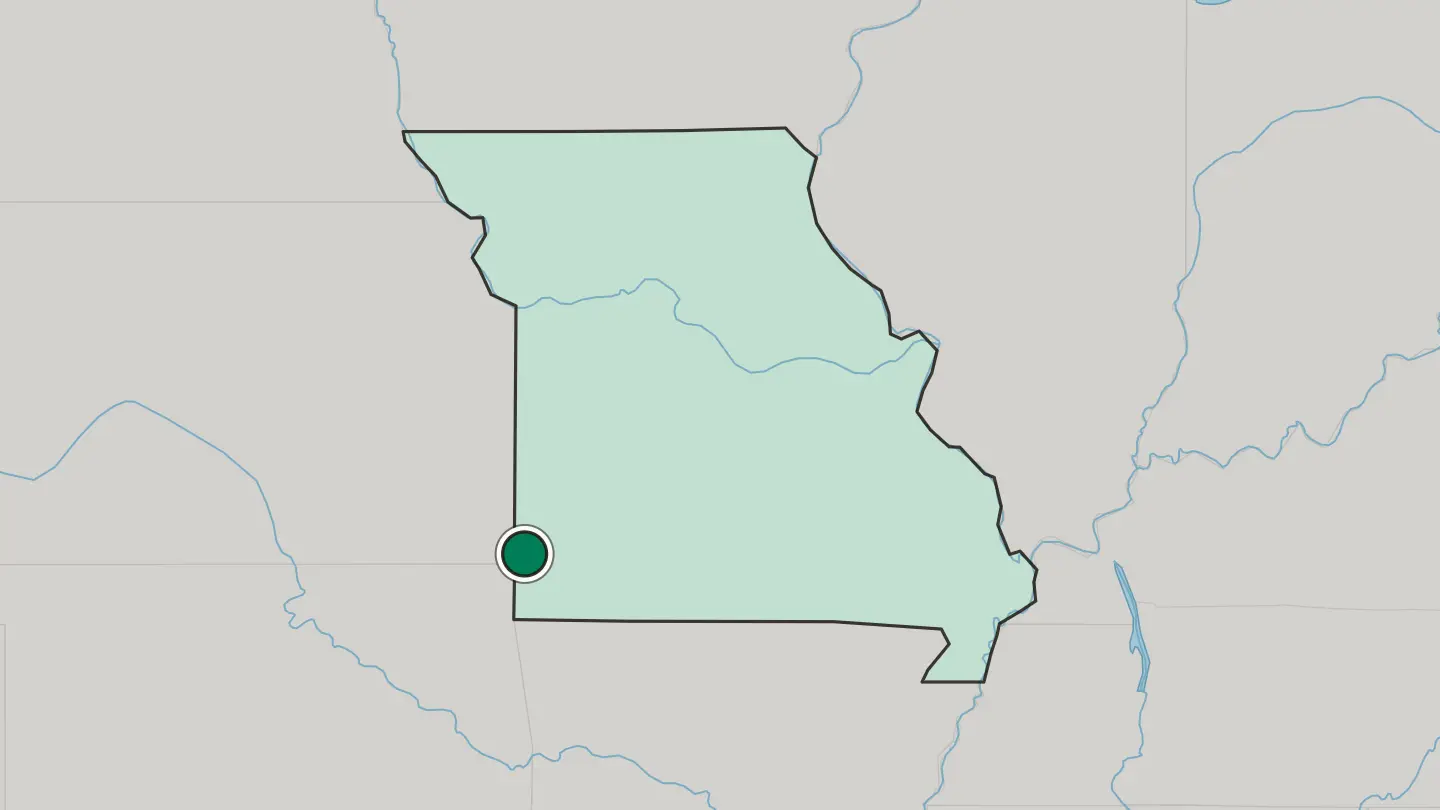
Hotel links are affiliate links: booking through them may earn us a commission, at no extra cost to you. It never affects how places are ranked. How this works
About Missouri
Two rivers and two cities shape Missouri.
What is Missouri known for?
St. Louis stands on the Mississippi beneath the stainless arc of the Gateway Arch, the tall monument to the wagon trains that once set out west from the riverfront. Kansas City anchors the western side, known across the country for slow-smoked barbecue and for the jazz that grew up around its 18th and Vine district. Further south the wooded hills of the Ozarks rise, drawing boaters to the Lake of the Ozarks and theatre crowds to Branson.
The river town of Hannibal raised Mark Twain, whose Mississippi shaped American writing.
Where is Missouri?
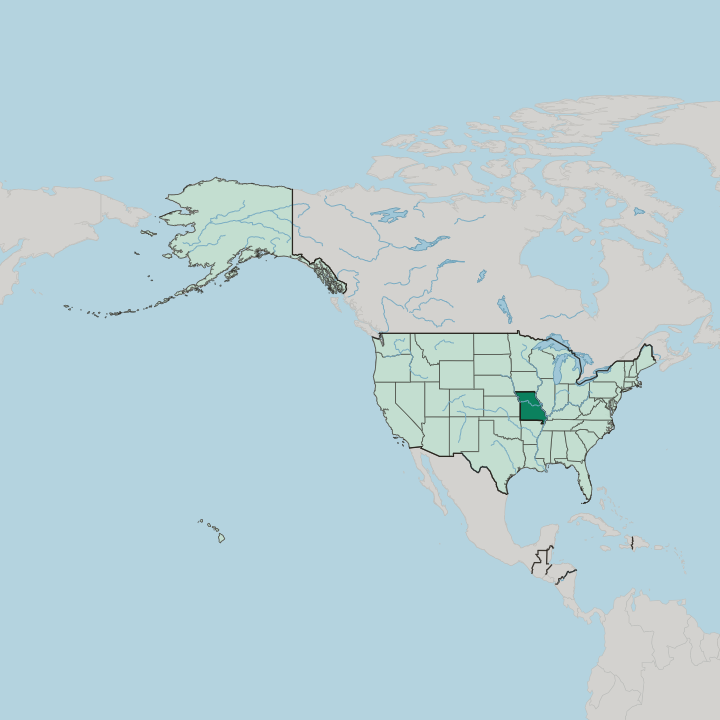
Missouri sits in the middle of the United States, a landlocked state with no coast of its own. Eight states ring it. Iowa lies along the north, while Nebraska, Kansas and Oklahoma close off the western side and Arkansas fills the south. The eastern boundary is all water: the Mississippi River runs the whole length of that edge, dividing Missouri from Illinois, Kentucky and Tennessee.
The Missouri River enters from the west near Kansas City, then bends east across the state to meet the Mississippi just above St. Louis, splitting the map roughly in two. North of that line lie the rolling glaciated plains, prairie country cut by creeks and drained toward the rivers. South and east of it the land climbs into the Ozarks, a forested limestone plateau of springs, bluffs and hollows that covers the largest share of the state.
The oldest rock breaks the surface in the St. Francois Mountains, where Taum Sauk Mountain marks the highest ground in Missouri. Water has worked the plateau hard. Rain sinking through the limestone has hollowed out thousands of caves underground, which is why the state answers to the nickname the Cave State.
Down in the far south-east corner the highland drops away to the flat cotton lowland of the Bootheel, an arm of the Mississippi floodplain that reaches toward the delta.
What is Missouri like?
Missouri thinks of itself as a crossroads, and its music proves the point. Ragtime was scored here, its syncopations worked out by Scott Joplin in the railroad town of Sedalia before the century turned. The blues took hold along the St. Louis waterfront, and the sound carried north up the Mississippi.
Kansas City went its own way. In the clubs of the 18th and Vine district, a loose swinging jazz grew up that sent Charlie Parker out into the wider world. Food follows the same split.
Kansas City smokes its meat slow and finishes it with a thick sweet sauce and charred burnt ends, while St. Louis argues for its own cut of ribs. The rivers gave the state its writers too. Mark Twain grew up in Hannibal, and the Mississippi of his boyhood became the setting for Tom Sawyer and Huckleberry Finn.
West of St. Louis along the Missouri River, German settlers planted the vineyards they called the Missouri Rhineland, and the brick wine cellars of Hermann still press the harvest each autumn. English is the common language. People here answer to the nickname the Show-Me State, a shorthand for the plain, prove-it streak that locals wear with some pride.
What is the history of Missouri?
Missouri became the twenty-fourth state in 1821, admitted under the bargain known as the Missouri Compromise that set the terms for slavery in the young republic. French traders came earlier. They founded St. Louis in 1764 as a fur post at the meeting of the rivers.
The United States bought the whole territory in the Louisiana Purchase, and in 1804 the Lewis and Clark Expedition pushed off from St. Louis to map the West. The riverfront became the outfitting point for wagon trains, and the state grew into the staging ground for a nation moving west.
What is the climate of Missouri?
Missouri has a continental climate of hot summers and cold winters, with weather that swings hard between the two. Nothing tempers it. With no mountain wall or ocean nearby, the state lies open to Arctic air spilling down from the north and warm wet air pushing up off the Gulf of Mexico, and the two collide overhead.
Spring is the stormy season, when Missouri sits along the edge of Tornado Alley and thunderheads roll through in the afternoons. Summers turn hot and sticky, winters bring snow to the northern plains, and the Bootheel in the far south stays milder than the rest.
How do you get to Missouri?
Most visitors fly in. The two airports sit at opposite ends of the state. St. Louis Lambert International is the busier hub on the eastern side, while Kansas City International serves the west.
Interstate 70 ties the two cities together in a straight run of about 250 miles, the spine most road trips follow, while Amtrak's Missouri River Runner shadows that line by rail and Interstate 44 peels off toward Springfield and the Ozarks. From St. Louis, MetroLink trains reach the airport and the Gateway Arch.
Common questions
What is the best area to stay in Missouri?
St. Louis: a first visit on the eastern rivers. Kansas City: barbecue and the western jazz clubs. Branson: family shows in the southern hills. Lake of the Ozarks: boating and lakeside resorts. Hermann: wine-country weekends.
Good for
More regions in United States
Updated September 2026