United States · Missouri · St. Louis
Parkview, St. Louis — Area Guide & Where to Stay
Gated entrances on Skinker Boulevard open onto Parkview, a private subdivision of 255 houses whose curving streets straddle St. Louis and University City.
Hotel links are affiliate links: booking through them may earn us a commission, at no extra cost to you. It never affects how places are ranked. How this works


Where to stay in Parkview
The practical side of choosing where to sleep.
Nothing commercial sits inside the gates. Julius Pitzman's 1905 plat laid out house lots and small parks and nothing else, so a bed near Parkview means one of the districts pressing on its edges. The Delmar Loop runs along Delmar Boulevard past the north side, where a pedestrian gate lets the subdivision out into it, and its rooms put music venues and restaurants a few minutes from the door.
East across North Skinker Boulevard lies Skinker-DeBaliviere. The Skinker MetroLink station at 260 North Skinker Boulevard stands a short walk off the southeast corner, and the Blue Line runs from it to Forest Park and downtown. The Loop side suits evenings out, and the Skinker side suits days that start on the train.
Few places to stay in Parkview — most visitors book in St. Louis nearby.
Find hotels in Parkview
Direct booking searches for these neighbourhoods.
The Delmar Loop
The Delmar Loop runs along Delmar Boulevard past Parkview's north side, close enough that the subdivision keeps a pedestrian gate onto it, and it carries the rooms and the bars that the private streets do not.Find hotels in The Delmar LoopTravellers who plan to move on the Blue Line rather than by car.Skinker-DeBaliviere
Skinker-DeBaliviere lies east across North Skinker Boulevard, and the Skinker MetroLink station at 260 North Skinker Boulevard opens under the Forest Park Parkway crossing.Find hotels in Skinker-DeBaliviereHotel links are affiliate links: booking through them may earn us a commission, at no extra cost to you. It never affects how places are ranked. How this works
Things to do in and around St. Louis
Ranked by global recognition; descriptions from Wikidata (CC0).
Museums & Galleries
3- Saint Louis Art Museum
- Mildred Lane Kemper Art Museum
- Missouri History Museum
Churches & Religious Sites
1- Assumption Greek Orthodox Church Heritage
Landmarks & Notable Places
5- Emmanuel DeHodiamont House Heritage
- Sutter-Meyer House Heritage
- Joseph and Ann Murphy Residence Heritage
- Martin Franklin Hanley House Heritage
- McGarry House Heritage
worth knowingacross 3 categories in and around St. Louis
About Parkview
What are the main landmarks in Parkview?
Parkview's monument is its own plan. Julius Pitzman curved every street so that each one runs out of sight, which shortens every view, breaks the flat line of setbacks that a grid produces, and keeps the far end of a block private. The historic district counts seven named streets.
Waterman, McPherson, and Washington carry the oldest of the houses, three-storey brick fronts in Colonial Revival and Arts and Crafts dress. The museums that visitors attach to this corner of the map all stand outside the gates. The Saint Louis Art Museum, the Missouri History Museum, and the Saint Louis Zoo sit inside Forest Park to the southeast, and the Mildred Lane Kemper Art Museum belongs to the Washington University in St. Louis campus across Forest Park Parkway.
What is the history of Parkview?
The Parkview Realty and Improvement Company formed in November 1901, and grading of the ground was finished by December 1903. Julius Pitzman filed the plat in November 1905, and Parkview became the largest and the last of the private places drawn by the surveyor who had already laid out Forest Park. Twelve houses were begun in 1906.
Twenty stood by the end of 1907, and by 1916 most of the 255 houses had been built, among them the home of Henry Caulfield, an original trustee of the subdivision who later became governor of Missouri. The City of St. Louis named its eastern part a historic district on September 22, 1978, the National Register of Historic Places followed on March 14, 1986, and University City designated its own share on July 27, 1992.
Where is Parkview?
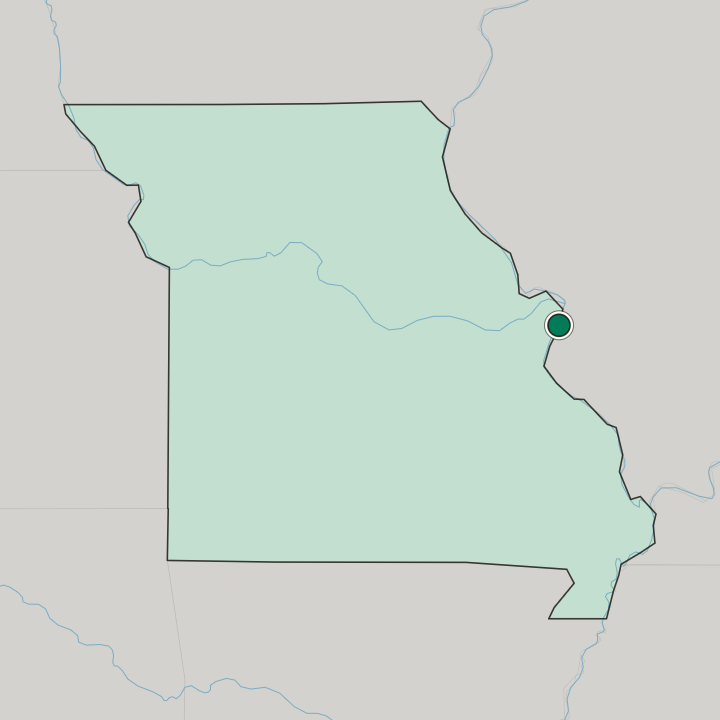
Four neighbours box Parkview in. The Delmar Loop runs along Delmar Boulevard to the north, Skinker-DeBaliviere lies east across North Skinker Boulevard, the Ames Place section of University City closes the west side, and the Washington University in St. Louis campus holds the south, with Forest Park beyond the southeast corner. Roughly seventy acres lie inside that outline, about a third of them within the City of St. Louis and the rest in University City.
Common questions
What is the best area to stay in Parkview?
The Delmar Loop: Guests who want music venues and restaurants a few minutes from the door.. Skinker-DeBaliviere: Travellers who plan to move on the Blue Line rather than by car.. Parkview itself: Owners rather than visitors, since the streets are private and no rooms are let..
Good for
More areas in St. Louis
Updated October 2026