United States · Missouri · St. Louis
Patch, St. Louis — Area Guide & Where to Stay
Civil War-era stone houses stand in Patch, the southern tip of Carondelet where St. Louis ends at the Mississippi River and the county line.
Hotel links are affiliate links: booking through them may earn us a commission, at no extra cost to you. It never affects how places are ranked. How this works


Where to stay in Patch
Where visitors usually base themselves, and why.
Patch offers barely a bed within its own edges, so visitors base themselves in central St. Louis and come south by car. The reward is a tight grid of nineteenth-century housing between Robert Avenue and the city limit, where the National Register listings run to stone in a quarter otherwise built of brick.
South Broadway holds the storefronts. Pick it if you want the Steins Street District and the Ivory Triangle within a few blocks of each other.
Find hotels in Patch
Direct booking searches for these neighbourhoods.
The Steins Street rows
The Steins Street District and the Stone Houses share one short run of Steins Street, both on the National Register since 1980. Few places to stay nearby — book ahead.Find hotels in The Steins Street rowsdays built around the one commercial corner of PatchSouth Broadway at the Ivory Triangle
The Ivory Triangle sits inside the St. Boniface Neighborhood Historic District, where South Broadway gathers what trade the neighbourhood keeps. Lodging is scarce in this area; reserve in advance.Find hotels in South Broadway at the Ivory Trianglequiet evenings on the streets falling toward the riverThe Vulcan Street end
Vulcan Street carries the Zeiss Houses and the Schlichtig House down toward the industrial Mississippi frontage of Patch. Rooms are few around here — worth securing early.Find hotels in The Vulcan Street endHotel links are affiliate links: booking through them may earn us a commission, at no extra cost to you. It never affects how places are ranked. How this works
Things to do in and around St. Louis
Ranked by global recognition; descriptions from Wikidata (CC0).
Churches & Religious Sites
1- Quinn Chapel AME Church Heritage
Landmarks & Notable Places
4- Anton Schmitt House Heritage
- Carlin-Rathgeber House Heritage
- Jacob Steins House Heritage
- Schlichtig House Heritage
worth knowingacross 2 categories in and around St. Louis
About Patch
What are the main landmarks in Patch?
Patch gathers its listed buildings east of Alabama Avenue. Stone Houses and the Steins Street District share one short run of Steins Street, both entered on the National Register in 1980, and the Zeiss Houses stand just south of them on Vulcan Street. The Schlichtig House anchors its southern end.
The Anton Schmitt House reached South Broadway by relocation, relisted in 1999. Davis Street holds the Carlin-Rathgeber House, and the Jacob Steins House stands nearer the river. Carondelet School fronts Minnesota Avenue, the Coca-Cola Syrup Plant a block of Michigan Avenue, and Saint Trinity Lutheran Church stands on Koeln Avenue.
What is the history of Patch?
Patch took shape as the far southern end of Carondelet, a village of 1767 that governed itself until St. Louis absorbed it in 1870. French families came first and German ones after, and their surnames hold the buildings: Schmitt, Steins, Zeiss, and Schlichtig. Civil War-era stone survives here.
Most of what stands went up between 1880 and 1930, and a survey of Carondelet east of Broadway put a group of these houses on the National Register in 1980, with the St. Boniface Neighborhood Historic District following in 2002.
Where is Patch?
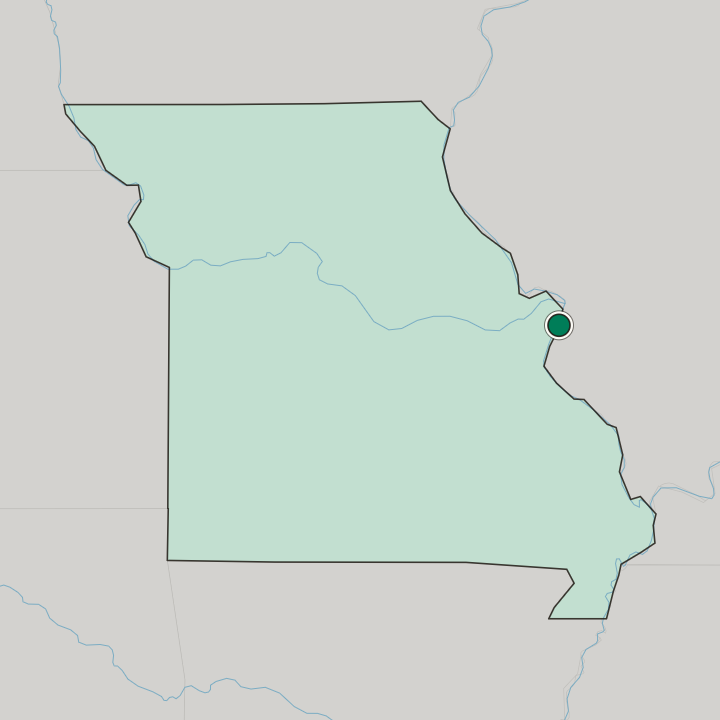
Patch fills the southern tip of Carondelet, edged by Robert Avenue, Alabama Avenue, the Mississippi River, and the St. Louis city limit.
Common questions
What is the best area to stay in Patch?
The Steins Street rows: walkers after the listed stone rows of lower Carondelet. South Broadway at the Ivory Triangle: days built around the one commercial corner of Patch. The Vulcan Street end: quiet evenings on the streets falling toward the river.
More areas in St. Louis
Updated October 2026