United States · Missouri · St. Louis
West End, St. Louis — Area Guide & Where to Stay
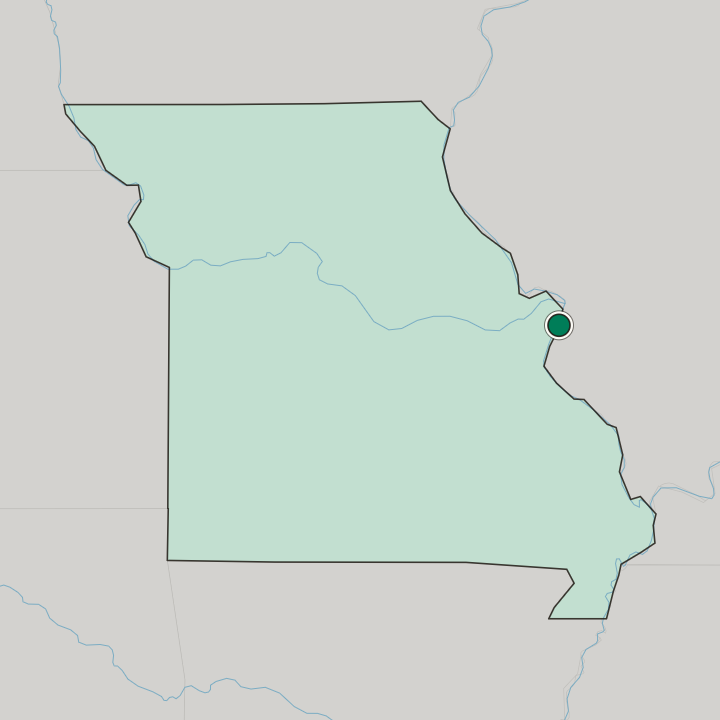
A stone house of about 1830 stands on Maple Place in West End, a neighbourhood on the western edge of St. Louis, at the city line with University City.
Hotel links are affiliate links: booking through them may earn us a commission, at no extra cost to you. It never affects how places are ranked. How this works


Where to stay in West End
Where visitors usually base themselves, and why.
West End keeps little lodging of its own, so a bed here usually means a room in the Central West End or in University City, then a short ride back along Delmar Boulevard. What the district holds instead is housing raised between 1890 and 1920: in the Hamilton Place Historic District that runs to single-family houses, apartment buildings and two- or four-family flats. Delmar Boulevard closes the south side.
If you want quiet ground within walking distance of the Delmar Loop, look to West Cabanne Place and the blocks around Cates Avenue.
Find hotels in West End
Direct booking searches for these neighbourhoods.
West Cabanne Place
West Cabanne Place carries a short run of late nineteenth-century houses and went on the National Register in 1980. Few places to stay nearby — book ahead.Find hotels in West Cabanne Placequiet residential ground a block off Delmar BoulevardHamilton Place
The Hamilton Place Historic District covers portions of six blocks along Enright Avenue, Cates Avenue and Clemens Avenue. Few places to stay nearby — book ahead.Find hotels in Hamilton Placewalking to the Delmar Loop and the trainsThe Delmar Boulevard edge
Delmar Boulevard closes the south side of West End and carries the old Wabash station at 6005 Delmar Boulevard. Few places to stay nearby — book ahead.Find hotels in The Delmar Boulevard edgeHotel links are affiliate links: booking through them may earn us a commission, at no extra cost to you. It never affects how places are ranked. How this works
Things to do in and around St. Louis
Ranked by global recognition; descriptions from Wikidata (CC0).
Museums & Galleries
3- Saint Louis Art Museum
- Mildred Lane Kemper Art Museum
- Missouri History Museum
Churches & Religious Sites
3- Assumption Greek Orthodox Church Heritage
- Church of the Messiah Heritage
- St. Mark the Evangelist Catholic Church, Convent and Academy Heritage
Stadiums & Sports
1- Saint Louis Chess Club
Landmarks & Notable Places
4- Emmanuel DeHodiamont House Heritage
- Joseph Erlanger House Heritage
- Sutter-Meyer House Heritage
- McGarry House Heritage
worth knowingacross 4 categories in and around St. Louis
About West End
What are the main landmarks in West End?
West End holds the Emmanuel DeHodiamont House at 951 Maple Place, a stone house of about 1830 counted among the oldest still standing in St. Louis. Early Gothic Revival detail marks it. Delmar Boulevard station carries an Ionic front of granite, limestone and brick at 6005 Delmar Boulevard, raised by the Wabash Railroad in 1929 over tracks it had just depressed.
West Cabanne Place keeps a run of houses from the 1890s, and the Hamilton Place Historic District covers portions of six blocks along Enright Avenue, Cates Avenue and Clemens Avenue.
What is the history of West End?
West End began as farmland held by the family of Jean Pierre Cabanné, a French Creole fur trader whose name survives on Cabanne Avenue. Emmanuel DeHodiamont and his wife Caroline bought a tract of it in 1829 and put up their stone house soon after. The land stayed rural for decades.
Most of the housing dates from between 1890 and 1920, and the streets filled in beside the Hodiamont streetcar, which ran on its own right-of-way and was the last line working in St. Louis when it stopped in 1966. The De Hodiamont Car House Historic District, off Horton Place at the city limit, keeps that name on the map.
Where is West End?
West End fills the ground between Page Boulevard, Delmar Boulevard and Belt Avenue on the western edge of St. Louis. North Skinker Boulevard marks the city limit.
Common questions
What is the best area to stay in West End?
West Cabanne Place: the 1890s houses of a listed residential block. Hamilton Place: quiet residential ground a block off Delmar Boulevard. The Delmar Boulevard edge: walking to the Delmar Loop and the trains.
Good for
More areas in St. Louis
Updated October 2026