United States · Ohio
Where to Stay in Akron, Ohio
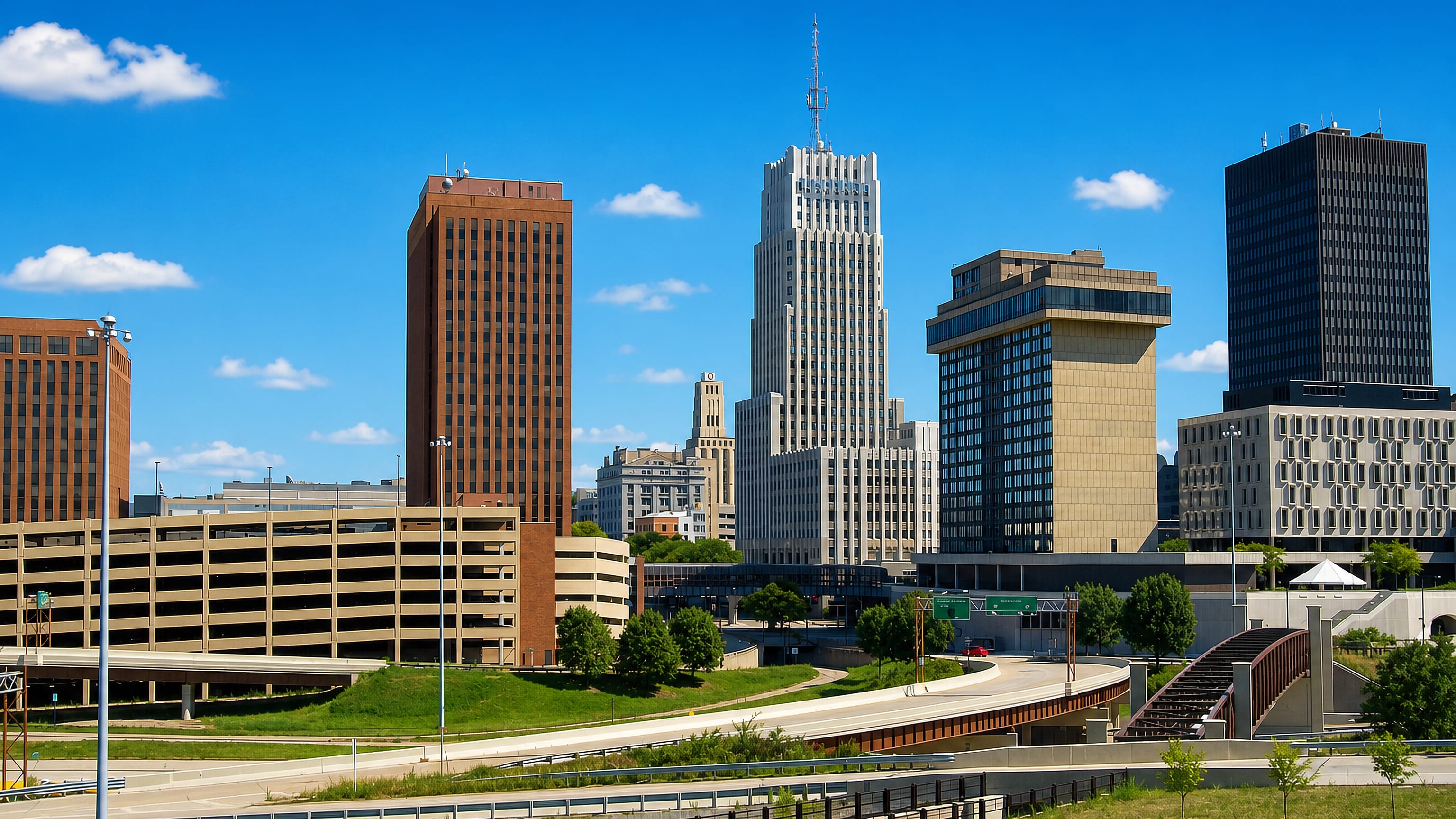
Brick mills line the Little Cuyahoga River at Akron, the seat of Summit County in Northeast Ohio, known for the Akron Art Museum and the Akron Zoo.
Hotel links are affiliate links: booking through them may earn us a commission, at no extra cost to you. It never affects how places are ranked. How this works



Where to stay in Akron
How the choice of base plays out on the ground.
Akron spreads from the Little Cuyahoga River across the ridges of Summit County, and where you stay depends on whether you want the museums of the centre or the quieter streets around them. The downtown core gathers the cultural halls and the older civic buildings. It suits a short cultural visit.
Travellers drawn to the galleries settle near the Akron Art Museum, where the East Market Street Church of Christ and the First Congregational Church stand within a short walk of the old business streets. West of the centre, the leafy blocks around the Akron Zoo and the Hower Mansion carry the city's older residential grain. If you have come for the parks and the family attractions, base yourself near the Akron Zoo, an easy morning out.
Others choose the streets near Firestone Stadium, south of the centre, close to the sporting grounds and the rubber-era works that gave Akron its trade. Each of these Akron quarters keeps a character of its own. Where you settle in Akron is up to you.
Find hotels in Akron
Direct booking searches for these neighbourhoods.
Downtown Akron
The downtown core sets the Akron Art Museum among the East Market Street Church of Christ and the First Congregational Church, all within a short walk on the old business streets.Find hotels in Downtown AkronFamily mornings near the Akron Zoo and the Hower MansionWest Akron near the Zoo
West of the centre, leafy older blocks gather the Akron Zoo and the Hower Mansion in the residential grain above the Little Cuyahoga River.Find hotels in West Akron near the ZooSporting grounds and rubber-era works near Firestone StadiumSouth Akron by Firestone Stadium
South of downtown, the streets around Firestone Stadium sit close to the old rubber works that gave Akron its trade in Summit County.Find hotels in South Akron by Firestone StadiumHotel links are affiliate links: booking through them may earn us a commission, at no extra cost to you. It never affects how places are ranked. How this works
Things to do in Akron
Ranked by global recognition; descriptions from Wikidata (CC0).
Museums & Galleries
1- Akron Art Museum
Churches & Religious Sites
6- St. Bernard's Church Heritage
- First Congregational Church Heritage
- East Market Street Church of Christ Heritage
- St. Paul's Sunday School and Parish House Heritage
- Grace Reformed Church Heritage
Show 1 more →
- Wesley Temple AME Church Heritage
Castles & Historic Sites
1- Matthews Hotel Monument
Stadiums & Sports
2- Firestone Stadium
- Skeeles Field
Landmarks & Notable Places
6- Dr. Robert Smith House Heritage
- Andrew Jackson House Heritage
- Byron W. Robinson House Heritage
- Edward P. Werner House Heritage
- Hower Mansion Heritage
Show 1 more →
- Wells E. Merriman House Heritage
worth knowingacross 5 categories in Akron
About Akron
What is Akron known for?
Akron is known as the county seat of Summit County and one of the larger cities of Northeast Ohio. Its rubber industry made its name. Standing along the Little Cuyahoga River south of Cleveland, Akron drew the mills and the workers whose trade shaped a city that ranks among the most populous in Ohio, its old works and churches still marking the streets.
What are the main landmarks in Akron?
Akron holds landmarks that span its galleries, its parks, and its churches. The Akron Art Museum anchors the centre. Its collection draws visitors downtown, while the Akron Zoo keeps a green pocket to the west, the Hower Mansion preserves a rubber-era home, and the St. Elia the Prophet Orthodox Church and the First Congregational Church stand among the older halls of Summit County.
What is the history of Akron?
Akron was founded in 1825 on the high ground above the Little Cuyahoga River in what became Summit County. The canal made the town. Its position on the watershed of Northeast Ohio drew the early trade that moved along the waterways, and the settlement that grew there became the county seat, gathering the commerce that ran south from Cleveland into the interior of Ohio.
From that early canal town, Akron turned to manufacturing and rose on the rubber trade that filled its mills. The works along the Little Cuyahoga River drew workers to the growing city, whose churches and mansions still mark the era, from the Hower Mansion on the western streets to the halls near the Akron Art Museum. Through every shift the river endured.
From a canal crossing above the water, Akron grew into the industrial seat that shaped this corner of Summit County.
Where is Akron?
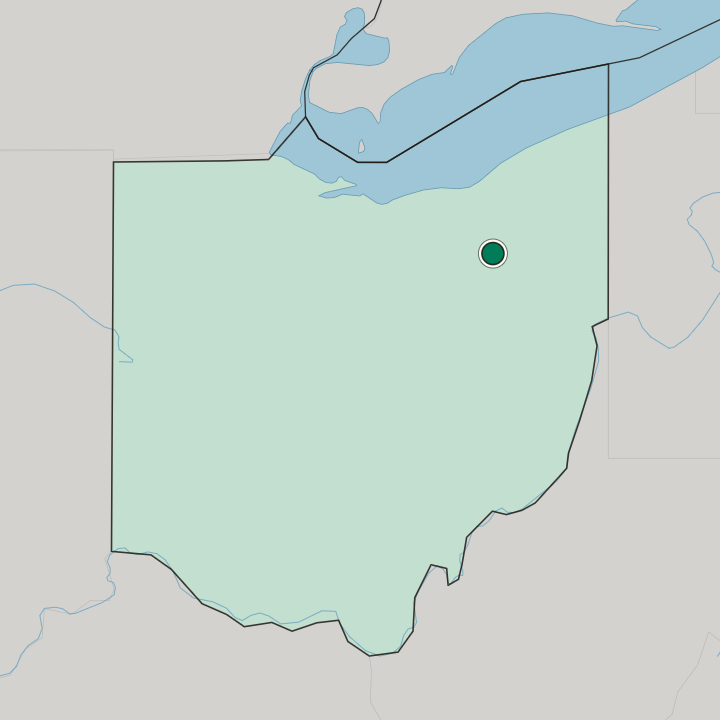
Akron lies in Northeast Ohio, set on the high ground above the Little Cuyahoga River south of Cleveland. The setting is one of ridge and water. The river threads the eastern edge of the city, the streets climb westward toward the leafy blocks around the Akron Zoo, and the wider bounds of Summit County frame the plateau that carries Akron across its watershed.
What is the climate of Akron?
Akron has a humid continental climate, with warm summers and cold, snowy winters across Northeast Ohio. Seasons turn sharply here. Hot, showery summers give way to long grey winters along the Little Cuyahoga River, when snow settles over Summit County and the streets around the Akron Zoo, before mild springs return to the plateau above the water.
How do you get to Akron?
Akron is reached by road and air, an interchange city on the highways of Northeast Ohio. Nearly everyone comes into Akron by car. Interstate routes run north toward Cleveland and south into the interior of Ohio, linking Akron across Summit County, while regional air service and the wider corridors of the state tie the city to the towns along the Little Cuyahoga River.
Common questions
What is the best area to stay in Akron?
Downtown Akron: Galleries and civic streets near the Akron Art Museum. West Akron near the Zoo: Family mornings near the Akron Zoo and the Hower Mansion. South Akron by Firestone Stadium: Sporting grounds and rubber-era works near Firestone Stadium.
Good for
More cities in Ohio
Updated September 2026