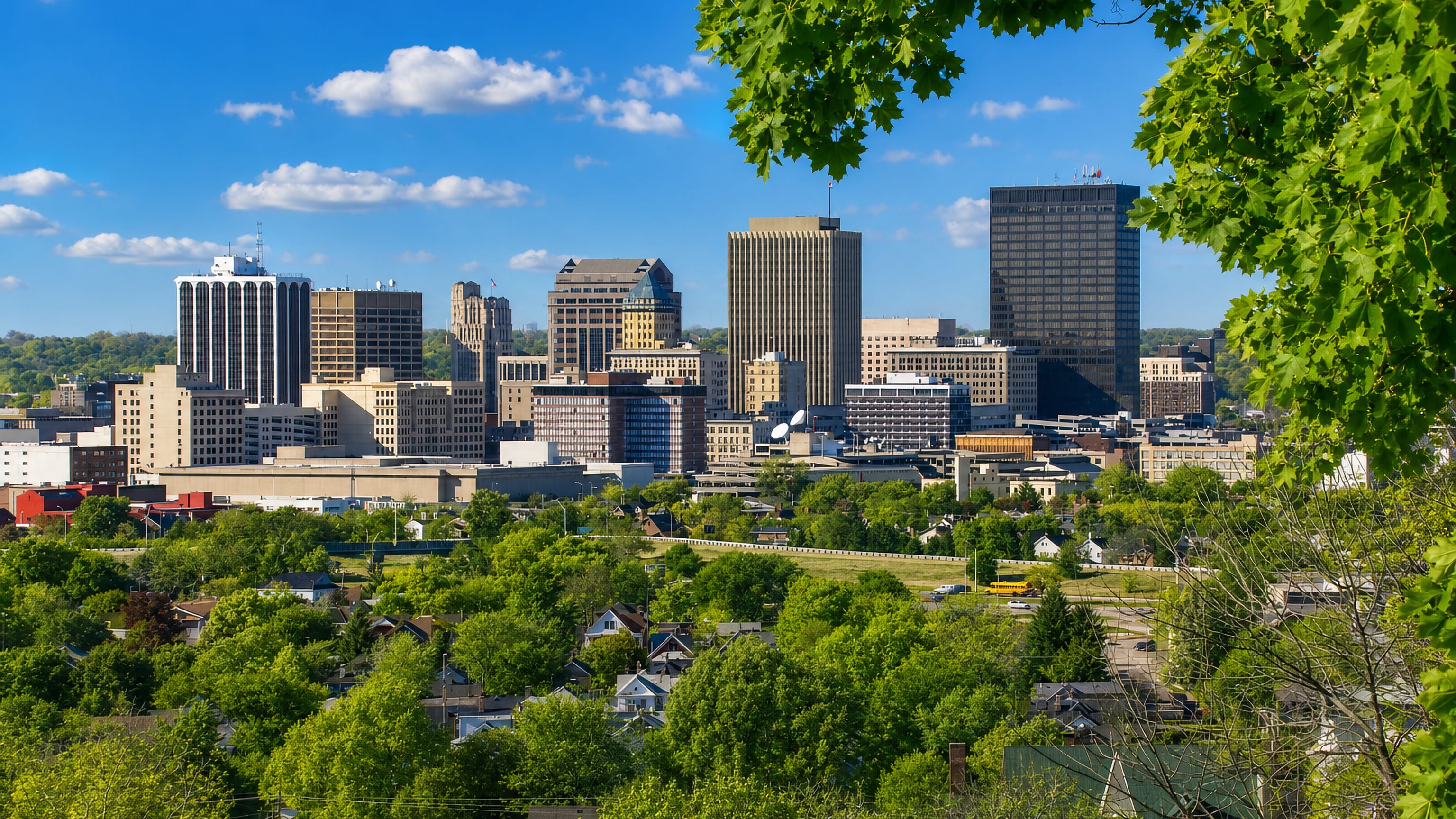
United States · Ohio
Where to Stay in Dayton, Ohio
Dayton is a city in the Miami Valley of Ohio, known as the birthplace of aviation and home of the Dayton Art Institute.
Hotel links are affiliate links: booking through them may earn us a commission, at no extra cost to you. It never affects how places are ranked. How this works


Where to stay in Dayton
Where visitors usually base themselves, and why.
Where to stay in Dayton turns on how close a visitor wants to sit to the museums and the river that runs through the Miami Valley of Ohio. The central district gathers the civic and cultural sites in a walkable core. A visitor crosses that central core on foot in minutes.
Around the Dayton Art Institute and the Boonshoft Museum of Discovery, hotels stand within reach of the riverfront and the streets that carry the city's founding-era heritage from 1796, and The International Peace Museum lies close among the downtown blocks. A bed here keeps the galleries and museums on the doorstep. The ballpark quarter sits nearby, drawn around Day Air Ballpark and the river's edge, where lodging trades the museum core for a livelier stretch on game nights.
No two of these Dayton quarters share the same character. Toward the older neighbourhoods, the Paul Laurence Dunbar House and America's Packard Museum anchor quieter residential blocks that reward visitors drawn to the city's literary and industrial past. A short ride ties these quarters together across the valley floor, so a hotel away from the center is rarely far from the Art Institute, the ballpark, or the river that shaped Dayton.
Art and history anchor Dayton.
Find hotels in Dayton
Direct booking searches for these neighbourhoods.
Museum core
The central district gathers hotels within a few blocks of the Dayton Art Institute, the Boonshoft Museum of Discovery, and The International Peace Museum near the riverfront.Find hotels in Museum coreBest if you want the river's edge and Day Air Ballpark on the doorstep, with the museum core a short walk west.Ballpark riverfront
The riverfront quarter draws around Day Air Ballpark and the water, setting lodging beside game-night crowds rather than the quieter museum blocks of the center.Find hotels in Ballpark riverfrontHotel links are affiliate links: booking through them may earn us a commission, at no extra cost to you. It never affects how places are ranked. How this works
Things to do in Dayton
Ranked by global recognition; descriptions from Wikidata (CC0).
Museums & Galleries
2- Dayton Art Institute Heritage
- Boonshoft Museum of Discovery
Churches & Religious Sites
3- Sacred Heart Church Heritage
- First Lutheran Church Heritage
- Westminster Presbyterian Church
Stadiums & Sports
2- Day Air Ballpark
- Baujan Field
Landmarks & Notable Places
8- Isaac Pollack House Heritage
- James Brooks House Heritage
- Samuel N. Brown House Heritage
- Dr. Jefferson A. Walters House Heritage
- Edwin Smith House Heritage
Show 3 more →
- Hanitch-Huffman House Heritage
- Duncarrick Heritage
- Jacob O. Joyce House Heritage
worth knowingacross 4 categories in Dayton
About Dayton
What is Dayton known for?
Dayton is known as the birthplace of aviation, the Ohio city where the Wright brothers built their first practical aircraft. Museums carry that legacy and much more. The Dayton Art Institute holds the visual arts, the Boonshoft Museum of Discovery draws families, and The International Peace Museum marks a theme few American cities claim.
Heritage runs deep too. The Paul Laurence Dunbar House preserves the home of the poet, and America's Packard Museum keeps a collection of the vanished carmaker in a restored dealership.
What are the main landmarks in Dayton?
Landmarks in Dayton range from museums to historic homes and churches. The Dayton Art Institute anchors the cultural sites, drawing visitors to the riverside core. Other sites reach into the city's past.
The Paul Laurence Dunbar House preserves the poet's home, and the Boonshoft Museum of Discovery and The International Peace Museum add science and civic themes, while the Westminster Presbyterian Church and America's Packard Museum keep the founding-era and industrial heritage of the Miami Valley city.
What is the history of Dayton?
Dayton was founded in 1796 on the river in the Miami Valley of Ohio, one of the earliest inland settlements of the region. Its position on the water carried early trade. Waterways came first.
The canals and rivers that met at the site turned the young town into a milling and manufacturing center, and the founding-era streets grew into a city of industry through the nineteenth century, when workshops and factories drew people to the valley floor. The Paul Laurence Dunbar House recalls the poet who rose from this community, and the Westminster Presbyterian Church and Temple Israel trace the congregations that filled the growing city. Invention set Dayton apart.
The Wright brothers built the first practical aircraft in the city, giving it a claim as the birthplace of aviation, and industrial firms such as the carmaker recorded in America's Packard Museum shaped its twentieth-century economy, so the modern city carries both its 1796 river-town origins and the workshops and museums that mark its record of manufacturing and flight.
Where is Dayton?
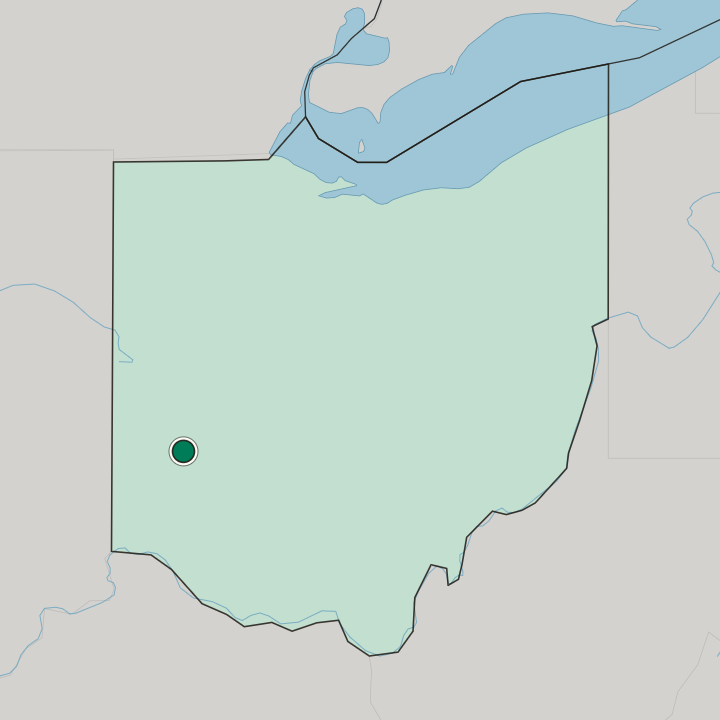
Dayton sits on the floor of the Miami Valley in Ohio, on flat ground where several rivers meet in the region's lowland. The city spreads across the level valley plain. Rivers converge at its heart.
That meeting of waters shaped the old milling town and the riverfront core, while the surrounding low country carries the residential grid and the industrial districts that grew across the valley north of Cincinnati.
What is the climate of Dayton?
Dayton has a humid continental climate typical of the Miami Valley in Ohio. Summers run warm and humid. Winters bring cold and snow.
The inland valley setting drives sharp seasonal swings, with hot, thundery summer afternoons and cold spells that dust the river town in snow, while spring and autumn pass quickly between the two extremes on the plain.
How do you get to Dayton?
Dayton is reached by road and air across the Miami Valley of Ohio. Interstate 75 and Interstate 70 cross near the city, tying it to Cincinnati and Columbus along the corridors. Its own airport serves the valley directly.
Highways carry most arrivals from the surrounding plain and the larger cities up and down the state, and the road network fans out from the riverfront core toward the museums, the ballpark, and the residential districts spread over the valley.
Common questions
What is the best area to stay in Dayton?
Museum core: Best if you want the Dayton Art Institute and the Boonshoft Museum of Discovery a short walk from bed and accept a quiet downtown after dark.. Ballpark riverfront: Best if you want the river's edge and Day Air Ballpark on the doorstep, with the museum core a short walk west..
Good for
More cities in Ohio
Updated September 2026