United States · Ohio
Where to Stay in Toledo, Ohio
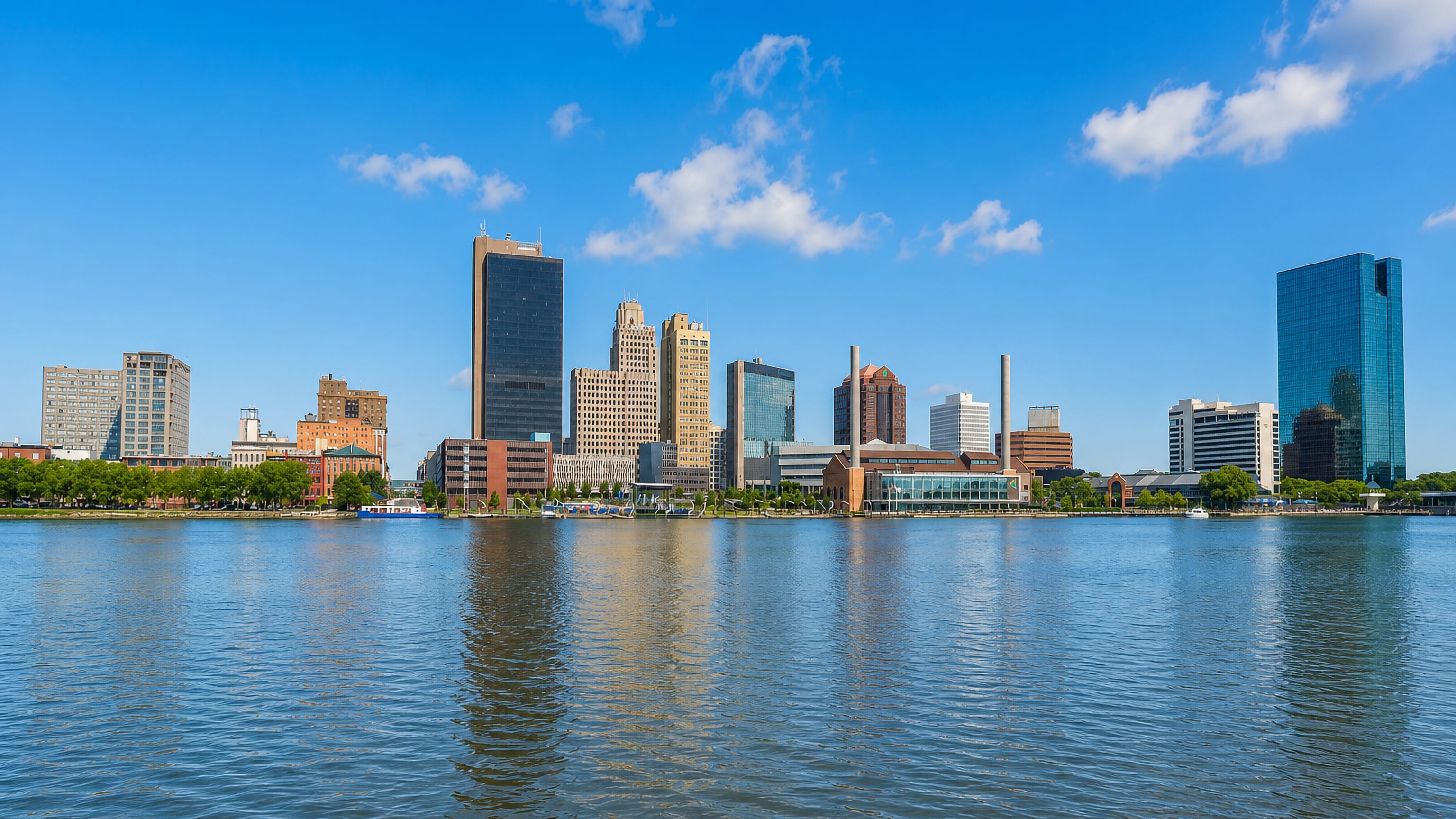
Glass and grey water mark Toledo, a Great Lakes port city in Ohio known for the Toledo Museum of Art.
Hotel links are affiliate links: booking through them may earn us a commission, at no extra cost to you. It never affects how places are ranked. How this works


Where to stay in Toledo
The practical side of choosing where to sleep.
Where a traveller stays in Toledo turns on the downtown riverfront, because the ballpark, the science center, and the maritime museum gather along the water that runs through the center of the city. The core holds the most of what visitors come to see. In the downtown core, everything stays close at hand.
Around Fifth Third Field and Imagination Station, hotels sit within walking reach of the riverfront and the downtown blocks, and the National Museum of the Great Lakes lies along the water nearby with its ship moored at the dock. The Old West End climbs away from the center to the northwest, where the Toledo Museum of Art stands among the grand houses and the older churches like St. Ann Roman Catholic Church Complex mark the early residential streets. Rooms there trade riverfront for tree-lined blocks.
South and east from the center, the grid runs toward the parks and the wider city, so a bed away from downtown still keeps the museum and the ballpark a short ride off. Downtown and the Old West End each hold a character of their own. A traveller who wants the ballpark and the river near the door stays downtown by Fifth Third Field, while the Old West End by the Toledo Museum of Art suits a quieter stay among the old houses.
Find hotels in Toledo
Direct booking searches for these neighbourhoods.
Downtown riverfront
The center sets hotels around Fifth Third Field, Imagination Station, and the National Museum of the Great Lakes along the downtown riverfront.Find hotels in Downtown riverfrontBest if you want grand old houses and tree-lined streets, with the ballpark a short ride back down to the river.Old West End
The district northwest of downtown carries the Toledo Museum of Art among the grand houses and older churches like St. Ann Roman Catholic Church Complex.Find hotels in Old West EndHotel links are affiliate links: booking through them may earn us a commission, at no extra cost to you. It never affects how places are ranked. How this works
Things to do in Toledo
Ranked by global recognition; descriptions from Wikidata (CC0).
Museums & Galleries
1- Toledo Museum of Art Heritage
Churches & Religious Sites
4- St. Ann Roman Catholic Church Complex Heritage
- Ashland Avenue Baptist Church Heritage
- Trinity Episcopal Church Heritage
- First Church of Christ, Scientist Heritage
Stadiums & Sports
3- Fifth Third Field
- League Park
- Speranza Park
Landmarks & Notable Places
4- Albert Neukom House Heritage
- Dr. John A. Wright House Heritage
- Joseph K. Secor House Heritage
- Peter Gendron House Heritage
worth knowingacross 4 categories in Toledo
About Toledo
What is Toledo known for?
Toledo is known as a Great Lakes port and glass city in Ohio, a place whose industry gave it the name of the Glass City. Art crowns its reputation. The Toledo Museum of Art holds a noted glass collection in its own pavilion, while the National Museum of the Great Lakes keeps the record of the shipping that built the port, and Imagination Station and Fifth Third Field anchor the science and baseball life of the downtown along the water.
What are the main landmarks in Toledo?
The main landmarks of Toledo split between the riverfront and the Old West End. Glass leads. The Toledo Museum of Art holds its famous glass pavilion among the grand houses to the northwest, while the National Museum of the Great Lakes and its moored ship sit by the downtown water, and Fifth Third Field and Imagination Station mark the ballpark and the science center, with St. Ann Roman Catholic Church Complex and Trinity Episcopal Church standing among the older streets across the city.
What is the history of Toledo?
Toledo grew as a port and industrial city on the Great Lakes in Ohio, founded in 1833 where the river reached the lake near a contested border with the neighboring territory. Trade and the lake made it. The town rose at the head of the harbor as the canals and then the railroads tied it to the interior, and its later fortune came from glass, giving the growing city the name it still carries as the Glass City.
Buildings from the founding century still stand across the center and the Old West End. Trinity Episcopal Church, the First Church of Christ, Scientist, and Ashland Avenue Baptist Church mark the early congregations, while grand houses like the Peter Gendron House and the Joseph K. Secor House record the industrial families of the growing city. The National Museum of the Great Lakes keeps the wider record of the shipping and the harbor that carried Toledo's growth from a border settlement into a lake port.
Where is Toledo?
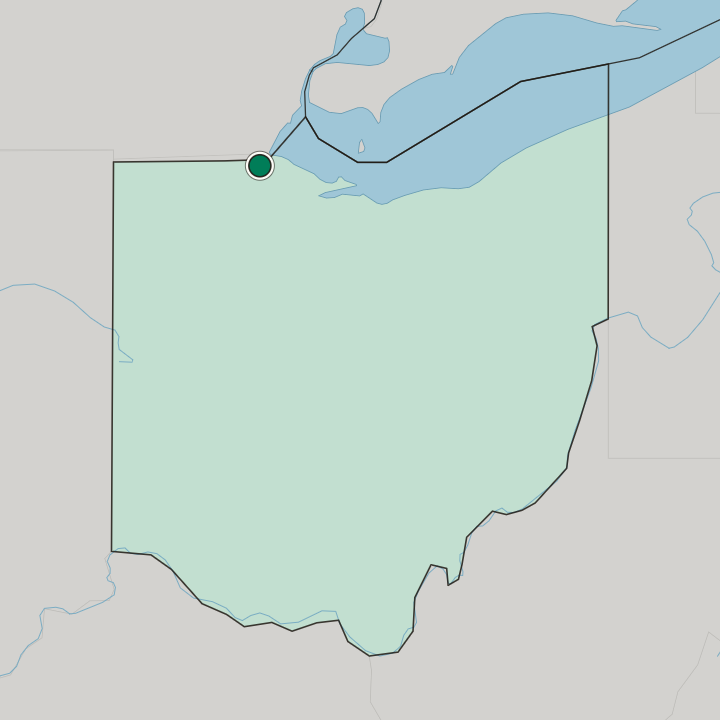
Toledo sits on flat lake-plain ground in Ohio, where the river runs through the center toward the Great Lakes. Water shapes the city. The downtown riverfront lines the water where the old harbor stood, and the grid spreads across the level plain, with the Old West End rising slightly to the northwest and the parks like League Park and Speranza Park set among the outer neighborhoods.
What is the climate of Toledo?
Toledo has a cold temperate climate on the Great Lakes plain of Ohio, with cold snowy winters and warm summers. Winters run grey and cold. Snow and lake-driven cloud settle over the flat plain through the cold months, while the summers turn warm and humid across the city and the riverfront, with the spring and autumn bringing the changeable weather of the lake country.
How do you get to Toledo?
Toledo is reached by road, rail, and water, a port city on the Great Lakes in Ohio. For most, the way into Toledo is by highway. Interstate corridors cross near the city where the routes to the lake meet the roads running west into the interior, and the downtown riverfront with Fifth Third Field sits a short distance from the interchange and the main approaches into the center.
Common questions
What is the best area to stay in Toledo?
Downtown riverfront: Best if you want Fifth Third Field and the river near the door and accept a working downtown grid in return.. Old West End: Best if you want grand old houses and tree-lined streets, with the ballpark a short ride back down to the river..
Good for
More cities in Ohio
Updated September 2026