United States · Oregon
Where to Stay in Eugene, Oregon
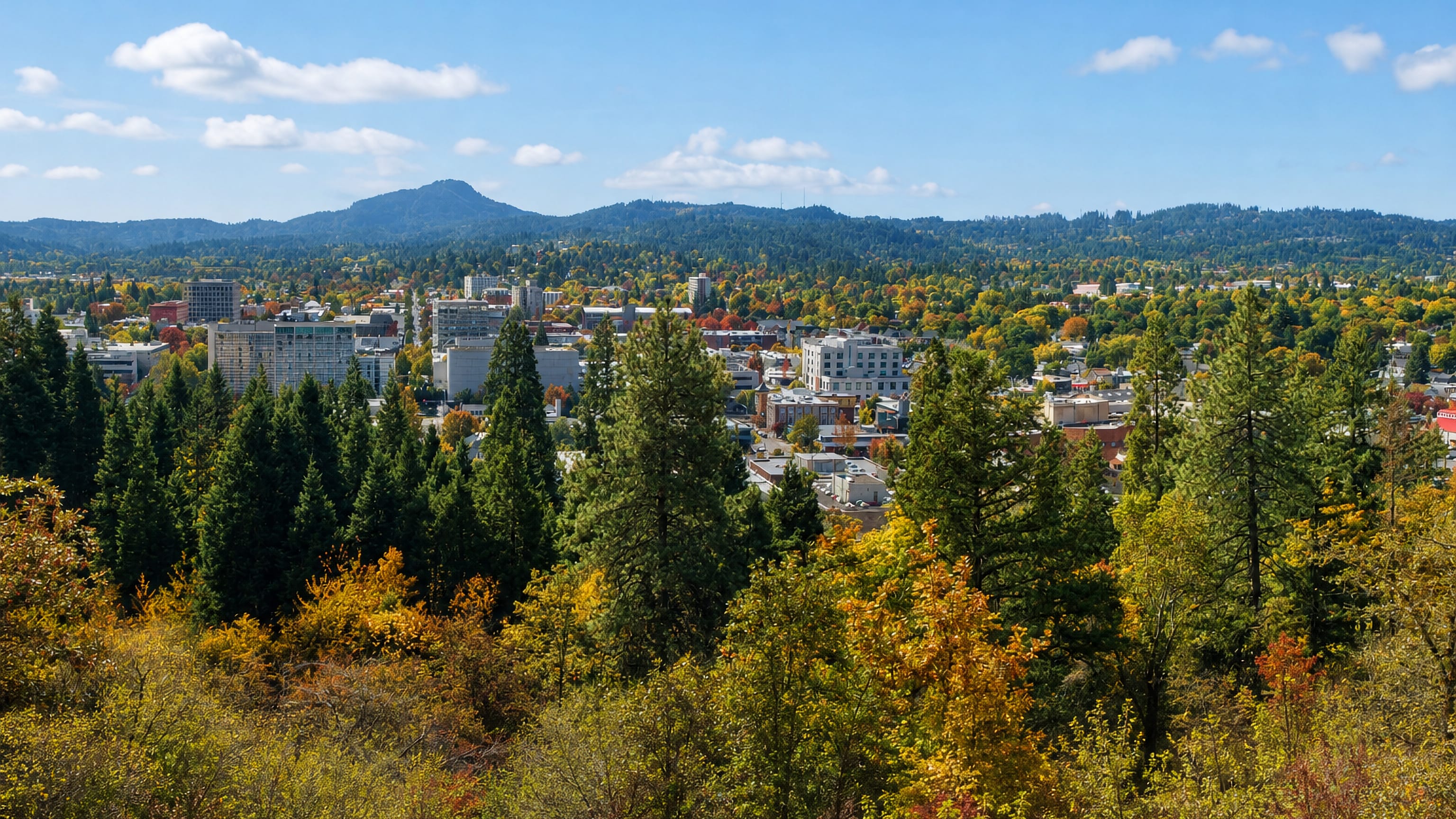
River paths thread through Eugene, a city on the Willamette River in Oregon, known for the University of Oregon and the green run of the Willamette Valley.
Hotel links are affiliate links: booking through them may earn us a commission, at no extra cost to you. It never affects how places are ranked. How this works


Where to stay in Eugene
How the choice of base plays out on the ground.
Eugene spreads across the valley floor, and the river and the university pull its neighbourhoods into shape. Start near campus. The streets around the University of Oregon put the Jordan Schnitzer Museum of Art and the University of Oregon Museum of Natural and Cultural History within an easy walk, along with the cafes and bookshops that follow a college town.
Downtown, a short way north, gathers the older commercial blocks near the First Congregational Church and the county's historic houses, and it stays lively into the evening. Follow the Willamette River and the trip changes character. The riverside paths run for miles along the water, linking parks and quiet residential streets where a slower base suits walkers and cyclists.
From here the McKenzie River valley and the Willamette Valley wine country open eastward and south. Wherever you land, the rivers are the thread. They set the greenery, the light off the water, and the easy grade that makes Eugene a walking and riding city.
Find hotels in Eugene
Direct booking searches for these neighbourhoods.
Around the University of Oregon
Walking reach of the Jordan Schnitzer Museum of Art and the University of Oregon Museum of Natural and Cultural History.Find hotels in Around the University of Oregonfirst-time visitors and evenings outDowntown Eugene
The older commercial blocks near the First Congregational Church, lively after dark and central to the city.Find hotels in Downtown Eugenewalkers, cyclists, and a quieter stayAlong the Willamette River
Riverside paths and parks beside the Willamette River, a calmer base for the trails and the valley beyond.Find hotels in Along the Willamette RiverHotel links are affiliate links: booking through them may earn us a commission, at no extra cost to you. It never affects how places are ranked. How this works
Things to do in Eugene
Ranked by global recognition; descriptions from Wikidata (CC0).
Museums & Galleries
2- Jordan Schnitzer Museum of Art Heritage
- University of Oregon Museum of Natural and Cultural History
Churches & Religious Sites
1- First Congregational Church Heritage
Stadiums & Sports
1- McArthur Court
Landmarks & Notable Places
8- Mims House Heritage
- Daniel and Catherine Christian House Heritage
- Windsor W. Calkins House Heritage
- Elmer Harlow House Heritage
- Wallace and Glenn Potter House Heritage
Show 3 more →
- Patterson–Stratton House Heritage
- Frank and Ida Chambers House Heritage
- C. S. Williams House Heritage
worth knowingacross 4 categories in Eugene
About Eugene
What is Eugene known for?
Eugene is known above all as the home of the University of Oregon, whose campus shapes the life and calendar of the city at the southern end of the Willamette Valley, near where the McKenzie River joins the Willamette River. The campus holds the Jordan Schnitzer Museum of Art and the University of Oregon Museum of Natural and Cultural History. Running runs deep here.
Track and distance racing are woven into its reputation. The Eugene Science Center and the Lane County Historical Museum round out the city's museums.
What are the main landmarks in Eugene?
Most of Eugene's landmarks cluster near campus. On the University of Oregon grounds stand the Jordan Schnitzer Museum of Art, the University of Oregon Museum of Natural and Cultural History, the Collier House, and McArthur Court. The Eugene Science Center and the Lane County Historical Museum sit within the city.
A run of preserved historic houses, among them the Mims House and the Frank and Ida Chambers House, lines the residential blocks around the older centre, where the First Congregational Church still anchors the streetscape.
What is the history of Eugene?
Eugene was laid out in 1846 by settlers reaching the southern Willamette Valley along the overland trails west. The valley floor, watered by the Willamette River and the McKenzie River that joins it nearby, drew farming, and the young town grew as a market and county seat for Lane County. This was Kalapuya country.
Valley peoples lived here long before that arrival. Everything turned when the University of Oregon opened on the rise above the river. The Collier House and McArthur Court date from the campus's early decades, and the university drew scholarship, sport, and the museums that mark the city now.
Historic houses across the older neighbourhoods, among them the Mims House and the Daniel and Catherine Christian House, record the town's Victorian growth. The Lane County Historical Museum keeps that longer story of the valley. Rail and the river tied Eugene to the wider Oregon interior as it grew.
Where is Eugene?
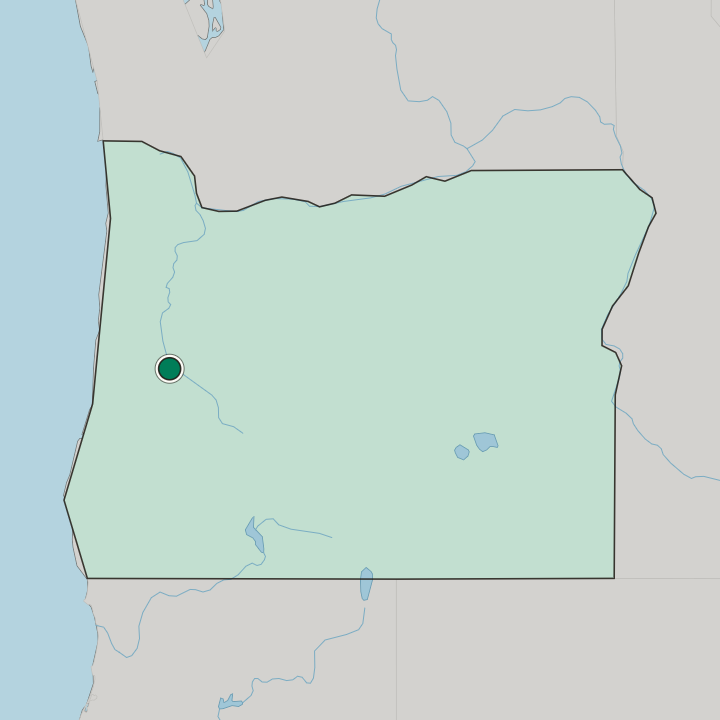
Eugene lies at the southern end of the Willamette Valley in Oregon, on the floor of the wide farming basin where the Willamette River runs through the city and is gathered by the McKenzie River just to the north. Low hills rise inside the town. They break the level valley and give the streets their pitch.
Beyond, the land climbs east toward the Cascade Range. The valley opens northward from Eugene down the length of the river.
What is the climate of Eugene?
Eugene has mild, wet winters and warm, dry summers, the marine climate of the Willamette Valley behind the Coast Range. Rain falls through the cool half of the year and greens the valley floor. Summers turn dry and clear.
The rivers and the surrounding hills keep the air fresh, and long stretches of grey, damp weather give the city its green character. Snow is uncommon on the valley floor, though the Cascade Range to the east holds it through winter.
How do you get to Eugene?
Eugene sits on the main north-south corridor through the Willamette Valley, reached by the interstate and rail line that run the length of Oregon. Eugene Airport handles regional and connecting flights. Trains stop in the city on the route between the valley towns, and buses tie it to the wider region.
For onward trips, roads climb east up the McKenzie River toward the Cascade Range, while the valley highway runs north through Oregon's wine country and farm towns.
Common questions
What is the best area to stay in Eugene?
Around the University of Oregon: campus visits and the art museums. Downtown Eugene: first-time visitors and evenings out. Along the Willamette River: walkers, cyclists, and a quieter stay.
Good for
More cities in Oregon
Updated September 2026