United States · Pennsylvania
Where to Stay in Bethlehem, Pennsylvania
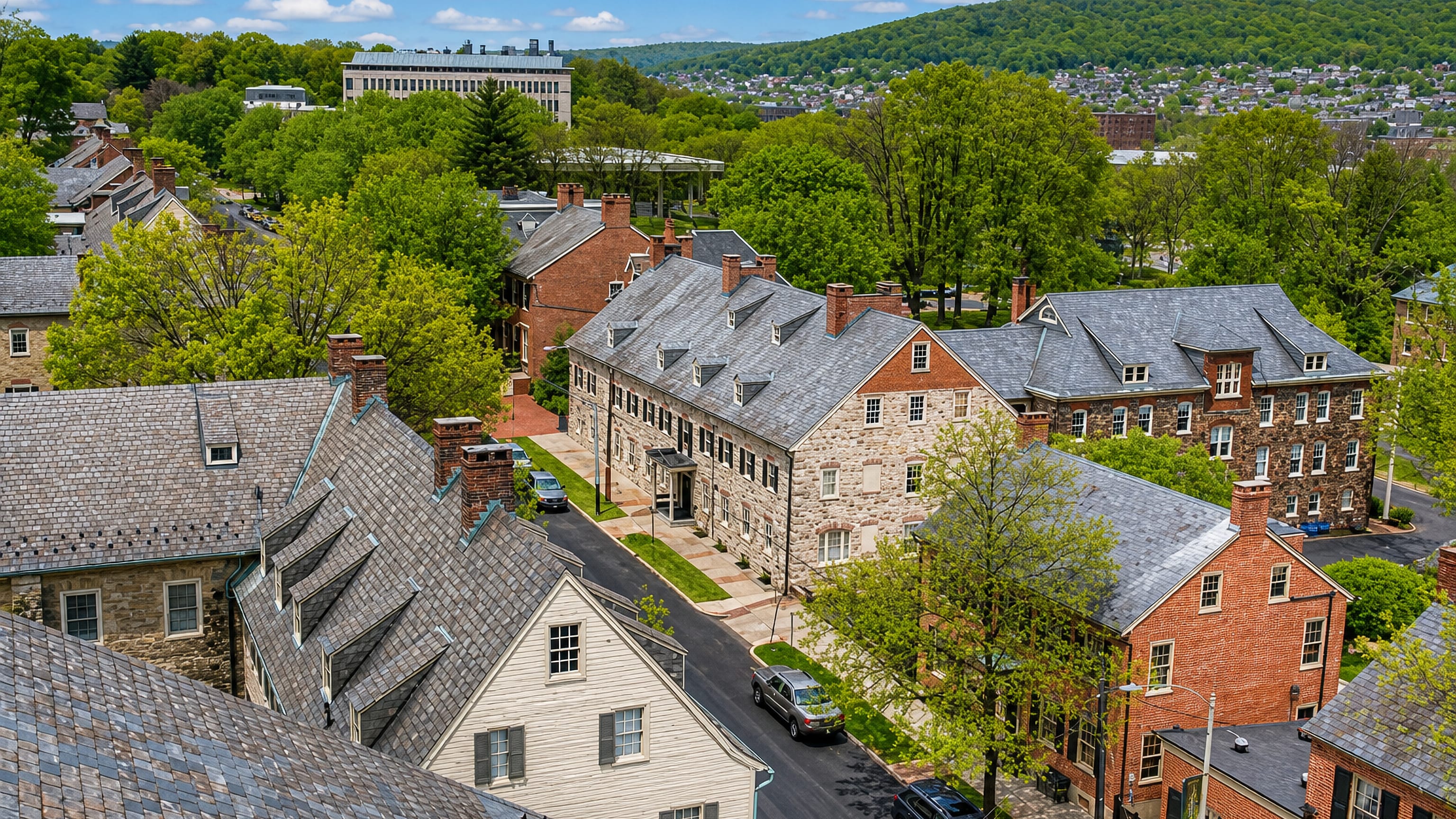
Bethlehem, a Moravian foundation of 1741 on the Lehigh River, is the second-largest city of the Lehigh Valley after Allentown.
Hotel links are affiliate links: booking through them may earn us a commission, at no extra cost to you. It never affects how places are ranked. How this works


Where to stay in Bethlehem
Where the beds are, and what that means for the visit.
The Moravian core is the obvious base. Central Moravian Church, the Old Moravian Chapel and the Gemeinhaus-Lewis David de Schweinitz Residence make up the city's oldest cluster, and a room among them puts the eighteenth-century streets of Bethlehem outside the door. Term dates matter here.
Lehigh University brings its own calendar into the city, and the weeks around graduation are the ones when rooms anywhere near the Lehigh University Art Galleries and the Payne Gallery go first. Those weeks fill early. The industrial side offers the other choice.
Rooms near the National Museum of Industrial History put the city's manufacturing record within easy reach, and Central Park is the obvious break for anyone travelling with children. Burnside Plantation is quieter ground. Its farm buildings stand apart from the streets that fill on a weekend, and a stay out that way trades the walk to Central Moravian Church for parking and space.
Allentown and Easton are the fallbacks. Both sit inside the Lehigh Valley within an easy drive, which matters when a Lehigh University weekend takes every bed in Bethlehem at once, and the run back in costs little.
Find hotels in Bethlehem
Direct booking searches for these neighbourhoods.
The Moravian core
Central Moravian Church, the Old Moravian Chapel and the Gemeinhaus-Lewis David de Schweinitz Residence form the oldest cluster in Bethlehem, all on one short walk.Find hotels in The Moravian coreAnyone whose week runs on the Lehigh University calendarThe Lehigh University side
The Lehigh University Art Galleries and the Payne Gallery sit on the university side of Bethlehem, where graduation weeks take the rooms first. Rooms are few around here — worth securing early.Find hotels in The Lehigh University sideTravellers pairing the National Museum of Industrial History with Central ParkAround the National Museum of Industrial History
The National Museum of Industrial History and Central Park anchor the working side of the city, with parking easier than in the Moravian streets.Find hotels in Around the National Museum of Industrial HistoryHotel links are affiliate links: booking through them may earn us a commission, at no extra cost to you. It never affects how places are ranked. How this works
Things to do in Bethlehem
Ranked by global recognition; descriptions from Wikidata (CC0).
Museums & Galleries
3- Burnside Plantation Heritage
- National Museum of Industrial History
- Monsoon gallery
Churches & Religious Sites
3- First Presbyterian Church
- Central Moravian Church
- Old Moravian Chapel
Parks & Gardens
1- Central Park
Landmarks & Notable Places
2- Gemeinhaus-Lewis David de Schweinitz Residence Heritage
- Gristmiller's House Heritage
worth knowingacross 4 categories in Bethlehem
About Bethlehem
Industry left a museum behind.
What is Bethlehem known for?
The National Museum of Industrial History holds that side of the record, while the Moravian buildings, Central Moravian Church, the Old Moravian Chapel and the Gemeinhaus-Lewis David de Schweinitz Residence, carry the founding of 1741. Lehigh University Art Galleries and the Payne Gallery cover the art side. Bethlehem shares the Lehigh Valley with Allentown and Easton, and among the three it is the one whose name and church buildings reach back to a single congregation.
What are the main landmarks in Bethlehem?
The Moravian buildings come first. Central Moravian Church and the Old Moravian Chapel stand for the congregation that founded the place, and the Gemeinhaus-Lewis David de Schweinitz Residence and the Gristmiller's House belong to the same register of early building. The National Museum of Industrial History covers the works.
Art is split between the Lehigh University Art Galleries, the Payne Gallery and the Monsoon gallery, while Burnside Plantation keeps a farm inside the city and First Presbyterian Church holds a corner of its own. Central Park is the green one.
What is the history of Bethlehem?
The founding year is 1741. A Moravian congregation established the settlement, and its buildings still carry the name, with Central Moravian Church, the Old Moravian Chapel and the Gemeinhaus-Lewis David de Schweinitz Residence standing for that first community. The Lehigh River runs through the ground they chose.
As a tributary of the Delaware River it gave the settlement a route outward, and the Gristmiller's House survives from the working economy that grew along it. Burnside Plantation farmed the edge. Industry made the second city.
Manufacturing on a scale far beyond a congregation town reshaped Bethlehem, and the National Museum of Industrial History keeps the record of it inside the city rather than in a regional collection somewhere else. Learning arrived alongside. Lehigh University brought galleries with it, the Lehigh University Art Galleries and the Payne Gallery among them, and the Monsoon gallery and First Presbyterian Church fill in the streets between the campus and the older core.
The city ended up straddling two counties, held partly by Northampton County and partly by Lehigh County, and second in the Lehigh Valley only to Allentown, with Easton completing the trio. Bethlehem ranks seventh in Pennsylvania.
Where is Bethlehem?
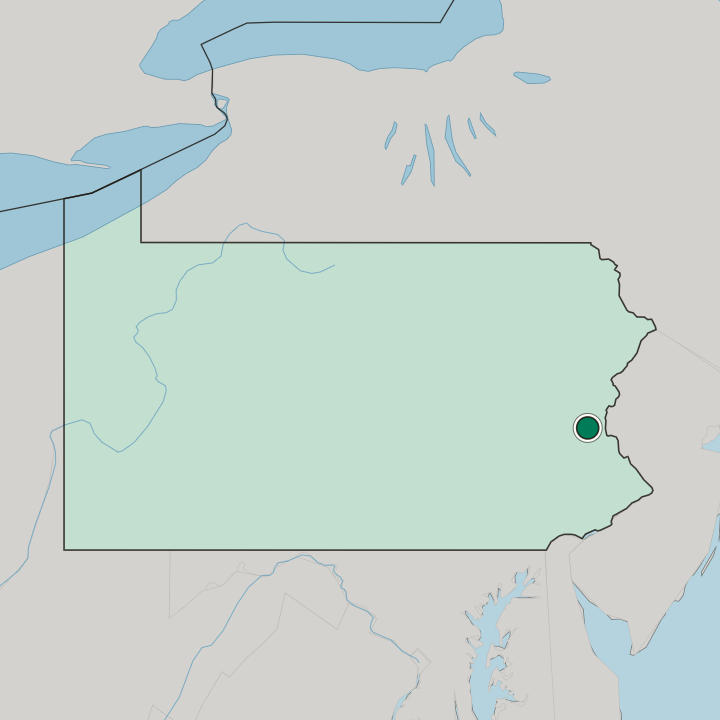
Bethlehem lies along the Lehigh River, which joins the Delaware River downstream and gives the city its one continuous natural line. The Lehigh Valley holds it. Two counties divide the place between them, Northampton County taking the larger share and Lehigh County the smaller, which is unusual for a city of this size and puts Allentown and Easton in the same regional frame.
Central Park breaks the grid.
What is the climate of Bethlehem?
The Lehigh River carries the seasons through. Bethlehem sits in the northern temperate band, and the river corridor is where the year shows first, greening along the banks well before the built streets change, and the same corridor stays the coolest line through the city in high summer. Winter empties the parks.
Central Park and Burnside Plantation carry the warm-weather traffic, while the Lehigh University Art Galleries, the Payne Gallery and the National Museum of Industrial History take the indoor months.
How do you get to Bethlehem?
Bethlehem shares its approaches with Allentown. The two sit close together in the Lehigh Valley, with Easton completing the line, so the roads that serve one serve all three and no arrival is specific to this city alone. Two counties meet inside it.
Northampton County and Lehigh County each hold part of Bethlehem, so a route in can cross an administrative line without crossing anything visible, and the practical arrival is by car off the valley's road network. Parking is the last problem.
Common questions
What is the best area to stay in Bethlehem?
The Moravian core: Visitors here for Central Moravian Church and the Old Moravian Chapel. The Lehigh University side: Anyone whose week runs on the Lehigh University calendar. Around the National Museum of Industrial History: Travellers pairing the National Museum of Industrial History with Central Park.
Good for
More cities in Pennsylvania
Updated October 2026