United States · Tennessee
Where to Stay in Franklin, Tennessee
Franklin is the county seat of Williamson County, a Tennessee town of preserved houses standing about 21 miles south of Nashville.
Hotel links are affiliate links: booking through them may earn us a commission, at no extra cost to you. It never affects how places are ranked. How this works


Where to stay in Franklin
Where visitors usually base themselves, and why.
The historic core is the first choice. Carter House, the Lotz House and the Confederate Monument stand within a few blocks of one another, and a bed on those streets is the only arrangement in Franklin that lets a visitor walk between the named sites rather than drive. Parking gets tight.
Wyatt Hall and the Rainey House belong to the same walkable stretch, so the trade is convenience against quiet. Nashville changes the calculation. Franklin lies about 21 miles south of that city, so a room here stays within an easy drive of it while keeping the scale and quiet of a Williamson County town.
Some visitors do the reverse. A Nashville base with a day run down to Carnton, the McLemore House and Harlinsdale Farm works well enough, though it gives up the evenings on Franklin's own streets and the walk between the houses. The Winstead House, Glen Echo and the Cox House stand among ordinary residential streets.
Those blocks go quiet after dark. Parking is the compensation, and every entry on the Franklin register is a short drive rather than a walk, which is the whole trade for anyone arriving by car.
Find hotels in Franklin
Direct booking searches for these neighbourhoods.
The Carter House blocks
Carter House, the Lotz House and Wyatt Hall stand close enough together that this is the one part of Franklin a visitor can cover on foot.Find hotels in The Carter House blocksArrivals by car aiming at the Carnton groundsThe Carnton and Harlinsdale Farm side
Carnton and Harlinsdale Farm hold ground of their own rather than a street frontage, which rewards a stay with parking over one with a pavement.Find hotels in The Carnton and Harlinsdale Farm sideQuiet nights within reach of Glen Echo and the Cox HouseThe Winstead House streets
Residential Franklin around the Winstead House, with room at the door and the Williamson County roads towards Nashville a short run away. Few places to stay nearby — book ahead.Find hotels in The Winstead House streetsHotel links are affiliate links: booking through them may earn us a commission, at no extra cost to you. It never affects how places are ranked. How this works
Things to do in Franklin
Ranked by global recognition; descriptions from Wikidata (CC0).
Churches & Religious Sites
1- St. Paul's Episcopal Church Heritage
Castles & Historic Sites
2- Harlinsdale Farm Heritage
- Confederate Monument (Franklin)
Landmarks & Notable Places
8- Carnton Heritage
- Carter House Heritage
- Lotz House Heritage
- Alpheus Truett House Heritage
- Henry H. Mayberry House Heritage
Show 3 more →
- Wyatt Hall Heritage
- John Henry Carothers House Heritage
- McGavock-Gaines House Heritage
worth knowingacross 3 categories in Franklin
About Franklin
Preserved houses are the point.
What is Franklin known for?
Carnton and the Carter House head a Williamson County register that runs past twenty entries, with the Lotz House, the McLemore House and the Winstead House close behind them. Harlinsdale Farm covers the open ground. Glen Echo, Wyatt Hall and the Cox House carry the rest of the older building stock, which is a long list for a town this far out from Nashville.
What are the main landmarks in Franklin?
Carnton heads the list. The house shares the Williamson County register with the Carter House, the Lotz House and the McLemore House, four buildings that between them cover the domestic record of older Franklin. St. Paul's Episcopal Church stands for the congregations.
Harlinsdale Farm, Glen Echo, the Maney-Sidway House and the McGavock-Gaines House complete a roll that few towns of this size can match.
What is the history of Franklin?
Franklin was founded in 1799. The town became the seat of Williamson County, and the street plan set out then still carries the Carter House, the Lotz House and Wyatt Hall. The Alpheus Truett House and the Rainey House sit on the same older streets.
Families gave the buildings their names. Carnton, the McGavock-Gaines House, the Maney-Sidway House and the McLemore House carry family surnames rather than civic titles, which is why the Franklin register reads as a list of households instead of institutions. The list runs past twenty buildings.
Not every one is a house. Harlinsdale Farm points at worked ground instead of a household, and the Winstead House, Glen Echo and the Cox House extend the same domestic record outward from the centre of Franklin. Two public markers close the list.
St. Paul's Episcopal Church serves a congregation, while the Confederate Monument is the most explicitly commemorative object the town keeps. Nashville sets the frame. Franklin lies about 21 miles to the south of it and counts as one of the principal cities of the Nashville metropolitan area, which is what turned an early county seat into part of a much larger urban region.
Where is Franklin?
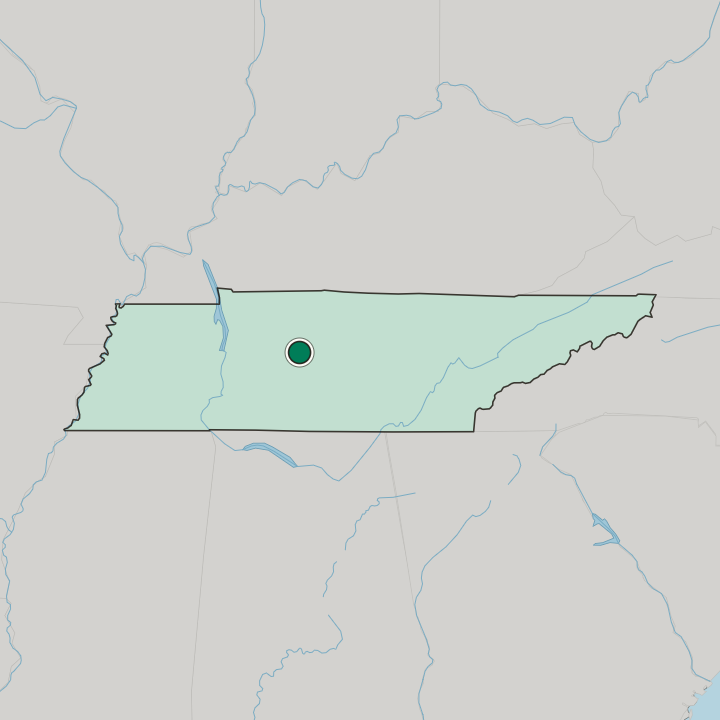
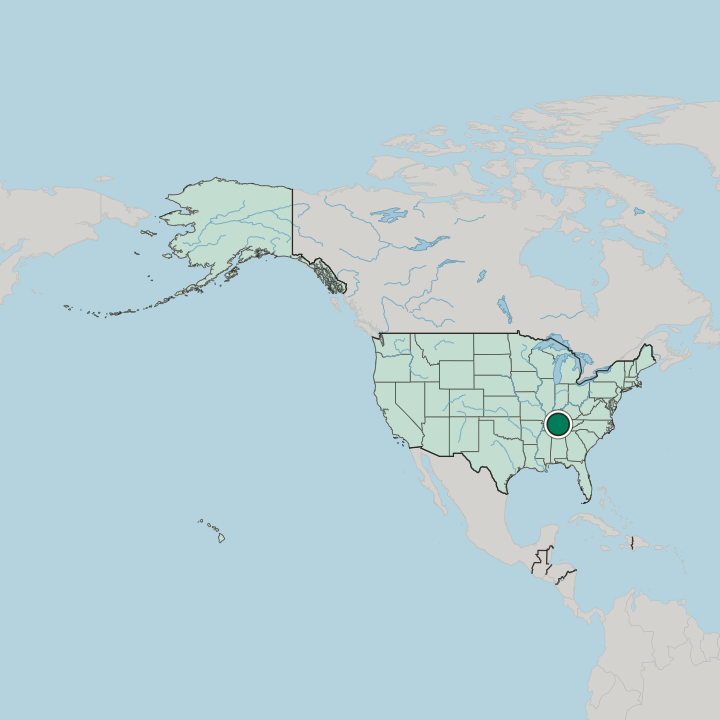
Franklin covers about 108 square kilometres of Williamson County. The town sits inland in Tennessee, on ground that carries both the built centre around the Carter House and open land at Harlinsdale Farm. Nashville lies to the north.
The distance between the two runs to roughly 34 kilometres, close enough that the outer edges of Franklin belong to the wider Nashville metropolitan area rather than to open country.
What is the climate of Franklin?
Nashville and Franklin share one climate. The two lie about 34 kilometres apart in the temperate band of the northern hemisphere, close enough that the weather over Williamson County and the weather over the larger city rarely part company. The year turns in four clear stages.
Warm months run long through the middle of the calendar, and the inland position keeps the swing between the two halves of the year wider than a coastal town would see.
How do you get to Franklin?
Almost everyone arrives from Nashville. The larger city lies about 21 miles to the north, which makes the drive down into Williamson County short enough that Franklin works as a day trip in either direction. Distances inside the town are small.
Carnton, the Carter House and Harlinsdale Farm are spread across the municipal area rather than gathered on one street, so a car covers the whole register in an afternoon while a walk reaches only the central blocks.
Common questions
What is the best area to stay in Franklin?
The Carter House blocks: Walking days between the Lotz House and the Confederate Monument. The Carnton and Harlinsdale Farm side: Arrivals by car aiming at the Carnton grounds. The Winstead House streets: Quiet nights within reach of Glen Echo and the Cox House.
Good for
More cities in Tennessee
Updated September 2026