United States · Tennessee
Where to Stay in Memphis, Tennessee
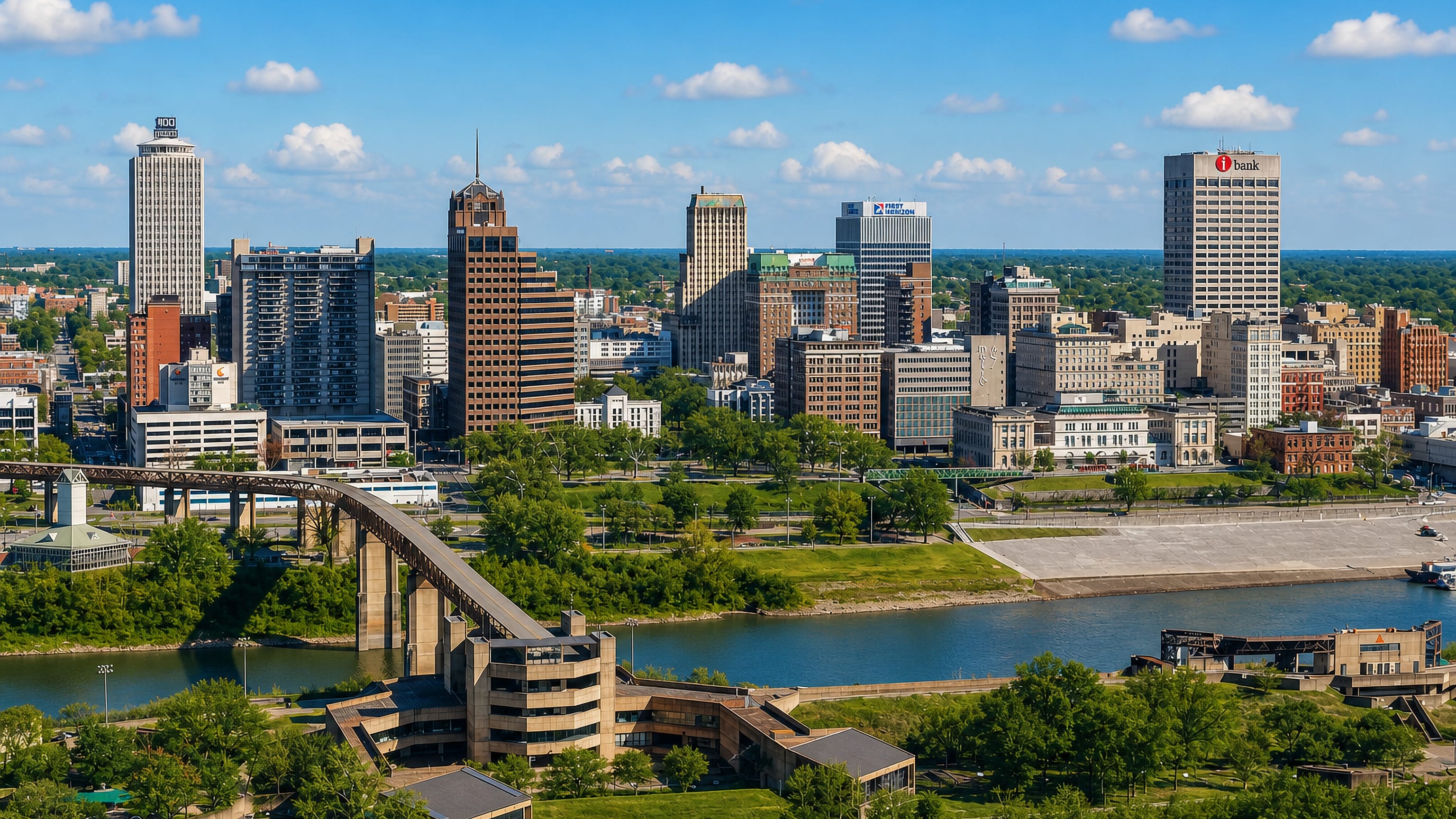
Memphis is a music city in Tennessee on the Mississippi River, known for the Blues Hall of Fame and the National Civil Rights Museum.
Hotel links are affiliate links: booking through them may earn us a commission, at no extra cost to you. It never affects how places are ranked. How this works




Where to stay in Memphis
One neighbourhood here has its own guide — here's what it is best for.
 MemphisUnited States
Greenlaw
Greenlaw is a Memphis neighbourhood, also recorded as Uptown, holding the Burkle Estate and the Porter-Leath House.Where to stay →Hotel links are affiliate links: booking through them may earn us a commission, at no extra cost to you. It never affects how places are ranked. How this works
Find hotels in Memphis
Direct booking searches for these neighbourhoods.
Downtown Memphis
The Blues Hall of Fame, the riverfront on the Mississippi River, and AutoZone Park cluster on Memphis's downtown bluffs.Find hotels in Downtown MemphisHeritage stays by the National Civil Rights MuseumCivil rights quarter
The National Civil Rights Museum at the old Lorraine Motel and The Cotton Museum sit south of downtown Memphis.Find hotels in Civil rights quarterTree-lined nights near the Stax MuseumMidtown
Shaded streets near the Stax Museum and the Mallory-Neely House give Midtown Memphis a quieter, residential base.Find hotels in MidtownHotel links are affiliate links: booking through them may earn us a commission, at no extra cost to you. It never affects how places are ranked. How this works
Things to do in Memphis
Ranked by global recognition; descriptions from Wikidata (CC0).
Museums & Galleries
3- Memphis Music Hall of Fame
- Memphis Rock N' Soul Museum
- The Cotton Museum
Churches & Religious Sites
5- Mason Temple Heritage
- Beale Street Baptist Church Heritage
- Calvary Episcopal Church Heritage
- First Presbyterian Church Heritage
- Second Congregational Church Heritage
Stadiums & Sports
1- AutoZone Park
Landmarks & Notable Places
6- Mallory–Neely House Heritage
- Annesdale Heritage
- Magevney House Heritage
- James Lee House Heritage
- John Alexander Austin House Heritage
Show 1 more →
- Porter-Leath House Heritage
worth knowingacross 4 categories in Memphis
About Memphis
What is Memphis known for?
Memphis is known as a river city in Tennessee where blues, soul, and rock and roll took shape. Music runs through it. The Blues Hall of Fame, the Memphis Rock N' Soul Museum, and the Stax Museum trace those sounds, while the National Civil Rights Museum marks a turning point in American history at the old Lorraine Motel.
Cotton once ran the economy, a story kept at The Cotton Museum on the bluffs above the Mississippi River.
What are the main landmarks in Memphis?
Music halls and house museums fill the roll of Memphis landmarks. The Blues Hall of Fame, the Memphis Music Hall of Fame, and the Stax Museum honor the city's recording legacy. At the old Lorraine Motel, the National Civil Rights Museum preserves the site of Martin Luther King Jr.'s assassination, while Mason Temple and Beale Street Baptist Church anchor its civil-rights story.
Grand houses survive too. The Mallory-Neely House, the James Lee House, and the Magevney House keep the domestic history, and AutoZone Park brings baseball downtown.
What is the history of Memphis?
Memphis was founded in 1819 on the Fourth Chickasaw Bluff, high ground above the Mississippi River in Tennessee. The river made it a port. Cotton moved through its wharves and warehouses through the nineteenth century, a trade recorded at The Cotton Museum, and the same commerce built houses like the Mallory-Neely House and the Magevney House.
Yellow fever epidemics later emptied the city, which lost its charter for a time before recovering. In the twentieth century Memphis became a crucible of American music, as Beale Street clubs and the studios behind the Stax Museum shaped blues, soul, and rock and roll. The city also carries a defining chapter of the civil-rights era.
Martin Luther King Jr. was assassinated at the Lorraine Motel in 1968, an event preserved by the National Civil Rights Museum, while Mason Temple stands where he delivered his final speech. That heritage, alongside the Blues Hall of Fame, keeps Memphis central to the story of the American South.
Where is Memphis?
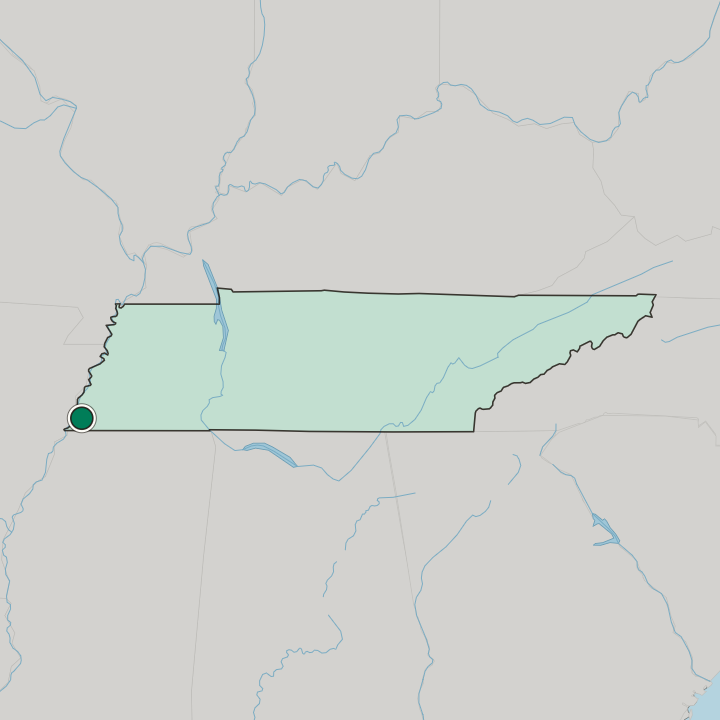
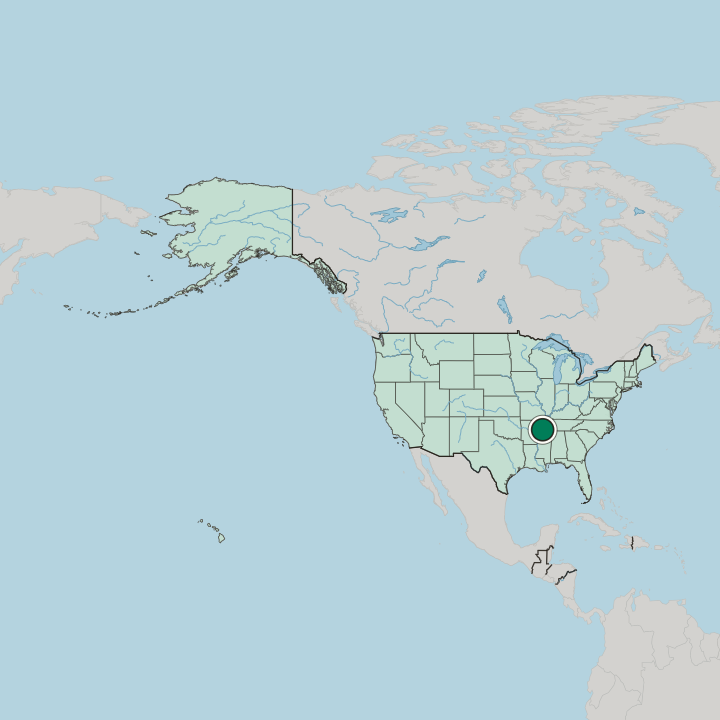
Memphis stands on a bluff above the Mississippi River in the far southwest corner of Tennessee. The bluff lifts the old city clear of the floodplain. West of the river the land drops into wide bottomland and levees, while the city itself spreads east over gently rolling ground toward the suburbs.
The Wolf River and Nonconnah Creek thread through the metro before joining the Mississippi River, and the flat, fertile delta country stretches away south beyond the state line into Mississippi and Arkansas. Cotton land surrounds it.
What is the climate of Memphis?
Memphis has a warm, humid climate typical of the mid-South. Summers are long and steamy. Spring brings thunderstorms rolling up the Mississippi River valley, sometimes with tornadoes, and heavy downpours can swell the local creeks.
Winters stay short and mild, though cold snaps and the occasional ice storm reach down into Tennessee from the north. Humidity hangs over the delta country through much of the year.
How do you get to Memphis?
Memphis sits at the crossing of Interstate 40 and Interstate 55, the highways that carry traffic across Tennessee and over the Mississippi River into Arkansas. Memphis International Airport lies southeast of downtown. Long-distance trains also call at the city.
From the airport it is a short drive to downtown, the riverfront, and the Blues Hall of Fame, while the interstates ring the wider metro and its bluff-top core.
Common questions
What is the best area to stay in Memphis?
Downtown Memphis: Music and river at the Blues Hall of Fame. Civil rights quarter: Heritage stays by the National Civil Rights Museum. Midtown: Tree-lined nights near the Stax Museum.
Good for
More cities in Tennessee
Updated October 2026