United States · Tennessee
Where to Stay in Jackson, Tennessee
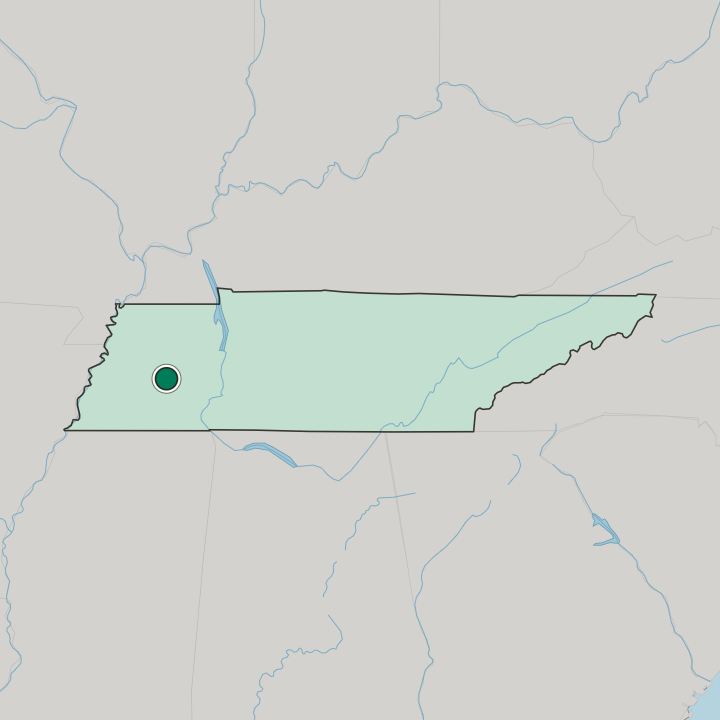
Jackson is the seat of Madison County and a rail crossroads of West Tennessee, about 70 miles east of Memphis and well southwest of Nashville.
Hotel links are affiliate links: booking through them may earn us a commission, at no extra cost to you. It never affects how places are ranked. How this works


Where to stay in Jackson
How the choice of base plays out on the ground.
Jackson rewards a central base. The heritage houses are the reason to be in the older part of the city rather than out along the highway. Oakslea Place, the Ross-Sewell House and the Captain H.P.
Farrar House carry the record of the railway decades, and a bed among them makes a morning on foot possible in a city that otherwise expects a car. Events change the answer. Oman Arena and Rothrock Stadium draw the crowds that a regional centre of West Tennessee pulls in, and a room within reach of either beats one chosen for the view on a night when something is on.
Distances inside Jackson add up. The municipal area is wide, so the difference between one end of Madison County's seat and the other is a real drive rather than a stroll. Two bigger cities frame the choice.
Jackson stands between Memphis and Nashville rather than beside either, and that middle position is why a room here is often a night on a longer journey instead of the journey itself. St. Luke Episcopal Church and Oakslea Place both belong to that list.
Find hotels in Jackson
Direct booking searches for these neighbourhoods.
The Oakslea Place quarter
Oakslea Place and the Captain H.P. Farrar House stand close enough together to make the older part of Jackson worth covering without a car.Find hotels in The Oakslea Place quarterNights when Oman Arena or Rothrock Stadium has something onAround Oman Arena
The venues that pull West Tennessee into Jackson stand on this side, which counts for more than any view on an event evening.Find hotels in Around Oman ArenaOvernight halts on the run between Memphis and NashvilleThe Memphis highway edge
The outer edge of the Madison County seat, where a room is picked for the 70 miles back to Memphis rather than for the walk to St. Luke Episcopal Church. Lodging is scarce in this area; reserve in advance.Find hotels in The Memphis highway edgeHotel links are affiliate links: booking through them may earn us a commission, at no extra cost to you. It never affects how places are ranked. How this works
Things to do in Jackson
Ranked by global recognition; descriptions from Wikidata (CC0).
Churches & Religious Sites
1- St. Luke Episcopal Church Heritage
Stadiums & Sports
2- Oman Arena
- Rothrock Stadium
Landmarks & Notable Places
4- Oakslea Place Heritage
- Captain H.P. Farrar House Heritage
- Ross-Sewell House Heritage
- William Holland Jr. House Heritage
worth knowingacross 3 categories in Jackson
About Jackson
Railroads made this city.
What is Jackson known for?
Jackson grew as a crossroads where lines ran out in all four cardinal directions, which made it the commercial centre of West Tennessee at a time when Memphis had not yet taken that role. The court came with that. The Tennessee Supreme Court keeps a courthouse for West Tennessee in Jackson, and Oman Arena and Rothrock Stadium supply the public gathering places that a regional seat of Madison County is expected to hold.
What are the main landmarks in Jackson?
Two venues and five houses. Oman Arena and Rothrock Stadium are the public buildings, and the rest of the Madison County list is domestic architecture from the decades when Jackson ran West Tennessee trade. Oakslea Place and the Ross-Sewell House carry the older domestic record.
The Captain H.P. Farrar House and the William Holland Jr. House fill out the same group, and St. Luke Episcopal Church is the one entry built for a congregation rather than a household.
What is the history of Jackson?
Jackson dates from 1821. The town became the seat of Madison County and the commercial centre of West Tennessee at a point when Memphis had not yet grown into the role it later took. Railways confirmed it.
Lines ran out of Jackson in all four cardinal directions, and the junction is what pulled trade in from the surrounding country. Cotton paid for much of it. The economy of the early city rested on cotton production worked under slavery, and Jackson went through the same disenfranchisement and racial violence recorded across the South in the decades that followed.
The courts arrived early. When the Tennessee Supreme Court set up its courthouse for West Tennessee in 1834, Jackson was the obvious place for it, and the court has stayed. Memphis eventually overtook it.
Jackson settled into second place among the cities of West Tennessee and into the role of a regional trade centre for Madison County and the counties around, with the houses of the railway years still standing. Oakslea Place and the Ross-Sewell House are two of them. Oman Arena and Rothrock Stadium came later, and they carry the civic life of the modern city rather than its founding.
Where is Jackson?
Jackson covers about 151 square kilometres. The city sits inland in West Tennessee, roughly 110 kilometres east of Memphis and 210 kilometres southwest of Nashville, which puts it near the middle of the run between the two. Madison County surrounds it.
The country around Jackson carried cotton, and rail lines reached the town from all four cardinal directions across it.
What is the climate of Jackson?
Tornadoes are the local hazard. Jackson lies in the belt of West Tennessee where they occur, and they belong to the unsettled stretch between the cold and warm halves of the year. The rest is temperate.
Summer holds the middle of the calendar with real weight, and the cotton country around the city has always worked to that rhythm rather than to a coastal one.
How do you get to Jackson?
Driving is how visitors reach Jackson. The run in from Memphis covers about 110 kilometres and the one down from Nashville about 210, which leaves Jackson well inside a day of driving from either. The junction came first.
Four sets of tracks converged here and made Madison County a trading seat, though covering the 151 square kilometres of the modern city means driving between the houses and the arena.
Common questions
What is the best area to stay in Jackson?
The Oakslea Place quarter: Mornings on foot past the Ross-Sewell House. Around Oman Arena: Nights when Oman Arena or Rothrock Stadium has something on. The Memphis highway edge: Overnight halts on the run between Memphis and Nashville.
Good for
More cities in Tennessee
Updated September 2026