United States · Tennessee
Where to Stay in Chattanooga, Tennessee
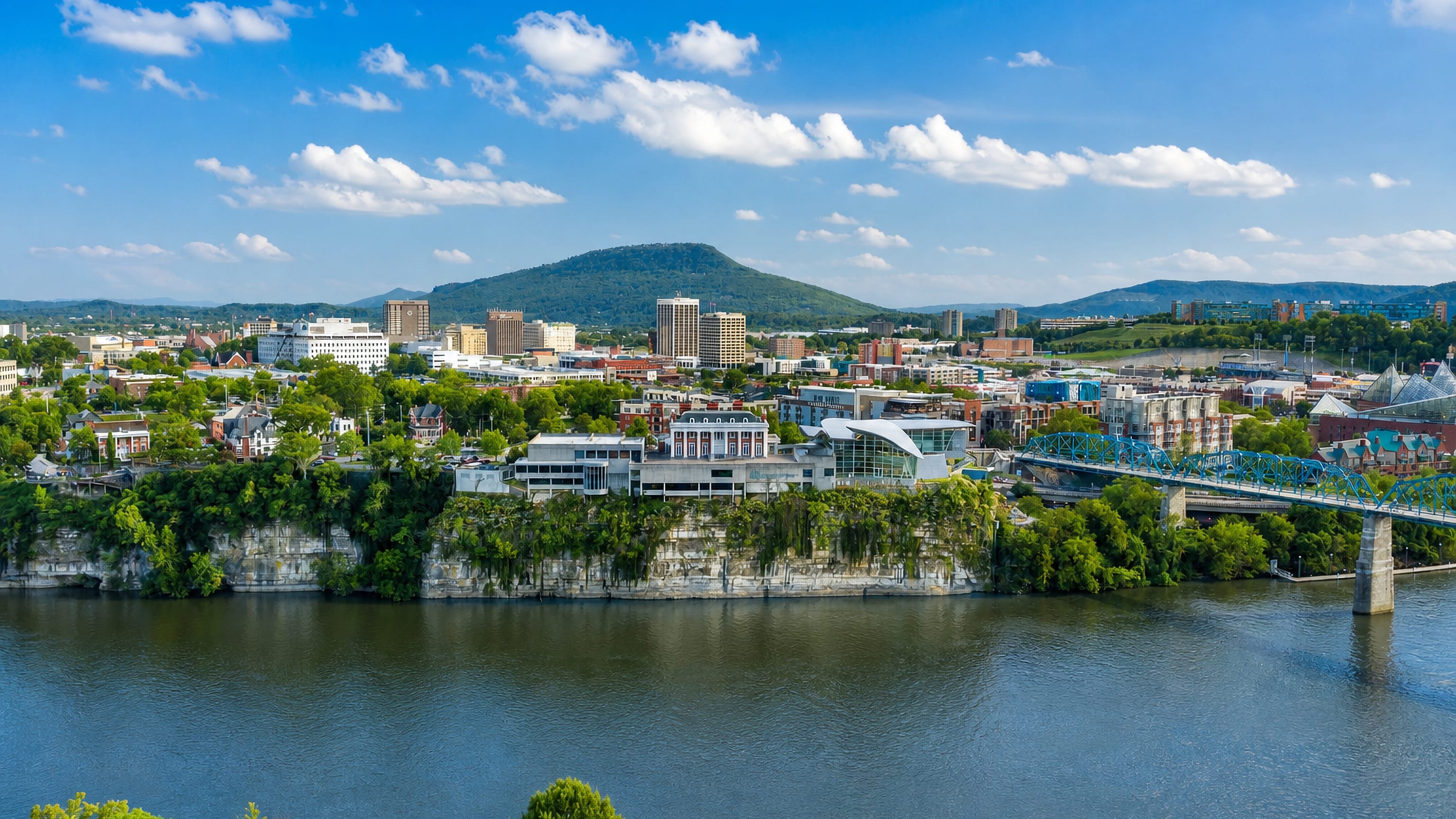
The Tennessee River bends through Chattanooga, a river city in southeast Tennessee, known for the Hunter Museum of American Art.
Hotel links are affiliate links: booking through them may earn us a commission, at no extra cost to you. It never affects how places are ranked. How this works


Where to stay in Chattanooga
Where the beds are, and what that means for the visit.
Chattanooga gathers around the Tennessee River, and where you stay divides between the riverfront and the historic neighbourhoods spread behind it. The waterfront district, along the river through the heart of the city, holds the Hunter Museum of American Art on its bluff, the Songbirds Guitar Museum, and the walkable core beside the water. This is the base for travellers here for the river, the museums, and the downtown.
The water runs past your door. Beyond the centre, the older residential districts fan out across southeast Tennessee, each with its own character. The Ferger Place Historic District preserves an early planned neighbourhood, and streets of nineteenth-century homes and churches, among them Saints Peter and Paul Basilica and the First Presbyterian Church, spread through the wider city.
Visitors who want a quieter, more settled setting, still within reach of the riverfront and the Chattanooga Zoo at Warner Park, base themselves out here. The two halves sit close together, so your choice turns on whether the river or the older neighbourhoods draws you more.
Find hotels in Chattanooga
Direct booking searches for these neighbourhoods.
Riverfront
The waterfront district runs along the Tennessee River through the heart of Chattanooga, holding the Hunter Museum of American Art on its bluff and the Songbirds Guitar Museum nearby.Find hotels in RiverfrontOld streets around the Ferger Place Historic DistrictHistoric neighbourhoods
The older residential districts of Chattanooga spread across southeast Tennessee, centred on the Ferger Place Historic District and its churches such as Saints Peter and Paul Basilica.Find hotels in Historic neighbourhoodsHotel links are affiliate links: booking through them may earn us a commission, at no extra cost to you. It never affects how places are ranked. How this works
Things to do in Chattanooga
Ranked by global recognition; descriptions from Wikidata (CC0).
Museums & Galleries
1- Hunter Museum of American Art Heritage
Churches & Religious Sites
8- First Presbyterian Church Heritage
- Saints Peter and Paul Basilica Heritage
- Highland Park Methodist Episcopal Church Heritage
- Trinity Methodist Episcopal Church Heritage
- Northside Presbyterian Church Heritage
Show 3 more →
- First Baptist Church Education Building Heritage
- St. Andrew's United Methodist Church Heritage
- First Congregational Church Heritage
Castles & Historic Sites
1- Ferger Place Historic District Heritage
Landmarks & Notable Places
6- Brabson House Heritage
- Caleb Isbester House Heritage
- Chancellor T.M. McConnell House Heritage
- Gaskill House Heritage
- Kelley House Heritage
Show 1 more →
- Model Electric Home Heritage
worth knowingacross 4 categories in Chattanooga
About Chattanooga
What is Chattanooga known for?
Chattanooga is known as a river city on the Tennessee River, the seat of Hamilton County in southeast Tennessee. It is one of the two principal cities of East Tennessee, along with Knoxville, near the border of Georgia. The Hunter Museum of American Art overlooks the river, and the Songbirds Guitar Museum and the Chattanooga Zoo at Warner Park draw visitors into the city.
The old rail town gave its name to the 1941 song Chattanooga Choo Choo. River and railway define it.
What are the main landmarks in Chattanooga?
Chattanooga sets its landmarks along the Tennessee River and through the old neighbourhoods. The Hunter Museum of American Art crowns a bluff above the water, while the Songbirds Guitar Museum and the Chattanooga Zoo at Warner Park draw families and music-lovers. Churches mark the historic streets.
Saints Peter and Paul Basilica, the First Presbyterian Church, the Trinity Methodist Episcopal Church, and the Northside Presbyterian Church stand among them, alongside the Ferger Place Historic District and old homes such as the Brabson House and the Chancellor T.M. McConnell House.
What is the history of Chattanooga?
Chattanooga was founded in 1839 on the Tennessee River, at a crossing point in what became Hamilton County. It grew as a river and rail town, a junction where the water route met the lines that ran through the mountains of southeast Tennessee toward the border of Georgia. That railroad fame reached far beyond the region.
The 1941 song Chattanooga Choo Choo carried the city's name across the country, fixing it in memory as a railway town. Wealth from the rail and river trade built the neighbourhoods that still stand. The Ferger Place Historic District laid out an early planned quarter, and churches rose across the growing city, among them the First Presbyterian Church and Saints Peter and Paul Basilica.
Homes of the era survive too. The Brabson House and the Gaskill House remain from the nineteenth-century town, and the Hunter Museum of American Art later crowned the bluff above the river, so that the long story of the place, from the founding of 1839 through the railway age, still reads in its streets and its riverfront.
Where is Chattanooga?
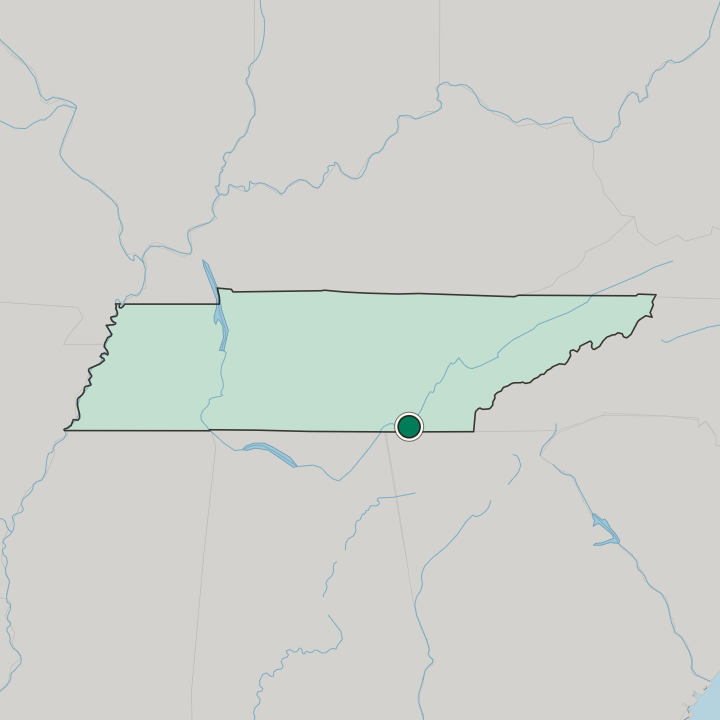
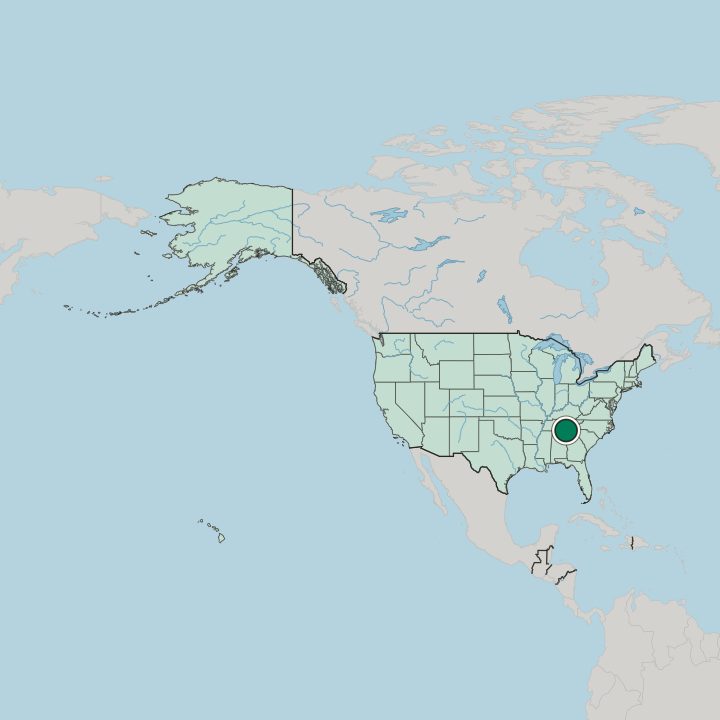
Chattanooga lies in southeast Tennessee, on the Tennessee River near the border of Georgia. The city sits where the river winds among the ridges and valleys of the southern mountains, its water curving through the built-up centre. Hills wall the valley.
Within Hamilton County, at the meeting point of Tennessee, Georgia, and the wider region, the city spreads along the river bends and climbs the wooded slopes that rise from the water on either side.
What is the climate of Chattanooga?
Chattanooga has a warm, humid climate typical of southeast Tennessee. Long, hot, humid summers bring frequent thunderstorms, while the winters stay mild and short, with only occasional cold spells reaching into the river valley. The seasons turn gently.
Rain falls through much of the year over the ridges and valleys around the Tennessee River, keeping the country green and the slopes above Chattanooga thick with woodland.
How do you get to Chattanooga?
Chattanooga is reached by road, air, and the old rail corridors of southeast Tennessee. The interstate highways cross here, meeting near the border of Georgia and carrying most arrivals into the city along the Tennessee River. Its airport lies close by.
From the highways and the airfield, travellers reach Chattanooga within a short run, the same junction of routes through the mountains that made the city a railway town in the first place.
Common questions
What is the best area to stay in Chattanooga?
Riverfront: Museums by the water at the Hunter Museum of American Art. Historic neighbourhoods: Old streets around the Ferger Place Historic District.
Good for
More cities in Tennessee
Updated September 2026