United States · Virginia
Where to Stay in Arlington, Virginia
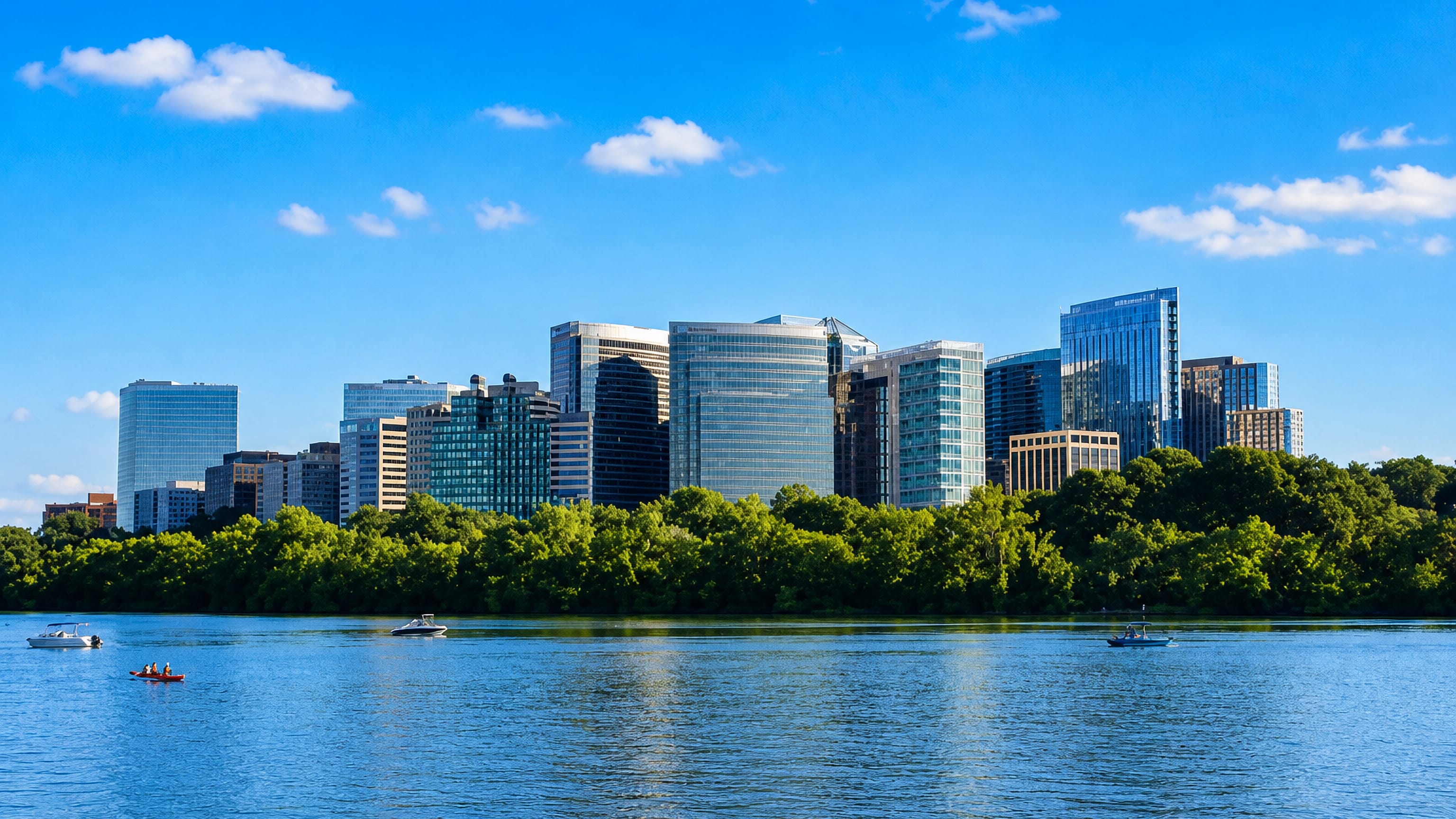
Arlington County lies across the Potomac River from Washington, the smallest self-governing county in the United States by area.
Hotel links are affiliate links: booking through them may earn us a commission, at no extra cost to you. It never affects how places are ranked. How this works


Where to stay in Arlington
How the choice of base plays out on the ground.
Court House is the obvious base. The county's courthouse and administrative offices stand there, the Washington Metro reaches it, and the blocks around the station carry the density that makes an Arlington stay work on foot. Beds concentrate along the lines.
That concentration is the whole logic of the place, since the urbanized districts grew up around the stations and everything outside them thins quickly into low-rise suburb. Washington lies straight across the water, which is why a good many Arlington rooms are booked by people whose actual destination is the capital and not the county. The cemetery side answers a different trip.
Rooms nearer Arlington National Cemetery put McClellan Gate, the Netherlands Carillon and the Pentagon Memorial inside a single morning's walk, and that suits you if the memorials are the reason for coming rather than the capital opposite. Maywood is the third choice. The historic district and Ball-Sellers House sit in the low-rise fabric well off the station corridors, where nights are quiet and a car stops being a nuisance, and Freedom Park marks the point where the office blocks give way.
None of these bases sits far from another. Twenty-six square kilometres cannot hold a bad commute, and the practical difference between these three bases is measured in stops rather than in hours.
Find hotels in Arlington
Direct booking searches for these neighbourhoods.
Court House
Court House holds Arlington's courthouse and administrative offices, and the Metro lines that make the urbanized districts walkableFind hotels in Court HouseMornings that begin at McClellan Gate and end under the Netherlands CarillonThe Arlington National Cemetery side
The cemetery slopes, the Netherlands Carillon and the Pentagon Memorial fall inside one walk from these blocks. Few places to stay nearby — book ahead.Find hotels in The Arlington National Cemetery sideQuiet nights in the Maywood Historic District, clear of the Metro corridorsMaywood and the low-rise streets
Maywood Historic District and Ball-Sellers House keep Arlington's older suburban fabric well back from the station platforms. Few places to stay nearby — book ahead.Find hotels in Maywood and the low-rise streetsHotel links are affiliate links: booking through them may earn us a commission, at no extra cost to you. It never affects how places are ranked. How this works
Things to do in Arlington
Ranked by global recognition; descriptions from Wikidata (CC0).
Museums & Galleries
1- Old Guard Museum
Churches & Religious Sites
2- Unitarian Universalist Church of Arlington Heritage
- Lomax African Methodist Episcopal Zion Church Heritage
Castles & Historic Sites
3- Fort C. F. Smith Heritage
- Pentagon Memorial
- Netherlands Carillon
Landmarks & Notable Places
2- Ball-Sellers House Heritage
- Maywood Historic District Heritage
worth knowingacross 4 categories in Arlington
About Arlington
What is Arlington known for?
Arlington National Cemetery gives the county its best-known ground, and the memorials set across it, the Civil War Unknowns Monument, the Rough Riders Memorial, the Canadian Cross of Sacrifice, turn a walk there into a reading of American military history. The Pentagon Memorial stands apart. Above the slope the Netherlands Carillon answers it in bronze, while the Military Women's Memorial and the National Seabee Memorial each hold their own approach from the cemetery gates.
Freedom Park adds another register.
What are the main landmarks in Arlington?
Not everything here is a monument. Ball-Sellers House is the county's oldest dwelling and the Maywood Historic District its most complete surviving neighbourhood from the early suburban decades, while the Unitarian Universalist Church of Arlington and the Lomax African Methodist Episcopal Zion Church hold two very different congregational records. Freedom Park keeps a green break among the office blocks near Court House, and the McClellan Gate still frames the formal way into Arlington National Cemetery.
What is the history of Arlington?
The oldest thing standing is a house. Ball-Sellers House survives from the era when this bank of the Potomac carried farms rather than a county government, and the Maywood Historic District preserves the street grid laid down as Arlington filled in behind the capital. War reshaped the rest.
McClellan Gate and the Civil War Unknowns Monument fix the ground of Arlington National Cemetery to that conflict, while the Lomax African Methodist Episcopal Zion Church records the Black congregations rooted in the county through the same years. Everything after arrived as commemoration. The USS Maine Mast Memorial, the Rough Riders Memorial and the Spanish-American War Nurses Memorial mark one war; the National Seabee Memorial, the 3rd Infantry Division Memorial and the USS Serpens Memorial mark another; the Laos Memorial and the Canadian Cross of Sacrifice widen the frame past American service alone.
Loss outside war entered too. The Space Shuttle Challenger Memorial and the Space Shuttle Columbia Memorial stand for two crews, the Pan Am Flight 103 Memorial for a civilian one, and the Pentagon Memorial together with the Victims of Terrorist Attack on the Pentagon Memorial for the day that struck the county directly. The Netherlands Carillon was a gift.
Court House, meanwhile, went on doing the ordinary work, since the county courthouse and its administrative offices still sit there and the Old Guard Museum keeps the regimental record a short way off.
Where is Arlington?
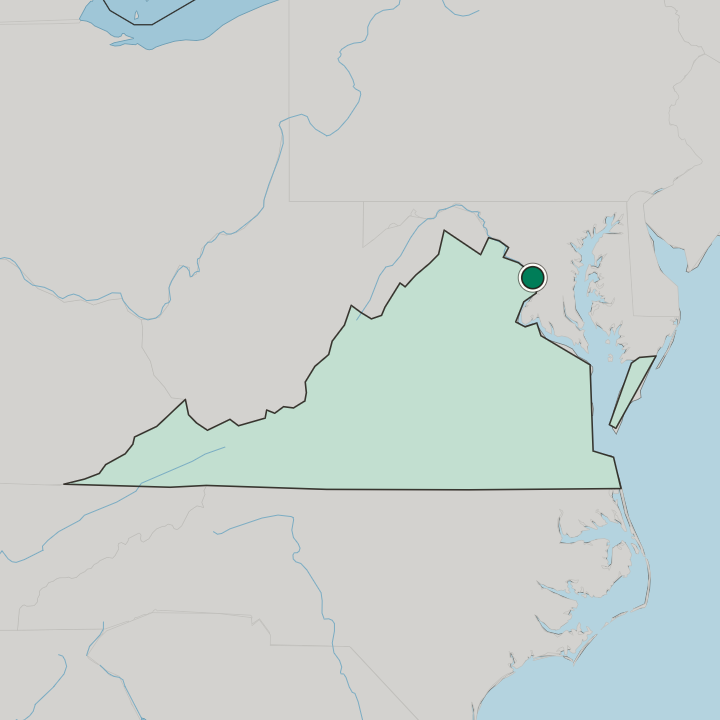
The Potomac River draws the boundary, and Arlington sits on the river's southwestern bank with Washington directly opposite, which is the single fact that explains the county's density, its road pattern and its transit map. Twenty-six square kilometres hold it all. Nothing in the United States governs itself on less.
Urbanized districts crowd the Washington Metro lines while suburban blocks spread behind them into the rest of Virginia, and the change from one to the other happens over a few streets rather than a few miles.
What is the climate of Arlington?
Arlington keeps the temperate year of the Potomac lowland, warm through the middle months and cold at the edges of it, with no ocean close enough to flatten either end. The river softens little. What the seasons decide here is not whether walking works but how far it goes, and the cemetery slopes, the Netherlands Carillon and Freedom Park all reward the milder stretches of spring and autumn more than the deep summer.
How do you get to Arlington?
The Washington Metro does the work. Several of its lines run through Arlington and the urbanized districts were built around the stations, so arriving without a car is normal rather than heroic here. Court House is the stop for county business.
The capital sits directly opposite across the river, which is why an Arlington bed and a Washington itinerary tend to work as a single arrangement rather than two separate trips.
Common questions
What is the best area to stay in Arlington?
Court House: County business at the Arlington courthouse with a Washington Metro platform at the door. The Arlington National Cemetery side: Mornings that begin at McClellan Gate and end under the Netherlands Carillon. Maywood and the low-rise streets: Quiet nights in the Maywood Historic District, clear of the Metro corridors.
Good for
More cities in Virginia
Updated September 2026