United States · Virginia
Where to Stay in Richmond, Virginia
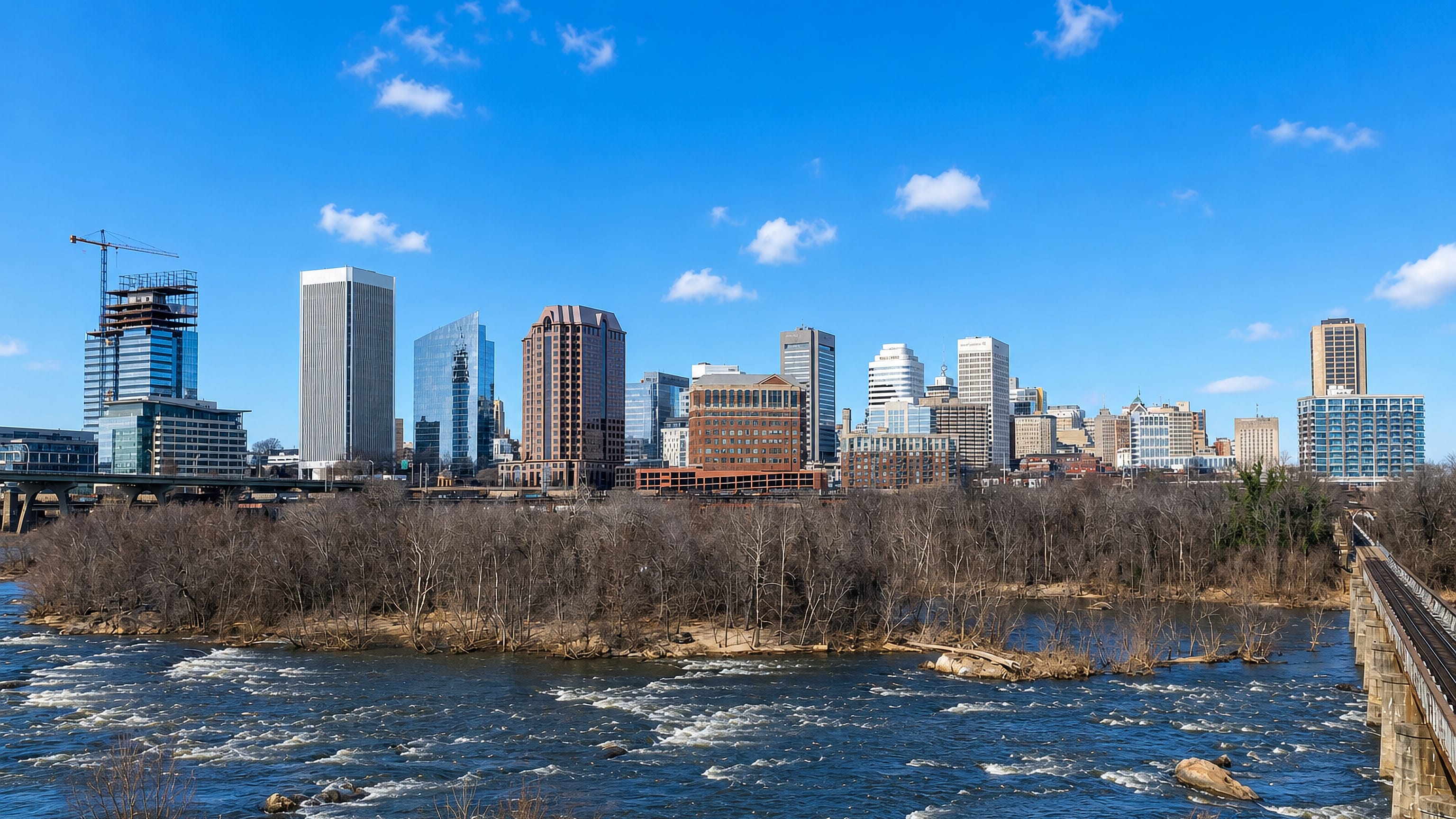
Brick terraces and church spires mark Richmond, a river capital in Virginia known for the Virginia Museum of Fine Arts and the Edgar Allan Poe Museum.
Hotel links are affiliate links: booking through them may earn us a commission, at no extra cost to you. It never affects how places are ranked. How this works




Where to stay in Richmond
How the choice of base plays out on the ground.
Richmond spreads its lodging across old residential blocks and its museum quarter. Stay near the Virginia Museum of Fine Arts and you sit within a walk of galleries and the Science Museum of Virginia, a calm stretch of the city built around brick houses and shaded avenues. The older core reads differently.
Blocks near St. John's Episcopal Church and the John Marshall House keep a colonial grain, with narrow streets and standing houses from before the republic. This is where the city's founding still shows. If you want the heavier history close, rooms toward the American Civil War Museum and the White House of the Confederacy place the Civil War chapters within reach, though the mood there runs solemn rather than lively.
You choose by appetite. Museum-goers do well near the Virginia Holocaust Museum and the Black History Museum and Cultural Center of Virginia, where the walk links several collections in a short span. Quieter stays sit among the church blocks, away from the busier avenues, close enough to reach the Edgar Allan Poe Museum on foot yet held back from the noise.
Find hotels in Richmond
Direct booking searches for these neighbourhoods.
Museum quarter by the Virginia Museum of Fine Arts
A short walk links the Virginia Museum of Fine Arts to the Science Museum of Virginia along brick avenues.Find hotels in Museum quarter by the Virginia Museum of Fine ArtsHistory-minded stays near St. John's Episcopal ChurchColonial core near St. John's Episcopal Church
Narrow streets around St. John's Episcopal Church and the John Marshall House keep Richmond's pre-republic grain.Find hotels in Colonial core near St. John's Episcopal ChurchHotel links are affiliate links: booking through them may earn us a commission, at no extra cost to you. It never affects how places are ranked. How this works
Things to do in Richmond
Ranked by global recognition; descriptions from Wikidata (CC0).
Museums & Galleries
3- Virginia Museum of Fine Arts Heritage
- American Civil War Museum
- Black History Museum and Cultural Center of Virginia
Churches & Religious Sites
5- St. John's Episcopal Church Heritage
- Monumental Church Heritage
- St. Peter's Church Heritage
- Trinity Methodist Church (Richmond, Virginia) Heritage
- Third Street Bethel A.M.E. Church Heritage
Castles & Historic Sites
3- Robert E. Lee Monument Heritage
- Washington Monument Heritage
- General J E B Stuart Statue
Stadiums & Sports
1- Belgian Building Heritage
Landmarks & Notable Places
3- John Marshall House Heritage
- Scott House Heritage
- Robinson House Heritage
worth knowingacross 5 categories in Richmond
About Richmond
What is Richmond known for?
Richmond is known for its museums and its Civil War heritage. The Virginia Museum of Fine Arts and the Science Museum of Virginia draw steady visitors, while the American Civil War Museum and the White House of the Confederacy hold the harder chapters of its past. Writers left a mark too.
The Edgar Allan Poe Museum keeps the city's literary name, and old congregations like St. John's Episcopal Church tie the streets to Virginia's earliest colonial years.
What are the main landmarks in Richmond?
Richmond holds a wide run of museums, churches, and monuments. The Virginia Museum of Fine Arts and the Science Museum of Virginia lead the collections. Civil War sites cluster nearby.
The American Civil War Museum, the White House of the Confederacy, and the Chimborazo Medical Museum trace the war years, while the Robert E. Lee Monument and the Jefferson Davis Monument stand among the city's older civic markers. Colonial fabric survives in St. John's Episcopal Church, the John Marshall House, and Monumental Church, and the Edgar Allan Poe Museum keeps the writer's local memory.
What is the history of Richmond?
Richmond traces its founding to 1607, when English settlement reached the falls that gave the site its early importance in Virginia. Trade and river traffic built it up. By the colonial era, congregations like St. John's Episcopal Church and civic figures tied to the John Marshall House made the town a seat of Virginia's political life, and independence was debated in its early churches.
War defined the next chapter. Richmond served as the Confederate capital, and the White House of the Confederacy, the American Civil War Museum, and the Chimborazo Medical Museum survive from those years as sites of memory rather than triumph. The Robert E. Lee Monument and the Jefferson Davis Monument were raised long after as civic markers, and the city's account of that period is contested ground.
Later museums broadened the record. The Black History Museum and Cultural Center of Virginia and the Virginia Holocaust Museum set that older story beside the fuller history the city now tells.
Where is Richmond?
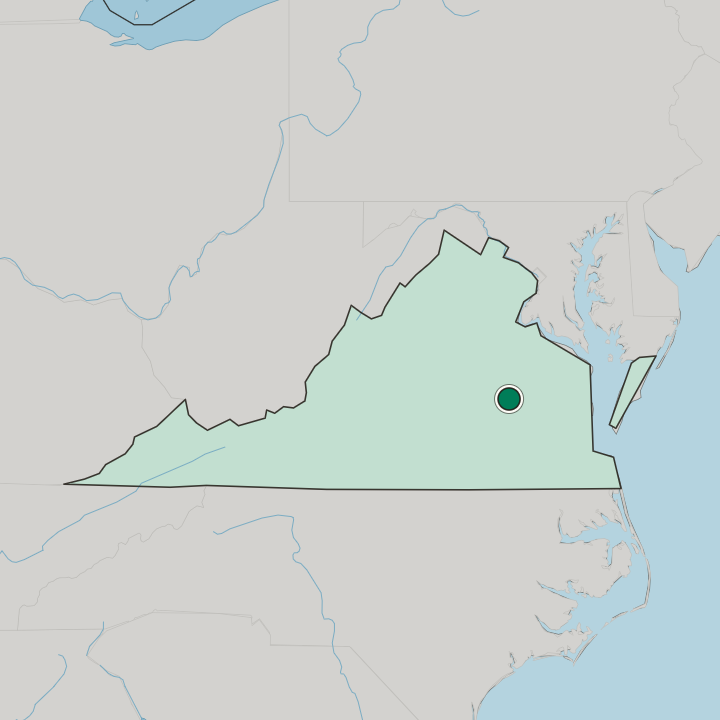
Richmond sits at the fall line of Virginia, where the coastal plain rises toward higher inland ground. The old core gathers on the slopes above the water. Brick terraces climb from the river flats toward the museum blocks near the Virginia Museum of Fine Arts, and the colonial streets around St. John's Episcopal Church hold the highest ground.
The city's spread reaches out from that historic center across a temperate belt of Virginia.
What is the climate of Richmond?
Richmond has a temperate climate with warm, humid summers and mild winters. Spring comes early. Long, hot afternoons settle over the city through the middle months, easing into cooler evenings by the church blocks around St. John's Episcopal Church, while snow stays light and short-lived across most of a Virginia winter.
The seasons turn gently rather than sharply.
How do you get to Richmond?
Richmond sits on the main road and rail corridors that run through Virginia between the coast and the interior. Trains stop in the city. Rail lines link it north and south along the eastern seaboard, and highways feed the center from every side, bringing visitors within a short drive of the Virginia Museum of Fine Arts and the historic streets near St. John's Episcopal Church.
Common questions
What is the best area to stay in Richmond?
Museum quarter by the Virginia Museum of Fine Arts: Gallery visitors near the Virginia Museum of Fine Arts. Colonial core near St. John's Episcopal Church: History-minded stays near St. John's Episcopal Church.
Good for
More cities in Virginia
Updated September 2026