United States · Virginia
Where to Stay in Norfolk, Virginia
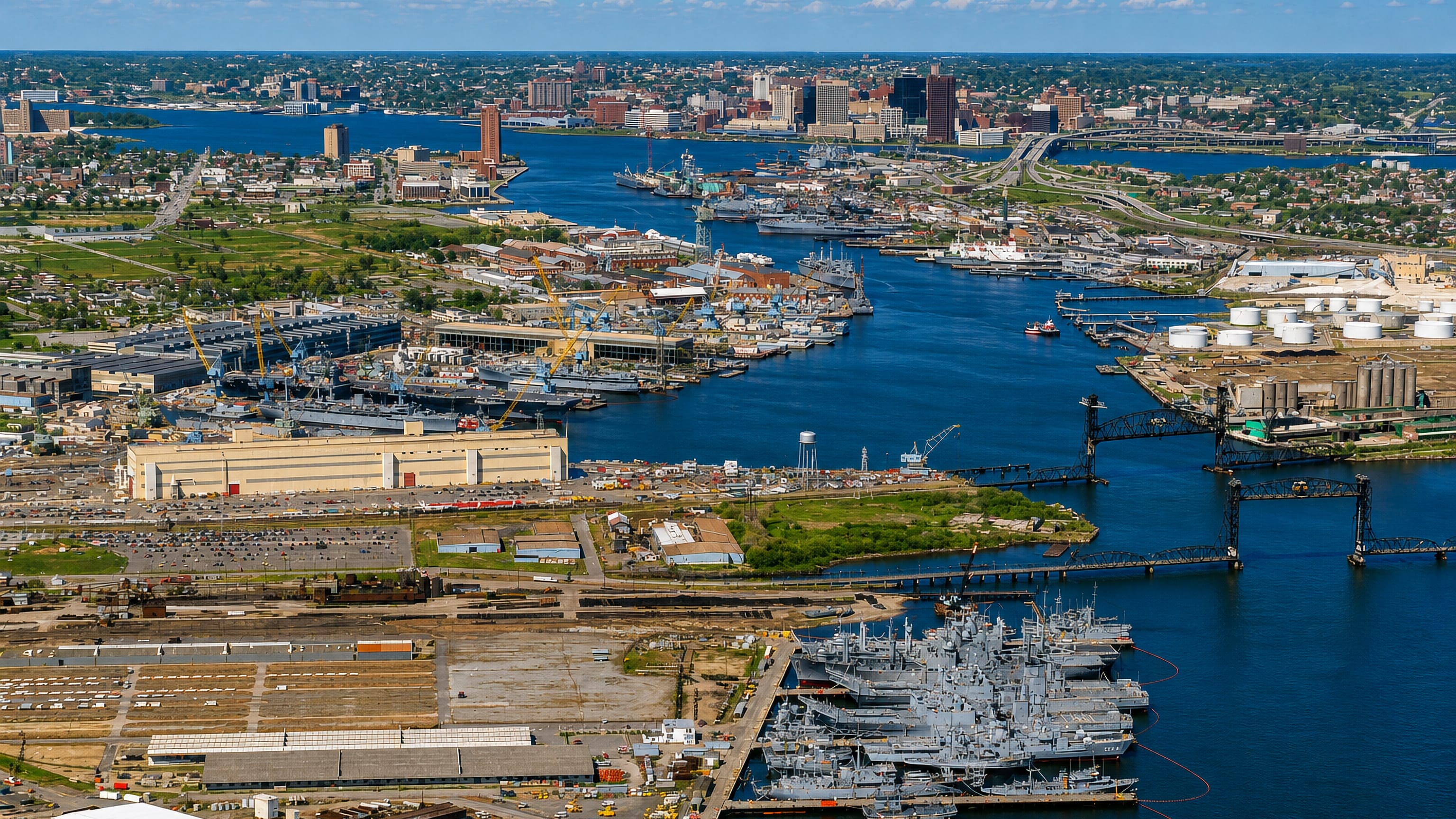
Grey harbour water meets old brick at Norfolk, a port city on the coast of Virginia, founded in 1682 and home to Nauticus.
Hotel links are affiliate links: booking through them may earn us a commission, at no extra cost to you. It never affects how places are ranked. How this works




Where to stay in Norfolk
Where the beds are, and what that means for the visit.
Norfolk gathers most of its rooms along the downtown waterfront, so where you stay turns on how close you want the harbour and the museums. The central district holds the waterfront attractions and the arena within a compact walk, and it suits a first visit best. Stay downtown near Nauticus and the Norfolk Scope if you come for the harbour and the events.
The waterfront core puts Nauticus, the MacArthur Memorial and the arena within a short flat walk, and the water is always close. You trade quiet for that centrality. Rooms fill fastest when an event fills the Norfolk Scope, so book ahead in the busy weeks.
Stay closer to the Chrysler Museum of Art and the older residential streets for a calmer base. This part of the city keeps you near the museum and historic homes like the Moses Myers House, on quieter blocks well away from the busiest waterfront. You walk further to the harbour.
It works well for a longer, steadier stay in this corner of Virginia.
Find hotels in Norfolk
Direct booking searches for these neighbourhoods.
Waterfront downtown
The waterfront core reaches Nauticus, the MacArthur Memorial and the Norfolk Scope arena within one flat walk of the harbour.Find hotels in Waterfront downtownVisitors in town for a concert or a gameScope arena blocks
The blocks by the Norfolk Scope leave only a short walk back after an event fills the arena.Find hotels in Scope arena blocksA quieter base among the art museum and historic homesChrysler Museum quarter
The streets by the Chrysler Museum of Art and the Moses Myers House give a calm base off the busy waterfront.Find hotels in Chrysler Museum quarterHotel links are affiliate links: booking through them may earn us a commission, at no extra cost to you. It never affects how places are ranked. How this works
Things to do in Norfolk
Ranked by global recognition; descriptions from Wikidata (CC0).
Museums & Galleries
3- MacArthur Memorial
- Nauticus
- Chrysler Museum of Art
Churches & Religious Sites
6- Basilica of Saint Mary of the Immaculate Conception, Norfolk Heritage
- Saint Paul's Episcopal Church Heritage
- Christ and St. Luke's Church Heritage
- St. John's African Methodist Episcopal Church (Norfolk, Virginia) Heritage
- St. Peter's Episcopal Church Heritage
Show 1 more →
- Zion Methodist Church Heritage
Castles & Historic Sites
1- Norfolk Confederate Monument
Stadiums & Sports
2- Norfolk Scope
- Marty L. Miller Field
Landmarks & Notable Places
3- Pythian Castle Heritage
- Allmand-Archer House Heritage
- Taylor-Whittle House Heritage
worth knowingacross 5 categories in Norfolk
About Norfolk
What is Norfolk known for?
Norfolk is best known as the great naval port of coastal Virginia and for the museums along its waterfront. Nauticus and the Hampton Roads Naval Museum tell the maritime story. Art has its own house here.
The Chrysler Museum of Art holds one of the finest collections in the region, while the MacArthur Memorial anchors the naval and military history of Norfolk.
What are the main landmarks in Norfolk?
Norfolk's main landmarks run along the waterfront and the old downtown. Nauticus and the Hampton Roads Naval Museum sit at the harbour, while the MacArthur Memorial holds the general's tomb and record nearby. Art and faith stand close by.
The Chrysler Museum of Art and the Basilica of Saint Mary of the Immaculate Conception mark the cultural core, and the Moses Myers House and the Virginia Zoological Park round out the heritage across Norfolk.
What is the history of Norfolk?
Norfolk was founded in 1682 as a colonial port on the coast of Virginia, and the harbour has shaped it ever since. Its deep sheltered water made it a shipping and naval centre, and much of the early town burned and rebuilt around that trade. The port was the making of it.
The waterfront grew into one of the country's great naval bases, a story now told at Nauticus and the Hampton Roads Naval Museum. Among the survivors of the older city stands the Moses Myers House, a merchant home from the early republic, alongside the churches that weathered war and fire, including the Basilica of Saint Mary of the Immaculate Conception. The MacArthur Memorial later made the downtown the resting place and record of the general, tying the city to the wider history of the twentieth-century military.
Culture followed the shipping money, and the Chrysler Museum of Art grew into the region's leading gallery. From colonial port to naval city, that long harbour history still governs how Norfolk is laid out and read.
Where is Norfolk?
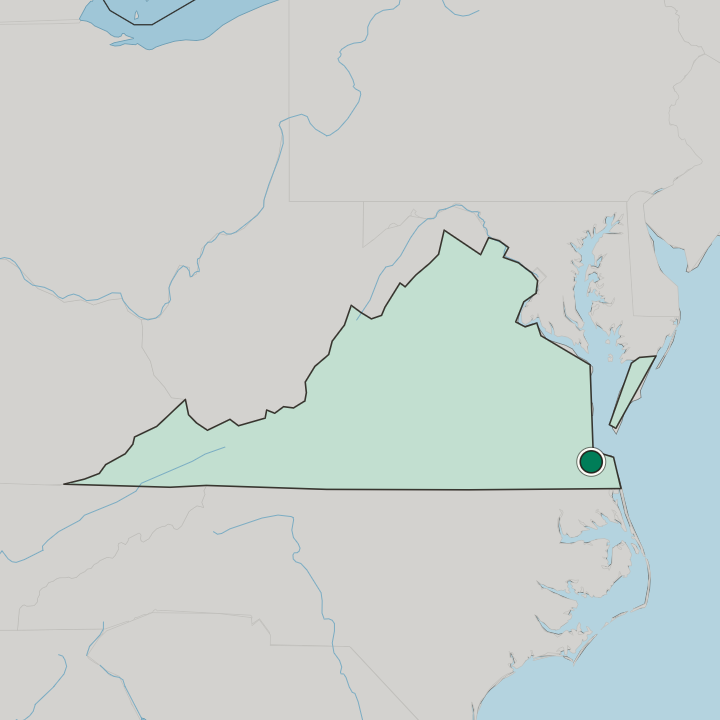
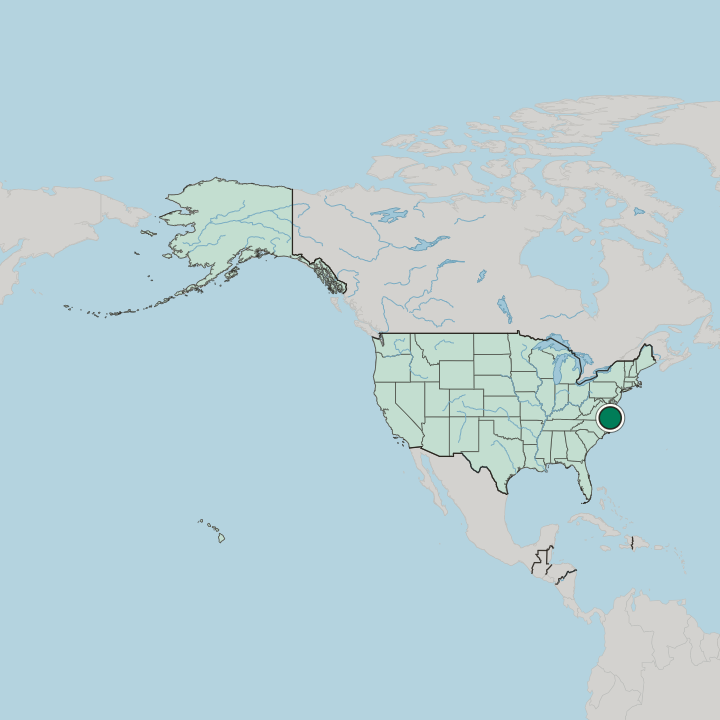
Norfolk sits on the coast of southeastern Virginia, spread across the low flat land where rivers open to a great harbour. Water surrounds much of the city, from the sheltered port to the tidal creeks that thread the neighbourhoods. The land barely rises above the tide.
Nauticus stands on the downtown waterfront, and the wider city of Norfolk reaches inland from the harbour across the coastal plain of Virginia.
What is the climate of Norfolk?
Norfolk has a humid subtropical climate softened by the surrounding water. Summers are warm and humid, with thunderstorms and the occasional coastal storm sweeping in off the Atlantic. Winter comes in mild and leaves early.
That gentle cool season brings the clearest days along the waterfront and around Nauticus, while spring and autumn are long and temperate across this low coastal edge of Virginia.
How do you get to Norfolk?
Norfolk is the main port and transport hub of coastal Virginia, reached by road, rail and water. Its own airport carries the region's scheduled flights, a short drive from the downtown waterfront, and interstate highways and tunnels link the harbour cities across the water. Bridges tie the shores together.
Once you arrive, the core of Norfolk is walkable, with Nauticus, the MacArthur Memorial and the Chrysler Museum of Art close together on foot.
Common questions
What is the best area to stay in Norfolk?
Waterfront downtown: First-timers close to Nauticus and the harbour. Scope arena blocks: Visitors in town for a concert or a game. Chrysler Museum quarter: A quieter base among the art museum and historic homes.
Good for
More cities in Virginia
Updated October 2026