United States · Virginia
Where to Stay in Portsmouth, Virginia
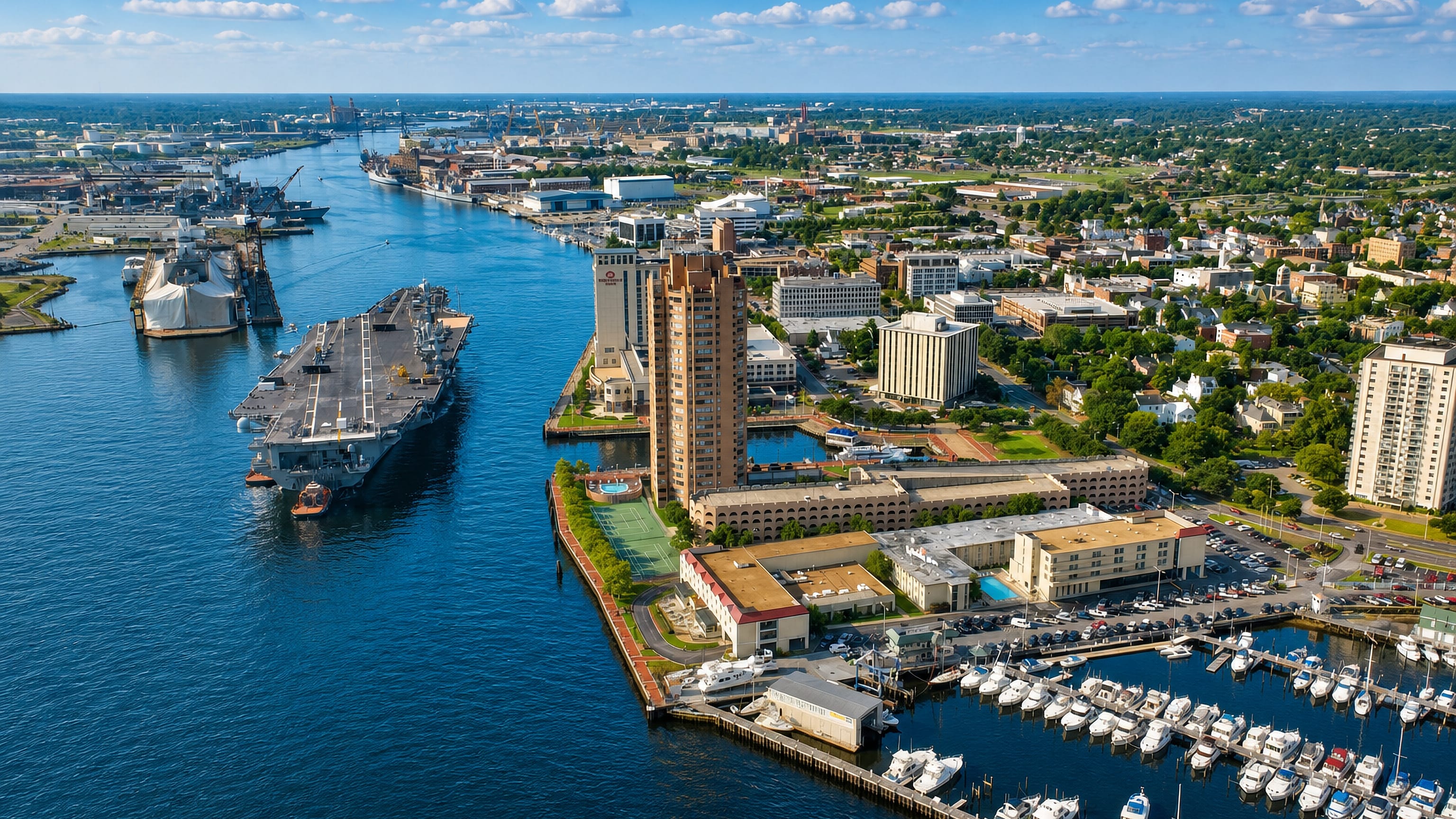
Portsmouth faces Norfolk across the Elizabeth River, an independent Virginia city laid out in 1752 and bound to the Norfolk Naval Shipyard on its bank.
Hotel links are affiliate links: booking through them may earn us a commission, at no extra cost to you. It never affects how places are ranked. How this works


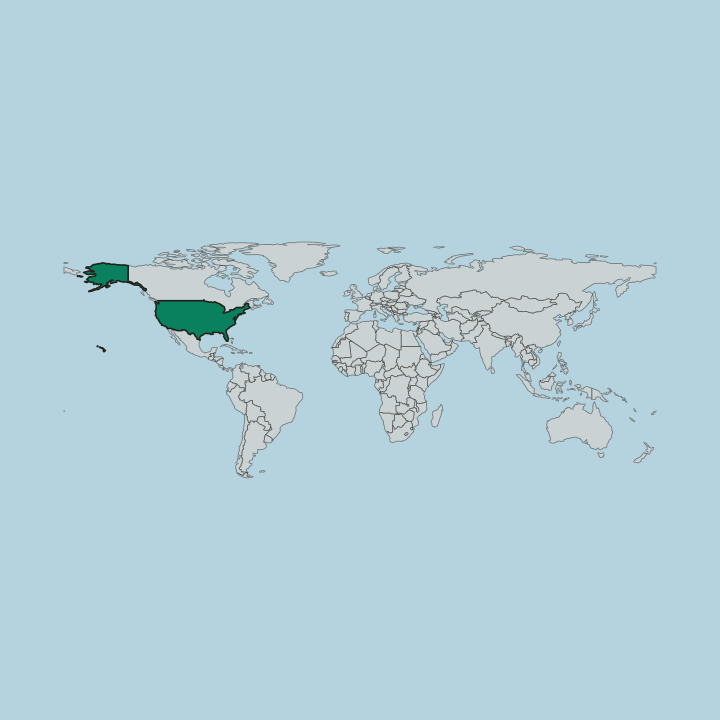
Where to stay in Portsmouth
Where visitors usually base themselves, and why.
The Elizabeth River is the whole decision. Portsmouth sits on one bank and Norfolk on the other, so a bed here keeps the shipyard side of the water while leaving the museums of Norfolk a crossing away rather than a drive. The waterfront holds most of it.
Portsmouth Naval Shipyard Museum, the Children's Museum of Virginia and Portsmouth Community Library are the city's own institutions, and they are what a stay on this bank is arranged around. The other bank changes the calculation. Norfolk carries Nauticus, the Chrysler Museum of Art, the MacArthur Memorial and Norfolk Scope, and a visitor whose days are built around those will find the water an obstacle at the wrong hour.
Churches mark the older streets. Trinity Episcopal Church, Saint Paul's Episcopal Church and the Basilica of Saint Mary of the Immaculate Conception belong to the older layer of the harbor, as do the Taylor-Whittle House, the Allmand-Archer House and the Moses Myers House. Pythian Castle is the oddity.
It sits among the buildings Portsmouth has kept, and a stay near the harbor puts it, the shipyard and the narrow width of the Elizabeth River inside a single afternoon.
Find hotels in Portsmouth
Direct booking searches for these neighbourhoods.
The harbor blocks
The Portsmouth Naval Shipyard Museum and the Children's Museum of Virginia are the two Portsmouth institutions a short stay is arranged around.Find hotels in The harbor blocksStays that want Trinity Episcopal Church and the Taylor-Whittle House on the walkThe older church streets
Trinity Episcopal Church, the Taylor-Whittle House and the Allmand-Archer House are the surviving older fabric on the Portsmouth bank.Find hotels in The older church streetsDays built around Nauticus and the Chrysler Museum of ArtThe Norfolk side of the Elizabeth River
Nauticus, the Chrysler Museum of Art and the MacArthur Memorial all stand on the Norfolk bank rather than the Portsmouth one.Find hotels in The Norfolk side of the Elizabeth RiverHotel links are affiliate links: booking through them may earn us a commission, at no extra cost to you. It never affects how places are ranked. How this works
About Portsmouth
The Norfolk Naval Shipyard defines the waterfront.
What is Portsmouth known for?
Portsmouth has been tied to the Navy for as long as it has been a town, and the Portsmouth Naval Shipyard Museum sets out that record for anyone who walks the harbor edge. Families come for another reason. The Children's Museum of Virginia draws them, and the Elizabeth River is all that separates the city from Norfolk, where Nauticus and the Chrysler Museum of Art stand on the opposite bank.
What are the main landmarks in Portsmouth?
Two banks share one landmark list. Portsmouth keeps the Portsmouth Naval Shipyard Museum, the Children's Museum of Virginia, Portsmouth Community Library and Pythian Castle, while Norfolk holds Nauticus, Norfolk Scope, the MacArthur Memorial and the Chrysler Museum of Art across the Elizabeth River. Both banks lean on their churches for the rest.
Trinity Episcopal Church, Saint Paul's Episcopal Church and the Basilica of Saint Mary of the Immaculate Conception stand among the older houses, the Taylor-Whittle House, the Willoughby-Baylor House and the Moses Myers House among them.
What is the history of Portsmouth?
Portsmouth was laid out in 1752. The town took its place on its own bank of the Elizabeth River opposite Norfolk, and the shipyard that grew beside it has bound the city to the United States Navy ever since. Naval work followed quickly.
Norfolk Naval Shipyard is both a historic yard and a working Navy facility, and its presence explains why the armed forces run through so much of what Portsmouth has recorded about itself. Churches came with the grid. Trinity Episcopal Church, Saint Paul's Episcopal Church and the Basilica of Saint Mary of the Immaculate Conception are the parish names the harbor kept, and the Taylor-Whittle House, the Allmand-Archer House and the Willoughby-Baylor House survive from the same centuries.
Pythian Castle answers a later century. The Moses Myers House and Portsmouth Community Library round out what the two banks have preserved, and the Hampton Roads Naval Museum gathers the harbor's naval record in one place. Portsmouth remains an independent city.
Its status keeps it separate from Norfolk despite the shared river, and the MacArthur Memorial, Nauticus and the Chrysler Museum of Art on the far bank remain another city's business.
Where is Portsmouth?
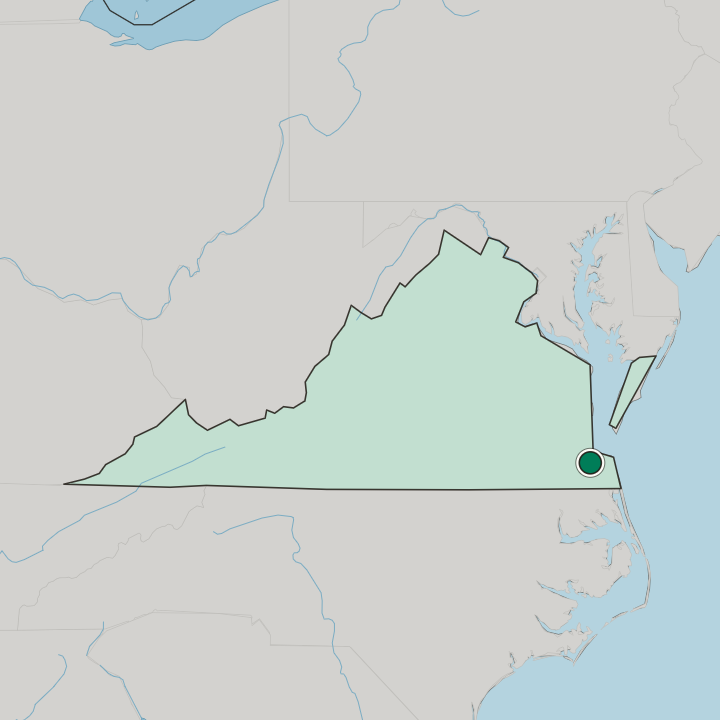
The Elizabeth River draws the boundary. Portsmouth occupies its own bank of that river, Norfolk stands directly opposite, and both belong to the harbor of Hampton Roads that opens beyond them. Land is a minor player.
Portsmouth is a compact city by the standards of the region, and its museums, churches and older houses gather near the harbor rather than spreading inland.
What is the climate of Portsmouth?
The harbor does the moderating. Portsmouth lies in the temperate band with the Elizabeth River at its door and the open water of Hampton Roads beyond, which trims the sharpest edges off both the summer and the winter. Seasons arrive softened.
A walk along the Portsmouth waterfront in high summer feels the difference the water makes, and the same air keeps the cold months from settling in the way they do inland.
How do you get to Portsmouth?
The river is the first obstacle. Everything approaching Portsmouth by land arrives on its own bank of the Elizabeth River, and reaching Norfolk means crossing the water rather than driving around the whole harbor of Hampton Roads. Little ground separates the two waterfronts.
Norfolk Naval Shipyard occupies the waterfront on the Portsmouth side, and the Portsmouth Naval Shipyard Museum stands as the visitor's version of what lies behind those gates. Nauticus and Norfolk Scope lie on the far bank.
Common questions
What is the best area to stay in Portsmouth?
The harbor blocks: Visits centred on the Portsmouth Naval Shipyard Museum. The older church streets: Stays that want Trinity Episcopal Church and the Taylor-Whittle House on the walk. The Norfolk side of the Elizabeth River: Days built around Nauticus and the Chrysler Museum of Art.
Good for
More cities in Virginia
Updated October 2026