United States · Virginia
Where to Stay in Roanoke, Virginia
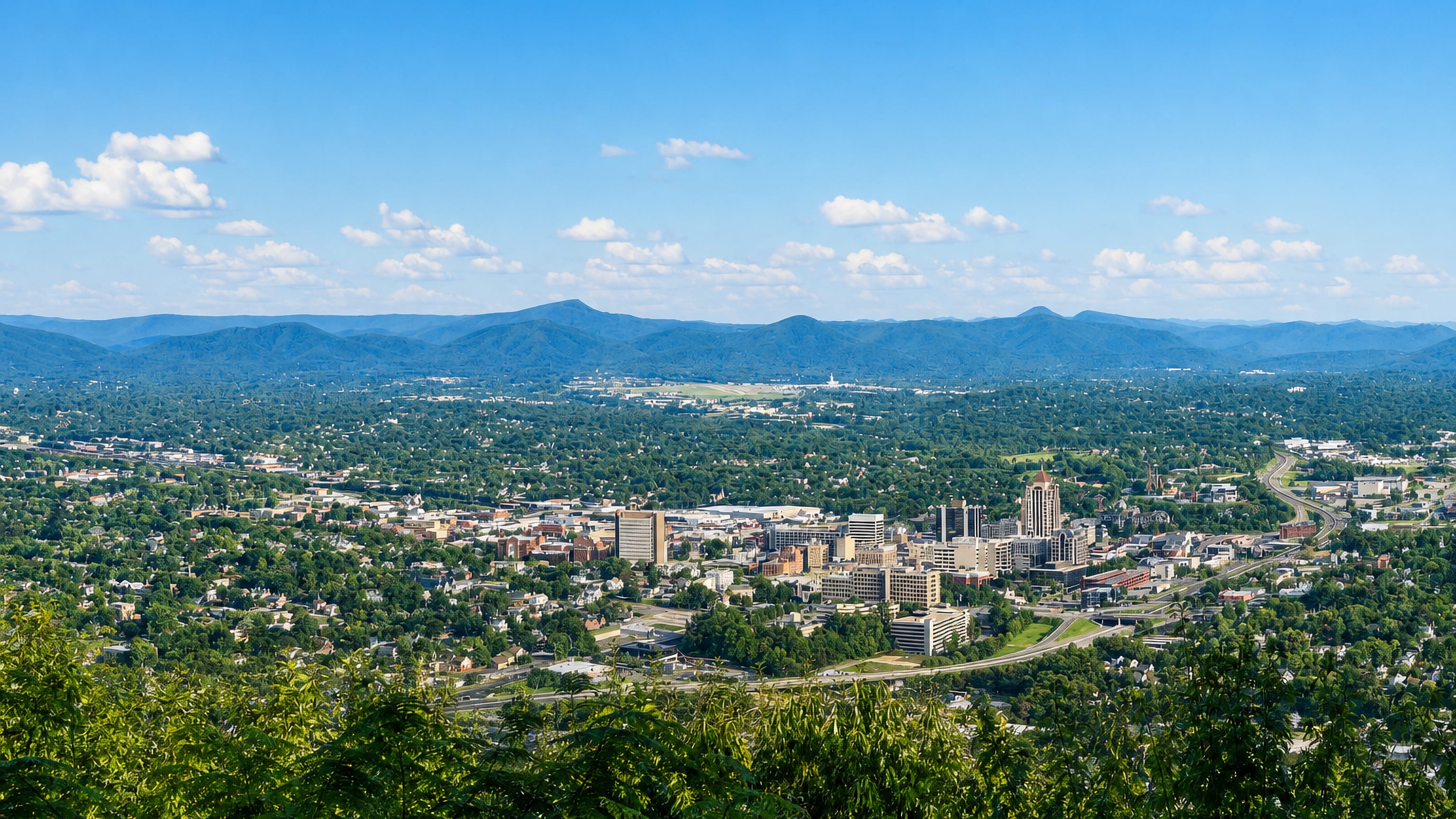
Roanoke lies along the Roanoke River in the Blue Ridge, a Virginia city of 1852 known for the lit star standing over it on Mill Mountain.
Hotel links are affiliate links: booking through them may earn us a commission, at no extra cost to you. It never affects how places are ranked. How this works


Where to stay in Roanoke
Where visitors usually base themselves, and why.
Mill Mountain divides the choice. Roanoke spreads along the valley floor beneath it, so a bed downtown puts the Taubman Museum of Art and the Virginia Museum of Transportation on foot while the mountain and its star stay a drive above. Downtown is the compact answer.
The Science Museum of Western Virginia is the third of the central collections, and a stay there suits anyone who would rather walk between them than move a car. The mountain suits a different visit. Mill Mountain Zoo and the star occupy the height over Roanoke, and a room on that side trades the walkable centre for the view down the Roanoke Valley toward the Blue Ridge.
Older streets sit between. Belmont Methodist-Episcopal Church and the Boxley-Sprinkle House survive from the city Roanoke was before its museums, and a stay near them is quieter than one in the middle. The valley opens the range.
The Appalachian Mountains rise beyond the city, and a base in Roanoke reaches the range without the long approach a stay deeper in the Blue Ridge would demand. Roanoke sits between Virginia Tech and Smith Mountain Lake.
Find hotels in Roanoke
Direct booking searches for these neighbourhoods.
Downtown Roanoke
The Taubman Museum of Art, the Virginia Museum of Transportation and the Science Museum of Western Virginia are the central Roanoke collections.Find hotels in Downtown RoanokeStays that want Mill Mountain Zoo and the lit star overheadThe Mill Mountain side
Mill Mountain Zoo and the star share the height above Roanoke, with the Roanoke Valley laid out below them.Find hotels in The Mill Mountain sideQuiet nights near Belmont Methodist-Episcopal ChurchThe older church streets
Belmont Methodist-Episcopal Church and the Boxley-Sprinkle House stand in the part of Roanoke that predates its museum quarter.Find hotels in The older church streetsHotel links are affiliate links: booking through them may earn us a commission, at no extra cost to you. It never affects how places are ranked. How this works
Things to do in Roanoke
Ranked by global recognition; descriptions from Wikidata (CC0).
Museums & Galleries
2- Taubman Museum of Art
- O. Winston Link Museum
Churches & Religious Sites
2- St. John's Episcopal Church Heritage
- Belmont Methodist-Episcopal Church Heritage
Landmarks & Notable Places
1- Boxley-Sprinkle House Heritage
worth knowingacross 3 categories in Roanoke
About Roanoke
The star on Mill Mountain names the city.
What is Roanoke known for?
Roanoke answers to the Star City of the South because of it, and the lit marker above the Roanoke Valley is the first thing most arrivals look for from the road below. Downtown carries the museums. The Virginia Museum of Transportation, the Taubman Museum of Art and the Science Museum of Western Virginia stand in the city below, while Mill Mountain Zoo shares the height with the star.
What are the main landmarks in Roanoke?
The star is the landmark that travels. Mill Mountain carries it above the Roanoke Valley, and Mill Mountain Zoo shares the same height, which makes the climb the one fixed item on most visits to Roanoke. Three museums hold the floor.
The Virginia Museum of Transportation, the Taubman Museum of Art and the Science Museum of Western Virginia are the city's collections, and Belmont Methodist-Episcopal Church and the Boxley-Sprinkle House are the older buildings on the list.
What is the history of Roanoke?
Roanoke dates from 1852. The settlement took hold along the Roanoke River inside the Blue Ridge range of the Appalachian Mountains, and the valley it occupies has shaped everything the city has done since. Roanoke's churches went up first.
Belmont Methodist-Episcopal Church and the Boxley-Sprinkle House survive from the decades when Roanoke was still a valley town rather than the largest Virginia city west of Richmond. The star came later. A lit star was raised on Mill Mountain over the Roanoke Valley, and the city answers to the Star City of the South, a name that has done more for its reputation than anything else on the map.
Transport followed the valley. Interstate 81 runs the length of the country Roanoke sits in, and the Virginia Museum of Transportation gathers what moved through the valley before the road did. Museums arrived last.
The Taubman Museum of Art and the Science Museum of Western Virginia belong to the modern city, Mill Mountain Zoo to the height above it, and Smith Mountain Lake and Virginia Tech mark the two ends of the country Roanoke sits between.
Where is Roanoke?
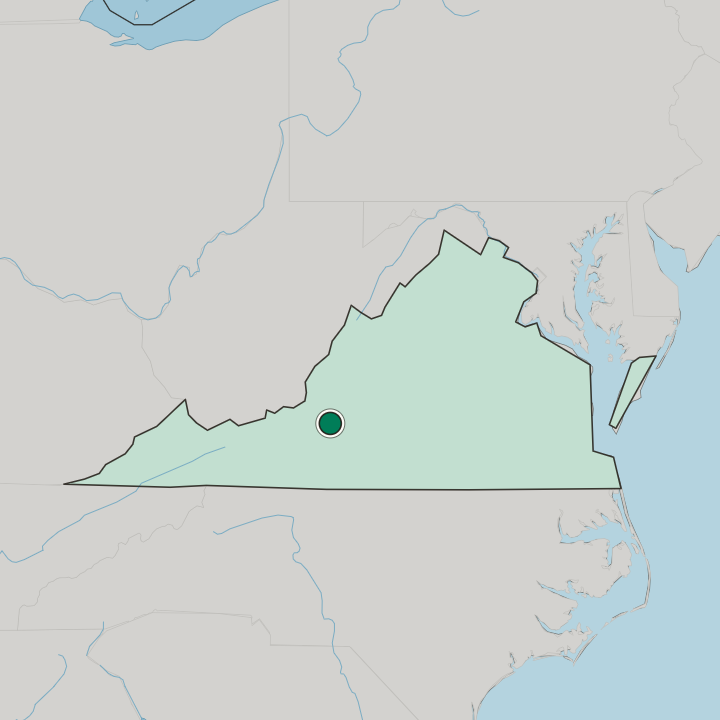
The valley holds the city. Roanoke lies along the Roanoke River inside the Blue Ridge range of the Appalachian Mountains, with Mill Mountain rising directly over the built-up ground and the Roanoke Valley opening around it. Relief is the constant.
Smith Mountain Lake lies on one side of the city and Virginia Tech on the other, which puts Roanoke in the middle of the country between the water and the mountains.
What is the climate of Roanoke?
The Blue Ridge does the work. Roanoke sits in a valley inside the range, and the mountains around it hold the summer heat of the temperate band in check more than the open country beyond the Blue Ridge manages. Height changes everything here.
The air on Mill Mountain runs cooler than the valley floor of Roanoke, and the same relief that gives the Roanoke Valley its views gives it its weather.
How do you get to Roanoke?
Interstate 81 brings most arrivals. The road runs through the valley Roanoke occupies, roughly two hundred and fifty miles from Washington and about fifty north of the North Carolina line, which makes the city a long but simple drive from either end. Richmond lies east.
Roanoke is the largest Virginia city west of Richmond, and the drive in from the capital runs west until the Blue Ridge closes around the road. Smith Mountain Lake lies within reach.
Common questions
What is the best area to stay in Roanoke?
Downtown Roanoke: Walking days between the Taubman Museum of Art and the Virginia Museum of Transportation. The Mill Mountain side: Stays that want Mill Mountain Zoo and the lit star overhead. The older church streets: Quiet nights near Belmont Methodist-Episcopal Church.
Good for
More cities in Virginia
Updated September 2026