United States · Virginia
Where to Stay in Lynchburg, Virginia
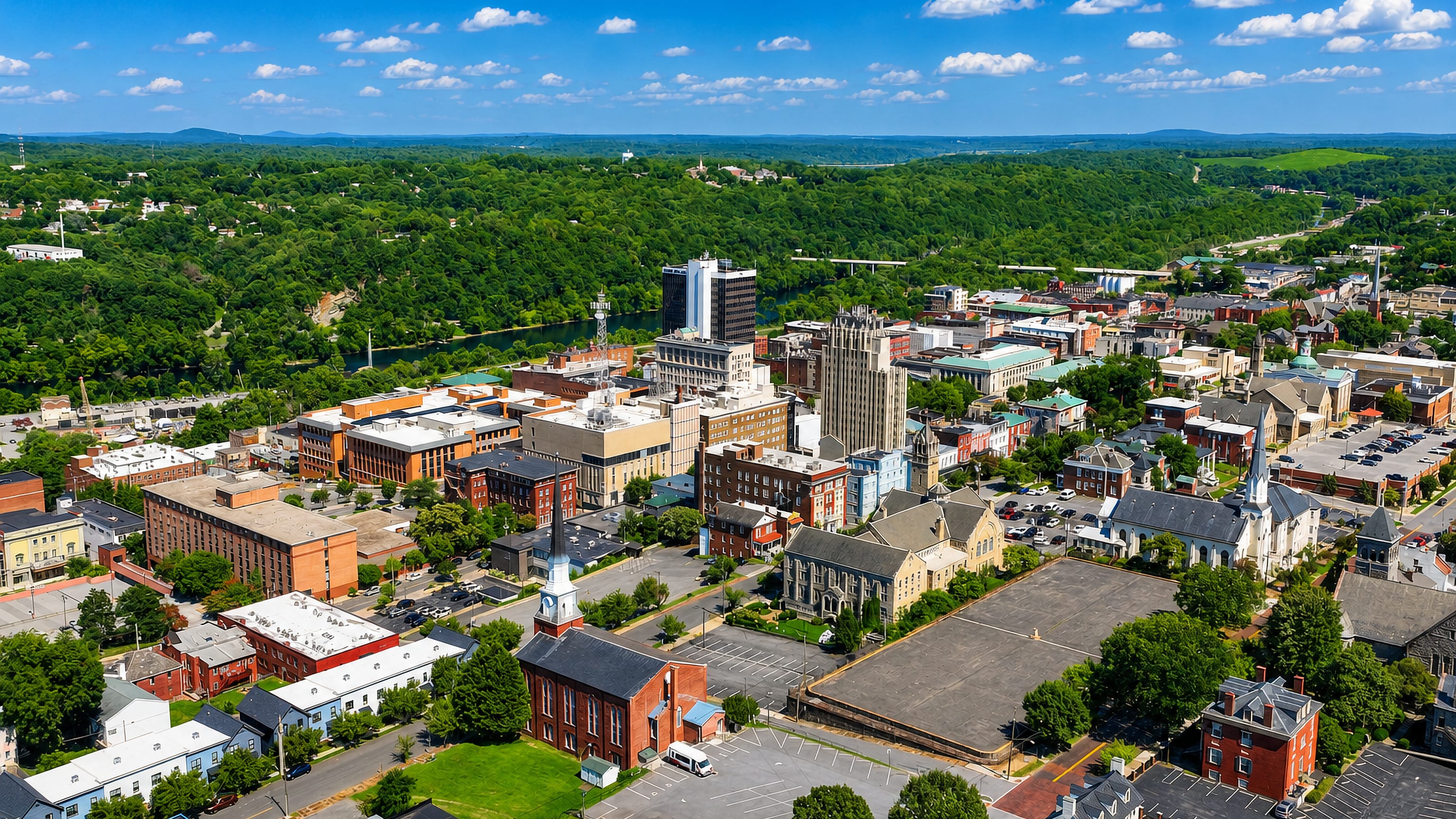
Lynchburg rises over the James River east of the Blue Ridge Mountains, a Virginia city of seven hills founded by John Lynch in 1757.
Hotel links are affiliate links: booking through them may earn us a commission, at no extra cost to you. It never affects how places are ranked. How this works




Where to stay in Lynchburg
The practical side of choosing where to sleep.
Height decides more than distance here. The Lynchburg Courthouse and Point of Honor Monument stand on the rises that carry the oldest streets, and a bed up there means walking down to the James River and back up again at the end of the evening. The low ground is easier.
Rooms along the river put Bank of the James Stadium and the flattest walking in the city within reach, which suits you when a day of climbing seven hills is not the holiday you had in mind. Randolph College holds a third option. The Maier Museum of Art sits on the campus edge and the streets around it run quiet and settled, which makes them the steadiest base for a longer stay in Lynchburg.
Older residential blocks make a fourth. The Anne Spencer House and the Robert Walter Johnson House and Tennis Court stand among them, and a stay in that quarter puts the city's twentieth-century record on the doorstep rather than its founding one. A hundred and thirty square kilometres of broken ground makes Lynchburg feel larger than it is, and the choice between these four is really a choice of which hill to be tied to.
Find hotels in Lynchburg
Direct booking searches for these neighbourhoods.
The courthouse hill
The Lynchburg Courthouse and Point of Honor Monument crown the hills that carry Lynchburg's oldest streetsFind hotels in The courthouse hillLevel walking on the low ground where John Lynch's ferry began the cityThe James River side
The James River gives Lynchburg its only flat walking, with Bank of the James Stadium down on the same groundFind hotels in The James River sideSettled campus-edge streets with the Maier Museum of Art at the cornerAround Randolph College
Randolph College keeps a quiet residential quarter with the Maier Museum of Art on its edge. Rooms are few around here — worth securing early.Find hotels in Around Randolph CollegeOlder blocks near the Anne Spencer House and the Robert Walter Johnson HouseThe Anne Spencer House streets
The Anne Spencer House and the Robert Walter Johnson House and Tennis Court stand together in Lynchburg's older residential quarter. Lodging is scarce in this area; reserve in advance.Find hotels in The Anne Spencer House streetsHotel links are affiliate links: booking through them may earn us a commission, at no extra cost to you. It never affects how places are ranked. How this works
Things to do in Lynchburg
Ranked by global recognition; descriptions from Wikidata (CC0).
Museums & Galleries
1- Lynchburg Courthouse Heritage
Churches & Religious Sites
3- St. Paul's Church Heritage
- South River Friends Meetinghouse Heritage
- Saint Paul's Vestry House Heritage
Castles & Historic Sites
1- Point of Honor Monument
Stadiums & Sports
1- Bank of the James Stadium
Landmarks & Notable Places
7- Carter Glass House Heritage
- Sandusky House Heritage
- Miller-Claytor House Heritage
- Dr. Robert Walter Johnson House and Tennis Court Heritage
- John Marshall Warwick House Heritage
Show 2 more →
- Lynch's Brickyard House Heritage
- William Phaup House Heritage
worth knowingacross 5 categories in Lynchburg
About Lynchburg
Seven hills gave the city its nickname.
What is Lynchburg known for?
The James River runs below them and the Blue Ridge Mountains stand off beyond, which is the setting everything else in Lynchburg is arranged against. Point of Honor Monument crowns one rise. The Maier Museum of Art at Randolph College carries the art, the Anne Spencer House and the Miller-Claytor House keep the older domestic record, and the Lynchburg Courthouse remains the civic centre of gravity for the whole hill city.
What are the main landmarks in Lynchburg?
Houses run the length of the record. Miller-Claytor House, the John Marshall Warwick House, Sandusky House and the William Phaup House survive across the hills, and Lynch's Brickyard House carries the founder's name into the same list. Saint Paul's Church anchors the parish.
Bank of the James Stadium and the Maier Museum of Art at Randolph College mark the two poles of what the city does with a free afternoon.
What is the history of Lynchburg?
John Lynch founded the place in 1757. He worked a ferry and held to Quaker principle and abolition, and the South River Friends Meetinghouse survives as the plainest reminder of the community he came from. The city itself dates from 1786.
Lynch's Brickyard House and the Miller-Claytor House stand from those first decades, and Point of Honor Monument marks the ground of the same period on one of the hills above the river. The Civil War left it standing. Lynchburg's strategic importance helped it remain the only major city in Virginia not recaptured by Union forces before the war ended, and Sandusky House and the John Marshall Warwick House are among the survivals of that century.
Saint Paul's Church and its Vestry House kept the parish going through all of it. Later the city added the Carter Glass House, the Dicks-Elliott House and the William Phaup House, and the Anne Spencer House and the Robert Walter Johnson House and Tennis Court entered the same register from a different part of the community. Randolph College brought the Maier Museum of Art, the Lynchburg Courthouse held the civic line unbroken, and Bank of the James Stadium is the newest name on a list that runs back to a ferryman.
Where is Lynchburg?
Broken ground defines the plan. Lynchburg spreads over about a hundred and thirty square kilometres of broken ground in the foothills of the Blue Ridge Mountains, with the James River cutting the low line through it and every approach involving a climb of some kind. Nothing here is flat for long.
Streets rise and fall between the ridges, which is why the city reads differently on foot than it does on a map.
What is the climate of Lynchburg?
The Blue Ridge Mountains take the edge off. Lynchburg lies east of that range and gets the temperate year of the Virginia interior, with summer heat gathering in the valleys along the James River and cold air draining out of the hills on winter nights. Elevation makes the difference.
A street on one of the seven hills sits a little cooler than one beside the water, and the walking season stretches from spring through to late autumn.
How do you get to Lynchburg?
Everything came up the James River first. John Lynch's ferry crossing is the reason a settlement formed here at all, and the river valley still carries the easiest approach through country that otherwise rises into the Blue Ridge Mountains. Roads climb from every direction.
Anyone driving in from the Commonwealth's flatter half meets the hills before the city, and the last few miles into Lynchburg are all gradient.
Common questions
What is the best area to stay in Lynchburg?
The courthouse hill: Central nights on the rise the Lynchburg Courthouse shares with Point of Honor Monument. The James River side: Level walking on the low ground where John Lynch's ferry began the city. Around Randolph College: Settled campus-edge streets with the Maier Museum of Art at the corner. The Anne Spencer House streets: Older blocks near the Anne Spencer House and the Robert Walter Johnson House.
Good for
More cities in Virginia
Updated September 2026