United Arab Emirates
Emirate of Sharjah, United Arab Emirates — Towns & Travel Guide
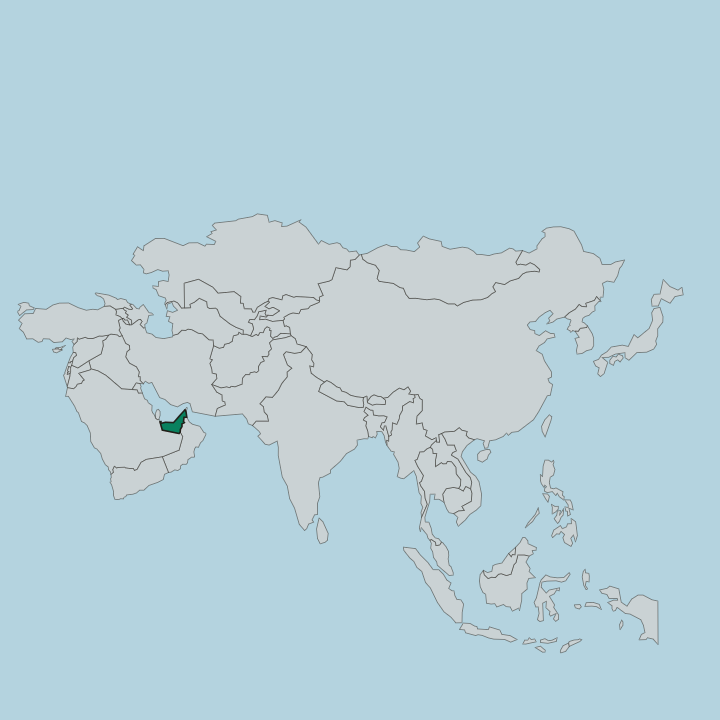
Sharjah is the third-largest emirate of the United Arab Emirates, the only one to touch both the Persian Gulf and the Gulf of Oman.
Hotel links are affiliate links: booking through them may earn us a commission, at no extra cost to you. It never affects how places are ranked. How this works


Towns & cities in Emirate of Sharjah
One town here has its own guide — it links to where to stay.
 United Arab Emirates
Sharjah
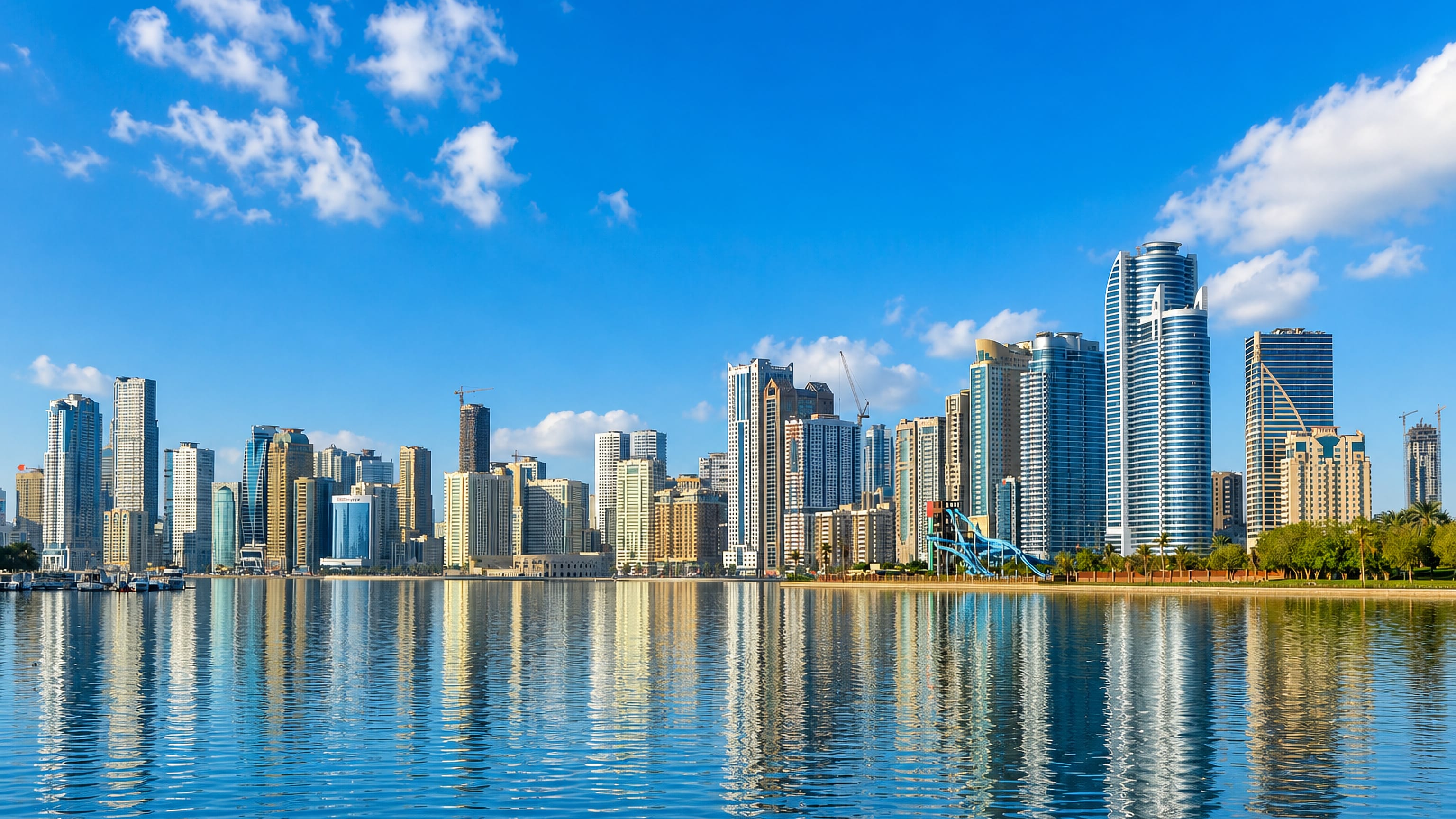
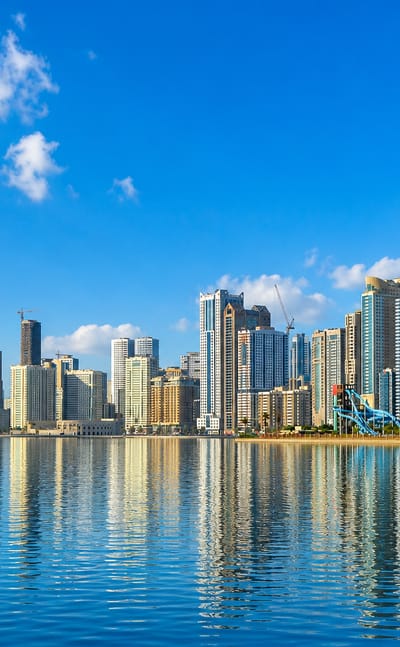
Museums and old courtyard houses ring Sharjah, the port city and capital of the Emirate of Sharjah in the United Arab Emirates.Where to stay →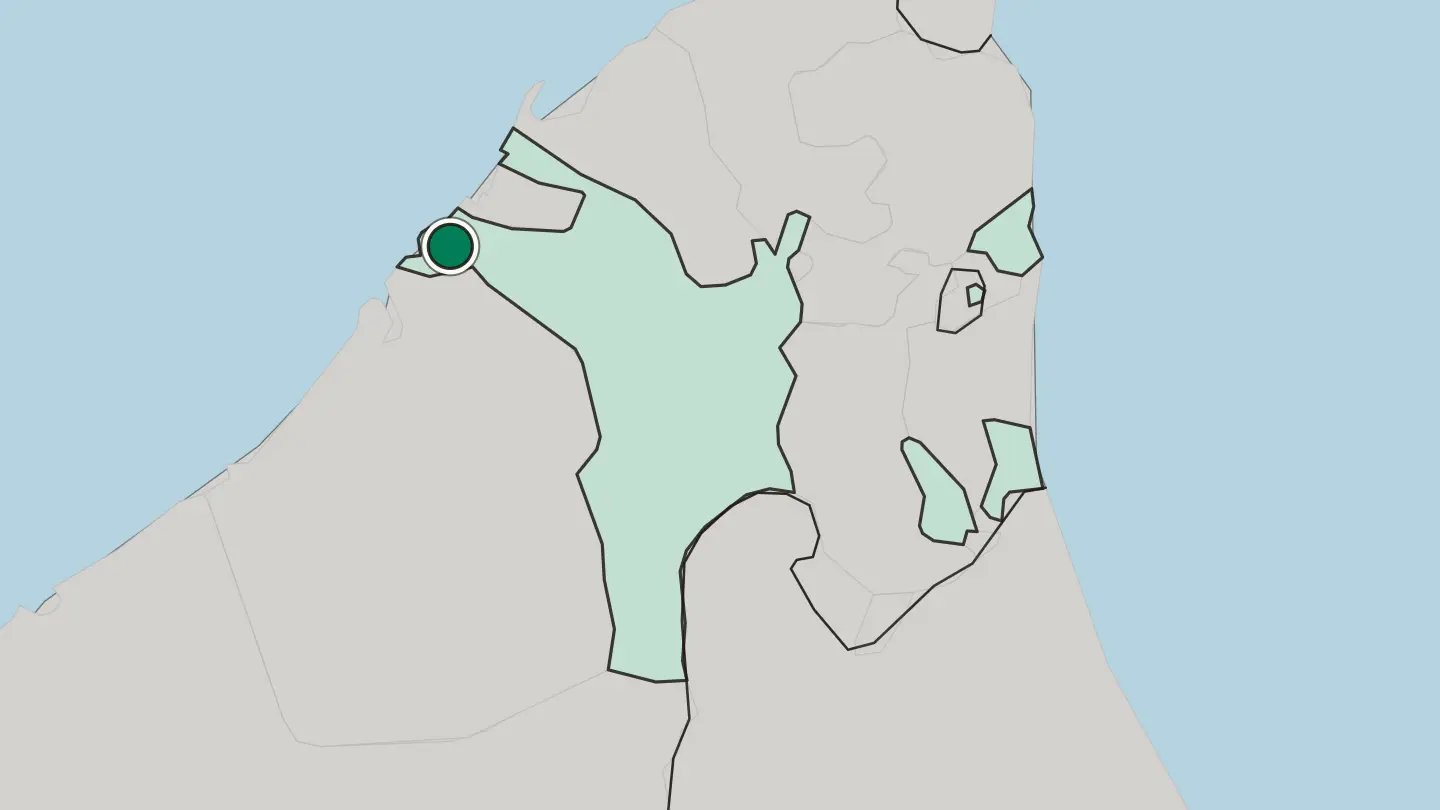
Hotel links are affiliate links: booking through them may earn us a commission, at no extra cost to you. It never affects how places are ranked. How this works
About Emirate of Sharjah
Sharjah is the culture emirate.
What is Emirate of Sharjah known for?
While Dubai next door sells nightlife, Sharjah trades in museums, heritage quarters, and Islamic art, and alcohol is banned across the whole territory. Its capital, the city of Sharjah, runs straight into Dubai along the Persian Gulf shore, so the two read almost as one built-up sprawl from the road. The name most travellers know is Khor Fakkan, the emirate's exclave on the far Gulf of Oman coast, where a deep-water port sits below the Hajar Mountains.
Where is Emirate of Sharjah?
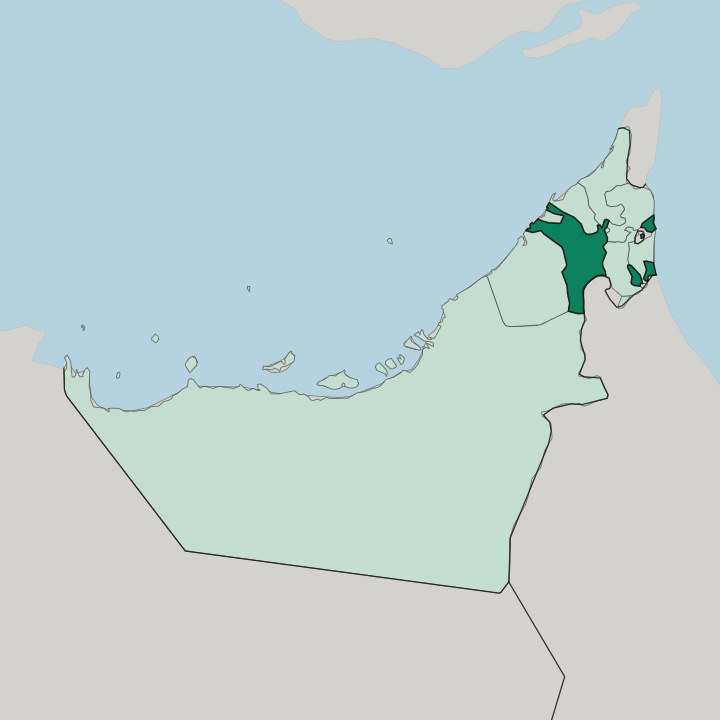
Sharjah is split in two by the country it belongs to. The main body of the emirate sits on the Persian Gulf coast of the United Arab Emirates, in the north of the federation, where the capital city presses right up against Dubai. From that coast the territory reaches inland across flat gravel desert toward the oasis town of Al Dhaid, a broad interior of dunes and sabkha broken only by scattered settlements.
The emirate is unusual. Its remaining pieces lie on the opposite side of the country entirely, on the Gulf of Oman, cut off from the main body by the land of the other emirates. Three of those eastern exclaves matter to travellers.
Khor Fakkan and Kalba both front the Gulf of Oman below the Hajar Mountains, whose bare ridges rise steeply behind the coast, while Dibba Al-Hisn holds the northern end of the shore where three villages under three different rulers share one bay. This scattering makes Sharjah the only emirate to border all six of the others. It also gives one small territory a foot on each of the Arabian Peninsula's two great seas at once.
What is Emirate of Sharjah like?
Sharjah has built its whole identity on culture rather than glitz. UNESCO named the city the Cultural Capital of the Arab World in 1998, and later the Capital of Islamic Culture and a World Book Capital, and the emirate wears those titles seriously. It shows first in the museums.
Sharjah holds more of them than any other emirate, from the Sharjah Museum of Islamic Civilization under its blue-tiled dome to galleries of calligraphy, archaeology, and heritage crafts, most of them clustered in the restored old Heart of Sharjah quarter beside the creek. The tone is more conservative than the coast to the west. Alcohol is banned across the entire emirate, dress runs modest, and Arabic is the working language of daily life, though English is understood everywhere in the city.
Ruled by the Al Qasimi family, whose head is himself a historian and a writer, Sharjah leans hard into books and scholarship. The Sharjah International Book Fair fills its halls every year. Old wind-tower houses stand restored along the waterfront.
This is the emirate that chose the library over the nightclub.
What is the history of Emirate of Sharjah?
The Al Qasimi family took control of Sharjah around 1727 and have ruled it ever since. Under the Qawasim the emirate grew into the strongest naval power on the lower Persian Gulf, a fleet that alarmed the British enough to bring warships and, in 1820, a treaty that made Sharjah one of the Trucial States. British protection held for generations.
When it ended, Sharjah joined the United Arab Emirates on 2 December 1971, one of six emirates to sign at the founding, with a seventh added the following year.
What is the climate of Emirate of Sharjah?
Sharjah runs hot and dry, a desert climate with barely any rain. Summers are brutal. From May into September the air over the Persian Gulf coast turns humid and heavy, and daytime heat sits far above anything comfortable for walking a souk.
The cooler months from November to March are the reason to come, with warm sunny days and mild evenings across both coasts. What little rain falls arrives in short winter bursts, sometimes flooding the wadis that cut down from the Hajar Mountains toward the Gulf of Oman shore.
How do you get to Emirate of Sharjah?
Most travellers fly into Sharjah International Airport, the emirate's own gateway east of the capital and the home base of the budget carrier Air Arabia. Many arrive through Dubai instead. Dubai's far larger airport sits only a short drive across the border, and the two cities merge so completely that a taxi is often the simplest way in.
The eastern exclaves are the harder reach: getting to Khor Fakkan or Kalba on the Gulf of Oman means a road over or around the Hajar Mountains, an hour and a half or more from the Persian Gulf side.
Common questions
What is the best area to stay in Emirate of Sharjah?
The city of Sharjah: a first base in Sharjah. Al Majaz: waterfront walks by Khalid Lagoon. Khor Fakkan: the emirate's east-coast beaches. Kalba: the Khor Kalba mangroves.
Good for
More regions in United Arab Emirates
Updated September 2026