United Arab Emirates
Abu Dhabi, United Arab Emirates — Towns & Travel Guide
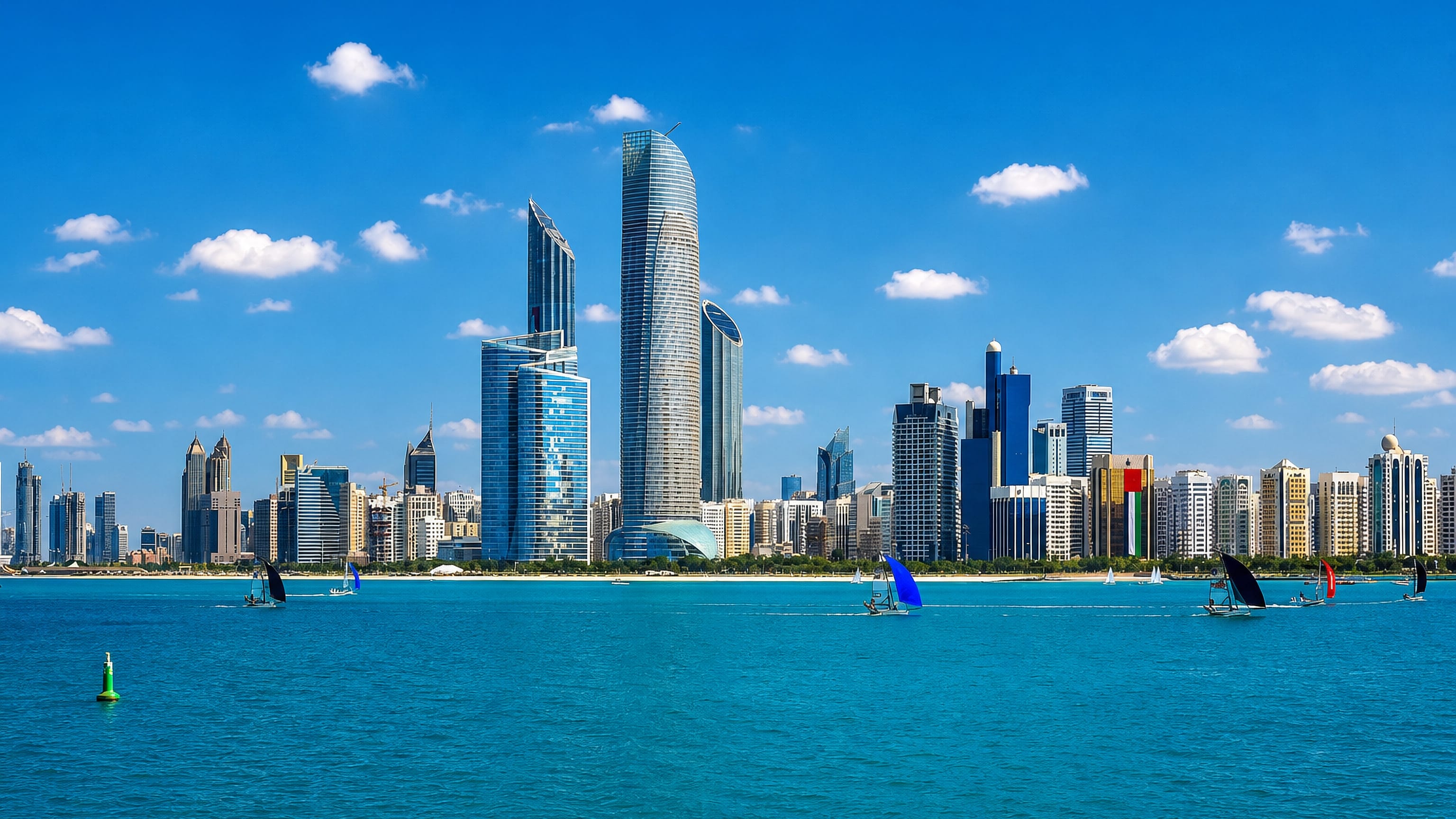
Abu Dhabi is the largest emirate of the United Arab Emirates, its federal capital spread across a T-shaped island in the Persian Gulf.
Hotel links are affiliate links: booking through them may earn us a commission, at no extra cost to you. It never affects how places are ranked. How this works


Towns & cities in Abu Dhabi
Pick a town or city — each links to where to stay.
 United Arab Emirates
Abu Dhabi
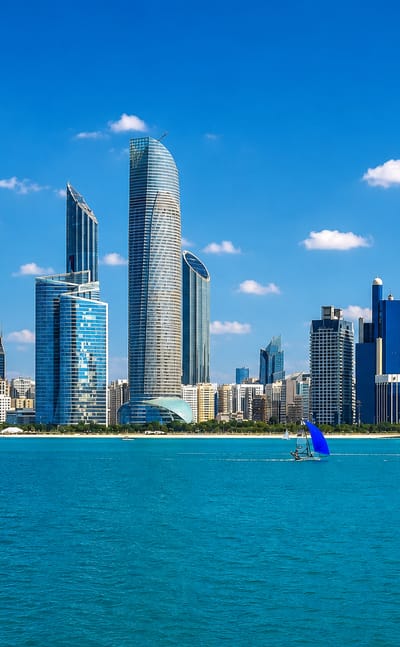
The Persian Gulf wraps a T-shaped island at Abu Dhabi, capital of the United Arab Emirates, known for the Louvre Abu Dhabi and Wahat Al Karama.Where to stay →
 United Arab Emirates
Al Ain City
Al Ain is the oasis city of the Abu Dhabi emirate, lying inland at the desert's edge by the Oman border in the United Arab Emirates.Where to stay →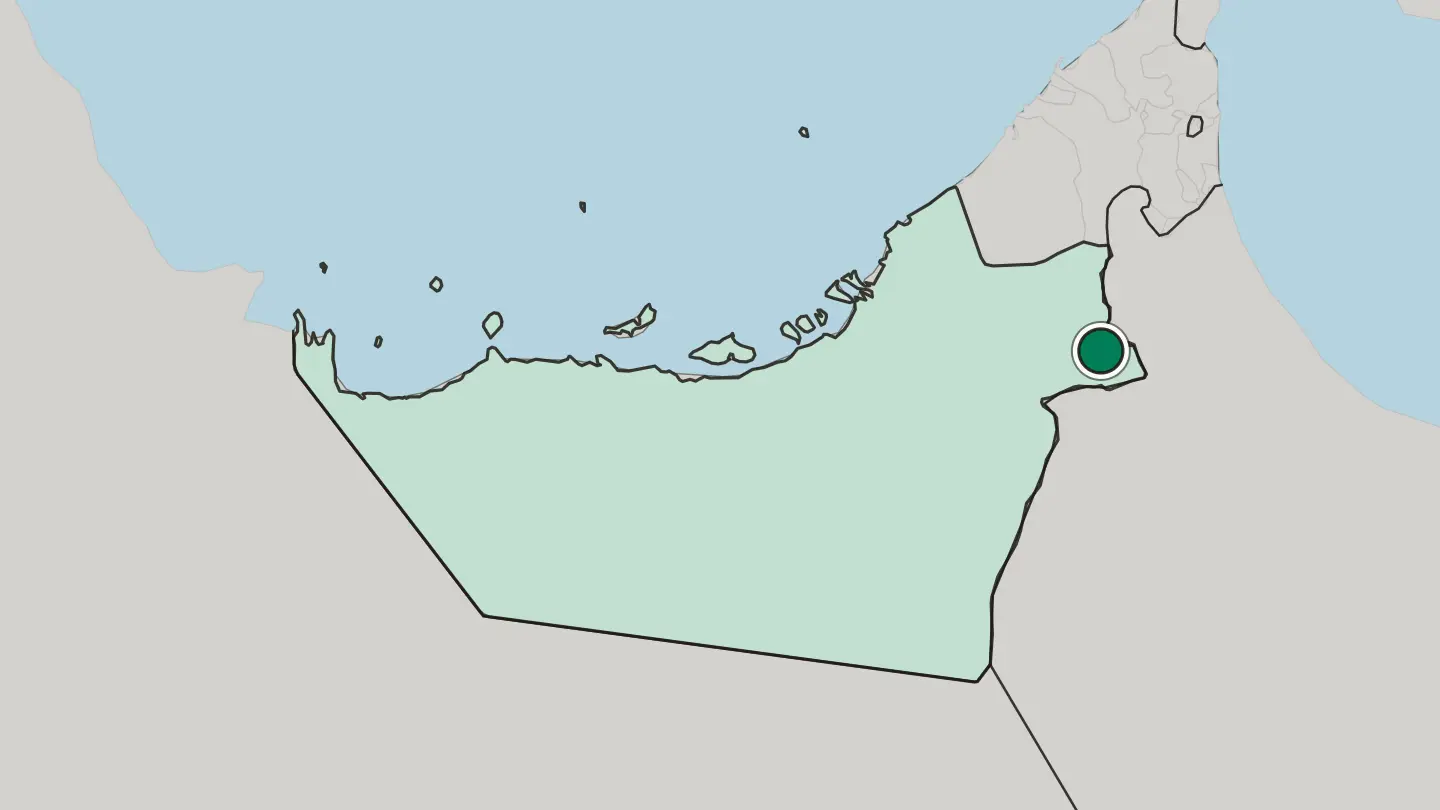
Hotel links are affiliate links: booking through them may earn us a commission, at no extra cost to you. It never affects how places are ranked. How this works
About Abu Dhabi
What is Abu Dhabi known for?
Abu Dhabi is the seat of the United Arab Emirates and its federal capital. Oil made it. Wealth from the fields discovered under the Gulf in 1958 rebuilt a pearling town into the ruling heart of the federation, and the emirate now fills roughly seven-eighths of the country's land.
The capital city sits on a T-shaped island, ringed by the Sheikh Zayed Grand Mosque, the waterfront Corniche, and the museum island of Saadiyat. Desert defines the rest.
Where is Abu Dhabi?
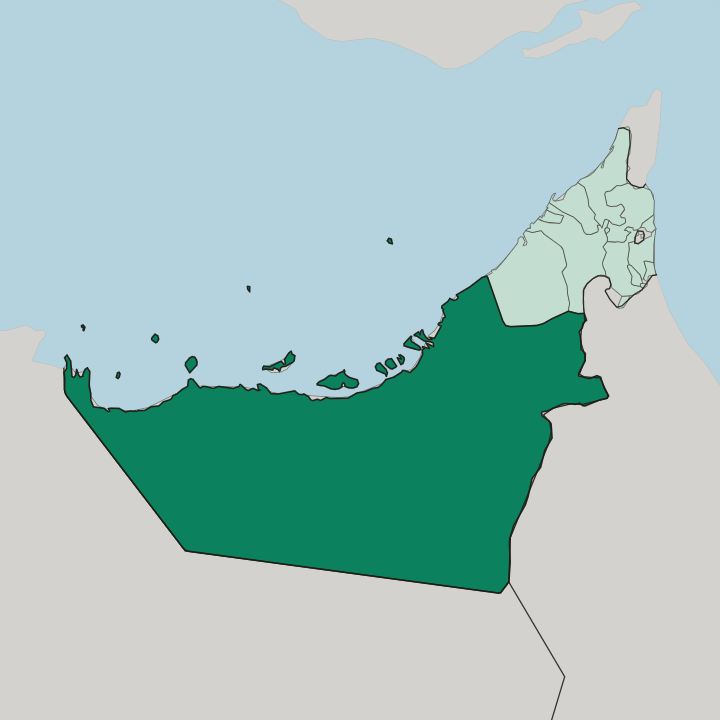
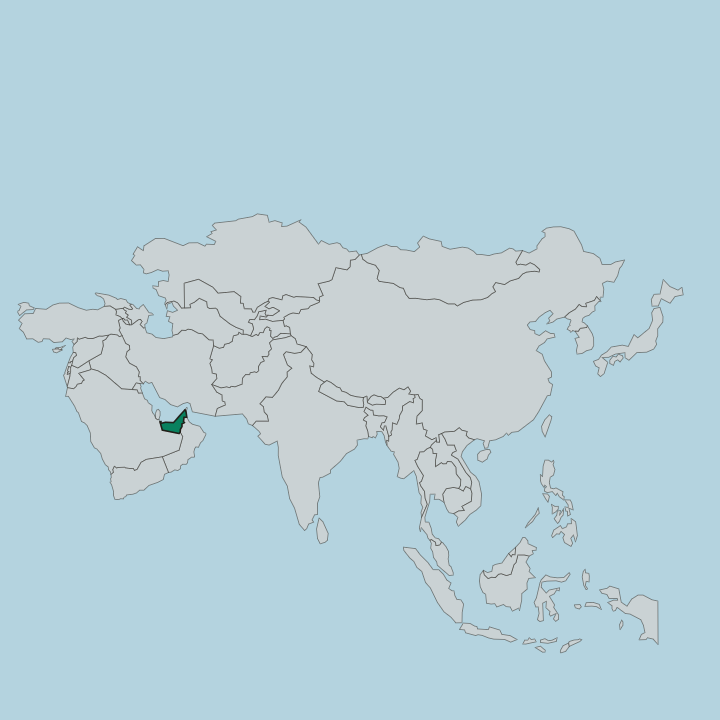
Abu Dhabi occupies the far west and south of the United Arab Emirates, filling most of the country's land. It is the largest of the seven emirates. Dubai adjoins it to the north, Oman closes off the east, and Saudi Arabia runs along the whole southern and western border. To seaward lies the Persian Gulf, and some two hundred islands scatter across the shallow water off a coastline stretching roughly seven hundred kilometres.
The capital sits among them. It stands on a T-shaped island that pushes out from the central-western coast into the Gulf, joined to the mainland by causeways. South of the coast the land turns to open desert.
The Liwa Oasis curves in a long arc of date-palm villages along the northern edge of the Rub' al Khali, the Empty Quarter, the largest continuous sand desert on earth, which the emirate shares with Saudi Arabia and Oman. Al Ain lies apart from all of this, inland to the east on the Oman border, an oasis city watered by underground springs. Between the Gulf shore and the dunes, gravel plains and salt flats fill most of the map, and that expanse of sand and sea, far more than any city block, is what the emirate mostly is.
What is Abu Dhabi like?
Abu Dhabi carries its Bedouin and pearling past close to the surface, even as the capital glitters. Arabic is the mother tongue, and the working majority is expatriate, so English does much of the daily talking on the street. The old economy lives on in the culture.
Before oil, families of the ruling Bani Yas tribe dived for pearls off these shores and herded between the coast and the Liwa Oasis, and falconry, camel racing, and the date harvest still anchor the emirate's sense of itself. Modern Abu Dhabi has spent its oil wealth on a different kind of prestige. The Louvre Abu Dhabi opened on Saadiyat Island under a vast latticed dome, the first outpost the Paris museum has lent its name to, and a wider museum district is rising around it.
Faith frames public life. The Sheikh Zayed Grand Mosque, all white marble and reflecting pools, is both the country's largest place of worship and its most visited single building, open to visitors who cover up and step out of their shoes. The mix is deliberate.
A desert emirate that made itself rich in a single lifetime now spends heavily to be taken seriously as a place of art and ideas, without letting go of the tribe and the tide that made it.
What is the history of Abu Dhabi?
The story starts with fresh water. In 1761 a hunting party of the Bani Yas found drinking water on a Gulf island, and a pearling and fishing settlement grew up on the spot that became Abu Dhabi town. The ruling Al Nahyan family moved down from the Liwa Oasis and settled there in 1793, taking Qasr Al Hosn, the emirate's oldest building, as their seat for the better part of two centuries.
Oil changed the scale of everything. The first find came in 1958, and in 1971 Sheikh Zayed bin Sultan Al Nahyan led the Trucial States into the United Arab Emirates and became the federation's first president, with Abu Dhabi as its capital.
What is the climate of Abu Dhabi?
Abu Dhabi has a hot desert climate, and the sun shines on more than three hundred days a year. Summers are brutal. From June to September the coast bakes toward the low forties Celsius while humidity off the Persian Gulf makes the air feel heavier still, and the open Rub' al Khali sands to the south run hotter and drier again.
Winter is the reward, with mild dry days in the mid-twenties from December to February. Rain barely registers. Most visitors come in the cooler months, when a full day outdoors on the Corniche or in the desert is comfortable rather than punishing.
How do you get to Abu Dhabi?
Almost all visitors to Abu Dhabi come in by plane. Zayed International Airport, on the mainland east of the capital, is the hub of Etihad Airways and the emirate's main door to the world. From the terminal a causeway carries you onto the capital's island in half an hour.
Neighbouring Dubai lies a short drive up the coast to the north, close enough that many travellers land there instead and cross by road. Inland, a highway runs east across the desert to Al Ain, roughly ninety minutes from the coast. Another strikes south toward the Liwa Oasis.
Common questions
What is the best area to stay in Abu Dhabi?
Abu Dhabi city: the capital and its Corniche. Saadiyat Island: the Louvre and Saadiyat's beaches. Yas Island: Yas Marina and the theme parks. Al Ain: oases and the Garden City.
Good for
More regions in United Arab Emirates
Updated September 2026