Brazil · Minas Gerais
Where to Stay in Barbacena, Minas Gerais
Barbacena is a municipality of Minas Gerais dated to 1791, its landmarks running from the Basilica of Saint Joseph the Worker to the Madness Museum.
Hotel links are affiliate links: booking through them may earn us a commission, at no extra cost to you. It never affects how places are ranked. How this works


Where to stay in Barbacena
Where visitors usually base themselves, and why.
Churches mark the middle of Barbacena. Rooms in the streets between the Basilica of Saint Joseph the Worker and the Igreja Matriz de Nossa Senhora da Piedade leave the parish buildings, the shops and most of the town's daily traffic inside one walk, which makes that the sensible base for a short visit. Little here is aimed at tourists.
The trade runs on people with business in this part of Minas Gerais, so the standard stays plain and steady rather than decorative, and the reward for a visitor is a quiet night rather than a lively one. Further out the ground opens toward the farmland the municipality takes in. Space comes with the distance.
A room on the edge trades the walk to the Igreja Nossa Senhora do Rosário for parking and an easier start in the morning, and if the Parque Museu Casa de Marcier or the Mosteiro Padre Cunha is the reason you came, a car makes the whole municipality reachable in a way that walking does not. Barbacena is not big. Getting from the Igreja Nossa Senhora do Carmo to the Igreja de São Sebastião takes less time than settling which of the ten listed buildings deserves the afternoon, so neither choice costs a visitor much.
Find hotels in Barbacena
Direct booking searches for these neighbourhoods.
Between the Basilica and the Igreja da Piedade
The middle of Barbacena, where the Basilica of Saint Joseph the Worker and the Igreja Matriz de Nossa Senhora da Piedade stand a few streets apartFind hotels in Between the Basilica and the Igreja da PiedadeDrivers taking in the Mosteiro Padre Cunha and the Parque Museu Casa de MarcierThe outer streets
The edge of Barbacena where the municipality's farmland starts and a car reaches the Madness Museum and the outlying collections without troubleFind hotels in The outer streetsHotel links are affiliate links: booking through them may earn us a commission, at no extra cost to you. It never affects how places are ranked. How this works
Things to do in Barbacena
Ranked by global recognition; descriptions from Wikidata (CC0).
Museums & Galleries
3- Madness Museum
- Museu Georges Bernanos
- Parque Museu Casa de Marcier
Churches & Religious Sites
6- Igreja Matriz de Nossa Senhora da Piedade (Barbacena) Heritage
- Igreja Nossa Senhora do Rosário (Barbacena) Heritage
- Igreja Matriz de Santo Antônio (Barbacena) Heritage
- Igreja Nossa Senhora do Carmo (Barbacena) Heritage
- Igreja de São Sebastião (Barbacena) Heritage
Show 1 more →
- Mosteiro Padre Cunha Heritage
worth knowingacross 2 categories in Barbacena
About Barbacena
Six churches and three museums make the list.
What is Barbacena known for?
The Basilica of Saint Joseph the Worker heads it, and the Igreja Matriz de Nossa Senhora da Piedade, the Igreja Nossa Senhora do Rosário and the Igreja Matriz de Santo Antônio give Barbacena a set of parish churches longer than most municipalities of Minas Gerais carry. The Madness Museum stands apart. Its subject is one that few places anywhere have chosen to put on public display, and the Museu Georges Bernanos and the Parque Museu Casa de Marcier round out the rest.
What are the main landmarks in Barbacena?
The Basilica of Saint Joseph the Worker leads the list. Around it stand the Igreja Matriz de Nossa Senhora da Piedade, the Igreja Nossa Senhora do Rosário, the Igreja de São Sebastião, the Igreja Matriz de Santo Antônio and the Igreja Nossa Senhora do Carmo, a run of parish churches that would furnish a far larger town. A monastery joins them.
The Mosteiro Padre Cunha keeps the religious side of the roll, while the Madness Museum, the Museu Georges Bernanos and the Parque Museu Casa de Marcier carry the secular collections of Barbacena.
What is the history of Barbacena?
Barbacena's founding is dated to 1791. That places the beginning of the municipality in the last decade of the eighteenth century, and the churches it carries are dedicated to saints and Marian titles: Nossa Senhora da Piedade, Nossa Senhora do Rosário, Santo Antônio, Nossa Senhora do Carmo and São Sebastião. Faith organised the plan.
A town that ends with five parish churches and a monastery has built its public life around them, and the Mosteiro Padre Cunha is the plainest survival of that arrangement anywhere in the municipality. The Basilica of Saint Joseph the Worker heads the inheritance. Its dedication names Joseph in his working aspect, a title standing apart from the Marian and saintly dedications the older parish churches of Barbacena carry.
Museums came afterwards. The Museu Georges Bernanos and the Parque Museu Casa de Marcier attach two names to the civic memory of the place, while the Madness Museum takes on a subject that most municipalities leave undocumented altogether. The town keeps what others let go.
Ten listed buildings in a single municipality of Minas Gerais is the record of somewhere that went on building and then went on keeping, which is why the roll here reads longer than the size of Barbacena would lead anyone to expect.
Where is Barbacena?
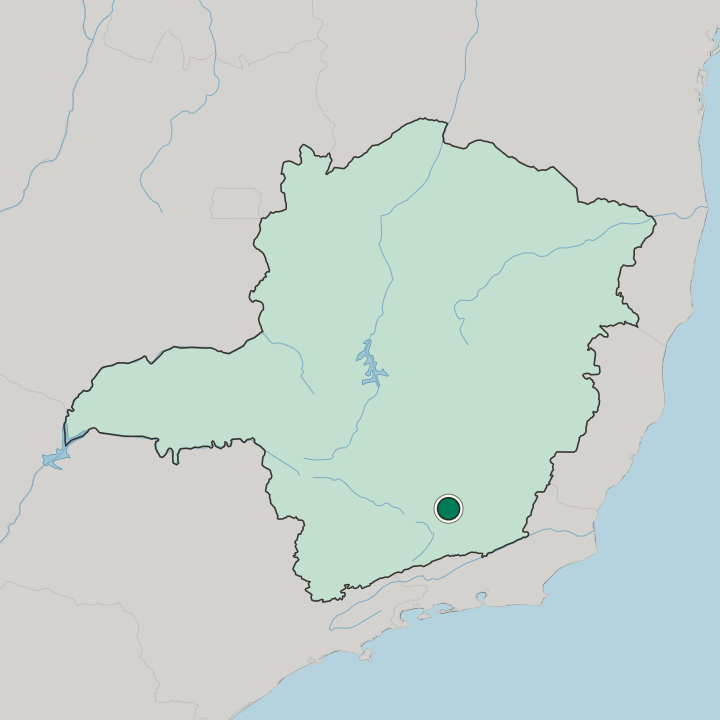
Barbacena covers a broad stretch of Minas Gerais. The municipal boundary takes in a great deal more open country than town, so the streets around the Basilica of Saint Joseph the Worker and the Igreja Matriz de Santo Antônio account for a small share of the ground the name actually covers. Farmland fills the rest.
Roads leave the built-up part in several directions into the country around, and the change from street to field comes within a short distance of the last parish church.
What is the climate of Barbacena?
The year here divides into wet and dry. Barbacena lies in the tropical band of the southern hemisphere, which reverses the northern calendar and drops the warm wet months across the stretch a European visitor would think of as winter. Seasons swap places.
Rainfall rather than temperature is what separates one part of the year from another in this corner of Minas Gerais, and a traveller who plans by northern habit gets the two halves the wrong way round.
How do you get to Barbacena?
Roads bring people in. The approach to Barbacena is overland, and the road network of Minas Gerais carries travellers as far as the streets below the Basilica of Saint Joseph the Worker. Cars and coaches share the load.
Once inside the town the Igreja Matriz de Nossa Senhora da Piedade, the Igreja Nossa Senhora do Carmo and the Mosteiro Padre Cunha stand near enough to one another that the whole set can be taken in on foot.
Common questions
What is the best area to stay in Barbacena?
Between the Basilica and the Igreja da Piedade: A first visit wanting Barbacena's parish churches on foot. The outer streets: Drivers taking in the Mosteiro Padre Cunha and the Parque Museu Casa de Marcier.
Good for
More cities in Minas Gerais
Updated October 2026