Brazil · Minas Gerais
Where to Stay in Pouso Alegre, Minas Gerais
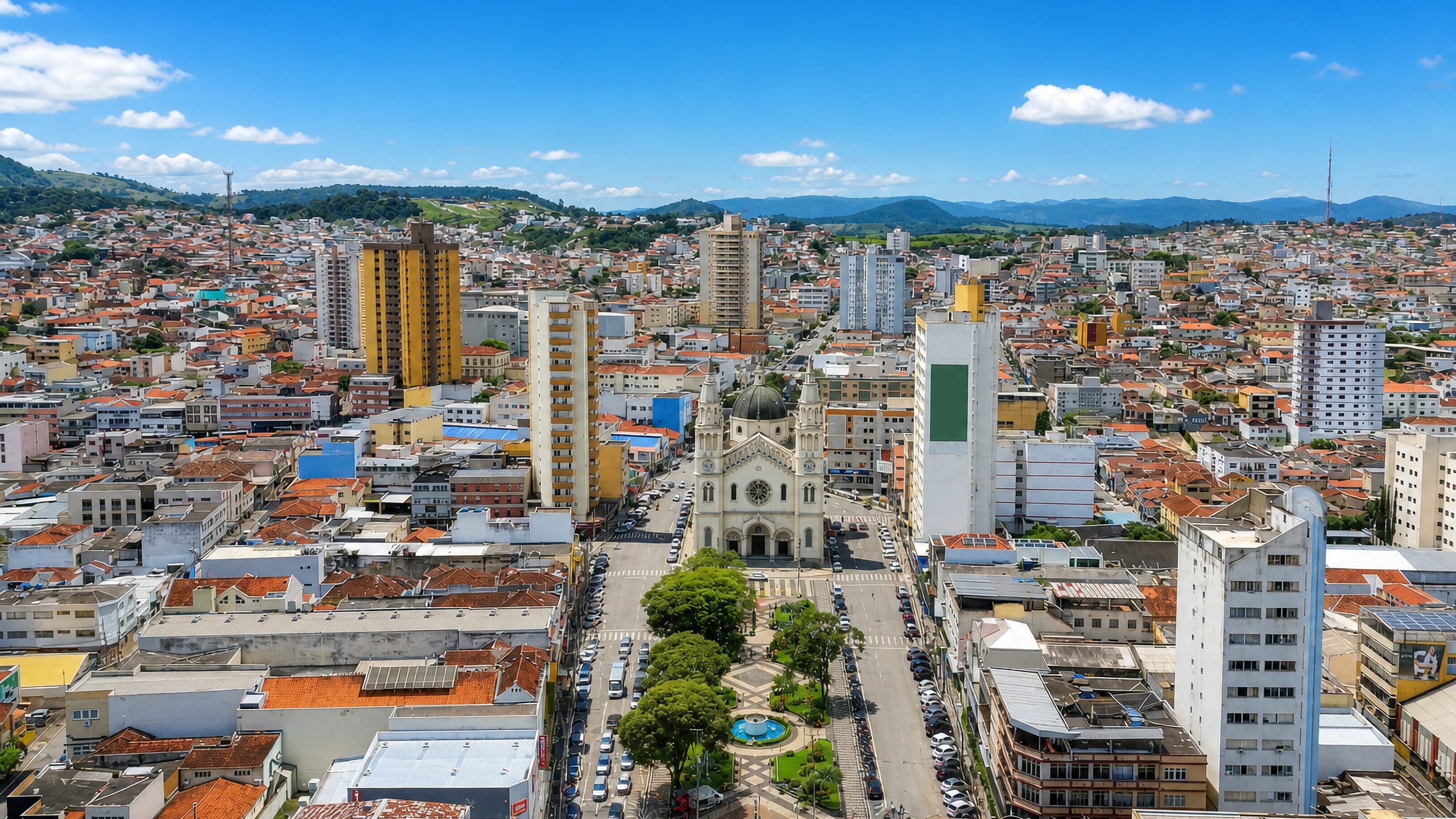
Pouso Alegre is a city in southern Minas Gerais, Brazil, spread along the valley of the Sapucaí River.
Hotel links are affiliate links: booking through them may earn us a commission, at no extra cost to you. It never affects how places are ranked. How this works


Where to stay in Pouso Alegre
The practical side of choosing where to sleep.
Pouso Alegre keeps most of its beds near the Palace Episcopal and the blocks running down towards the Teatro Municipal, and that pairing sets the choice for almost every visitor. Everything civic sits close. The Courthouse Orvietto Butti, the Casa dos Junqueiras, and the Clube Literário e Recreativo stand within an easy walk of one another, which makes the old centre the simplest base for anyone here for two or three nights.
Streets there stay busy well into the evening. A quieter option lies around the Fonte Luminosa da Independência, where open ground and the Estátua do Bandeirante Fernão Dias leave families more room to spread out than the tighter grid nearer the churches allows. Music students fill the pavements by the Conservatório Estadual de Música Juscelino Kubitschek, and the Escola Estadual Monsenhor José Paulino puts a second institution into the same few blocks, so weekday mornings start loud and early on that side of the city.
Beds there fill early. Drivers face a different calculation. Out along the Sapucaí valley the roadside stays trade the walk into the centre for parking and space, which suits anyone touring southern Minas Gerais by car rather than settling into one town for the week.
Nothing in the city is far from anything else. The whole built-up area is small enough that a wrong guess costs a few minutes rather than an afternoon, so the real question is whether you want the theatre and the courthouse outside the door or the road out of town.
Find hotels in Pouso Alegre
Direct booking searches for these neighbourhoods.
Palace Episcopal blocks
The Palace Episcopal and the Courthouse Orvietto Butti stand a few blocks apart, so the civic centre begins at the door.Find hotels in Palace Episcopal blocksevenings built around the Teatro Municipal and the Clube Literário e RecreativoTeatro Municipal side
Performance nights and the Conservatório Estadual de Música Juscelino Kubitschek keep this stretch of Pouso Alegre awake after dark.Find hotels in Teatro Municipal sidefamilies wanting the Fonte Luminosa da Independência within a strollAround the Fonte Luminosa da Independência
Open ground by the fountain and the Estátua do Bandeirante Fernão Dias gives room the churchside grid cannot offer.Find hotels in Around the Fonte Luminosa da Independênciadrivers crossing southern Minas Gerais who need to parkSapucaí valley outskirts
Roadside stays out in the Sapucaí valley swap the walk into Pouso Alegre for space and an easy exit. Lodging is scarce in this area; reserve in advance.Find hotels in Sapucaí valley outskirtsHotel links are affiliate links: booking through them may earn us a commission, at no extra cost to you. It never affects how places are ranked. How this works
About Pouso Alegre
What is Pouso Alegre known for?
The Sapucaí valley put Pouso Alegre where it stands, and the city has grown into a commercial and teaching centre for the smaller towns of southern Minas Gerais, with a civic core arranged around church, court, and stage. Music keeps a formal address. The Conservatório Estadual de Música Juscelino Kubitschek trains players from the surrounding region, while the Teatro Municipal carries the performance side.
Faith raised the largest walls.
What are the main landmarks in Pouso Alegre?
The Palace Episcopal is the set piece of the old centre. Nearby the Courthouse Orvietto Butti carries the civic weight, and the Casa dos Junqueiras keeps a family name from the town's older commercial life attached to a surviving house. Water and light meet at the Fonte Luminosa da Independência.
The Estátua do Bandeirante Fernão Dias stands over public ground, and the Escola Estadual Monsenhor José Paulino counts as a monument as much as a school. Stage and classroom share the list.
What is the history of Pouso Alegre?
Dates come hard here. The sources carry no charter year for Pouso Alegre, so its earlier life has to be read from the buildings that survived rather than from a founding document. Those buildings point one way.
An episcopal palace, a courthouse, and a municipal theatre are the furniture of a place that turned into an administrative and religious centre for the towns around it in the Sapucaí valley. The Palace Episcopal marks Pouso Alegre as a seat of church administration rather than a parish stop, and the Courthouse Orvietto Butti planted the law inside the same small grid. Civic society left its own addresses.
The Clube Literário e Recreativo speaks to a reading and social life organised formally enough to need a building of its own, while the Conservatório Estadual de Música Juscelino Kubitschek and the Escola Estadual Monsenhor José Paulino show the state taking on music and schooling. The Casa dos Junqueiras keeps a family name attached to a house. Independence is commemorated in water and light at the Fonte Luminosa da Independência, and the Estátua do Bandeirante Fernão Dias holds a bandeirante figure in public space.
Both are monuments rather than evidence of dates. What the record does support is a southern Minas Gerais town that accumulated church, court, stage, and school, and then kept the fabric of each standing. That accumulation is the history the visible city can actually prove, and it explains why the centre reads as an institutional quarter rather than a market square with houses around it.
The rest waits on better sources.
Where is Pouso Alegre?
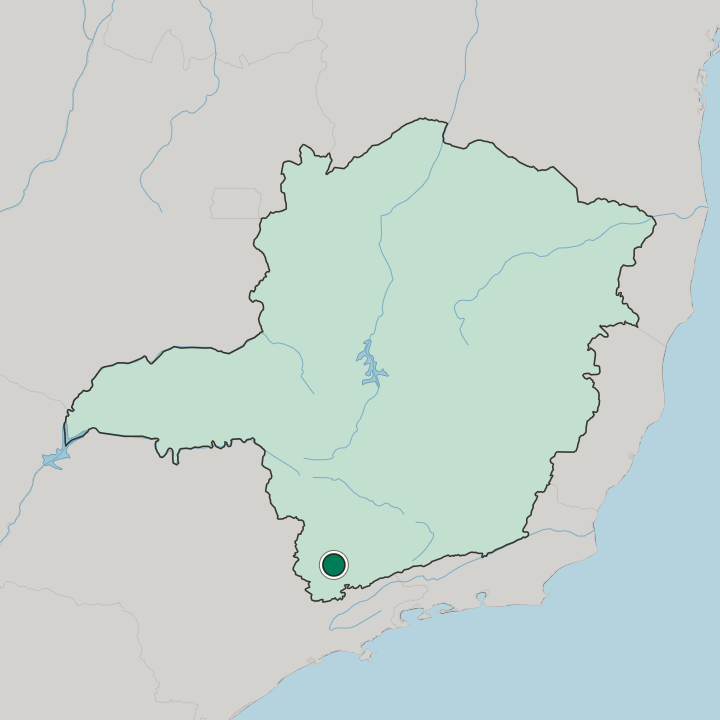
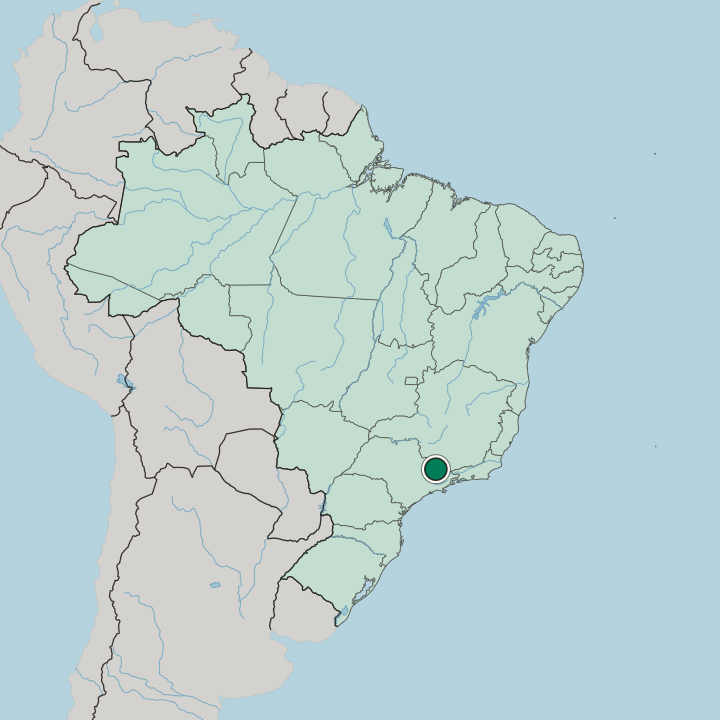
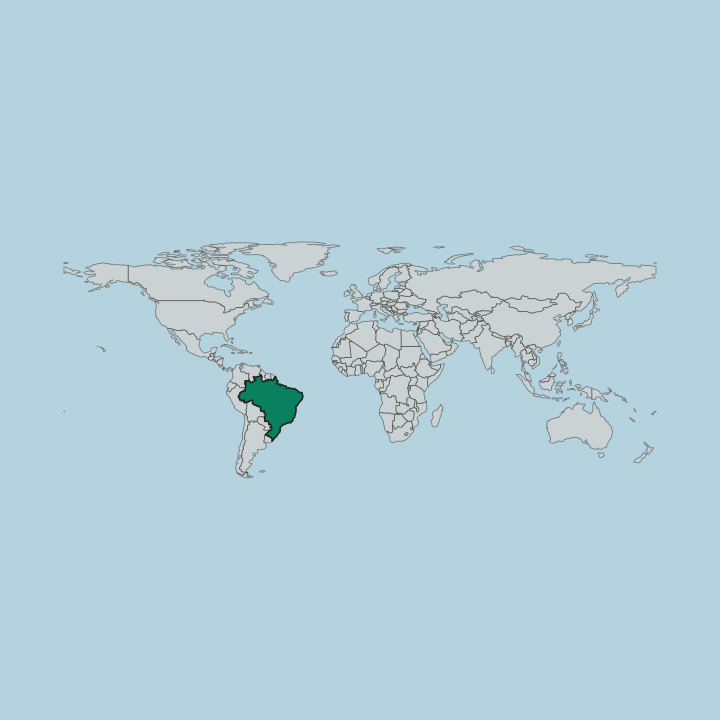
Pouso Alegre lies in the valley of the Sapucaí River, in the southern part of Minas Gerais. The Sapucaí gives the site its shape, and the municipality reaches far beyond the built-up centre across a wide stretch of inland country in this part of Brazil. No sea reaches this valley.
Neighbouring municipalities of southern Minas Gerais close the boundary on every side.
What is the climate of Pouso Alegre?
Pouso Alegre sits inside the tropical band, south of the equator, so its calendar runs opposite to the northern one. Warm months fall around the turn of the year. The cooler stretch lands in the middle of the calendar, a reversal that catches visitors arriving from Europe or North America and reshapes what they pack for a stay in the Sapucaí valley.
Seasons here read backwards.
How do you get to Pouso Alegre?
There is no way into Pouso Alegre but by road. The sources name no airport, rail terminal, or bus operator for Pouso Alegre, so the practical route in is the highway network that threads southern Minas Gerais and meets the Sapucaí valley. That points to car or coach.
Once in town, the centre around the Palace Episcopal and the Teatro Municipal is compact enough to cross on foot, which removes most of the transport question from a short stay.
Common questions
What is the best area to stay in Pouso Alegre?
Palace Episcopal blocks: walk-everywhere stays beside the episcopal seat of Pouso Alegre. Teatro Municipal side: evenings built around the Teatro Municipal and the Clube Literário e Recreativo. Around the Fonte Luminosa da Independência: families wanting the Fonte Luminosa da Independência within a stroll. Sapucaí valley outskirts: drivers crossing southern Minas Gerais who need to park.
More cities in Minas Gerais
Updated September 2026